Germany

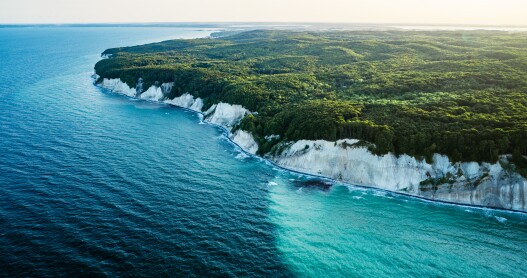
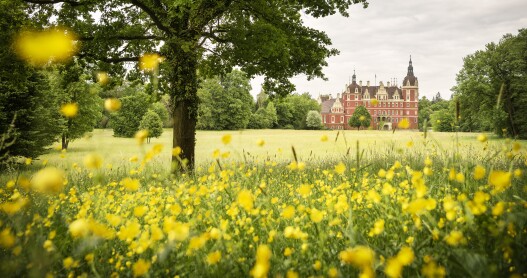
While Germany is well-known for its hearty food and beer, fairy-tale castles, and gorgeously preserved medieval towns, the country offers so much more than clichés. In addition to some of Europe’s most distinctive cities—Berlin, Munich, and Hamburg, to name a few—Germany features diverse natural scenery (scenic coastlines, mystical forests, soaring Alps), a heavyweight cultural legacy (including contributions from some of the world’s most famous philosophers and musicians), cutting-edge architecture, and celebrated contemporary art.

Germany-Guide.jpg

Photo by Felix Bruggemann

Overview

When’s the best time to go to Germany?

Summer is the ideal time to visit Germany. The country’s sunlit landscapes—crisscrossed with rivers, peppered with forests and lakes, and dotted with charismatic castles—are in full bloom, and its cities transform into outdoor playgrounds. Still, summer can bring crowds and expensive prices, so spring and autumn are attractive alternatives, helped along by a slew of major events like Munich’s famous Oktoberfest. Winter holds its own charms, especially for ski and snowboard fans, as well as for those who wish to visit Germany’s Christmas markets, which run from late November until December 23, or the Berlin International Film Festival in February.

How to get around Germany

There are over 40 airports spread across Germany, providing easy and convenient access to the country’s 16 federal states. Frankfurt am Main and Munich are the largest airports, followed by Düsseldorf, Berlin, Hamburg, Stuttgart, and Cologne Bonn. Once you’ve arrived in Germany, public transportation is generally excellent, with high-speed trains connecting all major cities as well as destinations across Europe. Some regions, like the Black Forest and Schleswig-Holstein, are more easily explored by car, but even there you can find buses and trains to get around.

Food and drink to try in Germany

Traditional German food is quite substantial—meat dishes like lamb, pork, and beef are popular, along with plenty of fish, rich sauces, and generous sides including potatoes, dumplings, and cabbage. Sausages are ubiquitous, and each region tends to have its own specialty. Be sure to try Rheinischer Sauerbraten (pot roast) in the North Rhine, spätzle (cheesy noodles) in the south, and quirky dishes like Handkäs mit Musik (pungent cheese topped with white onions) around Hesse. Contemporary German cuisine, on the other hand, often consists of lighter, updated versions of classics, and all the big cities offer a diverse range of international food.

Beer, of course, is a trademark of Germany, including the mixed drink Radler (beer with lemonade or any variation of juice), which is popular during the summer. In winter, sipping a steaming mug of Glühwein (mulled wine with spices) is recommended.

Culture in Germany

Germany is often referred to as Das Land der Dichter und Denker (The Country of Poets and Thinkers), which gives more than a clue as to its intellectual and cultural prowess. Famed for its contributions to everything from philosophy and literature to music and art, the country has produced many luminaries known worldwide by their surnames alone: Goethe, Bach, Hegel, Beuys, Hesse, Wagner, Mozart, among them. Germany’s contemporary cultural scene is just as dynamic, as evidenced by an annual calendar of events like the world-renowned Berlin International Film Festival and the Documenta art exhibition in Kassel.

Can’t miss things to do in Germany

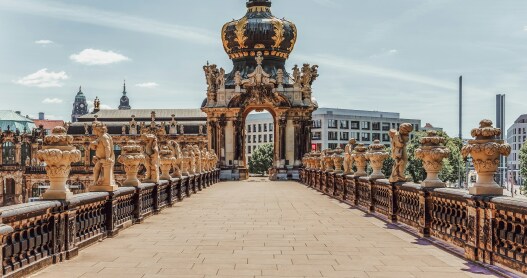
Vibrant urban culture vies with romantic landscapes throughout Germany. The major cities, especially Berlin, Hamburg, Cologne, and Munich, should not be missed, but smaller towns like Bayreuth, Weimar, Nuremburg, Dresden, Bamberg, and Lübeck are also attractive for their impressive architecture and charming atmospheres. Soaring cathedrals and grand palaces can be found across the country, while natural areas like the Black Forest, the Bavarian Alps, and the Baltic and North Sea coastlines provide an alluring mix of recreation and relaxation.

Practical Information

Americans and other non-E.U. citizens need a valid passport to visit Germany for less than 90 days, and a travel visa to stay longer. The local language is German, though the more urban the destination, the more English is spoken, especially among the younger generation. The currency is the euro, the voltage is 230 volts, and the socket type is F (round plugs with two round prongs).

Guide Editor

Paul Sullivan has lived in Berlin since 2008. In addition to running his local website, Slow Travel Berlin, he writes regularly on Berlin and Germany for international publications like The Guardian, The Telegraph, the Sunday Times, and the BBC, and has worked on Berlin and Germany guidebooks for publishers such as Fodors, DK, Rough Guides, Wallpaper, and more.
READ BEFORE YOU GO
HOTELS
Whether you’re a skier or an après-ski enthusiast, these 19 European hotels are ideal for a winter weather getaway.
After a careful two-year renovation, the historic Brenners Park-Hotel & Spa is stepping into a new era of wellness shaped by the surrounding Black Forest.
Around the world, breakfast is emerging as the moment when a luxury hotel’s ambition—and its core values—become most visible.
These women aren’t just breaking barriers. They’re building a more inclusive, dynamic future for hospitality—and your hotel experience will be the better for it.
These are the 24 hotels we recommend most for wellness.
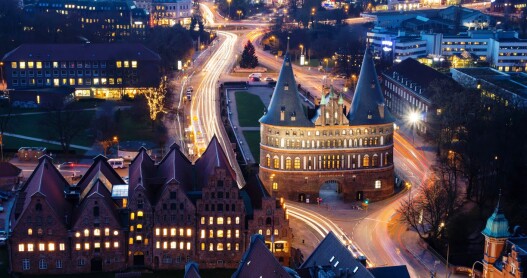
From rococo and baroque facades in Lübeck to Bauhaus in Weimar and Le Corbusier’s modernist neighborhood outside Stuttgart, Germany has a rich architectural history.
Descend into ancient mine shafts, visit skilled woodcarvers, soar to the top of eastern Germany’s highest mountain, and soak up the charm of historic towns.
From the protected Wadden Sea to the historic warehouse districts of Hamburg and beyond, a visit to the former Hanseatic League is a dream trip for sustainably minded travelers who love history.
Berlin is a masterpiece of urban planning, from the Museum Island at the heart of its walkable center to groundbreaking Modernism Housing Estates, plus epic parks and forests waiting just a stone’s throw away.
Explore rich religious traditions and outstanding architecture at the country’s most magnificent cathedrals and monasteries.
RESOURCES TO HELP PLAN YOUR TRIP
Founded in 1558, Bayerische Staatsbibliothek is a historic, expansive, and important universal library. With almost nine million volumes and countless reading rooms, this is the perfect place to become lost in a text, work remotely, or explore with the family. Since 1663 they have collected copies of almost every Bavarian printed text—making it a wonderful place to learn about the regional culture and heritage. It’s also a lively cultural space that hosts regular exhibits and events. Come here either to marvel at the architecture, history, and texts or to get lost in a book. If you’re just passing by, be sure to check out the famous stone statues adorning the flight of stairs known as “the four magi.” See if you can guess which scholastic founders they represent!
A true desert outpost, the Peruvian town of Mancora enjoys the most sunshine hours of anywhere in the country. Unlike the rest of Peru the water is warm enough to surf without a wetsuit, a welcome complement to an area already featuring some of the best waves in South America. Hemingway knew what he was doing when he set up shop in nearby Cabo Blanco, an authentic fishing village where the ceviche is some of the freshest on the planet and the days pass with a simple peacefulness unique to many coastal escapes. While outdoor activities abound around Mancora, from kitesurfing to fishing to morning yoga sessions, on this particular morning the to-do list consists of nothing more than a good book, a cold drink, and watching whales splash on the endless horizon.
Considered the largest Roman city gate north of the Alps, the Porta Nigra has been designated a World Heritage Site.
Many visitors to Peru stay in Miraflores, and for good reason: The neighborhood is where you’ll find most of the better hotels, as well as the top restaurants. Get off main streets to stroll the pretty side streets. Down by the ocean, walk the Malecón seawall and visit the Parque del Amor, or Love Park, to watch paragliders soar and bank overhead. The oceanfront is also home to Larcomar, an open-air shopping mall where you can grab a bite or shop for any items you may have forgotten.
My wife and I just returned from our annual trip to Europe to visit Christmas Markets. Our first stop was Cologne, Germany. In researching Cologne several months ago I read about the Hohenzollern Railway Bridge, which crosses the Rhine into central Cologne. The bridge has gained a new romantic image, since couples began placing locks on the fence separating the railroad and the pedestrian walkway over the Rhine. I’ve seen several bridges around the world where this is done, including Spain, Estonia, Paris, and even the Great Wall of China, but nowhere in the volume of the Hohenzollernbrucke. Since our stay in Cologne was on our 45th Wedding Anniversary, I thought I would surprise my wife with this addition to our itinerary. She was both surprised and eager to take part in the tradition. So, we found a lockshop, picked out a lock and had it engraved with our names and “45 Years”. We walked to the bridge, and were absoluted stunned at the number of locks of every sort, size and shape. The number has to be in the tens of thousands. A definite testament to love. We even had a difficult time finding a recognizable place for the lock. Finally, we completed the tradition by locking it, and tossing one of the two keys into the Rhine. If you are going to Cologne, don’t miss seeing this.
Bauhaus—the German design, crafts, and architecture school founded in 1919 by Walter Gropius—is one of the most famous design movements of the 20th century, and this Berlin museum shows its impressive breadth and influence. Designed by Gropius himself and completed in 1979, the building holds a wealth of Bauhaus items such as furniture (lamps, chairs, tables), ceramics, photography, and theater pieces by an array of the movement’s most famous teachers and practitioners, including Gropius, Johannes Itten, Paul Klee, Lyonel Feininger, Wassily Kandinsky, László Moholy-Nagy, and Ludwig Mies van der Rohe. (Note: The museum is temporarily located in the Charlottenburg district while the main building is being renovated and extended to pay tribute to the movement’s centennial.)
Continental Europe’s largest shopping department has been supplying well-heeled Berliners with fine foods and upscale fashion for over a hundred years. Eight floors specialise in different goods, but the two most impressive are the ground floor and its ‘Luxury Boulevard,’ which features stores by the likes of Chanel, Bulgari and Tiffany & Co., and the sixth floor’s food hall, where regulars and visitors alike can be found perched at the champagne and oyster bars. More modestly-priced meals and some impressive views can be found in the glass-ceilinged cafe-restaurant on the seventh floor.
Occupying a prominent space between Brandenburg Gate and Potsdamer Platz, this memorial (also known as the Holocaust-Mahnmal, or Holocaust Memorial) has almost 3,000 gray oblong pillars (stelae), arranged at varying heights, that form a kind of labyrinth intended to reference the disorientation felt by Europe’s hunted Jewish population. Designed by New York architect Peter Eisenman, it opened in 2005. The effectiveness of the labyrinth is arguable; you may see groups of teenagers playing tag and picnicking on and among the blocks. However, there’s no denying the power of the site’s underground information center, which relates some of the life stories of Holocaust victims. Several other smaller but related memorials are nearby, dedicated to homosexuals, gypsies, and victims of National Socialist euthanasia killings.
Napoléon and his armies marched through it; revolutionaries and Nazis gathered beneath it; the Berlin Wall ran right behind: It’s safe to say that Berlin’s iconic Brandenburg Gate, completed in 1791, has pretty much seen it all. Designed by Carl Gotthard Langhans, who drew inspiration from the entrance to the Acropolis in Athens, the gate is best approached via Unter den Linden, the tree-lined boulevard that runs between the gate and the former Royal Palace. You can combine a visit here with nearby sights such as the Reichstag, Tiergarten Park, and the Memorial to the Murdered Jews of Europe. Since 2016, an impressive high-tech museum at the gate has offered a history of the city through the perspective of the iconic structure.
Built by Kaiser Wilhelm I in the late 19th century as a gesture to parliamentarians, Berlin’s famed Reichstag came into its own during the Weimar era—Germany’s first attempt at democracy. The parliament building burned under mysterious circumstances in 1933, leading to the suspension of civil rights and Hitler’s ensuing dictatorship. Seized and shot to pieces by Soviet troops in 1945, then abandoned during the city’s division, the traumatized building reentered public life when the German government returned to Berlin following reunification. Today the Reichstag stands proud, topped by a glass dome designed by British architect Sir Norman Foster as a symbol of political transparency. Going inside the dome is very popular; you can look down on plenary sessions as well as admire sweeping city views.