Germany

While Germany is well-known for its hearty food and beer, fairy-tale castles, and gorgeously preserved medieval towns, the country offers so much more than clichés. In addition to some of Europe’s most distinctive cities—Berlin, Munich, and Hamburg, to name a few—Germany features diverse natural scenery (scenic coastlines, mystical forests, soaring Alps), a heavyweight cultural legacy (including contributions from some of the world’s most famous philosophers and musicians), cutting-edge architecture, and celebrated contemporary art.

Germany-Guide.jpg

Photo by Felix Bruggemann

Overview

When’s the best time to go to Germany?

Summer is the ideal time to visit Germany. The country’s sunlit landscapes—crisscrossed with rivers, peppered with forests and lakes, and dotted with charismatic castles—are in full bloom, and its cities transform into outdoor playgrounds. Still, summer can bring crowds and expensive prices, so spring and autumn are attractive alternatives, helped along by a slew of major events like Munich’s famous Oktoberfest. Winter holds its own charms, especially for ski and snowboard fans, as well as for those who wish to visit Germany’s Christmas markets, which run from late November until December 23, or the Berlin International Film Festival in February.

How to get around Germany

There are over 40 airports spread across Germany, providing easy and convenient access to the country’s 16 federal states. Frankfurt am Main and Munich are the largest airports, followed by Düsseldorf, Berlin, Hamburg, Stuttgart, and Cologne Bonn. Once you’ve arrived in Germany, public transportation is generally excellent, with high-speed trains connecting all major cities as well as destinations across Europe. Some regions, like the Black Forest and Schleswig-Holstein, are more easily explored by car, but even there you can find buses and trains to get around.

Food and drink to try in Germany

Traditional German food is quite substantial—meat dishes like lamb, pork, and beef are popular, along with plenty of fish, rich sauces, and generous sides including potatoes, dumplings, and cabbage. Sausages are ubiquitous, and each region tends to have its own specialty. Be sure to try Rheinischer Sauerbraten (pot roast) in the North Rhine, spätzle (cheesy noodles) in the south, and quirky dishes like Handkäs mit Musik (pungent cheese topped with white onions) around Hesse. Contemporary German cuisine, on the other hand, often consists of lighter, updated versions of classics, and all the big cities offer a diverse range of international food.

Beer, of course, is a trademark of Germany, including the mixed drink Radler (beer with lemonade or any variation of juice), which is popular during the summer. In winter, sipping a steaming mug of Glühwein (mulled wine with spices) is recommended.

Culture in Germany

Germany is often referred to as Das Land der Dichter und Denker (The Country of Poets and Thinkers), which gives more than a clue as to its intellectual and cultural prowess. Famed for its contributions to everything from philosophy and literature to music and art, the country has produced many luminaries known worldwide by their surnames alone: Goethe, Bach, Hegel, Beuys, Hesse, Wagner, Mozart, among them. Germany’s contemporary cultural scene is just as dynamic, as evidenced by an annual calendar of events like the world-renowned Berlin International Film Festival and the Documenta art exhibition in Kassel.

Can’t miss things to do in Germany

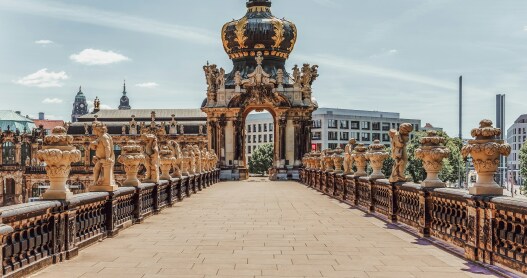
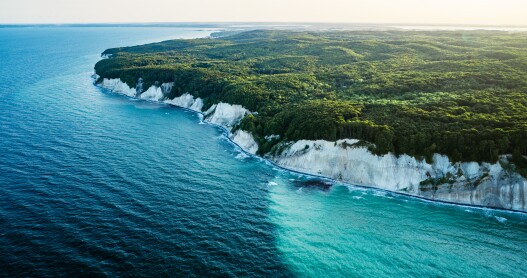
Vibrant urban culture vies with romantic landscapes throughout Germany. The major cities, especially Berlin, Hamburg, Cologne, and Munich, should not be missed, but smaller towns like Bayreuth, Weimar, Nuremburg, Dresden, Bamberg, and Lübeck are also attractive for their impressive architecture and charming atmospheres. Soaring cathedrals and grand palaces can be found across the country, while natural areas like the Black Forest, the Bavarian Alps, and the Baltic and North Sea coastlines provide an alluring mix of recreation and relaxation.

Practical Information

Americans and other non-E.U. citizens need a valid passport to visit Germany for less than 90 days, and a travel visa to stay longer. The local language is German, though the more urban the destination, the more English is spoken, especially among the younger generation. The currency is the euro, the voltage is 230 volts, and the socket type is F (round plugs with two round prongs).

Guide Editor

Paul Sullivan has lived in Berlin since 2008. In addition to running his local website, Slow Travel Berlin, he writes regularly on Berlin and Germany for international publications like The Guardian, The Telegraph, the Sunday Times, and the BBC, and has worked on Berlin and Germany guidebooks for publishers such as Fodors, DK, Rough Guides, Wallpaper, and more.
READ BEFORE YOU GO
HOTELS
Whether you’re a skier or an après-ski enthusiast, these 19 European hotels are ideal for a winter weather getaway.
After a careful two-year renovation, the historic Brenners Park-Hotel & Spa is stepping into a new era of wellness shaped by the surrounding Black Forest.
Around the world, breakfast is emerging as the moment when a luxury hotel’s ambition—and its core values—become most visible.
These women aren’t just breaking barriers. They’re building a more inclusive, dynamic future for hospitality—and your hotel experience will be the better for it.
These are the 24 hotels we recommend most for wellness.
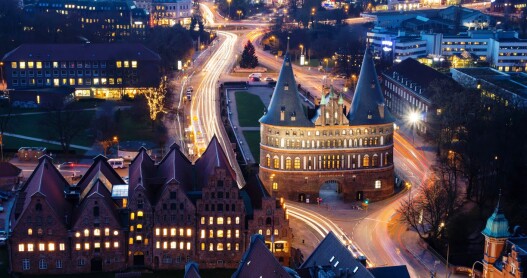
From rococo and baroque facades in Lübeck to Bauhaus in Weimar and Le Corbusier’s modernist neighborhood outside Stuttgart, Germany has a rich architectural history.
Descend into ancient mine shafts, visit skilled woodcarvers, soar to the top of eastern Germany’s highest mountain, and soak up the charm of historic towns.
From the protected Wadden Sea to the historic warehouse districts of Hamburg and beyond, a visit to the former Hanseatic League is a dream trip for sustainably minded travelers who love history.
Berlin is a masterpiece of urban planning, from the Museum Island at the heart of its walkable center to groundbreaking Modernism Housing Estates, plus epic parks and forests waiting just a stone’s throw away.
Explore rich religious traditions and outstanding architecture at the country’s most magnificent cathedrals and monasteries.
RESOURCES TO HELP PLAN YOUR TRIP
Munich’s Farmers’ Market, or “Viktualientmarkt,” is sure to please everybody. Located in Munich‘s old town, the open-air market is an overflowing abundance of fresh produce, cheese, appetizers, desserts, breads, honey, fresh-pressed juices, Bavarian specialties, spices, flowers, and more. It’s no wonder that the bustling, vibrant market attracts locals, tourists, and chefs shopping for the freshest ingredients. If you have been traveling through Germany eating bratwurst and potatoes daily, a farmers’ market picnic may be just what the doctor ordered. There are over 140 enticing stalls and shops, so the hardest part is deciding what to eat! Grab some crusty bread, stinky cheese, briny olives, and fresh strawberries and call it a day. If making decisions tires you out, you can relax with a Bavarian brew in the shaded beer garden next to the market. Open Monday-Saturday from 8am to 6pm.
Zum Dürnbraü, one of Munich‘s oldest restaurants, has been serving traditional Bavarian food since 1487. It has retained its popularity over the centuries by consistently delivering homeland classics while adding modern flavors. The restaurant is tucked away on a quiet side street in the heart of Munich, just 10 minutes from Marienplatz. Its main dining room looks like a typical Bavarian beer hall, but for those who seek a quiet daytime lunch spot, there is the very pretty and airy front garden. Bavarian specialities include wiener schnitzel, spaetzle with fried onions, duck with red cabbage, and roast pork marinated in dark beer. Zum Dürnbraü is also known for its pig knuckle, oxtail and ox tongue. Seeking lighter fare, I enjoyed a savory “Housewife Style” herring salad, with apples and potatoes in a sour cream sauce. It gets crowded during prime dining hours, so make a reservation or come for lunch.
Lenbachhaus is Munich‘s premier art gallery. It reopened in May 2013 after a four-year renovation of the original building (a late-19th-century Florentine-style villa for painter Franz von Lenbach), plus the addition of a modern wing designed by Norman Foster. The exterior of the new wing features striking, golden tubes. For Norman Foster fans, the museum’s new exterior is iconic—a beautiful play on color, pattern, and geometry. Try to see it at sunset, when the tubes are seemingly more golden, rich, and alluring. The Lenbachhaus redesign marries the old with the new, especially in the triple-height, sky-lit lobby atrium. Immediately upon stepping into the museum, your attention is drawn to what appears to be an enormous hanging icicle, which is in fact a specially commissioned work by Icelandic artist Olafur Eliasson called Wirbelwerk. The new wing serves as a “jewel box” for the museum’s best-known works, the “Blue Rider” collection of 20th-century Expressionist art. There is also a new garden and a restaurant with an outdoor terrace. With the addition of new galleries and a bold redesign, Lenbachhaus further cements its reputation as one of Bavaria’s leading cultural centers.
Glockenbachviertel, one of Munich‘s prettiest neighborhoods, is located south of the city center and next to the Isar River. Formerly home to the city’s Jewish community and millworkers, Glockenbachviertel was the center of Munich’s gay and lesbian community in the 1980s. In recent years, rapid gentrification has morphed this area into Munich’s most luxurious neighborhood. Quiet streets are lined with beautiful residential buildings and there are plenty of beautiful bars, restaurants, and shops. Take a stroll in the evening or do some shopping before dinner. Don’t miss Hans-Sachs-Straße and its fun boutiques, cafes, and bistros with outdoor seating. One of my favorite meals during my trip was at Das Kranz, a stylish restaurant that focuses on organic produce. The menu changes weekly to take advantage of seasonal, local ingredients. The flavors are fresh and the presentation is beautiful. The fun, relaxed atmosphere (with outdoor seating in summer) further adds to an enjoyable meal.
Bombed to smithereens during World War II, the Neues Museum—inaugurated in 1855—reopened in 2009 following a slow and sensitive reconstruction by the office of British architect David Chipperfield; both the building and its inspiring contents are well worth the visit. The current structure, featuring delicately restored frescoes, beautifully renovated columns and doors, and deliberately preserved war damage, won the prestigious Mies van der Rohe Award in 2011. The museum’s collections comprise thousands of ancient artifacts from the Egyptian Museum and Papyrus Collection, the Museum of Prehistory and Early History, and the Collection of Classical Antiquities. Highlights include a 3,300-year-old bust of Queen Nefertiti, the famous Neanderthal skull from Le Moustier in France, and Heinrich Schliemann’s collection of antiquities from Troy.
Described as serving eco-Bavarian delicacies, Milchhäusl is a rare find. The 100% organic, hearty local specialties at this charming park-side outpost are in high demand. You’ll find them near the main entrance to the English Garden—perfect after you’ve worked up an appetite exploring.
I’ve always dreamed of exploring the Amazon and I couldn’t imagine a better way than setting sail aboard the MV Aria. The second ship in Aqua Expeditions Amazon fleet, the MV Aria launched in 2011 and holds just 32 guests. Peruvian architect Jordi Puigi is responsible for the striking design. Each of the 16 cabins has floor to ceiling windows so guests can wake up to see the sunrise over the Amazon and if they are lucky, pink dolphins popping out of the water. The top deck has a bar that makes a great pisco sour, plus a hot tub where you can take in the bright stars at night. Guests can choose from three, four, or seven-night trips. The itinerary and the wildlife you will spot changes depending on the season and the water levels.
The Hotel Orphée, in the medieval city of Regensburg, oozes 19th-century French glamour. Centrally located to Regensburg’s cobblestone streets, local shops, restaurants, and small squares, it’s decorated in a Baroque palazzo style. Each large, reasonably priced room is styled differently, but nearly all feature antiques and four-poster beds. Also on-site is the Orphée Restaurant, a French bistro that’s been in operation since 1896. Surrounded by its authentic wood wainscotting, tin ceiling, old French posters, and overall patina, you’ll feel transported to a distinctly different era—a time when sitting in a small café, drinking wine and watching passersby, could be the grand plan of your day. Note: In the summer, the narrow streets surrounding the hotel get very noisy, so if you’re a light sleeper, this may not be the place for you.
Herrsching is a lovely, small town in Bavaria, Germany on Lake Ammersee, about 30 minutes southwest of Munich. It is perfect if you are seeking a relaxed day trip from Munich or a longer stay to unwind from the stresses of daily life. A former fishing village, the town’s current local population is 8,000 year-round and 13,000 in summer. Herrsching is popular for its easy access to watersports (sailing, swimming, paddleboarding, etc), hiking, biking and Andechs, the Benedictine monastery and brewery which is a popular day trip from Munich. The town has a quiet waterfront with a 5-mile promenade that offers a small section for lakeside dining - perfect in the summer months. Sitting by the water under the shady trees, it is the perfect environment to enjoy a romantic dinner in a simple, tranquil setting. For those seeking quiet and a laid-back atmosphere, Herrsching delivers.
In true Berlin fashion, flea markets are not hard to find. One of the newer fleas takes place every Sunday at Mauerpark. I arrived on the early side, around 10am, and the space was already buzzing with locals on the hunt for vintage items, second-hand bikes, and inexpensive clothes. I wandered aimlessly through the park for about an hour, just taking in the sights and sounds of the city. At 3 p.m., a live karaoke party breaks out. It’s the perfect place to release your inner diva. Both the U-Bahn and the S-Bahn stop at Schönhauser Allee, as does the M1 tram.