Germany

While Germany is well-known for its hearty food and beer, fairy-tale castles, and gorgeously preserved medieval towns, the country offers so much more than clichés. In addition to some of Europe’s most distinctive cities—Berlin, Munich, and Hamburg, to name a few—Germany features diverse natural scenery (scenic coastlines, mystical forests, soaring Alps), a heavyweight cultural legacy (including contributions from some of the world’s most famous philosophers and musicians), cutting-edge architecture, and celebrated contemporary art.

Germany-Guide.jpg

Photo by Felix Bruggemann

Overview

When’s the best time to go to Germany?

Summer is the ideal time to visit Germany. The country’s sunlit landscapes—crisscrossed with rivers, peppered with forests and lakes, and dotted with charismatic castles—are in full bloom, and its cities transform into outdoor playgrounds. Still, summer can bring crowds and expensive prices, so spring and autumn are attractive alternatives, helped along by a slew of major events like Munich’s famous Oktoberfest. Winter holds its own charms, especially for ski and snowboard fans, as well as for those who wish to visit Germany’s Christmas markets, which run from late November until December 23, or the Berlin International Film Festival in February.

How to get around Germany

There are over 40 airports spread across Germany, providing easy and convenient access to the country’s 16 federal states. Frankfurt am Main and Munich are the largest airports, followed by Düsseldorf, Berlin, Hamburg, Stuttgart, and Cologne Bonn. Once you’ve arrived in Germany, public transportation is generally excellent, with high-speed trains connecting all major cities as well as destinations across Europe. Some regions, like the Black Forest and Schleswig-Holstein, are more easily explored by car, but even there you can find buses and trains to get around.

Food and drink to try in Germany

Traditional German food is quite substantial—meat dishes like lamb, pork, and beef are popular, along with plenty of fish, rich sauces, and generous sides including potatoes, dumplings, and cabbage. Sausages are ubiquitous, and each region tends to have its own specialty. Be sure to try Rheinischer Sauerbraten (pot roast) in the North Rhine, spätzle (cheesy noodles) in the south, and quirky dishes like Handkäs mit Musik (pungent cheese topped with white onions) around Hesse. Contemporary German cuisine, on the other hand, often consists of lighter, updated versions of classics, and all the big cities offer a diverse range of international food.

Beer, of course, is a trademark of Germany, including the mixed drink Radler (beer with lemonade or any variation of juice), which is popular during the summer. In winter, sipping a steaming mug of Glühwein (mulled wine with spices) is recommended.

Culture in Germany

Germany is often referred to as Das Land der Dichter und Denker (The Country of Poets and Thinkers), which gives more than a clue as to its intellectual and cultural prowess. Famed for its contributions to everything from philosophy and literature to music and art, the country has produced many luminaries known worldwide by their surnames alone: Goethe, Bach, Hegel, Beuys, Hesse, Wagner, Mozart, among them. Germany’s contemporary cultural scene is just as dynamic, as evidenced by an annual calendar of events like the world-renowned Berlin International Film Festival and the Documenta art exhibition in Kassel.

Can’t miss things to do in Germany

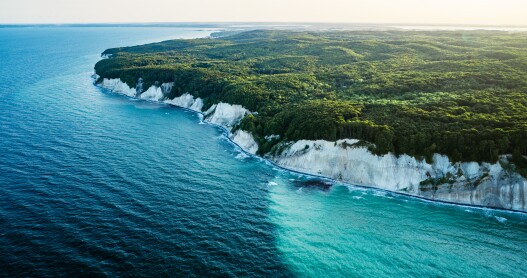
Vibrant urban culture vies with romantic landscapes throughout Germany. The major cities, especially Berlin, Hamburg, Cologne, and Munich, should not be missed, but smaller towns like Bayreuth, Weimar, Nuremburg, Dresden, Bamberg, and Lübeck are also attractive for their impressive architecture and charming atmospheres. Soaring cathedrals and grand palaces can be found across the country, while natural areas like the Black Forest, the Bavarian Alps, and the Baltic and North Sea coastlines provide an alluring mix of recreation and relaxation.

Practical Information

Americans and other non-E.U. citizens need a valid passport to visit Germany for less than 90 days, and a travel visa to stay longer. The local language is German, though the more urban the destination, the more English is spoken, especially among the younger generation. The currency is the euro, the voltage is 230 volts, and the socket type is F (round plugs with two round prongs).

Guide Editor

Paul Sullivan has lived in Berlin since 2008. In addition to running his local website, Slow Travel Berlin, he writes regularly on Berlin and Germany for international publications like The Guardian, The Telegraph, the Sunday Times, and the BBC, and has worked on Berlin and Germany guidebooks for publishers such as Fodors, DK, Rough Guides, Wallpaper, and more.
READ BEFORE YOU GO
HOTELS
Whether you’re a skier or an après-ski enthusiast, these 19 European hotels are ideal for a winter weather getaway.
After a careful two-year renovation, the historic Brenners Park-Hotel & Spa is stepping into a new era of wellness shaped by the surrounding Black Forest.
Around the world, breakfast is emerging as the moment when a luxury hotel’s ambition—and its core values—become most visible.
These women aren’t just breaking barriers. They’re building a more inclusive, dynamic future for hospitality—and your hotel experience will be the better for it.
These are the 24 hotels we recommend most for wellness.
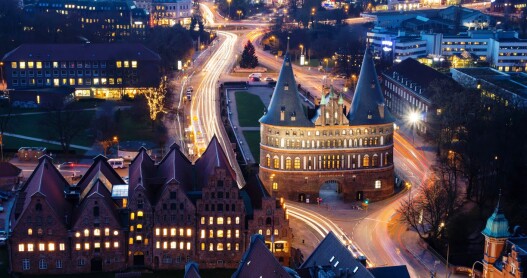
From rococo and baroque facades in Lübeck to Bauhaus in Weimar and Le Corbusier’s modernist neighborhood outside Stuttgart, Germany has a rich architectural history.
Descend into ancient mine shafts, visit skilled woodcarvers, soar to the top of eastern Germany’s highest mountain, and soak up the charm of historic towns.
From the protected Wadden Sea to the historic warehouse districts of Hamburg and beyond, a visit to the former Hanseatic League is a dream trip for sustainably minded travelers who love history.
Berlin is a masterpiece of urban planning, from the Museum Island at the heart of its walkable center to groundbreaking Modernism Housing Estates, plus epic parks and forests waiting just a stone’s throw away.
Explore rich religious traditions and outstanding architecture at the country’s most magnificent cathedrals and monasteries.
RESOURCES TO HELP PLAN YOUR TRIP
The largest department store in continental Europe, Kaufhaus des Westens (usually abbreviated as simply KaDeWe) is over a century old and a must for any shopper visiting Berlin. After being largely destroyed in World War II, its reopening in 1950 was not only an important shopping moment but a propaganda one too, an embodiment of the prosperity of West Berlin. Regardless of its Cold War significance, the sixth-floor food hall provides an unforgettable culinary experience with a chance to sample the best German and international products.
Set in the former headquarters of a 19th-century bank, Hotel de Rome forms a major part of Bebelplatz, the historic square best known as the site of the Nazis’ infamous book burning in 1933. Across from the stately Opera House and the equally handsome Humboldt University, the hotel has retained the bank’s neoclassical exterior. Parts of the interior are original, too, most notably an elegant staircase that winds up to the fourth floor (the first three floors are also original), and the former bank vault, which has been transformed into a spa that is accessed via the vault’s original steel door. The high-ceilinged guestrooms and suites are suitably sumptuous, with marble in the bathroom and furnishings of mahogany; the color palettes, however, were devised by designers Olga Polizzi and Tommaso Ziffer and are ultra-contemporary. The hotel also has a swanky restaurant, a popular cocktail bar, and a rooftop patio with splendid views of Bebelplatz and the city beyond.
Looming over one of central Berlin’s most vibrant intersections, this restored Bauhaus building with its distinctive 1920s curved facade was transformed in 2010 into the Berlin outpost of the glamorous Soho House hotel and private members brand. The building has heaps of history, having started as a Jewish-owned department store before being taken over by the Nazis and then occupied by the Communist regime for archival purposes.

Today, it’s one of Mitte’s foremost havens of hip, offering quirkily decorated rooms that mix vintage with contemporary design tropes—think Marshall speakers and old-school record players, floral armchairs, and art deco bathtubs. The lofts are even more astonishing, both for their capacious size and their industrial-chic aesthetic—some come with grand pianos and foosball tables. The hotel also has a rooftop pool and adjacent bar with views of Alexanderplatz, a concept retail area, a private cinema and library room with a bar that hosts occasional events open to the public, an in-house restaurant, and a Cowshed spa that’s a popular destination in its own right.
An enviable location in the quietly upscale embassy quarter on the edge of sprawling Tiergarten Park is only part of SO Berlin Das Stue’s appeal. Occupying a graceful, gray-stone 1930s building that once housed the Danish embassy, the hotel features soothing, sophisticated interiors by Spanish architect Patricia Urquiola, who decorated the public areas with animal sculptures—a reference to the neighboring zoo—and colorful, comfortable furnishings. Two original travertine staircases lead up to the 78 rooms and suites, which offer a blend of modern conveniences (rain showers, HD entertainment systems, and iMacs in each room) and considered design touches (black-and-white fashion photographs, hardwood floors, sliding walls, handle-less cupboards), plus views of either the park or the zoo. Guests can enjoy the hotel’s glamorous work and relaxation areas—some with libraries of books on art and design, fashion, and architecture—as well as a spa offering holistic Susanne Kaufmann treatments, and a fitness center with an indoor swimming pool and Finnish sauna. The new staff uniforms come from Viktor & Rolf. Dining options include a chic bar serving light bites (and live music every other Friday); The Casual, offering all-day shareable plates both indoors and out; and the Michelin-starred, Mediterranean-accented Cinco from chef Paco Pérez. A newer wing, designed by Axthelm Architects, features rooms with more direct views of the zoo—which hotel guests can access via the terrace’s exclusive private entrance.
Run by the famous Spanish shoe brand, Casa Camper is a stylish boutique hotel neatly situated in the middle of Mitte’s hip fashion and culture district. Designed by Jordi Tió and Fernando Amat—the founder of Barcelona’s iconic design store Vinçon—the devilishly good-looking interior is defined by clean lines and striking furniture set against rust-red walls. The rooms are deliberately minimal, with wooden floors and slick designer furnishings, but are decidedly comfortable and include eco-friendly touches such as water-recycling showers. Instead of an in-room minibar concept, the hotel offers a 24-hour buffet that is free for guests. Plus, the hotel’s prime location ensures easy access to the swanky drinking, dining, and shopping options in the neighborhood.
The Hotel Adlon Kempinski undoubtedly boasts the most distinguished location in the city—right on historic Pariser Platz, opposite the Brandenburg Gate. The original incarnation opened in 1907 with the blessing of none other than Kaiser Wilhelm II. Despite playing host to such illustrious guests as Tsar Nicholas II, Albert Einstein, and Franklin Roosevelt, the building was almost destroyed after World War II. A new hotel was eventually opened in 1997 and continues to draw celebrities, politicians, and the occasional aristocrat—in 2002, it was here that Michael Jackson notoriously dangled his nine-month-old son out the window.

Needless to say, the hotel is the last word in stately—if somewhat conservative—luxury, as heralded by its glamorous, balconied lobby, which greets guests with the sounds of live piano and a trickling fountain. The sumptuous rooms come with marble bathrooms, full-size work desks, and entertainment centers; the three restaurants include the two-Michelin-starred Lorenz Adlon Esszimmer, serving classic European dishes such as braised shoulder of lamb (there’s a four-week waitlist for reservations, so plan accordingly). A luxury spa and a range of boutiques offering everything from fine wines to jewelry to porcelain are also on-site.
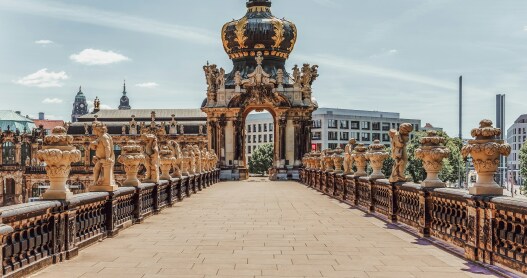
Dresden’s architectural and cultural highlight, the Zwinger was commissioned by Augustus the Strong and built between 1710 and 1728 by architect Matthäus Pöppelmann in cooperation with the sculptor Balthasar Permoser. Originally designed as an orangery and setting for court festivities, it’s one of the best examples of late Italian Baroque architecture in Germany. Today, its cultural treasures are immense, ranging from the two-floor Semper Gallery (full of Old Master paintings, including Raphael’s Sistine Madonna) to a royal porcelain collection with Chinese, Japanese, and Meissen examples. Visitors will also find a Museum of Mathematics and Physics (with antique sextants and globes), the Nymphs’ Bath (one of Europe’s most beautiful Baroque fountains), and a gilded gate flanked by long, arched galleries. The venue also hosts musical and theater performances, among other events.
This club, housed in an old industrial warehouse, does not look unlike a mental ward and, inside, has as many fascinating levels as an Escher drawing. To dance with a sea of the coolest kids in Berlin (and Europe for that matter—it’s a landmark destination for partiers across Europe), stay on the ground floor. For a smaller scene, head to the top floor, which gradually attracts a more queer crowd as the weekend goes on. That’s the other thing: it’s only open from Friday until Monday morning. Wear plain clothes and no smile to get past the doorman. If at first you don’t succeed, come back on Sunday nights when the line is shorter and the bouncers are known to be less prickly.
Piranha fishing...pink dolphin sightings...holding a caimen...beautiful day explorations by skiff and canoe along the Ucayali River and in the Pacaya Samiria National Reserve. Add to jaw-dropping explorations, the 5-star comfort of the Aqua Amazon with large, comfortable and well-designed, air-conditioned staterooms with picture windows allowing the world to float by as you relax, showers big enough for two, great cuisine, and an amazing staff—as well as congenial company on board in an intimate, yet spacious, cruise. Just 12 cabins means no crowds, just fun at mealtimes and in the salon/bar. Excellent, knowledgeable river guides are from the Amazon—so they know it, and the wildlife, intimately.
If your main goal is picking up some lovely Peruvian-made handicrafts, fashion and other local delights, Centro Comercial Larcomar is one of Peru’s loveliest shopping malls, sitting on prime cliff-top real estate, just above the sea. You can find outlets of several of the city’s best handicraft shops, high-end clothing boutiques and a wide array of great restaurants, all located just beyond the lovely Parque Salazar, a cherished coast-hugging green space in Miraflores. Visiting both makes for an easy afternoon.