Copenhagen

Like Paris in the 1920s, and San Francisco in the 1960s, Copenhagen is the city for our time. A hub for green innovation (with a pledge to become carbon neutral by 2025), Copenhagen has also mastered the zeitgeist—consider its cutting-edge architecture, its renowned restaurants and design shops, and its entirely disproportionate number of natural wine bars. Successive waves of immigration—from Turkish workers in the 1970s to Berkeley baristas in the 2010s—have made it Scandinavia’s most cosmopolitan city, but as the biking culture, harbor swimming, and proliferation of good bakeries attest, it retains its essential Danishness.

peter-lloyd-yGFdovJATMc-unsplash.jpg

Photo by Peter Lloyd/Unsplash

Overview

When’s the best time to go to Copenhagen?

Definitely summer. Not only are the days longer—the sun won’t set until close to 11 p.m.—but warmer temperatures and sunnier weather turn the city into a party as Copenhageners spill out in droves to eat lunch in outdoor cafés, watch movies in the park, and drink wine on the city’s many quays. That said, winter has its own charms, whether it’s drinking hot glögg at one of the many Christmas markets or exercising one’s inner Viking by bathing in the frigid harbor.

How to get around Copenhagen

Copenhagen is one of the most bike-friendly cities in the world (everything, from the timed traffic lights to the angled curbside trash cans, is built accordingly), and cycling is without a doubt the most convenient way to get around town. The city’s historic core is very walkable, and a leisurely stroll is a great way to see Copenhagen. Interconnected subways, buses, and S-trains use a common fare structure, and the subway is automated and runs regularly through the night. There’s no Uber, but between bikes and the all-night metro system, you shouldn’t need one.

Can’t miss things to do in Copenhagen

Bordered by two lovely parks, the area between Kongens Have and Kastellet is one of the city’s most adorable, with long, ochre-colored rows of houses, some excellent cafés, and two small museums—the David Collection (a selection of Islamic, Danish, and European art) and the Museum of the Resistance (which traces the Dutch response to the Nazis)—that deserve more attention than they get.

Cemeteries here double as parks, and Assistens Kirkegård, in the center of Nørrebro, is an especially nice place for a stroll or picnic (as well as for checking out the graves of its two most famous residents: H.C. Andersen and Søren Kierkegaard).

Refshaleøen, once home to the city’s shipyards, today embodies some of the best the city has to offer: including the green-energy power plant, dubbed Copenhill, that also serves as a ski slope and climbing wall; the dockside natural wine bar La Banchina; the laid-back Copenhagen Contemporary art museum; and the seasonal (spring through fall) outdoor street food market, Reffen.

About half an hour by train from Copenhagen, Roskilde is home to one of Europe’s great music festivals (June 25–July 2, 2022)—a rite of passage for nearly every young Dane. But Distortion, held a few weeks earlier (June 1–5, 2022), takes place right in the heart of the capital. The acts may not be quite as well known, but the urban setting adds its own energy.

Food and drink to try in Copenhagen

Getting a table at Noma, or Copenhagen’s other top-ranked restaurants, Geranium and Alchemist, takes considerable advance work and more than a little luck. Keep an eye on their Instagram accounts for news of when they open reservations (usually a few months in advance) and any last-minute cancellations.

Smørrebrød, the open-faced sandwich that is Denmark’s primary culinary invention, is only eaten at lunch in restaurants. Order two or three pieces, starting with fish (especially herring) and/or vegetables, before moving to chicken, pork, or beef. Akvavit, a distilled liquor, is the traditional accompaniment, though you can get away with beer if you don’t want to have to take the rest of the day off.

Danes are pastry-loving people. The buttery cinnamon and cardamom buns that scent the city are outstanding, but for something more uniquely Danish, try tebirkes (a marzipan-filled pastry topped with poppy seeds), the iced jam-filled cookies called hindbaersnitte, or the brown-sugar topped cake brunsviger.

Culture in Copenhagen

Look closely enough, and you’ll see that Copenhagen’s appeal rests on a split personality. On the one hand, there’s all that traditional Danish stuff: the cute houses and cobblestone streets of the historic center; an embrace of nature that probably dates back to the Vikings; and a degree of hygge conformity that manifests in a love of candles and oversized scarves. But thanks to immigration in the past few decades, the city is far more diverse than many other Nordic capitals. That vibrancy is especially palpable in Nørrebro, where shawarma joints push up against craft breweries, and in Vesterbro, where avant-garde galleries and 3rd (or is it 12th?)-wave coffee roasters share the streets with Asian and American (North and South) restaurants.

Danes take their festivals seriously, and with a multitude of parks and open spaces, the city’s design encourages people to mingle. Copenhagen has fantastic summer and winter jazz festivals as well as a citywide opera festival. Other key music events include the iconic Roskilde Festival, the heavy metal festival Copenhell, and Distortion—a sprawling music fest and street party that rotates through several neighborhoods. Non-music options include Copenhagen Cooking, Pride, and numerous film festivals including CPH:DOX and CPH:PIX.

Local travel tips for Copenhagen

Instead of joining the big open-air boats that offer city tours by water, locals take a DIY approach, renting a small GoBoat, stocking it with wine and snacks, and sailing themselves through the city’s canals and harbor.

Copenhageners take traffic laws seriously, regardless of the means of transportation. Expect a scolding if you fail to signal before stopping on your bike, or if you walk across the street against the light.

Local tip: Frederiksberg Have, the lush gardens north and west of Vesterbro, back directly onto the city zoo and offer free viewing of the elephant enclosure.

Yes, they bike in the rain and cold. As any Scandinavian will tell you, there’s no such thing as bad weather, only bad clothing

Practical Information

Travelers to Denmark are required to have a passport that is valid at least 6 months past the time of their departure. Electric plugs are types E and K, so travelers from the U.S. and Canada will need an adapter. The current is 230V, so appliances such as hairdryers will require a converter. Denmark’s official currency is the krone; even so, the euro is widely accepted, especially in the larger cities (though they aren’t required to do so). The official language is Danish, but nearly 90 percent of the population are fluent in English; German is widely spoken, too.

READ BEFORE YOU GO
HOTELS
This 1918 mansion in the Danish capital’s posh Østerbro neighborhood has been given new life as a private villa with seven bedrooms and bespoke amenities.
There are some exciting new developments in the Danish capital’s hotel scene. Here’s where to stay on your next trip.
2020 shows no sign of slowing down when it comes to luxury hotel openings. Here are 6 openings that I am especially excited about, plus a rundown of what other important brands are up to, highlighted at ILTM Cannes this month.
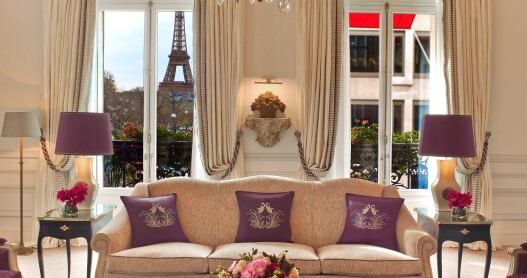
There’s nothing dreamier than a room with a view, and these luxurious hotels are perfectly positioned to give you the best views of some of Europe’s most memorable sights.
RESOURCES TO HELP PLAN YOUR TRIP
Great design is everywhere you look in Denmark—in shops, in homes, in public spaces—and the creativity of its people has long been a source of national pride. This museum, located just around the corner from Amalienborg, was founded in 1890, many decades before midcentury modern became an international sensation. It looks at the history of Danish design over the centuries, taking in everything from furniture to fashion to textiles.
Situated in a position that allows Amalienborg to beautifully frame it, Frederiks Kirke, more commonly referenced as the Marble Church, adds to the beauty of the palatial complex. Started in 1749, the church wasn’t completed until 1894 and sports the largest dome in Scandinavia and one of the largest domes in Europe. While simple, it is well worth a visit and has a beautiful interior with a wonderful dome. While the cathedral itself is interesting, the best part of the church is actually the hardest to get to. Available twice a day, a guide offers trips up to the overlook above the dome. This is worth it for two reasons. First, the view out over Amalienborg Palace and the harbor towards the Opera house is fantastic and not something you’ll see many photos of. Second, the path to the overlook actually takes you inside and above the dome. So, you’ll get to see the void between the interior of the inner dome, and the exterior dome. Even more, you’ll climb stairs that wrap over it—a fun thought when you consider what’s just a few feet below you!
Walking along the winding streets of central Copenhagen, you will invariable chance upon the 17th-century Round Tower, with an observation deck that affords great views over the city and to Sweden in the distance. To reach the top, you walk up an interior spiral ramp with no stairs, designed to allow horses and carts in earlier times to ascend to the library and observatory, and today kids have great fun racing up and down the cobbles. The tower is also the site of an annual unicycle race. The record round-trip time so far: just under one minute 50 seconds.
I absolutely love the interior courtyard of Christiansborg Palace. It is the type of place that seems straight out of a Disney fairy tale. Stand in the courtyard and close your eyes, imagining carriages, lanterns, and a steady stream of affluent Danes attending a grand ball—it’s a magical place. Started in 1733, the palace was completed in its present form in 1928. Over the years various stages were added and expanded in response to fire damage, periods of prosperity, and the latest design trends. The Palace currently serves as the seat of the Danish Parliament, the Prime Minister’s Office, the Supreme Court, The Royal Reception Rooms, and the Royal Stables which are the reason that the middle of the inner courtyard is a large dirt space (still used as part of the Royal Stables). You can access the ruins from the previous castle through the Christiansborg Palace museum.
Copenhagen’s pedestrian-only shopping street, Strøget, stretches from the city square (Radhusplasn) to Nyhavn (Kongens Nytorv) and is lined by shops, cafes, department stores and restaurants. Walking the street from end to end is an absolute must as part of any visit to Copenhagen. Set aside some extra time to enjoy the street performers and skilled buskers that line the street year-round.
Copenhagen in August is amazing. Hundreds of thousands of folks chilling on the canals, soaking up the vitamin D.
Built in the Gothic Revival style, many locals feel that this is Copenhagen‘s most elegant church. With its multi-hued design, sharp lines, and picturesque location overlooking Kastellet’s moat the “English Church” can be quite enchanting. Situated immediately next to the church is the Gefion fountain which depicts the Gefjun (Norse mythology) riding in a chariot pulled by giant animals. Designed by Anders Bundgaard, the fountain is dramatic and features spraying water which leaves you feeling as though Gefjun is in motion while in the midst of a raging stream.
While the little mermaid is good for what she is, just about everyone who sees her finds her...well...small. It shouldn’t be a surprise for something that is quite literally called the LITTLE mermaid, but somehow she often still disappoints. What makes the trip out to see her well worthwhile, however, is Kastellet, which is located immediately behind her. This star fortress dates back to the 1600s, still serves as an active military complex, and is one of the best preserved star fortresses left in Europe. No matter what time of year it is, a walk along the fortress’s ramparts is well worth it. The views over the canals are gorgeous, and there are a number of old canons left lying about for photos. You’ll also find one of Copenhagen‘s only remaining windmills. Don’t just explore the ramparts, also head down and look at the historic buildings that fill the interior of the fortress. With their brightly colored paint, tiny windows, and age-weary walls, they’re perfect for a photo.
A great relaxed wine bar with a wine happy hour which is extremely popular. There’s a nice wine selection which stretches beyond the bar’s namesake wine, a quirky interior atmosphere, and a very relaxed environment. This isn’t the type of wine bar you have to put a jacket on for, which makes it a perfect fit for Vesterbro and a huge hit among locals. This is the sister location to Malbeck Vinoteria, located in Norrebro. Photo: Malbeck Vinbar
Danish tobacco dominates the pipe tobacco scene and can be found in shops all over the world. As part of this tradition, Denmark also has a number of extremely skilled pipe artisans who craft handmade Danish pipes. The Danish Pipe Shop is staffed by incredibly friendly folks and has a team of knowledgeable staff eager to discuss the craft of pipe smoking, how pipes differ, and which tobacco they recommend. Prices range from cheap budget pipes (less than US$40) to high-end pipes costing hundreds of dollars. Even if you’re not a smoker, with its walls lined with widely varied pipes it is a great place to pop into for a look around.