Germany

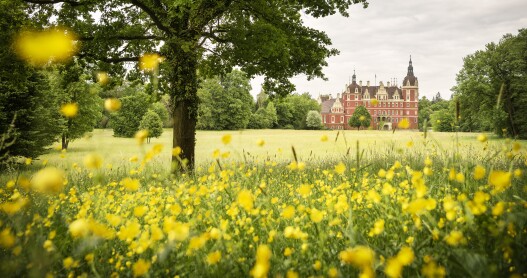
While Germany is well-known for its hearty food and beer, fairy-tale castles, and gorgeously preserved medieval towns, the country offers so much more than clichés. In addition to some of Europe’s most distinctive cities—Berlin, Munich, and Hamburg, to name a few—Germany features diverse natural scenery (scenic coastlines, mystical forests, soaring Alps), a heavyweight cultural legacy (including contributions from some of the world’s most famous philosophers and musicians), cutting-edge architecture, and celebrated contemporary art.

Germany-Guide.jpg

Photo by Felix Bruggemann

Overview

When’s the best time to go to Germany?

Summer is the ideal time to visit Germany. The country’s sunlit landscapes—crisscrossed with rivers, peppered with forests and lakes, and dotted with charismatic castles—are in full bloom, and its cities transform into outdoor playgrounds. Still, summer can bring crowds and expensive prices, so spring and autumn are attractive alternatives, helped along by a slew of major events like Munich’s famous Oktoberfest. Winter holds its own charms, especially for ski and snowboard fans, as well as for those who wish to visit Germany’s Christmas markets, which run from late November until December 23, or the Berlin International Film Festival in February.

How to get around Germany

There are over 40 airports spread across Germany, providing easy and convenient access to the country’s 16 federal states. Frankfurt am Main and Munich are the largest airports, followed by Düsseldorf, Berlin, Hamburg, Stuttgart, and Cologne Bonn. Once you’ve arrived in Germany, public transportation is generally excellent, with high-speed trains connecting all major cities as well as destinations across Europe. Some regions, like the Black Forest and Schleswig-Holstein, are more easily explored by car, but even there you can find buses and trains to get around.

Food and drink to try in Germany

Traditional German food is quite substantial—meat dishes like lamb, pork, and beef are popular, along with plenty of fish, rich sauces, and generous sides including potatoes, dumplings, and cabbage. Sausages are ubiquitous, and each region tends to have its own specialty. Be sure to try Rheinischer Sauerbraten (pot roast) in the North Rhine, spätzle (cheesy noodles) in the south, and quirky dishes like Handkäs mit Musik (pungent cheese topped with white onions) around Hesse. Contemporary German cuisine, on the other hand, often consists of lighter, updated versions of classics, and all the big cities offer a diverse range of international food.

Beer, of course, is a trademark of Germany, including the mixed drink Radler (beer with lemonade or any variation of juice), which is popular during the summer. In winter, sipping a steaming mug of Glühwein (mulled wine with spices) is recommended.

Culture in Germany

Germany is often referred to as Das Land der Dichter und Denker (The Country of Poets and Thinkers), which gives more than a clue as to its intellectual and cultural prowess. Famed for its contributions to everything from philosophy and literature to music and art, the country has produced many luminaries known worldwide by their surnames alone: Goethe, Bach, Hegel, Beuys, Hesse, Wagner, Mozart, among them. Germany’s contemporary cultural scene is just as dynamic, as evidenced by an annual calendar of events like the world-renowned Berlin International Film Festival and the Documenta art exhibition in Kassel.

Can’t miss things to do in Germany

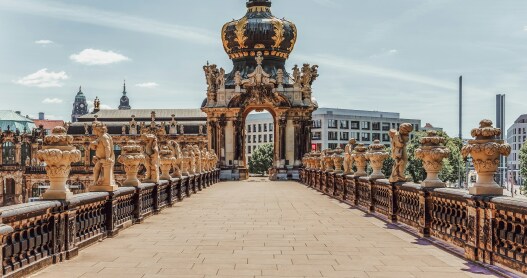
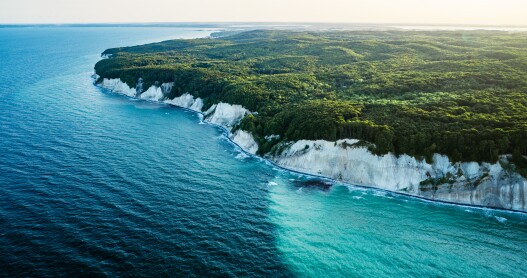
Vibrant urban culture vies with romantic landscapes throughout Germany. The major cities, especially Berlin, Hamburg, Cologne, and Munich, should not be missed, but smaller towns like Bayreuth, Weimar, Nuremburg, Dresden, Bamberg, and Lübeck are also attractive for their impressive architecture and charming atmospheres. Soaring cathedrals and grand palaces can be found across the country, while natural areas like the Black Forest, the Bavarian Alps, and the Baltic and North Sea coastlines provide an alluring mix of recreation and relaxation.

Practical Information

Americans and other non-E.U. citizens need a valid passport to visit Germany for less than 90 days, and a travel visa to stay longer. The local language is German, though the more urban the destination, the more English is spoken, especially among the younger generation. The currency is the euro, the voltage is 230 volts, and the socket type is F (round plugs with two round prongs).

Guide Editor

Paul Sullivan has lived in Berlin since 2008. In addition to running his local website, Slow Travel Berlin, he writes regularly on Berlin and Germany for international publications like The Guardian, The Telegraph, the Sunday Times, and the BBC, and has worked on Berlin and Germany guidebooks for publishers such as Fodors, DK, Rough Guides, Wallpaper, and more.
READ BEFORE YOU GO
HOTELS
Whether you’re a skier or an après-ski enthusiast, these 19 European hotels are ideal for a winter weather getaway.
After a careful two-year renovation, the historic Brenners Park-Hotel & Spa is stepping into a new era of wellness shaped by the surrounding Black Forest.
Around the world, breakfast is emerging as the moment when a luxury hotel’s ambition—and its core values—become most visible.
These women aren’t just breaking barriers. They’re building a more inclusive, dynamic future for hospitality—and your hotel experience will be the better for it.
These are the 24 hotels we recommend most for wellness.
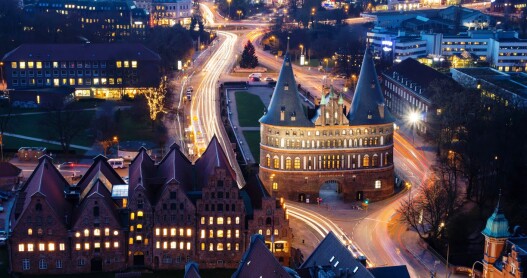
From rococo and baroque facades in Lübeck to Bauhaus in Weimar and Le Corbusier’s modernist neighborhood outside Stuttgart, Germany has a rich architectural history.
Descend into ancient mine shafts, visit skilled woodcarvers, soar to the top of eastern Germany’s highest mountain, and soak up the charm of historic towns.
From the protected Wadden Sea to the historic warehouse districts of Hamburg and beyond, a visit to the former Hanseatic League is a dream trip for sustainably minded travelers who love history.
Berlin is a masterpiece of urban planning, from the Museum Island at the heart of its walkable center to groundbreaking Modernism Housing Estates, plus epic parks and forests waiting just a stone’s throw away.
Explore rich religious traditions and outstanding architecture at the country’s most magnificent cathedrals and monasteries.
RESOURCES TO HELP PLAN YOUR TRIP
One of the most enjoyable things you can do in Munich is sit down at a bench in one of the many beautiful beer gardens, which serve as familiar gathering points for locals, friends, and visitors alike. The beer is top-notch, and the atmosphere warm and friendly—it’s impossible not to have a good time. The second largest beer garden in Munich is under a tall pagoda, the Chinesischer Turm, set against the beautiful backdrop of the Englisher Garten. Used under a [Creative Commons Attribution license|http://creativecommons.org/licenses/by/2.0/].
I would compare Marienplatz to the Grand Place in Brussels, but with a Bavarian twist. The square in Munich is almost as large, and its town hall just as impressive. A beautiful destination for lovers of architecture. While the square itself is a beautiful and lively hub, be sure to checkout the market nearby for authentic goods!
Germans, especially Bavarians (who are or are not Germans, depending on whom you talk to) love eating their meat and potatoes. While there, I went for a giant joint of pork with kartoffel (potato) salad. Nobody does fresh potato salad better. Sure, the famous Hofbrauhaus in Munich is a great place to sit with friends and try to avoid spraining your wrist as you suck down liter glasses of beer, but it’s also a great place to eat. Filling up helps you enjoy the beer even more and fights off the eventual intoxication as well.
This is one of the most hectic and lively courtyards in Berlin. Located in Mitte, it is named after the Hackeschen Market, which is across the street. As in many of Berlin’s courtyards, the building complex around it consists of offices, businesses, factories, and apartment buildings. In this specific one sits a well-known movie theater, which makes it even busier. As this was the first courtyard and quite successful, today there are eight other courtyards between Rosenthal and the Sophienstraße. All around the courtyards, you’ll find numerous bars, restaurants, and clubs. The area has become one of the coolest places to go at night.
The tree limbs were heavy with freshly fallen snow, providing a peaceful backdrop to this entirely eerie place. I had made my way outside Berlin, to the little community of Beelitz on this snowy Easter weekend, to photograph Beelitz Heilstätten, a sanatorium for tuberculosis treatment methods in the early 20th century. I took the photo tour to the women’s section of the sanatorium, and we were able to walk around the snowy grounds and inside three main buildings and photograph to our heart’s content. I love these tours, since they are a great setting to practice with lighting and composition. The tour information was provided only in German, but there were enough people there to translate for me. And honestly, I was there to do photography, so I didn’t need much guidance. The leader simply gives an overview of the history, buildings, and things to be careful of, or special things to see; he hands you a blueprint layout of the buildings; and then you are own your own for 4-5 hours to explore! The ultimate photography tour, if you ask me! More information: http://www.ottsworld.com/blogs/berlin-photo-tours/
Huayna Picchu is the landmark peak at Machu Picchu from which the classic, shot-from-above postcard photos are typically taken. While the views are spectacular, of course, the trail is not easy, studded with precarious, sometimes uneven stone steps, and often directly flanked by sheer drop-offs (thus probably out of the question for anyone with a fear of heights). While most hike to the top and back, you can also go up and around to the other side, with a visit to the Temple of the Moon/Great Cavern along the way. Admittance to Huayna Picchu is limited and sells out two or three months in advance; pay for your entrance as part of your Machu Picchu admission.
Tours of the Sacred Valley, and the entire Cuzco area, often feature side trips through gorgeous landscapes like Moray, an archaeological site with remarkable concentric agricultural terraces. It’s believed the Incas used these terraces—on which temperatures vary 59 degrees Fahrenheit from the top tier to the bottom—as a way to acclimatize non-regional crops for highland cultivation. Even if you don’t find that fascinating, it’s hard not to appreciate the beauty of the spot, and given that this part of Peru is not so heavily visited, it’s a nice escape from the beaten path. The Boleto Turístico covers this admission.
Blink and you’ll miss this tiny Indian-run eatery serving eclectic international fare between Mitte and Prenzlauer Allee along the trendy Kastanienallee. Notable for its upside-down McDonald’s sign (hence the “W” in the name; Der Imbiss means “The Snack”), the restaurant consists of a service window and a few brightly colored tables, and has quirky Hawaiian and African decor. The food is not only cheap and tasty but also healthy and diverse, pulling off an ambitious mix of Mexican, Californian, Indian, and Italian influences. It’s most famous for naan pizzas—Indian naan breads baked in the venue’s tandoor, with pizza-esque toppings from olives and cheese to artichokes and salmon. The menu also includes filling Indian thali platters, soups and salads, and Mexican-style wraps.
Visiting at least one of the five museums that make up Museum Island, a UNESCO World Heritage site, is a must for any serious culture-seeker in Berlin. A pioneering concept, this ensemble of public institutions brimming with exquisite artworks and historical artifacts traces its origin back to 1810 and King Friedrich Wilhelm III’s decision to open a museum for his personal collection of royal treasures. Today, the original Altes Museum—located opposite the former Royal Palace—is joined by the Pergamon Museum, with its jaw-dropping Middle Eastern antiquities; the Neues Museum and its treasures from ancient Egypt; the Alte Nationalgalerie’s collection of 19th-century European masters; and the Bode Museum, which hosts one of Europe’s most important sculpture collections.
The Westin brand’s first foray into South America was, at least when it opened in 2011, the tallest building in all of Peru. That distinction has since been taken over by the Edificio Banco Continental (BBVA) nearby, but the glass-and-steel tower designed by Peruvian-born, Miami-based architect Bernardo Fort-Brescia stands over one of the busiest intersections in the city, and is still one of Lima’s most recognizable landmarks. While it was designed primarily to fit the needs of the growing number of high-end business travelers (the largest convention center in the city is attached to the hotel), the high-profile team, including interior designer Tony Chi, added on artfully modern touches. The striking interiors incorporate pre-Colombian motifs and gold, silver, and bronze finishes. The hotel is a hub of activity, with a full-service spa and high-end shopping, plus a lobby bar and lounges that serve as impromptu meeting spaces.