Paris

A hub for hedonists, a wellspring of inspiration for artists, and a haven for history buffs: Paris is a fantasy destination for millions of travelers each year. The storied bakeries, iconic museums, and corner cafés feel anchored in another time, but the zeitgeist of the city leans forward into a dynamic, multicultural food scene dominated by young French and foreign talents. It is precisely this juxtaposition of old and new that makes Paris the perpetually perfect place to visit. So go exploring, get lost, eat until your belly hurts—and then do it all over again. The City of Light shines on.

Paris-filip-mishevski-eZ2aHgA6Xds-unsplash.jpg

Photo by Filip Mishevski/Unsplash

Overview

When’s the best time to go to Paris?

You’re likely to be disappointed if you arrive expecting the image of springtime in Paris that you see in Hollywood films. In the last several years, the months between April and June have reported below-average temperatures and record-high precipitation—a far cry from the endless days of sunshine in the movies. The weather is wholly unreliable, which foils many travelers’ ambitions for a dry early-season trip. Late summer and early fall typically yield the warmest sojourns (though the summers in general appear to be getting warmer), plus this is when Paris is most culturally active, unveiling new exhibits and welcoming the return of the some of the most anticipated festivals. December and January provide a more festive experience, with Christmas markets lining the well-heeled boulevards and twinkling lights illuminating the city’s boutiques. All weather aside, there is hardly a bad time to visit Paris, rain or shine.

How to get around Paris

From either of the city’s two airports, the RER B, a regional rail line, is the fastest way to reach the city center. Taxis are convenient, but they can be costly.

Getting around: There are few cities as walkable as Paris. For further distances, le métro is the quickest and most reliable means of getting to and from your destinations (sometimes faster than a taxi). Google Maps is a reliable way of figuring out which train to catch. Ubers operate here.

Paris also has excellent bike infrastructure. On nice days, grab a bike share with Vélib, the city’s successful bike-share program, or Lime.

Can’t miss things to do in Paris

– Whether at the peak of summer or in the moodiness of a winter’s night, nothing elicits a chorus of oohs and ahs like a leisurely after-dinner stroll across the city’s iconic bridges and along the banks of the Seine River. Amble across the Pont des Arts toward the Institut de France and continue along the docks of the river, watching the Bâteaux Mouches glide by and illuminate the river with their lights. Keep wandering until you reach a spot to pause for an unobstructed view of a twinkling Eiffel Tower (every hour, on the hour, after sundown). It’s free and absolutely stunning at all times of year.

– If time allows, you really shouldn’t miss visiting the Louvre, the Musée d’Orsay, and Sacré-Cœur, or taking a stroll through the Luxembourg Gardens.

– Following the devastating fire in April 2019, Notre-Dame Cathedral remains closed for restoration work. Officials have said the forecourt in front of the church could open as early as March 2020, but for now, you’ll only be able to snap a picture from afar.

Culture in Paris

Every international city has its iconic landmarks and cultural institutions. In Paris, most travelers would cite the Louvre as the must-visit art stop, but curious visitors should look beyond the usual suspects and explore places like the Musée de la Vie Romantique, the Jewish Art and History Museum, the Cinémathèque Française, and the Fondation Cartier.

Dive a little deeper into a fascinating chapter of 20th-century Parisian history with a historian-led Context walking tour that focuses on the city’s occupation by Nazi Germany, a time marked by unrest, bravery, and heroism. – Given the Parisians’ well-documented penchant for celebrating art, culture, and design in all its forms, you can count on a packed schedule of festivals all year long. Whether for a neighborhood street parade or larger-scale happenings like Paris Plage and Nuit Blanche, it’s worth planning your vacation around the city’s celebratory timetable.

Local travel tips for Paris

  • Always greet shop owners and restaurant staff with “bonjour” when entering and before asking a question or making a request.
  • When metro train cars are crowded, give up your folding seat and stand.
  • A baguette is always better with cheese—the older the cheese, the better.
  • Do not overlook the city’s farmers’ markets as potential lunch spots.
  • Macaron loyalties teeter between Ladurée and Pierre Hermé, so try both and decide for yourself.
  • The Champs-Élysées has few redeeming qualities and is considered the Times Square of Paris by locals. Skip it and opt for a bird’s-eye view from the top of the Arc de Triomphe.

Practical Information

  • U.S. visitors to France do not need a visa for stays of less than 90 days.
  • France uses type E and C plugs, so visitors from the U.S. will need an adapter.
  • France’s official currency is the euro.
  • The official language is French, though you’re likely to hear several languages spoken, as Paris is an international city.

Guide Editor

READ BEFORE YOU GO
HOTELS
These 19 hotels around the world immerse you in their destinations while carving out space for unhurried time together.
These are the 20 best luxury hotels and resorts in France outside of Paris, according to insiders—whether you’re seeking a bucolic Provençal getaway or an immersion in a bygone era of the French Riviera.
These are the top places to stay in the City of Light.
Not all Eiffel Tower views are created equal. These hotels prove why only some are worth the splurge.
This curated list of “maisons,” boutiques, and family-run hotels showcase the kind of style and attitude only Parisian hotels can deliver.
Once home to artists and writers, Paris’s Left Bank still delivers cobblestoned charm and leafy boulevards—and these timeless hotels will put you in the center of it all.
Stylish, central, and surprisingly affordable—Locke’s new Paris hotel brings townhouse elegance to the Latin Quarter.
Palace hotels are the highest distinction a hotel can achieve in France. Here’s what they are—and what makes them so special.
The French capital is filled with stylish hotels that are big on personality—and easy on the bank account.
Airbnb has launched a new category called “Icons” for its most over-the-top stays and experiences (Prince’s “Purple Rain” house, anyone?). It also added a new feature to make booking group trips easier.
RESOURCES TO HELP PLAN YOUR TRIP
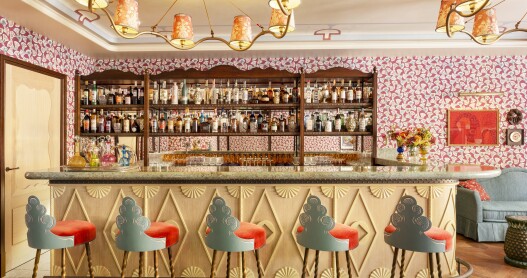
After laying abandoned for more than 20 years, a historic Art Deco swimming pool and health club in the 16th Arrondissement has been reborn as one of the most unique hotels in Paris—one that even locals check in to when they want a quick getaway. Now part of the MGallery by Sofitel collection, the property feels much like an urban resort thanks to its location—while the city center and typical tourist sites are a metro ride away, the block-long hotel sits right in the middle of attractions like the Jean Boulin stadium, Parc de Prince, the Roland Garros tennis center (home of the French Open), the Auteuil racetrack, and Bois de Boulogne Park. Design-hounds also love the place for its eye-catching, very Insta-worthy spaces, including the vibrant reception area (with its graffitied Rolls Royce installation) and the lobby-level brasserie and bar (done up in restored Art Deco elements, a mix of contemporary and flea-market furnishings, street-art-inspired murals, and colorful modern artwork).
If you find yourself at the pointy intersection of two 17th-century buildings in the 3rd Arrondisement, under a landmarked “Boulangerie” sign from one of Paris’ earliest bakeries (where Victor Hugo used to get his bread), you’ve arrived at this charming four-star hotel. Past the low-profile entry lie eclectic, eye-catching interiors designed by fashion legend Christian Lacroix, starting with a ground-floor public space awash in swirl of bold colors, oversized armchairs, and theater-backdrop-style wallpaper. The décor varies between the 17 rooms, as the designer worked within the different sizes and shapes to create unique personalities, so you might be surrounded by animal-print wallpaper, yards of taffeta, fresco-style paintings, a wall decorated with patterned tiles, or a ceiling adorned with stars. Aside from the two cozy Comfort level rooms, most are decently sized, and all feature high-end linens and pillows, Hermès bath amenities, free Wi-Fi, and either a shower or tub.

Enjoy breakfast in the bistro, which becomes a guests-only bar on Thursday through Saturday nights, or hang out in the lobby lounge with something from the honor bar and one of the MacBooks and iPads available on loan from the front desk. Complimentary bikes are on hand when you want to explore the lively Marais or head over to sister hotel, Le Pavillon de la Reine, to make use of its spa and gym.
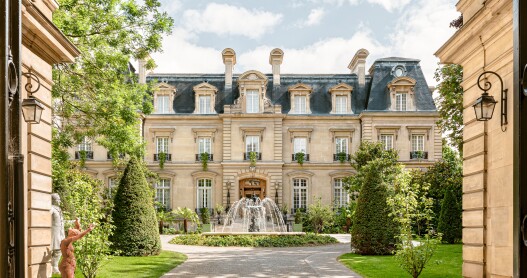
What kind of hotel might attract such diverse guests as Pablo Picasso and Elizabeth Taylor, Mata Hari and FDR, Queen Victoria and Jay-Z, Tchaikovsky and the Olsen Twins? The answer is Le Meurice. Opened in 1815 as one of the world’s first five-star hotels, this icon near the Tuileries Garden has long appealed to both the posh and creative sets; its ties to the art world are particularly strong, having hosted Picasso’s wedding dinner and served as Salvador Dalí’s Parisian pied-á-terre for over 30 years.

For recent renovations of the public spaces, interiors guru Philippe Starck and his designer daughter, Ara Starck, took inspiration from Dalí for some of the more playful touches (like the quirky portraits of 18th-century personalities painted on the backs of leather seats). In the 118 rooms and 42 suites, designer Charles Jouffre maintained a French classical style, with traditional and antique furnishings, rich fabrics, Garnier Thiebaut linens, deep-soaking tubs, and—in higher-category rooms like the Pompadour Suite—oak floors and fireplaces.
The façade may be classic, the doormen crisp, and the location tony, but once inside Le Royal Monceau, you’ll feel an independent, unexpectedly edgy spirit running through this luxury hotel. Opened in 1928, the historic spot, now part of the Raffles collection, underwent a complete renovation in the mid-2000s, overseen by interiors master Phillipe Starck, who—true to form—filled the spaces with contemporary style, dramatic flair (like oversized lobby sculptures and a stairwell adorned with dozens of chandeliers), and over 350 pieces of art, many culled from the hotel’s private collection. Art is a big focus here overall: along with a well-stocked art-library-cum-bookstore (which draws a lot of gift-seeking locals) and an on-site showroom curated by local gallerists (recent shows have spotlighted street artists, from Basquiat to Banksy), there’s a resident Art Concierge—the first in Paris—who can create bespoke itineraries for guests and arrange for special access, studio tours, and VIP experiences (including, with enough notice, an after-hours visit to the Louvre).
An ivy-covered, 17th-century mansion near the beautiful Place de Vosges is now the site of an intimate, five-star hotel. A favorite of sophisticated travelers who value privacy over hype, Le Pavillon de la Reine (named “Reine” in homage of a stay by Queen Anne of Austria) features striking interiors that blend original architectural details and aristocratic portraits with bright colors and contemporary furnishings. The 56 rooms and suites are similarly posh, with touches like patterned wallpaper and textiles, antique chandeliers, marble mantles, and flower-filled window boxes, plus luxe Codge bath products.
A new member of The Set hotel group, the Lutetia reopened in the summer of 2018 following a four-year renovation led by noted architect Jean-Michel Wilmotte. Now, the original Art Nouveau–meets–Art Deco structure provides a backdrop for 184 enlarged rooms and suites, each with wood paneling, handblown Murano glass, and Carrara marble. The seven signature suites, which include two penthouses, also boast perks like private balconies and 360-degree views of the city. Enjoy a drink in the sophisticated Bar Aristide (with its two smoking rooms and cigar sommelier) or the chic Bar Josephine (named for actress and dancer Josephine Baker, another hotel regular), then find sanctuary in the glass-roofed Le Saint-Germain salon and its adjacent courtyard. L’Orangerie restaurant serves casual fare with a healthy, organic twist, while the sleek Lutetia Brasserie offers gourmet menus from three-Michelin-starred chef Gérald Passedat. Continue the indulgence at the brand-new, 7,500-square-foot Akasha Spa, with six treatment rooms, a pool and Jacuzzi, and a state-of-the-art gym.
Steeped in history, this Parisian landmark was commissioned by King Louis XV in 1758, though it didn’t open as a hotel until 1909. Since then, it’s seen such notable guests as Franklin D. Roosevelt, Leonard Bernstein, Madonna, and more pass through its doors on Place de la Concorde. Designed in the grand, neoclassical style, it reopened in 2017 as the Hôtel de Crillon after a significant four-year renovation, which revamped most of the public spaces in the luxurious 124-room building. The new lobby feels airier—thanks to higher ceilings—yet more intimate, made possible by converting the formerly open space into a series of sitting rooms. Also new to the hotel is the 28-seat fine-dining restaurant L’Ecrin, a Sense spa with treatments inspired by centuries-old French remedies, and a jewel-like, glass-ceilinged pool. Chanel creative director Karl Lagerfeld even designed the two most luxurious suites, the fourth-floor Les Grands Appartements, adding bespoke furniture, his own artwork, and over-the-top bathrooms and dressing rooms.
Coco Chanel famously made the Ritz Paris her home for 34 years, but the grandest hotels need a little brightening once in a while. The Ritz, which originally opened on Place Vendôme in 1898, reopened in 2016 after a four-year, $450 million renovation. Starchitect Thierry Despont wisely retained iconic features like the red entry carpet and the hotel’s signature amber scent, but he incorporated brighter fabrics to the public rooms, subtle touches like a heightened lobby ceiling and the addition of peaceful landscaped gardens, and bold statements such as a retractable glass roof on the patio. Overall, too, the number of guest rooms was reduced to 142, and the number of staff was raised to 630. Guest rooms are light and airy, with cream walls, Empire furniture, swags of floral silk fabrics, and marble fireplaces with gilt details. Some rooms have balconies, perfect for morning coffee. Down in the Ritz Club, the pool, serenely set in a columned art deco room, is long enough for laps. The Chanel au Ritz Paris is the brand’s first freestanding spa, with treatment rooms featuring (of course) Chanel skin care and beauty products.
Tucked into a former cobbler’s workshop, Boot Café is making a determined bid to be the city’s tiniest (and most Instagrammable) specialty coffee bar. In a robin’s-egg-blue storefront, the café pours lattes made with beans from the highly regarded Parisian roaster Belleville Brûlerie and foreign roasters such as Five Elephant in Berlin. It’s a tight squeeze but worth a visit for bagels, cakes, and expertly pulled shots.
Bontemps Pâtisserie may have a name inspired by the fictional Louisiana town from the vampire series True Blood, but this retro-chic bakery is French through and through. The pâtisserie offers a refreshing twist on the signature French sable, a classic shortbread cookie, by using seasonal fillings (wild strawberry, passion fruit, blood orange). Don’t miss the larger tartes, from pecan to apple, which use the same light and crumbly shortbread crust. Take a box of minis to the Square du Temple across the street for an al fresco goûter.