Hawai‘i

More than 2,000 miles from the nearest continent (North America), Hawai‘i has always lured travelers seeking paradise in the Pacific. Polynesian explorers first paddled into the islands between 300 and 500 CE. Following centuries of civilization, the Hawai‘ians first met Europeans in 1778—sparking a story whose ultimate end was American statehood in 1959. Tourism is now the state’s largest industry, and most travelers are familiar with stock photos of hula, leis, and surfboards. But as with most idylls, there’s much more to discover beyond the pages of glossy brochures.

Kauai_Highres-8210-KyleJohnson.jpg

Photo by Kyle Johnson

Overview

Beaches

Eight major islands comprise the Hawai‘ian archipelago, meaning there’s coastline in abundance and a beach for everyone. Adventurers skirt the edges of Kaua‘i’s Napali Coast by kayak. Sun worshipers lounge around lazy Lanikai Beach on O‘ahu and on Maui’s Kaanapali Beach, where the sun feels so close it’s hard to believe you’re at sea level. Beaches like Punaluu Beach on the Big Island—with its black sand—and the Red Sand Beach on Maui reward day-trippers with their psychedelic scenery. Meanwhile, the gravity-defying waves of the Banzai Pipeline hurl themselves against O‘ahu’s North Shore in winter, and the churning surf of nearby Waimea Bay seems like it can’t be made of the same gentle stuff that kisses the coast off Lāna‘i.

Away from the Beach

Rings of coastline protect each island’s heart, and it’s well worth leaving the beach to explore inland. On the Big Island, travelers dip into the Waipio Valley—scooped out of the island’s north side—or summit the Mauna Kea volcano at twilight to touch the stars above. On Oʻahu, hikers scale the Koko Head Crater or follow trails of rainbows dancing above the lush Manoa Valley. No matter where they are based, visitors seeking to learn more about the archipelago have options for various guided tours. Paniolo Adventures, for example, guides horseback rides that offer views of the coastline, volcanoes, and ancient historical sites.

When’s the best time to go to Hawai‘i?

With great weather throughout the year, there’s no bad time to visit Hawaiʻi. Hurricane season, from June to November, rarely touches the islands.

Food and drink to try in Hawai‘i

The bounty of land and sea is evident in Hawaiʻi’s cuisine, which shows South Pacific, Asian, and even Portuguese influences. Roy’s, a popular restaurant located on three islands, serves blackened ahi and macadamia nut-crusted opah, while Yama’s Fish Market in Honolulu presents numerous appetizers and simple staples like beef stew. Humble roadside stands serve lau lau (pork wrapped in taro leaf) or poke (seafood tartare). Hawaiʻian hospitality has been exported in a glass via the mai tai and lava flow cocktails. For something sweet, try a deep-fried malasada doughnut from Leonard’s Bakery in Honolulu, a chocolate haupia cream pie from Ted’s Bakery on Sunset Beach, or a syrupy shave ice from the famous Matsumoto Shave Ice in Haleiwa.

Culture in Hawai‘i

Hawaiʻi was colonized by Polynesians and has long drawn visitors from Asia, Oceania, and North America. The ‘Iolani Palace—where Hawaiʻi’s last royal family lived and ruled—should be the first stop for anyone interested in the islands’ heritage. Across the street, the historic Ali’iolani Hale building was featured on the TV series Hawaii Five-0. Also check out the Bernice Pauahi Bishop Museum, where fascinating artifacts range from ancient weapons to the feathered cloak of King Kamehameha I. To this day, the islands’ varied influences are united by the uniquely Hawaiʻian spirit of aloha.

How to get around Hawai‘i

Most domestic and international arrivals land in Honolulu. Hawaiian Airlines, Island Air, and Mokulele Airlines operate inter-island flights. The islands are large enough to make a car rental worthwhile. If you plan to stay in one place, taxis and shuttles are easy to arrange.

Practical Information

Credit cards are not accepted everywhere, so travelers should carry some cash when shopping. A 15–20 percent tip is standard for restaurant bills, 15 percent for taxi fares, and $1–2 per bag handled at a hotel. Tips for tours start at $5 and increase based on tour length. Outlets are 110 volt.

Related Guides
READ BEFORE YOU GO
There are plenty of sailings you can take that don’t require a passport, including to some destinations abroad. But you need to make sure you understand the rules and regulations. Here’s what to know.
HOTELS
Lace up your hiking boots: These vacation rentals are perfectly situated for adventurers who love to explore on foot.
Bookmark these magical Airbnbs for your next trip to Hawai‘i.
ResortPass offers experiences at more than 1,000 hotels across the country.
All across Hawai‘i, hotels are helping travelers dive deeper into the islands’ ocean traditions and adventures. Learning to surf is just the beginning.
At these properties, the children’s programming goes far beyond basic caregiving services with immersive experiences that offer younger guests a deeper look into culture, nature, sustainability, and even themselves.
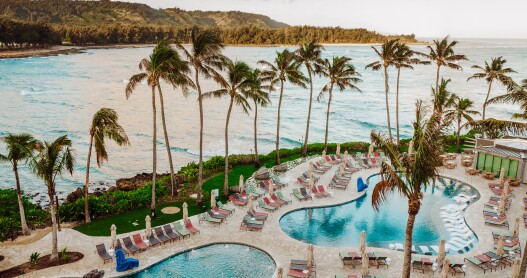
Just back from Turtle Bay Resort on O‘ahu’s North Shore, an AFAR editor shares why it’s her new go-to retreat in the Hawaiian islands.
Don’t just book a place to sleep; check into lodgings that will connect you to locals.
These well-curated hotel shops will give you a sense of place and a lasting memory.
An in-depth review of the Mauna Kea Beach Hotel.
RESOURCES TO HELP PLAN YOUR TRIP
The Mauna Kea Beach Hotel sits on the Big Island’s Kohala Coast. Beautiful sandy beaches cater to sun worshipers while the proximity to Waimea and Kailua-Kona make it a great place for travelers who seek ocean sports, coffee culture, or horseback riding. After absorbing the sun, snorkeling, and surf, a trip to the beach bar is the perfect place to enjoy a bit of shade while sipping on cold, refreshing, tropical drinks. An evening at the beach bar with a Dirty Hula Girl may be the perfect ending to a day at this beach hotel.


The sweet smell of plumeria floats on gentle trade winds into each guest room at the Mauna Kea Beach Hotel. When entering the room, you may be surprised that floor-to-ceiling picture windows and a beautiful private lanai (patio) beckon you to step back outside—closer to the rhythmic surf and paradise in nature. In the hotel’s main building, each morning you can wake up to warm accent colors in your room that recall the previous evening’s sunset. Natural light fills the entire space and you can brew a lovely cup of Kona coffee before leaving your room to face the world. A 2009 remodel of the main building rooms along with a 2013 beachfront wing renovation enable guests to unwind in the comfort of updated interiors that still remain true to Laurance S. Rockefeller’s original vision.


Local beach access at the Mauna Kea Resort: If you go early (7:30 a.m.) there are only 40 parking spots open to get to this hidden gem. Locals know that you say “beach access” at the imposing gate for those who want to swim in its clear blue water; check it out in North Kohala. Spectacular white sand beach with some shade trees. The 40 parking spots get filled by 9 a.m. or sooner so go early. It’s also good for boogie boarding.

PropertyThe architecture at Mauna Kea Beach Hotel certainly evokes Laurance S. Rockefeller’s sense of outdoor space with breezy landscaped covered walkways and a sparkling blue tile floor in the lobby that seems to bring the calm waters of Kaunaoa Bay right into the hotel. Another not-to-miss feature on the grounds includes the Collection: a fascinating assortment of Pacific and Asian art. More than 1,600 museum pieces blend into the hotel’s ambiance so well that you will always find new treasures on each visit. Better than a museum, these pieces of history are tangible to guests who want to inspect the stitches in a quilt, photograph the colors in a carving, or feel the texture of embellishments on a statue.


After absorbing the sun, snorkeling, and surf, a trip to the beach bar is the perfect place to enjoy a bit of shade while sipping on cold, refreshing, tropical drinks. An evening at the beach bar with a Dirty Hula Girl may be the perfect ending to a day at this beach hotel.
Vino and Vinyasa (Friday evenings): Follow your sun salutations with sauvignon blanc and your planks with pinot noir at this weekly class-slash-happy hour held ocean-side on Friday evenings. It’s only fitting that the sessions focus on Vinyasa, a yoga style that synchronizes movement with breath, because you’ll want to inhale the salty sea air deeply as you gaze at a fiery Big Island sunset.


Glow Stand-Up Paddling and Canoeing: Kauna’oa Bay’s large plankton population attracts manta rays, and you’ll find yourself gliding alongside them during this nocturnal excursion. Thanks to LED lights carefully strapped on your board, your hour-long jaunt may also include a parrotfish sighting (they’re intrigued by the boards’ shimmery glow.) You can treat stand-up paddle boarding as a workout, or simply stargaze as you float. New paddlers can take an introductory canoe ride while more seasoned guests can explore the Kohala Coast’s caves and coves on a private group charter.
These luminous events, from Chiang Mai to O‘ahu, are rooted in ancient cultural traditions.
Want a better beach trip? Go when everyone else isn’t. These destinations shine in the shoulder season.
Hurricane-free Caribbean beaches, empty canals in Venice, and lush safaris—all can be yours in off season.
These nine beaches stand out for both natural beauty and distinct character.
The new fee, which will go into effect at the start of 2026, is intended to raise money to improve climate-change resilience across the Hawaiian islands following the devastating 2023 Maui wildfires.
These are the 10 best ways to take advantage of Hawai‘i’s most outdoorsy island.
These scenic black-sand beaches are worth planning a trip around.
Afar’s picks for the 25 best new hotels in the world.
Skip the usual island excursions—this concierge at the Four Seasons Resord O‘ahu at Ko Olina unlocks rare adventures, from flying in a historic Warbird to behind-the-scenes Hawaiian history tours.