

Whether your ideal Hawaiian vacation means time sunning, hiking, or snorkeling, there’s an island for you.
Photo by Karsten Winegeart/Unsplash
From laid-back yet cosmopolitan O‘ahu to wild Moloka‘i, Hawai‘i is as diverse as the travelers who visit. Within the 137-island archipelago are six main islands that entice visitors with verdant jungle, dreamy white-sand beaches, active volcanoes, and opportunities to learn about the long, rich culture of Native Hawaiians, which dates back more 1,000 years.
Natural beauty and outdoor adventure are available on every island, but some are easier to access and others quieter and less crowded. For families, surfers, avid hikers, and stargazers, this is where to go in Hawai’i for every type of travel.
Responsible tourism in Hawai’i
Hawai‘i has struggled with the impact of overtourism on its people and its land for years. That doesn’t mean travelers shouldn’t go—to the contrary, Edwin “Ekolu” Lindsey III, president of Maui Cultural Lands says, “We’re happy to share, if the visitor’s intentions are right.”
As a good guest, travelers should abide by the no-trespassing signs, use reef-safe sunscreen, and follow best practices when it comes to the ocean and wildlife (like giving animals space and never touching coral reefs with hands, feet, or watercraft). Essentially, we should treat the islands as if we were entering the home of a dear friend.
“We don’t call them islands. We call them family because they are—they’re like human beings to us,” says Healani Kimitete-Ah Mow, Mauna Kea Resort aloha ambassador, “and when it comes to family . . . we need to take care of them.”
To encourage travelers to think of a trip to Hawai‘i as more than a vacation spot, the state introduced the Mālama Hawai‘i initiative. Mālama means “to care for,” and that’s what the program invites travelers to do: show care for the islands we visit.
Hawai‘i is also the first U.S. state to implement a “Green Fee,” which will increases the tax on tourists’ hotel rooms to support programs that manage climate-related threats and protect the archipelago’s delicate ecosystems.
As you consider which Hawaiian island is right for you, consider joining one of the mālama experiences: replanting native species, participating in a beach cleanup, or any of the many other volunteer experiences.
Related: How to Plan a Crowd-Free Trip to Hawai‘i

If you measure its height from the ocean floor, Mauna Kea is taller than Mount Everest.
Photo by Raph Howald/Unsplash
Hawai‘i
Come for: Outdoor adventurers who want to go stargazing on the highest peak in Hawai‘i, whale-watching, and hiking on volcanoes
One of the world’s most ecologically diverse places, the state’s youngest and largest island (commonly referred to as the “Big Island”) sweeps from a black-sand beach to waterfall-laced rainforest valleys, lava deserts, and snow-capped mountains.
The active Kīlauea volcano sits on the flank of massive Mauna Loa, but Mauna Kea wins the world heavyweight title for height, outstripping Mount Everest by 4,500 feet when measured from the ocean floor. It’s also among the most sacred of the five mountains on the island.
“We don’t look at this mountain as a mountain,” says Kimitete-Ah Mow. “She’s really alive.” For that reason, adventurous travelers who want to head up the steep winding road to the summit, famed for its stargazing, should book a guided tour with a company that will help visitors understand the history and culture of the mauna, or mountain.
Not in the mood for the high road? Visit the Imiloa Astronomy Center, or go low with a nighttime snorkeling trip to visit giant manta rays as they soar and loop, feeding on tiny zooplankton. Make sure to check out the incredible aerial breaching displays of the 11,000-odd humpback whales that winter offshore, too.
Finish with a peek into ancient traditions at Puʻuhonua O Hōnaunau or Kaloko-Honokōhau National Historical Park, where Hawaiians once fished, carved petroglyphs, and used toboggan-like sleds to ride downhill over stones covered in dirt and leaves. Travelers can also tour the seven-acre Kona Sea Salt farm and taste and buy sea salt harvested from 2,200 feet below the ocean surface.

Bed-and-breakfast Volcanoes Rainforest Retreat is right next to Hawai’i Volcanoes National Park
Photo by Wowi Zowi Productions, courtesy of Volcano Rainforest Retreat
Where to stay
The island of Hawai‘i offers plenty of options for lodging. For high-end resorts, look to the Kona area on the west side of the island; travelers who prefer more low-key lodging should look to the eastern Hilo side.
Fairmont Orchid
The Kona-side Fairmont Orchid occupies 32 acres, complete with tropical gardens, a 10,000-square-foot pool, and a white-sand beach. Of the 540 guest rooms and suites, all have lanais and half have ocean views.
Four Seasons Hualālai
You might spot a celebrity or two at this Hollywood favorite, beloved for its 865 acres of palm-fringed coastline. Just a 15-minute drive from the Kona International airport, this Four Seasons has eight pools, a rock amphitheater, and even an on-site museum and cultural center.
Volcano Rainforest Retreat
For travelers who want to stay on the Hilo side of the island—and close to Hawai‘i Volcanoes National Park—consider this quiet, five-cottage bed-and-breakfast on the edge of the rainforest. All cottages are unique, but each has cedar walls, shoji screens, and plenty of windows that look out on giant ferns.
Related: The 10 Best Hawaiʻi Resorts
How to give back
- Sign the island’s Pono Pledge. Pono means “righteous” and the pledge invites travelers to traverse the island with gentleness, humility, and respect.
- Join a community or educational event put on by Pōhāhā I Ka Lani, a nonprofit devoted to stewardship of Hawai‘i’s sacred land.
- Guests of the Fairmont Orchid can participate in three different projects: forest reforestation with Waikōloa Dry Forest Reserve and learn more about coral reef restoration and protection with the Kohala Center and Ākoʻako.
- Guests and local residents can join Kimitete-Ah Mow’s E Ala E ceremony at Mauna Kea Resort and Westin Hapuna Beach Resort. It’s a morning ritual to greet the sun—one that many Hawaiians participate in—that begins on the beach at 6 a.m. Kimitete-Ah Mow, also a Pono pledge ambassador, begins with a short blessing, invites travelers to gaze into the Pacific, and then they face the east and ask the sun to rise with another chant. After, people are invited to participate in a self-directed beach cleanup.
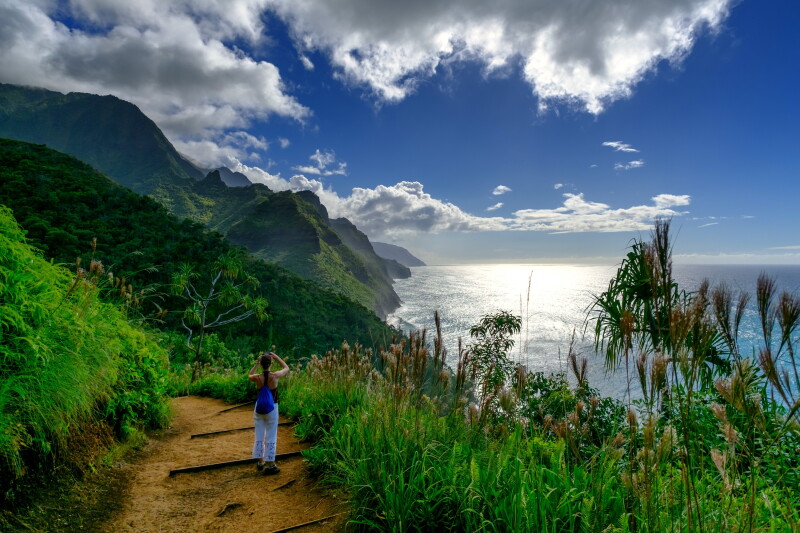
The cliffs and trails of Kaua‘i’s Nāpali Coast are steep and spectacular.
Courtesy of Tor Johnson for the Hawai‘i Tourism Authority (HTA)
Kaua‘i
Come for: A quiet, laid-back island full of natural beauty, waterfalls, and long stretches of beach, plus a chance to learn about ancient traditions and visit small towns
Lushness and serenity reign on the “Garden Isle,” home to the planet’s wettest spot, Mount Waialeale, averaging more than 451 inches of rain each year. The town of Poipu and the South Shore tend to be sunnier with more restaurants, shops, and water sports.
But Waimea—“the Grand Canyon of the Pacific”—and Nāpali Coast State Wilderness Park hog the spotlight. Here waterfalls and swift streams sculpt one of the world’s most staggeringly beautiful wilderness areas, threaded with ancient Hawaiian archaeological sites. Keep in mind that those wishing to visit Hā‘ena State Park, which includes Kee and Tunnels beaches, as well as the trailhead, need to make reservations in advance.
Fancy a more accessible cascade? Check out Wailua Falls, a 170-foot veil featured in the opening credits of the 1970s TV hit Fantasy Island. Then contrast that riot of water and vegetation with Polihale State Park, where Hawai‘i’s longest stretch of beach covers 15 miles and dunes can pile up to 100 feet high.
Related: Surfing Isn’t out of Reach for Blind Travelers. Here’s How I Made it Happen in Hawai‘i
Where to stay
Most travelers stay along the North Shore (home to Princeville and Hanalei); on the drier, sunnier South Shore, near the town of Poipu; or along the eastern coast, near Lihue Airport.
Westin Princeville Ocean Resort Villas
On the North Shore, the family-friendly resort is within a short drive of Hanalei Bay and offers plenty of pools, local cuisine at the Nanea restaurant, and fully equipped villas (including washers-dryers and kitchens).
Waimea Plantation Cottages
Find laid-back luxury at this 59-cottage property (once a sugar plantation) on the sunnier, slightly less-traveled West Side, home to the storied Waimea Canyon. All cottages were built in the late 19th century or early 20th and reflect that charm: painted wood-paneled walls and shaded lanais, each with a fully equipped kitchen.
1 Hotel Hanalei Bay
An oceanside sanctuary overlooking Kauaʻi’s North Shore, 1 Hotel Hanalei Bay is serious about sustainability. The 252-room resort has roofs that reduce and filter storm water runoff, has replaced non-native and invasive species on property with endemic and Polynesian-introduced vegetation, and uses furniture made from salvaged wood.
How to give back
- Hawai‘i Land Trust hosts volunteer days, including a marine cleanup on Kāhili Beach on the first Sunday of every month.
- Support Mālama Kaua‘i, an organization devoted to increasing local food production. Travelers can donate and shop the Mālama Kaua‘i Store (perfect for souvenirs and gifts).
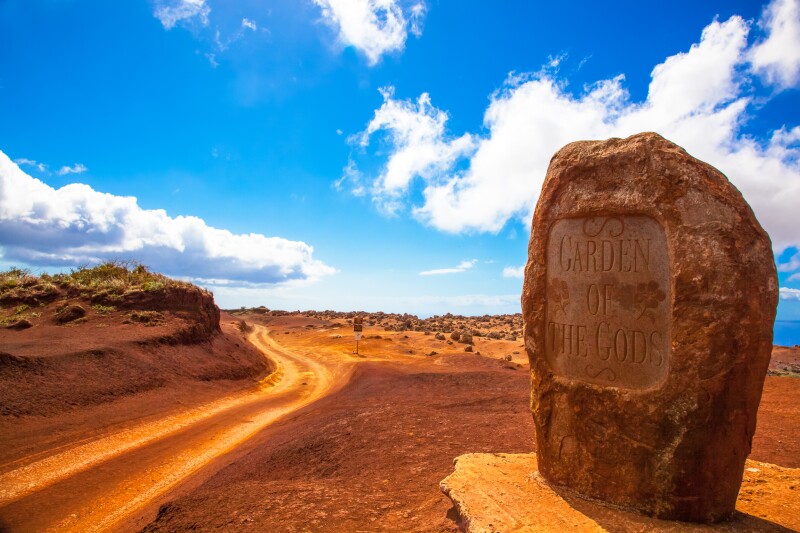
Keahiakawelo, or Garden of the Gods, is the site of a famous Lāna‘i myth. On a clear day, you can see O‘ahu and Moloka‘i.
Photo by Lynn Yeh/Shutterstock
Lāna‘i
Come for: A more rugged, remote-feeling trip on a small, uncrowded island with a cat sanctuary, hiking trails, and snorkeling
Before Lāna‘i was colonized, the land—where Hawaiian settlers lived off taro and seafood—was rich with native vegetation and purple flowers. But when goats, sheep, and other grazing animals were introduced to the island in the 1800s, the land was stripped, leaving it bare. Then came the pineapple years: Before statehood, the United States recognized the Republic of Hawai‘i in 1894, with pineapple entrepreneur and longtime Hawai‘i resident Sanford Dole as its president. When Hawai‘i was annexed in 1900, it became a territory, and in 1922, Sanford Dole’s cousin James Drummond Dole bought the island of Lāna‘i to expand his pineapple farming empire. Then came Larry Ellison: In 2012, the tech billionaire bought 98 percent of this island for $300 million, including two Four Seasons resorts (and their championship golf courses).
Ellison, while controversial, has placed an emphasis on sustainability, founding Pūlama Lāna‘i to protect native and endangered species and improve water and recycling systems. Today Lāna‘i remains less visited than other destinations in Hawai’i. Only 30 miles of the island’s roads are paved, but there are more than 400 miles of rugged trails you can explore by four-wheel-drive or horse or by hiking. Many lead to the 18 miles of nearly empty beaches that ring Lāna‘i and to lovely views of other islands. Be sure to stop by the Lāna‘i Culture and Heritage Center, which hosts workshops and events.
Where to stay
Small Lāna‘i has only a handful of accommodations, three of which are owned by Ellison.
Four Seasons Resort Lāna‘i
With 213 rooms, this is one of the smaller Four Seasons. As part of its Love Lanai program, guests can participate in cultural activities such as learning hula and lei making, join a ukelele sing-along, or take a historical tour of town.
Sensei Lāna‘i, a Four Seasons Resort
Wellness is the big focus at this 24-acre resort, which offers everything from day-long spa immersions to a five-day program that includes a fitness assessment, a Whoop wearable device to track your progress, and lots of fitness and bodywork. Other activities available to guests are horseback riding, mountain biking, and guided jeep tours around the island.
Hotel Lāna‘i
This historic property has 10 bright rooms with handsome hardwood throughout. It was built in 1923 by James Dole—and until 1990, was the only hotel on the island. Today it’s in the center of town, walking distance to popular local spots like Blue Ginger Cafe.
How to give back
- Visit—and donate to—the Lanai Cat Sanctuary. The organization began back in 2004 when founder Kathy Carroll started sterilizing Lāna‘i’s street cats and relocating them to a facility to protect Lāna‘i’s ground-dwelling birds. Today it’s a popular spot for cat (and bird)-loving travelers.
- Participate in one of the clean-up events organized by Lāna‘i Culture and Heritage Center.
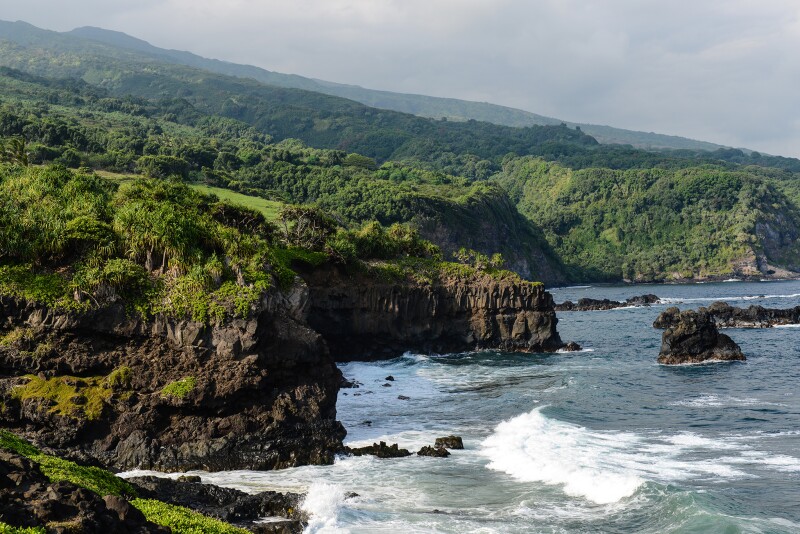
Driving slowly on the famed Road to Hana is normal, but be sure to use pull-outs to let faster drivers pass.
Photo by Brandon Bourdage/Shutterstock
Maui
Come for: A little of everything—adventure, black- and red-sand beaches, food, culture, and relaxation
Maui, “the Valley Isle,” remains the best one-stop sampler of Hawai‘i’s highlights. The island is anchored by the dormant Haleakalā volcano, which forms three-quarters of its mass. Catch a lift to the top with your bike, then cruise down 21 switchbacks, passing through as many ecological zones as you would on a Canada-to-Mexico road trip. Or make a reservation to visit Waīa‘ānapanapa State Park, home to a famous black-sand beach. (The reservation system is a part of the state’s commitment to the Mālama Hawai‘i initiative.)
Hungry for culture? Hire a hula instructor for a lesson nearly anywhere on Maui. Shop the galleries of Paia, then buckle in for the world-famous Road to Hāna, a drive tracing the rugged black-lava coastline. (Be sure to check out the guidelines for driving the famous road.) Hungry in general? Book a two-hour chocolate tour and lunch at Maui Ku‘ia Estate. Or stop by Sunset Market in Wailea Village every third Thursday to shop for local goodies, including Pau Maui vodka, tacos and shave ice, and cookies from Maui Cookie Lab.
Maui is also the access point for the Molokini atoll just off the coast, where visitors can snorkel an extinct volcanic caldera. But the caldera’s not your only option for gorgeous waters to explore: Get a mask and fins and then zip over to the beach town of Olowalu on the west coast where you’ll find a “cleaning station” for green sea turtles. For any ocean activities, look for outfitters certified by the Surfrider Foundation.
Related: How to Get Off the Tourist Trail in Maui
Where to stay
There’s no shortage of places to stay in Maui—here are several to get you started.
Maui Eco Retreat
Built in 1988 on land blessed by a Hawaiian priest, this solar-powdered retreat has only a handful of rooms, yoga classes, and an oceanfront location.
Hyatt Regency Maui Resort & Spa
This massive resort in Gold LEED-certified resort with 810 rooms is powered by one of the largest solar panel systems in the state. The oceanfront property has six pools, including one with a 150-foot waterslide, an on-site shave ice spot, and a beach lu‘au and dinner during which guests
Hotel Wailea
The adults-only Hotel Wailea has just 72 suites across 15 acres and can organize excursions in outrigger canoeing, on e-bikes, and in a 1957 Porsche 356 Speedster.
Camp Olowalu
For those who want to live a little closer to nature, book a campsite, tentalow (glamping tent), or A-frame cabin at Camp Olowalu. The beachfront spot, a former sugar plantation, was created in 1955 and expanded over time. Join a guided kayak and snorkeling tour to see coral reefs, protected by the Maui Coral Reef Recovery Plan and the Coral Reef Alliance.
How to give back
- Maui Cultural Lands: Launched as a nonprofit in 2002 by Puanani and the late Edwin “Ed” Robert Naleilehua Lindsey Jr., Maui Cultural Lands focuses on restoring and preserving Hawaiian cultural sites. Now headed up by their son, Edwin “Ekolu” Lindsey III, the nonprofit offers travelers the opportunity to help reforest Honokowai Valley and the Ka‘anapali areas, all while learning about the cultural significance of these archaeological sites. (For example, the work begins with a chant asking for permission to enter.)
- Pacific Whale Foundation: Founded in 1980, the nonprofit is dedicated to protecting the ocean and inspiring environmental stewardship. Travelers can book ecotours including snorkeling trips, stargazing, and of course, whale-watching. All profits support the foundation’s research, education, and conservation programs.

The uninterrupted three-mile stretch of Papohaku makes it one of the longest beaches in the state.
Photo by Shutterstock
Molokaʻi
Come for: Outdoor adventures without the resorts, such as bird-watching, snorkeling, and swimming, plus an excellent choice for camping
Molokaʻi packs in plenty of beauty, adventure, and also authenticity, thanks to the high percentage of Native Hawaiian descendants living there. Pāpōhaku Beach, with three miles of silky white sand, fringes the island’s west end. The sunbathing and camping are superlative here, but avoid swimming in the dangerous breaks between October and March.
Where to stay
There are no resorts on Molokaʻi, and most lodgings are low to the ground and laid-back.
Hotel Molokaʻi
At this more than 50-year-old hotel, the bungalows are outfitted with kitchenettes and carefully arranged to allow the trade winds to move through. Step out the front door and walk the Kamiloloa beach, snorkel the 28-mile barrier reef (the longest in Hawai‘i), or drive five minutes to wander Kaunakakai, the island’s main center.
Pu‘u O Hoku Ranch
For a truly remote stay, book a few nights at this lodge on the eastern side of the island. It is a family-owned, working organic and biodynamic ranch, so expect to see cattle and a wide range of produce, including bananas. There are two bright, homey cottages, built in the 1930s in Hawaiian ranch style, and, for large groups, a 12-bedroom lodge that can be booked out. (Its bedrooms aren’t available for individual reservations.)
How to give back
Molokaʻi is pure nature—and one of the best ways to help it remain that way is to join a project with the nonprofit Moloka‘i Land Trust, which works to protect two land preserves.

O‘ahu’s North Shore is home to the “Seven Mile Miracle,” a stretch of coast where surfers take on world-class breaks.
Photo by Caroline/Shutterstock
Oʻahu
Come for: A laid-back urban trip that still features beaches, hiking trails, historical sites—and some legendary surfing
On Oʻahu, the state’s capital Honolulu is a hub of art, culture, and good food, with a foodie scene that champions Hawaiʻi-inspired cuisine. Enjoy the resort hot spots of Waikīkī, Ko Olina, and Turtle Bay, but make sure to venture beyond them.
Pay your respects to local culture and history at the extensive Bishop Museum and at Pearl Harbor, now the Pearl Harbor National Memorial. The Pearl Harbor campus includes the USS Bowfin Submarine Museum and Park, where you can take virtual tours of submarine interiors and interactive displays about submarine warfare, among many other things. Explore the history of Hawaiian royalty at Iolani Palace, where travelers can pick between guided and self-led tours that wind from palace grounds to the opulent interiors.
For lunch, dip a smoked-beef brisket bánh mì in aromatic phở at the Pig and the Lady, where Andrew Le, his mom, and his brother serve Vietnamese fare with Hawaiian ingredients. For those who want to tour local delicacies, try the Saturday markets. The KCC Farmers’ Market at the foot of Diamond Head specializes in prepared food and travel-friendly foods like local honey. Closer to downtown Honolulu is the Kakaʻako Farmers’ Market, which has more produce but also foods made locally, such as Koko Kai, a non-dairy coconut yogurt.
O‘ahu has a strong connection to surfing and the ocean, of course—respecting the ocean and marine life is critically important, and almost spiritual, for many locals. Consider the Bishop Museum, which frequently offers surf exhibits and has permanent exhibits devoted to celestial navigation and outrigger canoeing.
Experienced surfers can head to the North Shore, where 36 breaks grace the “Seven-Mile Miracle,” a storied stretch of surfing heaven. Not quite ready to catch a world-class wave? Rest easy: In addition to Waikīkī, O‘ahu has more mellow aquatic options such as Hanauma Bay for family-friendly snorkeling.
Related: She’s a Concierge at a Top Hawai‘i Hotel—and These Are the Recs She Doesn’t Tell Just Anyone
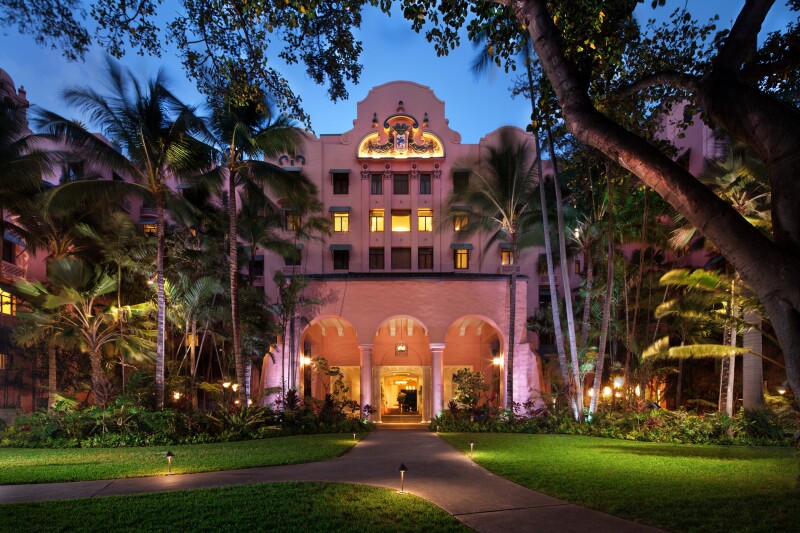
Built in 1927, the Royal Hawaiian, a Luxury Collection Resort, is a pink-hued classic in the heart of Waikīkī.
Courtesy of the Royal Hawaiian, a Luxury Collection Resort
Where to stay
Most travelers stay in or near Honolulu, where you’ll find plenty of options, no matter what you’re looking for.
The Royal Hawaiian, a Luxury Collection Resort
Many say that this hotel, built in the Roaring Twenties, put Waikīkī on the map. For years, celebrities flocked to the luxurious beachfront resort with its 528 rooms and handsome art deco details. On property, learn to make floral hair pieces and leis, how to hula, and more about the area and the hotel’s history.
Turtle Bay Resort
Set on a peaceful 1,300-acre property on a palm-tree-lined stretch of O‘ahu’s North Shore, Ritz-Carlton resort Turtle Bay gives guests the chance to experience a quieter side of O‘ahu. Its grounds are covered in more than 50,000 native trees and flowers, and guests can tour the on-property farm to learn more. Other activities include horseback riding, night snorkeling, outrigger canoe excursions, and guided bike tours. Afar hotel editor Jenn Flowers visited in 2023 and deemed Turtle Bay “your go-to spot for nature and surfing.”
How to give back
- Learn about bamboo-pole fishing and help restore fishponds with the Mālama Loko Ea Foundation.
- Participate in one of Ulu A‘e Learning Center’s volunteer events held several times a year.
- Learn to make papa and pohaku (a poi board and stone) with Hui Aloha Aina Momona, a three-acre farm raising pigs and olena (aka turmeric) plants.
- Join one of the nonprofit Hui o Ko‘olaupoko’s volunteer projects, such as caring for a native plant garden.
- Get involved in Kōke‘e Resource Conservation Program, which also invites people to help remove non-native species, as well as do trail and fence maintenance and care for tea plants in the Kōke‘e wilderness preserve.
- Plant a tree in the Hawaiian Legacy Forest at Gunstock Ranch, which offers a series of sustainable experiences, including horseback rides and off-road tours.
It’s difficult to go wrong with whatever island you choose to visit. The hard part comes when you have to leave Hawai‘i—hopefully a little better than you found it—to return home.
This article was originally published in 2019 and most recently updated on December 15, 2025, with current information. Sophie Friedman contributed to the reporting of this story.


