Greece

Whether your first view of Greece is of the sparkling Mediterranean or the stubbornly steadfast Acropolis, you’ll realize you’re somewhere special. Sit down at any taverna by the sea for a feast of fried fish and baked feta, and get wrapped up in ouzo and the musical flow of the Greek language. For history and classics geeks, the mainland is your treasure trove. The Oracle at Delphi will provide you with answers, and the sheer size of the ruins at Olympia will give you new appreciation for the ancients. Hike through the rugged landscapes and coastlines of the many islands, including Santorini’s fractured caldera, and Crete’s Samaria Gorge. Take the edge off while partying in the whitewashed alleyways of Íos Town, or relax on a lesser-known island like Icaria.

C76JNA Greece, Cyclades Islands, Mykonos, Chora, Church of Panagia Paraportiani. Image shot 2011. Exact date unknown.

Alamy

Overview

When’s the best time to go to Greece?

Although summer in the Mediterranean is never disappointing, late spring and early autumn are by far the best times to visit. Prices remain lower between March and May, and crowds have thinned. The same goes for the end of September to November. The fall season, though sometimes rainy, offers a sea that is still blissfully warm after a scorching summer.

How to get around Greece

Athens is the main travel hub. It’s possible to score fairly priced flights from Europe to some of the more popular islands—especially Santorini, Crete, or Mykonos—but it’s much easier to fly into Athens International Airport. From there, you can take a ferry from Piraeus Port to just about anywhere.

One of Greece’s many charms is that nobody is ever in a rush. This applies to transit as well. Airplanes and ferries are by far the most efficient modes of travel around the country, especially to the islands. On the other hand, the subway system in Athens is actually quite modern, having been built for the 2014 Olympics. It’s handicapped accessible, thanks to elevators in every station. Athens’ bus system is less reliable. On the islands, buses are the way to go, unless you opt for car rental. For all schedules, check out the Greek Travel Pages.

Food and drink to try in Greece

Food is at the heart of Greek living. Seek out the tavernas—you’ll find one in every town—serving steaming bowls of baked feta, fried eggplant, grilled fish, lamb chops, and fresh halva. The Greeks aren’t big drinkers; being inebriated in public is an embarrassment. But the local liquors should be tried: ouzo, raki, and tsipouro are the most common. Tsipouro tends to be underappreciated by travelers. Mix with ice and a small dose of water, and pair with mezedes—generous tapa dishes. If you love wine, head to Santorini. If you’re needing cool refreshment, opt for a frappé, the beloved iced coffee drink of Greek youth.

Culture in Greece

Despite being surrounded by culturally diverse countries like Turkey and Serbia, Greece has held steadfast to its roots. Athens is a bit of an exception, thanks to a large influx of Albanian and Turkish immigrants. For full immersion into Greek culture, head to the lesser-known islands that do not depend on tourism, like Lesbos or Hydra.

Holy Week in April is an exciting time to be in Greece and celebrate Orthodox Easter. Traditionally, celebrations include lamb roasts, fireworks, homemade wine, and dancing in costume. Santorini is one of the best places to celebrate; here people take elaborate care fixing up their property for the event. Carnival in March is a great time to take part in costume parades, drinking, and dancing. Go to Skyros to witness the “goat dance,” or anywhere in the Ionian islands for more Italian-style celebrations. The Athens Festival in June pays tribute to Greek culture and arts. You may be lucky enough to be in town during a feast of the saints, like the Feast of St. Nikolaos or the Feast of St. Demitrius.

Local travel tips for Greece

The locals know that autumn is the best time to visit Santorini. Ferry strikes and Greek protests can often cause delays in travel, but they are usually harmless. Check in advance. Study up on the language a bit before arriving, especially if visiting the quieter islands, where little English is spoken.

Guide Editor

READ BEFORE YOU GO
HOTELS
Around the world, breakfast is emerging as the moment when a luxury hotel’s ambition—and its core values—become most visible.
New hotels along the Athens coastline are helping to redefine what it means to live, and stay, in the Greek capital.
Traveling alone? More hotels are helping solo travelers make connections, stay safe, and have big adventures.
From lobby bars to rooftop lounges, these are the hotel bars Afar editors love checking out when they’re checking in.
These hotel pools around the globe are worth building a trip around.
AFAR’s picks for the 31 best new hotels in the world.
Get a room at one of these 12 spectacular new hotels in Greece, all of which are scheduled open their doors by spring or early summer.
Positioned between the capital’s ancient attractions and countless sandy beaches, One&Only Aesthesis revives ’60s Greek chic.
If you’re looking for serenity in 2024, check out these top destination spas.
From the Swiss Alps to the Brazilian rain forest, these Airbnbs are worth booking just for the views.
RESOURCES TO HELP PLAN YOUR TRIP
Santorini, Greece is an unquestionably beautiful island, but you can take the island experience up a notch, from beautiful to breathtaking, by hiking the ancient footpath from Thira to Oia. Start just before sunrise and meander the ancient dirt and cobblestone path, which is perfectly nestled at the cliffs edge, providing breathtaking views of the caldera. I set out on this path alone for a 4 hour hike, not too sure of what I would find along the way. Way up high, above the sea, away from the island crowds, as if walking through the clouds, I experienced the true beauty of the island- obvious natural beauty that surrounds you in every direction, but an ancient, deeply rooted beauty that can only be found in the silence, in the white washed churches scattered along the path, in the sun-smoothed cobblestone of the path ... in the clouds. Don’t forget layered clothes as once the sun rises the temperature does as well, comfortable walking shoes, bottled water & a camera!
Chania is one of the most beautiful cities of the island of Crete. One of the most beautiful corners of the city is the harbour. It was built on the Venetian era. Visitors will find there monuments of both the Venetian and the Ottoman history. The harbor was constructed by the Venetians at around 1350. Apart from the monuments to be seen by visiting the Venetian Harbour in Chania, you will find along many restaurants, cafes and bars. The area is very lively and crowded day and night.
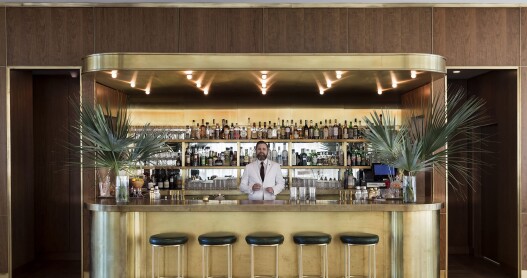
With its walls of colorful glass bottles, this charming little bar can be elusive—nestled deep in downtown Athens, in the warren of streets that make up the Plaka. Day or night, Brettos (pronounced Vrettos in Greek) is frequented by locals and tourists alike—the oldest distillery in Athens. While you can opt for beer, wine, homemade moonshine, or perhaps a cocktail, you might kick yourself later for passing up the chance to have an ouzo, Greece’s signature anise-flavored liquor, in such a storied watering hole. Who knows where that first sip might lead?
Hagios Demetrios is known as the largest church in all of Greece, and while this interior doesn’t look as large as other European churches, the entire building and grounds are a true showing of historic periods coming and overlapping one another. You’ll find ancient ruins with Christian worship, and many relics and antiquities to see.
See our full list of Where to Go in 2015. According to legend, the ancient gods battled it out to become Athens’ patron deity. The showdown came after the Phoenicians founded a city at a giant rock near the Aegean some two and a half million years ago. The gods of Olympus issued a challenge: the deity who could provide the most valuable legacy for mortals would become the city’s namesake. Athena, goddess of wisdom, produced an olive tree, symbol of peace and prosperity. Poseidon, god of the sea, pounded his trident into the ground and out came a saltwater spring (or a horse, depending on the legend you read). The gods decided Athena’s gift would serve the city better with food, oil, and wood. To this day, her legacy is revered throughout Greece. Named after Erechtheus, a mythical king of Athens, the Erechtheion is Ionic architecture at its finest, easily recognizable by the Caryatids, six larger-than-life maidens modeled on women from ancient Karyai who seem to be casually supporting its southern portico. Those holding up the porch now are plaster casts; the originals are preserved in the Acropolis Museum in Athens.
You can’t miss the Parthenon, the majestic ruin towering above Athens. Originally painted in vivid hues, this feat of architecture, engineering, and artistry is still as awe-inspiring as it was almost 2,500 years ago. Le Corbusier, pioneer of modernism, called it the most “ruthlessly flawless” monument in the world. Hold on to your admission ticket: It’s valid for several other archaeological sites on the slopes surrounding the Acropolis, including the Agora and theater of Dionysus.

We picked up some gyros to-go during our stroll through the historic Plaka neighborhood below the Acropolis. Thespidos street was particularly memorable for the cafe we stopped at and discovering Brettos bar, which we decided to come back to enjoy as the end a lovely evening.
It’s hectic, crowded, hot, and loud. But Piraeus port is an unforgettable experience—all modes of humanity coming together on this intersection of land and sea. Luxury cruise ships, bigger and whiter than you ever imagined, slowly approach, dock as if in slow motion, and unload their thousands for the day. Greek ferry lines like Blue Star or Hellenic Seaways efficiently shuttle locals to their weekend island getaways. Fisherman, cargo loaders, captains, and all kinds of other workers get busy doing their jobs. And lately, refugees from less fortunate lands are visible, looking for work, connection, or escape. There’s not much glamour in Piraeus Port, but there’s nothing quite like taking a bit of time as you wait for a ferry and watching life pass by.
For many travelers to Greece, there’s a conundrum: Do you concentrate on the mainland—Athens, Delphi—or do you spend your time cruising the islands—from fashionable Mykonos to holy Patmos? With Grand Circle Cruise Line, you don’t have to make that decision. The first week of the 15-day Treasures of the Aegean: Greek Island Cruise, Athens & Istanbul itinerary includes the monasteries of Meteora, perched atop rock formations; the town of Kalambaka, Thessaly, where you’ll discover a Byzantine tradition when you stop at an icon-painting workshop and meet one of the artisans; and the majestic ancient sanctuary of Delphi. Then you depart on a cruise to the Aegean’s most beautiful islands aboard a 50-passenger small ship. You’ll call at ports including Amorgos, Delos, and Naxos, where you’ll sit down for an island dinner with some of its residents. While you’ll be following the routes of ancient heroes, Grand Circle assures that travelers also experience modern-day life in the country from those who live, work, and play here. Exclusive Discovery Series events take you deeper, show you more, and give you an unfiltered look into daily life whether you’re dining with a Greek family during a Home-Hosted Dinner, or participating in a cooking class in the mountain village of Arachova.
This monastery, located on the Akritori peninsula of Crete, is run by monks who make wine and well-priced, quality olive oil. The building is surrounded by peaceful groves and orchards.