Berlin

Whether your interests lean toward history or culture or shopping or out-all-night fun or, even better, a mix, Berlin is sure to become one of your essential vacation spots. The city is loaded with writers and artists who are driving the conversation about the history city forward. The once divided city has turned into one of Europe’s cultural hot spots, where the fun goes on into the early hours of the morning before kicking right back off again. But Berlin’s ultra-modern present sits side-by-side with Germany’s history—most notably the country’s role during the 20th century and World War II. The city doesn’t shy away from its past, with sites including the Memorial to the Murdered Jews of Europe. Other worthwhile history stops include Checkpoint Charlie and the Brandenburg Gate.

Four people with big pints of beer cheersing

TTstudio / Shutterstock

Overview

When’s the best time to go to Berlin?

Berlin is famous for its summers—not that they’re especially warm, but there is just so much to do. The summer season can be wet, so it’s best to pack an umbrella—though rain doesn’t stop Berliners from enjoying their city. May is often considered the best time to visit, with good weather and plenty of festivals and events. Winters in Berlin are cold (below freezing in January and February), but the cultural events don’t disappear. Locals stay busy with seasonal festivities and quirky adventures like skiing on the grounds of the former Tempelhof Airport, which is now a giant city park.

How to get around Berlin

Berlin is served by two main airports. Tegel (TXL) is conveniently located within the city limits. Public buses (20 minutes) run from Tegel regularly to Berlin Hauptbahnhof and Alexanderplatz. Schonefeld Airport is connected to the city by S-Bahn and regional trains (30 minutes).

Berlin’s transportation system, the BVG, is reliable, convenient, and vast, and it includes buses, trains, and trams. As in many European countries, the BVG runs on the honor system, so make sure to validate your ticket before boarding. At random times, officers check the tickets of each passenger. The U-Bahn trains (underground lines) run until late and are round-the-clock on weekends; S-Bahn trains (commuter lines) traverse the city, making them best for fast connections. Taxis in Berlin are readily available, as are services like Uber.

Can’t miss things to do in Berlin

To really get a feel for Berlin’s cultural life, it’s best to visit one of the many parks and public spaces on a sunny afternoon or early in the evening. Görlitzer Park is one of the most popular hangouts, but you’ll find more locals at the Volkspark Friedrichshain. There’s a beer garden, a small hill for hiking, and even a fairy-tale fountain (the Märchenbrunnen). Museum goers should head straight to Museum Island, where five exquisite museums (all on one ticket) await.

For an overview of all that happened before, during, and since the Holocaust, seek out the Jüdisches Museum (Jewish Museum). The museum is a challenging but extremely worthwhile place to spend time.

Food and drink to try in Berlin

Food in Berlin runs the gamut—from cheap street foods (don’t miss the ubiquitous doner kebabs) to fine dining. Each Berlin neighborhood, or kiez, typically has its own food market. Fresh vegetables, produce, and bread can be bought at the markets, and many have small stands selling lunch or snacks.

Though, years ago, few people would have shouted “Berlin!” if asked for one of the world’s best food cities, things have changed. Trendy brunch spots, Vietnamese restaurants, and traditional German fare all play a role in today’s Berlin. Most tourists flock to the bars around Görlitzer Bahnhof and Schlesisches Tor, but there are plenty of other areas worth exploring. Branch out into Neukölln for the freshest crop of good bars. And rather than hitting the restaurants on Simon-Dach Strasse in Friedrichshain, go a few blocks east to Boxhagener Platz.

Culture in Berlin

With hundreds of independent galleries in addition to its many city-owned museums, Berlin has history and culture in spades. Museums cover everything from typography (Buchstabenmuseum) to film (Film and Television Museum). Art galleries in Berlin have a solid reputation among enthusiasts. Berlin was a hotbed for culture in the 1920s, and in recent years the city has again embraced its creative classes. Get some deep background on what life was like in Berlin during the Cold War by participating in Divided City, a private walking tour led by a local historian or architect from AFAR’s partner, Context Travel.

Artists, musicians, and innovators have made Berlin home in the past couple of decades, changing the very face of the city—sometimes quite literally. Street art and graffiti in Berlin is often ranked among the world’s best thanks to Berliners’ need to speak up and be heard.

In a city as diverse as Berlin, festivals and events happen all year long. Summertime sees an influx of music festivals: watch out for MyFest, Christopher Street Day gay pride, Carnival of Cultures, and Berlin Music Week. The winter has its fair share of festivals as well, most notably the star-studded Berlinale indepedent film festival.

Practical Information

  • The first language of Berlin is German. There’s a good chance you’ll run into English speakers in the city but a translation app or German language guide is definitely helpful.
  • Germany is a member of the European Union and uses the Euro as its currency.
  • The country’s standard voltage is 230v. Power sockets throughout the country require a type F adapter (though type C and E plugs will also work).

Guide Editor

READ BEFORE YOU GO
HOTELS
Berlin is a masterpiece of urban planning, from the Museum Island at the heart of its walkable center to groundbreaking Modernism Housing Estates, plus epic parks and forests waiting just a stone’s throw away.
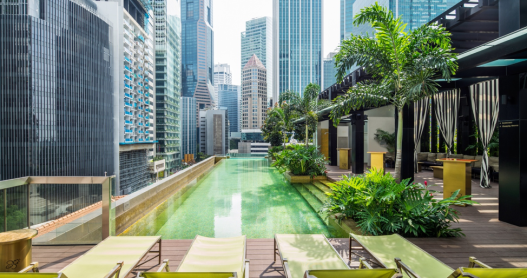
From shopping sprees in Singapore to thumping clubs in Berlin, the world is full of cool cities that move to the pulse of pop culture. Staying at the right hotel is one way to find the hippest places to eat, shop, and play.
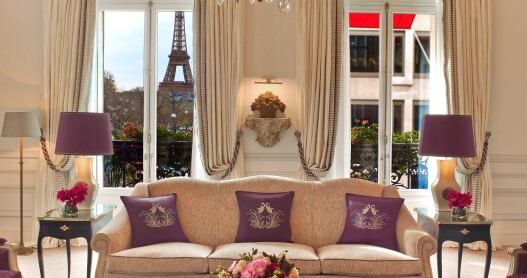
There’s nothing dreamier than a room with a view, and these luxurious hotels are perfectly positioned to give you the best views of some of Europe’s most memorable sights.
RESOURCES TO HELP PLAN YOUR TRIP
I dare you to visit Planet Modular and not leave with a stack of new notebooks, Japanese masking tape, or sparkly envelopes. It’s unequivocally a supplies haven for artists and crafty DIYers, and while I don’t fall into either of those categories, I’m a sucker for colored gel pens and stationery. One loop around this shop, and you’ll understand why Berlin ranks high in creative design.
Formerly considered East Berlin, Karl Marx Allee is one of the best places to get a glimpse of socialist history, architecture, and local life in Berlin from the past. The famous street is 89 meters wide and 2 km long and still houses some of the “wedding cake” architecture that East Germany was known for. You don’t need a guide. Save your money and simply check out the numerous (30+) plaques along the way (on both sides of the street) which provide you with history, stories, and old photos of the famous street. I suggest that you start at the Alexanderplatz U-Bahn station and walk along the north side of the street, then return along the south side—to get the full scope of the ultra-wide street.
In Berlin’s Kreuzberg district, here you’ll find racks constantly restocked with coveted labels (Wood Wood, Acne, Kenzo, Opening Ceremony) and supersmall brands such as Stutterheim, a Swedish design house that handsews raincoats. In addition you can enjoy coffee from Voo’s in-store Companion Coffee Showroom, serving specialty coffee and tea and limited baked goods. The store also hosts exhibits, readings, and concerts. This appeared in the August/September 2013 issue.
This is one of the most hectic and lively courtyards in Berlin. Located in Mitte, it is named after the Hackeschen Market, which is across the street. As in many of Berlin’s courtyards, the building complex around it consists of offices, businesses, factories, and apartment buildings. In this specific one sits a well-known movie theater, which makes it even busier. As this was the first courtyard and quite successful, today there are eight other courtyards between Rosenthal and the Sophienstraße. All around the courtyards, you’ll find numerous bars, restaurants, and clubs. The area has become one of the coolest places to go at night.
Blink and you’ll miss this tiny Indian-run eatery serving eclectic international fare between Mitte and Prenzlauer Allee along the trendy Kastanienallee. Notable for its upside-down McDonald’s sign (hence the “W” in the name; Der Imbiss means “The Snack”), the restaurant consists of a service window and a few brightly colored tables, and has quirky Hawaiian and African decor. The food is not only cheap and tasty but also healthy and diverse, pulling off an ambitious mix of Mexican, Californian, Indian, and Italian influences. It’s most famous for naan pizzas—Indian naan breads baked in the venue’s tandoor, with pizza-esque toppings from olives and cheese to artichokes and salmon. The menu also includes filling Indian thali platters, soups and salads, and Mexican-style wraps.
Visiting at least one of the five museums that make up Museum Island, a UNESCO World Heritage site, is a must for any serious culture-seeker in Berlin. A pioneering concept, this ensemble of public institutions brimming with exquisite artworks and historical artifacts traces its origin back to 1810 and King Friedrich Wilhelm III’s decision to open a museum for his personal collection of royal treasures. Today, the original Altes Museum—located opposite the former Royal Palace—is joined by the Pergamon Museum, with its jaw-dropping Middle Eastern antiquities; the Neues Museum and its treasures from ancient Egypt; the Alte Nationalgalerie’s collection of 19th-century European masters; and the Bode Museum, which hosts one of Europe’s most important sculpture collections.
The world’s largest chocolate shop also includes two restaurants and is a dream come true for travelers with a sweet tooth. At the Chocolate Café, you can fill up on hot chocolate, tortes and chocolate treats. The Chocolate Restaurant specializes in incorporating chocolate, as well as cacao, into savory dishes. You’ll want to pick up some gifts for friends at home—or just snacks for later in the day—at the shop.
Yam is a unique park that truly makes Berlin a city of the free. Created by rastafarians, or rugged nomad expats from Jamaica, Ghana, and Africa, they’ve created an environment that lives up to their dreams; a carefree zone where the only thing that matters is a cold beer, good people, music, food, and sports. Once inside, you walk through lots of sands with implanted picnic tables. Rastafarians serve food from stands that stems from a background of Caribbean or african roots. Cold local beer is served by a bar overlooking the ocean and sport fields are open for any basketball or soccer takers. Come by day to relax under the sun or come by night to dance through a cultural endemic.
The most famous remaining stretch of the Berlin Wall gets its name from its location on the east side of the Spree River, as well as from its collection of political and satirical murals. Originally painted just after the wall fell, the murals were repainted (or in some cases painted over) in 2009 as a way of cleaning up the increasingly decayed originals and in recognition of the 20th anniversary of the fall of the wall. Today, a fence partly protects the gallery to prevent vandalism of the murals, but people throng here nonetheless, especially in summer. A museum at the site tells the fascinating story of the structure through interactive displays, original newsreel footage, and filmed interviews with Berliners who lived on both sides.
The Spacehall Record Store is THE place to go to buy new or used records in Berlin. With plenty of listening stations, you can be sure you’re buying quality music. The space-like interior features some comfy (if not odd-shaped) couches and simple but quirky touches of design. Check out the room in the back to find good deals on used records. Or if you want some novelty band/DJ T-shirts, try the section up front.