Paris

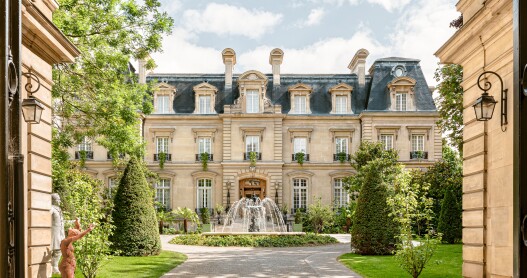
A hub for hedonists, a wellspring of inspiration for artists, and a haven for history buffs: Paris is a fantasy destination for millions of travelers each year. The storied bakeries, iconic museums, and corner cafés feel anchored in another time, but the zeitgeist of the city leans forward into a dynamic, multicultural food scene dominated by young French and foreign talents. It is precisely this juxtaposition of old and new that makes Paris the perpetually perfect place to visit. So go exploring, get lost, eat until your belly hurts—and then do it all over again. The City of Light shines on.

Paris-filip-mishevski-eZ2aHgA6Xds-unsplash.jpg

Photo by Filip Mishevski/Unsplash

Overview

When’s the best time to go to Paris?

You’re likely to be disappointed if you arrive expecting the image of springtime in Paris that you see in Hollywood films. In the last several years, the months between April and June have reported below-average temperatures and record-high precipitation—a far cry from the endless days of sunshine in the movies. The weather is wholly unreliable, which foils many travelers’ ambitions for a dry early-season trip. Late summer and early fall typically yield the warmest sojourns (though the summers in general appear to be getting warmer), plus this is when Paris is most culturally active, unveiling new exhibits and welcoming the return of the some of the most anticipated festivals. December and January provide a more festive experience, with Christmas markets lining the well-heeled boulevards and twinkling lights illuminating the city’s boutiques. All weather aside, there is hardly a bad time to visit Paris, rain or shine.

How to get around Paris

From either of the city’s two airports, the RER B, a regional rail line, is the fastest way to reach the city center. Taxis are convenient, but they can be costly.

Getting around: There are few cities as walkable as Paris. For further distances, le métro is the quickest and most reliable means of getting to and from your destinations (sometimes faster than a taxi). Google Maps is a reliable way of figuring out which train to catch. Ubers operate here.

Paris also has excellent bike infrastructure. On nice days, grab a bike share with Vélib, the city’s successful bike-share program, or Lime.

Can’t miss things to do in Paris

– Whether at the peak of summer or in the moodiness of a winter’s night, nothing elicits a chorus of oohs and ahs like a leisurely after-dinner stroll across the city’s iconic bridges and along the banks of the Seine River. Amble across the Pont des Arts toward the Institut de France and continue along the docks of the river, watching the Bâteaux Mouches glide by and illuminate the river with their lights. Keep wandering until you reach a spot to pause for an unobstructed view of a twinkling Eiffel Tower (every hour, on the hour, after sundown). It’s free and absolutely stunning at all times of year.

– If time allows, you really shouldn’t miss visiting the Louvre, the Musée d’Orsay, and Sacré-Cœur, or taking a stroll through the Luxembourg Gardens.

– Following the devastating fire in April 2019, Notre-Dame Cathedral remains closed for restoration work. Officials have said the forecourt in front of the church could open as early as March 2020, but for now, you’ll only be able to snap a picture from afar.

Culture in Paris

Every international city has its iconic landmarks and cultural institutions. In Paris, most travelers would cite the Louvre as the must-visit art stop, but curious visitors should look beyond the usual suspects and explore places like the Musée de la Vie Romantique, the Jewish Art and History Museum, the Cinémathèque Française, and the Fondation Cartier.

Dive a little deeper into a fascinating chapter of 20th-century Parisian history with a historian-led Context walking tour that focuses on the city’s occupation by Nazi Germany, a time marked by unrest, bravery, and heroism. – Given the Parisians’ well-documented penchant for celebrating art, culture, and design in all its forms, you can count on a packed schedule of festivals all year long. Whether for a neighborhood street parade or larger-scale happenings like Paris Plage and Nuit Blanche, it’s worth planning your vacation around the city’s celebratory timetable.

Local travel tips for Paris

  • Always greet shop owners and restaurant staff with “bonjour” when entering and before asking a question or making a request.
  • When metro train cars are crowded, give up your folding seat and stand.
  • A baguette is always better with cheese—the older the cheese, the better.
  • Do not overlook the city’s farmers’ markets as potential lunch spots.
  • Macaron loyalties teeter between Ladurée and Pierre Hermé, so try both and decide for yourself.
  • The Champs-Élysées has few redeeming qualities and is considered the Times Square of Paris by locals. Skip it and opt for a bird’s-eye view from the top of the Arc de Triomphe.

Practical Information

  • U.S. visitors to France do not need a visa for stays of less than 90 days.
  • France uses type E and C plugs, so visitors from the U.S. will need an adapter.
  • France’s official currency is the euro.
  • The official language is French, though you’re likely to hear several languages spoken, as Paris is an international city.

Guide Editor

READ BEFORE YOU GO
HOTELS
These 19 hotels around the world immerse you in their destinations while carving out space for unhurried time together.
These are the 20 best luxury hotels and resorts in France outside of Paris, according to insiders—whether you’re seeking a bucolic Provençal getaway or an immersion in a bygone era of the French Riviera.
These are the top places to stay in the City of Light.
Not all Eiffel Tower views are created equal. These hotels prove why only some are worth the splurge.
This curated list of “maisons,” boutiques, and family-run hotels showcase the kind of style and attitude only Parisian hotels can deliver.
Once home to artists and writers, Paris’s Left Bank still delivers cobblestoned charm and leafy boulevards—and these timeless hotels will put you in the center of it all.
Stylish, central, and surprisingly affordable—Locke’s new Paris hotel brings townhouse elegance to the Latin Quarter.
Palace hotels are the highest distinction a hotel can achieve in France. Here’s what they are—and what makes them so special.
The French capital is filled with stylish hotels that are big on personality—and easy on the bank account.
Airbnb has launched a new category called “Icons” for its most over-the-top stays and experiences (Prince’s “Purple Rain” house, anyone?). It also added a new feature to make booking group trips easier.
RESOURCES TO HELP PLAN YOUR TRIP
The area around the rue de Bretagne in the north part of the Marais continues to be a big draw with locals and visitors for a number of reasons: the Marché des Enfants Rouges covered market with food stalls, the wincingly bobo-chic Café Charlot (people go even if the service is uneven and the fries are frozen), the Franco-British brunch institution Rose Bakery and the upstart Candelaria, one of the best places in the city for tacos and cocktails. Equally as iconic as some of these hot spots it Hier Aujourd’hui et Demain, a shop right across from Café Charlot that hawks vintage home decor accessories and French industrial lamps - both of which have reeled me (and my wallet) in many a time. A great source for original pieces and antiques to bring back with you after your trip.
The folks behind this bistro à vins and wine shop are part of the sincere network of people in our neighborhood who share the same values I have—they take risks, they’re curious, they care about the environment. This is where my husband and I buy our wine, and the food is delicious, too. —Matali Crasset 67 rue de Lancry, arr. 11, 33/(0) 1-48-03-17-34. This appeared in the August/September 2013 issue. Image: Mari Bastashevski. Read more about Matali Crasset’s Belleville neighborhood.
Just down the street from the charming Carreau du Temple, an open-air market square in the Haut Marais that recently reopened after heavy renovations, sits OFR: a bookshop-cum-gallery that houses an extensive collection of multilingual art and design books and fashion magazines. Here, you’re likely to mingle with a modish crowd, willing to strike up a conversation about anything from travel photography to urban design. If you go, check OFR’s website for regularly rotating events. Added benefit: open 7/7!
You’d think that having a Meilleur Ouvrier de France (a prestigious crafstman title) at the helm of a restaurant would imply steep prices, but at Semilla, you’re in for both a great meal and a great deal. The international influence is strong here, where Ferrandi-trained chefs serve up modern interpretations of classic French dishes from an open kitchen. The crowd is mixed, the service is smooth and attentive, and the bread, an important element to any meal in France, is rustic and hearty—baked fresh in the adjacent sandwich shop run by the same owners. But the most unique aspect to the menu at Semilla is the option of half-portions on a selection of dishes. The menu changes daily with meat, fish and veggie options available for every kind of eater. Open seven days a week but be sure to call ahead for a reservation.
The location for the most charming scenes in the movie Amélie, this once-forgotten neighborhood is now a destination for the young and fun-loving. As soon as the weather turns warm, picnickers line the paths along this 19th-century waterway, watching bridges rise and turn to allow barges to pass. Shopping, food, drink, and diversions also abound here: Artazart (83 Quai de Valmy) is recognized as one of the best design bookstores in Europe, while Le Comptoir Général, just across the bridge, offers live music and cheap drinks. Chez Prune has one of the city’s most popular terraces for enjoying a glass of something refreshing and a chance to watch Paris go by.
Stand on the the quais beneath the Pont Neuf bridge—the city’s oldest crossing of the Seine—and look up. Staring down at you are mascarons, stone faces that resemble gargoyles, but without bodies. No two of these grotesque visages are the same. Enjoy their individuality as you ponder the decades it took to build this stone structure: begun in 1578 by Henri III and inaugurated by Henri IV in 1607. From 1588 to 1599, construction was interrupted by the French Wars of Religion, which lasted 36 years. Then head up the stairs to walk across its two spans, which connect the Ile de la Cité to the Right and Left banks. Great views of the Louvre can be had from the longer, seven-arch span that stretches to the Right Bank.
It isn’t uncommon to see large tour buses idling in front of Merci, one of the city’s most popular home and design shops, as visitors alight, armed with canvas shopping totes and credit cards at the ready. The store’s philanthropic mission brings in droves of both tourists and locals—profits are donated to a charity in Madagascar that aids women and children. It is a veritable feel-good shopping destination. One caveat: The goods for sale don’t come cheap. While high-end homewares and designer duds don’t match all budgets, Merci’s space itself is undeniably cool. When I’m feeling strapped for cash and want the Merci experience, I head to its Used Book Café. Used books, old and new, decorate this cozy library-inspired café where I can read, write, people-watch (and play the guessing game of “What’s in that Merci bag?”), and rejuvenate with a freshly pressed lemonade. With each sip, a feeling of calm washes over me—a type of Zen harder to reach on the bustling streets of Paris. All beverages, hot or cold, are served with a bite-size piece of cake and a smile. Grab one of the mismatched vintage armchairs, the fresh scones with jam, or the American-sized lattes. But on a warm, sun-drenched Paris day, it’s the citronnade between shop-hopping that sets you right.
Within the 18th arrondissement in Paris France, high atop the city, resides the wonderfully beautiful, hilly neighborhood of Montmartre. This diverse and eclectic section of the city can be a bit busy with tourists, but the views of Paris and the splendor of the Basilica of the Sacré-Cœur are certainly worth it. Riding the funicular is rather novel, but not necessary if you’re willing to climb the 300+ steps to the summit. This is an area to be explored on foot, as is nearly all of Paris. The shops, theaters, and forever famous Moulin Rouge should not be missed. The streets are intimate, the shops unique, and the overall feel of this place speaks of a youthful, colorful Paris.
Small enough to get around without being overwhelmed, the Musée d’Orsay is a favorite stop in Paris not just for its size but for its collection of Impressionist, Postimpressionist, and art nouveau art. Perfectly set in the center of the city, on the banks of the Seine, and opposite the Tuileries Gardens, the museum is housed in the former Gare d’Orsay, a railway station that was built for the Universal Exhibition of 1900—so the building itself could be seen as a work of art. The extraordinary collection spans art created in the period between 1848 and 1914.
This beautiful Parisian cemetery is on the Boulevard de Menilmontant and next to the Metro station Philippe August, in the 20th arrondissement. Upon entrance to the main gate, grab a map so not to get too lost. The art work on the memorials and the stories behind the names on the headstones inspire a mood of great tragedy and romance. The locals call it the la cite des morts (the city of the dead). The cemetery makes the ideal place to explore if you’ve seen a lot of Paris before and want to dig a bit deeper. Seek out the tombs of 1) Oscar Wilde (for all of those declarations and kisses left behind); 2) Georges Rodenbach, a Belgian writer and poet of the 19th century with a breathtaking tomb; 3) Victor Noir, who became more famous in death (by duel) than life. Seek the answer to the riddle of why his tomb is seen as good luck for fertility You’ll also see the gravesite of Gertrude Stein and Alice Toklas, buried side by side in a testament to their love. The list of the celebrity dead goes on and includes Gericault, Piaf, Chopin, Heloise and Abelard. Even Jim Morrison. An afternoon here is guaranteed to leave you grateful for the treasures you found but weren’t expecting.