Canada

Canada spans six time zones, and some say that it boasts the longest street in the world. This nation gave the world Leonard Cohen, Leslie Nielsen, Mounties, Tim Hortons, Superman, zippers, the light bulb, and the snowblower. This is a place where polar bears, poutine, and epic panoramas predominate. Canada’s wilderness beckons adventure-seekers from the world over, while the country’s cultural attractions, culinary marvels, hockey rinks, and artistic landmarks thrill visitors of all stripes.

Vancouver Canada totem pole

Jessie Beck

Overview

When’s the best time to go to Canada?

The best time to visit Canada depends on what you wish to experience. The snowy months of winter allow for world-class skiing, snowshoeing, and hockey games. Summer is ripe for sunseekers to explore both the Pacific and Atlantic coasts, the lakes of Ontario, and the wild country of the North. Spring turns the West into one gigantic flowerpot, while fall transforms Eastern Canada into a kaleidoscope of colors. Keep in mind that many Canadians travel during the summer months. Also, national parks and big cities attract thousands of visitors from the United States during school holidays and long weekends, when prices can soar in destinations like Toronto, Vancouver, Jasper, Montreal, Banff, Calgary, and Halifax.

How to get around Canada

Major international airports are spread across the country from Vancouver in the west to Halifax in the east. Many international visitors choose to arrive at U.S. border cities (e.g. Seattle, WA and Buffalo, NY) and then drive across the border. This can be a cheaper way of entering Canada, but be prepared for traffic and extended waits at border checkpoints during peak travel times.

Major cities like Toronto, Vancouver, Calgary, Montreal, and Halifax have excellent public transportation networks: taking the bus, riding the metro, or hailing a cab is a breeze. Smaller cities and rural towns are walkable, but you’ll need a car to get out into the countryside. Public transportation in and out of national parks is virtually nonexistent. The space between metro centers can seem daunting, so consider flying if you wish to cut down on travel times.

Food and drink to try in Canada

Canadian cuisine is as diverse as the country is expansive. On one city block—or on one menu—you may find restaurants serving Ukrainian, Chinese, Irish, German, Portuguese, Haitian, Nigerian, and Ethiopian dishes. Each province and city has its own culinary flair: you’ll find unique Western fare in Calgary and Edmonton, gastro-nouveau in Toronto and Vancouver, fine French dining in Montreal and Quebec City—and the best the ocean has to offer in Halifax, Charlottetown, and St. John.

Culture in Canada

Have you come for the great outdoors, or Winnipeg’s Folklorama? Perhaps you’re in town for Toronto’s MuslimFest, or you made the trek to quirky little Maxville, Ontario, for the Glengarry Highland Games. Massey Hall in Toronto has hosted the world’s largest musical acts for decades, while the Quebec Winter Carnival is Canada’s premiere winter event. The Edmonton International Fringe Festival, held every August, is the largest and oldest fringe fest in North America.

Canadians love to party. Canada Day (July 1) is celebrated from coast to coast, with Canadians and visitors packing public squares, stadiums, parks, and concert halls for massive festivals. The Calgary Stampede takes over Alberta’s largest city every July; Montreal’s International Jazz Festival (June 29–July 9) welcomes 2.5 million visitors each year; and Pride, Scotiabank Caribbean Carnival, The Canadian National Exhibition, and the Toronto International Film Festival bring revelry to Ontario’s capital.

Local travel tips for Canada

English is Canada’s common tongue, though French is spoken throughout Quebec and in many Atlantic cities. That said, you’ll hear nearly every other language in the big metro centers. The currency is the Canadian Dollar ($). Tipping is required (15%) in restaurants, and it is generally expected in taxis and hotels. ATMs are everywhere, and major credit cards are accepted across the country. Electricity is 110v.

Guide Editor

READ BEFORE YOU GO
An exclusive-use lodge in British Columbia’s Great Bear Rainforest, Fawn Bluff combines exceptional wilderness access with a nonprofit model that channels all net profits into Homalco First Nation community initiatives.
HOTELS
The 2026 FIFA World Cup is bringing the world to Vancouver this summer. Here are the 12 hotels worth booking, whether you’re coming for the games or finally making the trip to this dreamy British Columbia city.
These hotels around the world—all owned and run by women—reflect a wide range of destinations and styles.
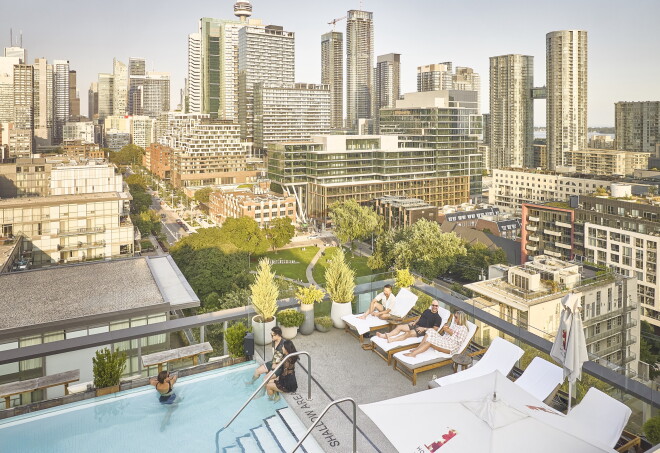
At the 10-room Ode Toronto, local art, vintage shopping, and neighborhood restaurants in Dundas West define the experience.
Sleep under the world’s darkest, clearest skies across six continents at one of these 19 dark sky zone hotels.
Afar editors share the 2025 hotel stays they didn’t want to leave—and would happily return to.
At Nimmo Bay in British Columbia, luxury means snorkeling in 50-degree water, sipping water from cedar-lined mountain streams, and spotting grizzlies from a floating sauna.
In Toronto’s burgeoning hotel scene, you’ll find Canada’s first Ace Hotel, a reimagined St. Regis, and an ultra-cool boutique stay in a private women’s club.
Heli-ski in winter, or hike, bike, and paddle in summer at Eleven Revelstoke Lodge, a revamped heritage property in Revelstoke, British Columbia.
Whether it’s a villa in Italy, a dude ranch in the U.S. West, or a luxury all-inclusive in the Caribbean, here are places where accommodations and experiences are ideal for large family groups with a wide range of ages.
These women aren’t just breaking barriers. They’re building a more inclusive, dynamic future for hospitality—and your hotel experience will be the better for it.
RESOURCES TO HELP PLAN YOUR TRIP
Open seasonally from June 1 through October 1, Moraine Lake Lodge is, as its name suggests, set right on the stunning turquoise waters of the glacier-fed Moraine Lake in Banff National Park. The lake is one of the most photographed locations in Canada, and the view once appeared on the back of Canadian $20 bills. The original lodge sprang from a teahouse that offered overnight camping at the turn of the 20th century, with the first lodge house dating back to the 1920s. A full redevelopment began in the late ‘80s, with new buildings designed by acclaimed Canadian architect Arthur Erickson. The cabins and rooms all feature custom-built log furniture, and many rooms have wood-burning river-rock fireplaces. The rooms’ design reflects the soaring Rocky Mountains outside, with warm earth tones alongside cozy blankets and deep soaker tubs. All rooms are free of TVs and telephones, allowing guests to unplug from modern-day distractions, although there is Wi-Fi. It’s likely that cell phones will not work here either.
The Post Hotel & Spa is set in the heart of the pristine Banff National Park, surrounded by the Canadian Rocky Mountains and overlooking Lake Louise. The original log-walled lodge—opened in 1942 as the Lake Louise Ski Lodge—has stone fireplaces and a cheery red alpine roof, and the numerous add-ons, extensions, and renovations over the years have preserved and accentuated this rustic design. This is further enhanced by the hotel’s interior color palette of burgundy and neutrals, and set off by luxurious touches such as overstuffed couches and Egyptian-cotton sheets. The accommodations include intimate cabins for two and a 3,000-square-foot mountain chalet ideal for groups and families. Just minutes away from one of Canada’s largest ski areas and blessed with an abundance of perfect powder each season, the Post Hotel & Spa is popular with skiers and boarders from across North America; in summer it attracts outdoor enthusiasts keen to explore the myriad treasures of the national park. It has been a Relais & Châteaux property since 1990.
Discounted Lindt Swiss chocolates—really, what is not to love about this? You’ll find a wider-than-usual Lindt range here, which means flavors you don’t often see in the shops, from pistachio to sea salt and even Irish cream.
Banff and Jasper are top of mind when it comes to Alberta‘s Great Outdoors. Travelers flock to Moraine Lake by the busload for postcard-perfect snaps and zip through the province’s northern parks on the trail of grizzlies, elk, and moose. Waterton Lakes manages to fly just far enough under the radar that it never feels crowded or bustling, even on a wild Canada Day long weekend, which makes it a wonderful alternative for the “been there, done that” crowd. For an iconic view of Waterton Village and Upper Waterton Lake, test your mettle against the Bear’s Hump, a mile-long trek that begins at the Waterton Visitor Resource Center. The trail opens to a grand rocky plateau atop what was once called Bear Mountain by the Blackfoot people. Begin your trek early in the morning or late in the afternoon to have the mountain to yourself, but be warned that the wind atop the Hump can be ferocious. Knock your hat off and dump you off the mountain ferocious. Still, the views of Waterton Valley and Mount Cleveland are worth the challenge. [Flash traveled to Alberta courtesy of Travel Alberta.]
For adventures in Old Strathcona, at the heart of Edmonton’s cultural, culinary, and nightlife scenes, book a night or three at the Euro-style Varscona Hotel on Whyte. Historic Old Strathcona is home to the iconic Stracona Railway Station (built in 1908), the Princess Theatre (the city’s oldest, built in 1915), and the Strathcona Hotel (built in 1891). The hotel has wonderfully appointed rooms, an excellent breakfast nook, a 24-hour business center, a fitness center, an “oak and leather” lobby with a chill vibe, and an attentive staff always at the ready with a recommendation for a cafe, coffee shop, or curio store. The hotel is within walking distance of Old Strathcona’s 100+ restaurants, cafes, bookshops, and music shops, and makes for a brilliant base for exploring Alberta‘s capital, especially when Edmonton is hosting one of its many festivals — one for nearly every day of the year, in fact, from the Edmonton International Fringe Festival (August 14-24) to Western Canada Fashion Week (September 18-25). [Flash traveled to Alberta courtesy of Travel Alberta.]
Best known by locals for its stunning views of the Canadian Rockies (nab a seat by the giant windows to make other diners jealous!), the Bison’s best-kept secret is its addictive dinner and Sunday brunch menus. Chefs Liz and Kirk are geniuses at creating special dishes that show off the region’s bounty, like bison carpaccio, venison striploin with maple parsnip purée, and a bison breakfast sandwich with bison sausage, fried egg, and foie gras butter. Ask the servers for help pairing the perfect regional beer or national wine with your order—they know their stuff.
Jasper National Park’s newest attraction, the Glacier Skywalk, opened earlier this year as part of several features at the Glacier Discovery Center. After parking at the center, take a quick bus ride to the Skywalk. A free audio tour introduces the local ecosystem - it’s a nice accompaniment to the stroll along the nature exhibits on the way to the platform. Once you finally reach the engineering marvel – anticipation building – take a step out onto the 1.5-inch thick glass that hovers over the Sunwapta Valley below. Peering down the valley reveals a glimpse of the Athabasca Glacier (though you’ll have to head down the road to get a good view of the whole thing). From the Skywalk you’ll see waterfalls, endless trees, and maybe even a mountain goat or two. Visiting first thing in the morning means less crowds and more freedom to really explore the Skywalk. The best thing about the attraction? The view is still amazing even if you are too nervous to go out very far on the glass. Photo and travel courtesy of Travel Alberta.
While famous for its namesake and black diamond ski runs, Lake Louise Resort has plenty to keep visitors happy even when the snow has melted. The main lodge – a log cabin built entirely from local trees - greets visitors who come for the 14-minute gondola ride up Whitehorn Mountain. Riders have a choice between an enclosed gondola and an open chair lift. A good way to experience both is to ride the gondola on the way up and the chair lift on the way down, since the views as you face the valley are more panoramic. Keep an eye out on your ride for one of the resident grizzly bears. At the top of the lift, there are a number of well marked hiking trails, as well as the Lake Louise Interpretative Nature Center. Center staff lead a 45-minute interpretative walk which is a great way to get acquainted with the environment and learn about the area’s bears before setting off on your own. Also at the summit, the Whitehorn Lodge offers visitors a surprisingly delicious experience with five-star views. Both the building and the menu have been recently revamped and the results are well worth the price of the gondola ride. The seafood chowder, a meal in itself, is a highlight as is the beef tenderloin burger: a mound of beef tenderloin cooked to order and served open-faced on a giant piece of focaccia with a pile of yam fries. You’ll definitely be full for your ride back down the gondola. [Travel courtesy of Travel Alberta]
One of the best things about Calgary is the winter playground in the center of town. Canada Olympic Park, on the western edge of the city, features a ski hill, snowboard park, cross-country trails, an Olympic luge track, Canada’s Sports Hall of Fame, and a glass elevator that takes you to the 1988 Winter Olympic’s biggest ski jump, as well as skating facilities and restaurants. It also offers private and group lessons, so you can brush up on your sport where World Cup and Olympic athletes train. Plan a day to hit the slopes, or forget the skis and come explore the park’s less strenuous attractions that celebrate winter.
Opened in 2006, the Four Seasons Centre for Performing Arts right in the crux of downtown at Queen and University is a gorgeous forum for performances from the National Ballet of Canada and the Canadian Opera Company (COC). For those looking for a frugal experience, the COC holds free concerts most Tuesdays and Thursdays at noon, and some Wednesdays at noon or 5:30 p.m. in the Richard Bradshaw Amphitheatre. Though the National Ballet’s most famous performance is The Nutcracker, performed, of course, during the holiday season, the company also performs other family-pleasing ballets including Sleeping Beauty and Alice’s Adventures in Wonderland from time to time.