Austria

Austria was once part of a mighty empire, which the Habsburgs ruled over from Vienna for some seven centuries. Although Austria today is just a fraction of its former glory, it still maintains its rich cultural and artistic heritage. Vienna is one of Europe’s most attractive cities, combining historic sites with a vibrant creative scene. The city is justifiably famous both for its classical music pedigree and for its elegant grand balls. With two-thirds of the country’s landscape shaped by the Alps, Austria is paradise for anyone eager to explore the mountains—or nature in general. Some of the world’s top ski resorts can be found in the western part of the country. The regions around the Danube, as well as south of Vienna, are known for their many family-run wineries. Austria is also a leader in the farm-to-table movement, and has over 20% of its agriculture, and more than 20,000 farmers, committed to organic farming.

Austria castle at sunset

Shutterstock

Overview

When’s the best time to go to Austria?

Temperatures in spring and fall are usually milder, making it a great time to visit. Winter sports are a major draw to the resort towns in the Austrian Alps, and the skiing is consistently ranked as some of the best in the world. The season lasts from December through late March. Vienna and Salzburg tend to be more crowded in July and August, and during major festivals. Temperatures vary by region and elevation, but averages do not climb above a comfortable high 70s in Vienna during summer.

How to get around Austria

Vienna can be reached via direct flights from several North American cities, including New York (JFK and Newark), Washington D.C., Miami, Chicago, and Toronto, though it is often practical to fly through Munich or Zurich—especially for a trip to Austria’s western provinces. Smaller airports in cities like Salzburg, Graz, Klagenfurt, and Innsbruck can be easily reached. High-speed trains connect Vienna and Salzburg with cities like Munich and Zurich. A hydrofoil travels between Bratislava and Vienna on the Danube. U.S. visitors can stay up to three months with just a passport, after which time a visa is required. If you are entering Austria using a rental car, make sure there is a Vignette (toll sticker) affixed to the windshield.

Cities in Austria are linked by a fast and efficient rail system, with Vienna to Salzburg taking as little as two-and-a-half hours. To explore large towns and cities, public transportation (bus and tram), biking, or walking is best. Driving on Austria’s highways requires a toll sticker—available in ten-day, two-month, and twelve-month increments—which can be purchased at gas stations, post offices, auto clubs, and even in neighboring countries. Renting a car is another great way to explore rural regions and high Alpine routes.

Food and drink to try in Austria

Austria’s cuisine reflects heavily on its imperial past, with influences from Hungary, Italy, and the Balkans. Classic dishes like Tafelspitz (beef, root vegetables, and sauerkraut), Wiener Schnitzel (veal cutlet, flattened and fried), and Gulasch (rich meat stew, often with paprika) can be found throughout the country, while every region is proud of their speciality dishes. But, let’s face it, the major food draw is really the delectable cakes and pastries, including the famous apple strudel and Sachertorte. You’d be forgiven for not knowing that Vienna is the only world capital producing significant quantities of wine within its city limits. White wines dominate the vineyards of the Wachau Valley, while reds prevail in Burgenland and Styria.

Culture in Austria

Some consider Vienna the cultural capital of Europe. The city has been synonymous with the music of Mozart, Beethoven, and Strauss, to name a few, as well as painters like Klimpt. Elegant balls, nights at the Vienna State Opera (one of the world’s best), and hours spent in coffeehouses are quintessential Vienna. The 640-year legacy of the Habsburg dynasty, which officially ended in 2011 with the death of Otto von Habsburg, can be found throughout the city. Oh, and let’s not forget the Boys Choir. Austria has nine inscriptions on the UNESCO World Heritage List: Schönbrunn Palace in Vienna, the Historic Center of Vienna, Wachau Cultural Landscape, Prehistoric Pile Dwellings around the Alps, Historic Center of Salzburg, Hallstatt-Dachstein/Salzkammergut Cultural Landscape, Graz Historic Center and Eggenberg Palace, Fertö/Neusiedlersee Cultural Landscape, and the Semmering Railway.

The year waltzes in with Vienna’s Ball Season in January and February, during which time “Fasching,” Austrian Carnival, also begins. The world famous Salzburg Festival takes place July–August, culminating with a performance of Hugo von Hoffmannsthal’s Everyman. Summer sees a variety of music festivals, from classical to rock (Nova Festival) to avant-garde (Styrian Fall), as well as wine festivals extending into the fall. Austria’s Christmas markets round out the year. Vienna alone lights up with 20 official Christmas markets selling seasonal gifts, decorations, and sweets.

Local travel tips for Austria

Austria has nine provinces: Vienna, Burgenland, Lower Austria, Upper Austria, Salzburg, Styria, Carinthia, Salzburg, Tyrol, and Vorarlberg. While German is the official language, there are regional dialects that German speakers from outside may have trouble understanding. In some cases, totally different words are used. The German Krankenhaus, for example, is Spital (hospital), and a Brötchen is a Semmel (roll). But language shouldn’t be an issue; English is widely spoken. Austria is a parliamentary democracy, and its national holiday falls on October 26—a day of free entry to state museums and many government buildings.

Related video

Guide Editor

READ BEFORE YOU GO
HOTELS
Travel like James Bond in these six beautiful destinations, from the beaches of Jamaica to the mountains of Austria.
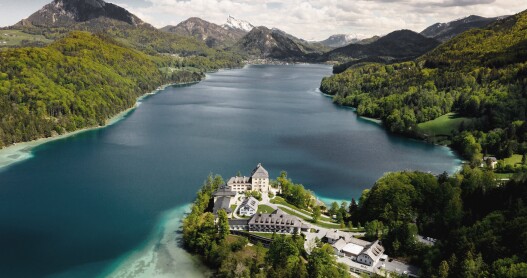
Rosewood Hotels and Resorts has transformed the historic Schloss Fuschl hotel outside Salzburg into a contemporary lakeside escape.
Whether you’re a food fan or adventurer-—or somewhere in between—there’s something to delight your senses in this centrally located European country.
Afar’s resident hotel expert shares the summer 2024 openings that are worth a special trip.
It’s easy to see why these ski chalets and mountain cabins are among the highest rated on Airbnb.
For the sustainably minded craftspeople in Austria’s most design-forward region, the forest has been a source of inspiration for centuries.
RESOURCES TO HELP PLAN YOUR TRIP
From centuries-old restaurants and coffeehouses to trendy new bistros, Vienna’s culinary scene is like the city itself—managing to be both classic and cool at once. Whatever your personal style, you won’t want to leave without trying some of its famous desserts, including the legendary Sacher torte.
Whether you want to stay in a former palace, a stylish spot, or a more affordable option, Vienna has a hotel for every traveler. Many of the best options are also centrally located, putting you within walking distance of the city’s main attractions.
The Austrian Alps are a winter sports paradise offering some of the world’s best skiing and a winter wonderland. But you don’t have to hit the slopes at Kitzbühel or strap on the skates and glide over Lake Zell to have a great time in Austria during winter. Lower prices and fewer tourists make winter city breaks a bargain, while the charm of a traditional Austrian mountain resort is not to be missed. The amazing views of an Alpine winter can also be enjoyed from inside a luxurious spa as well.
Upon arrival at Vienna International Airport, passengers can pay to undergo immediate COVID-19 testing—and if their results are negative, they can skip the required 14-day quarantine.
Vienna tops Resonance’s annual list of the world’s greenest cities based on criteria like air quality, walkability, and access to recycling and composting programs.
An elegant journey on Europe’s most iconic train takes a traveler into the past. But not the one she imagined.
Vacation among the vines at these small-in-size but big-on-wine destinations in France, Italy, Portugal, and beyond.
Though primarily known as a family-friendly resort, this beachside getaway is equally popular with kid-free travelers who love the location, service, and long list of amenities. Tucked among the hills of the Son Tra Peninsula, overlooking the East Sea, the resort is home to 197 guest rooms and 22 suites, each with modern Vietnamese-inspired decor, an oversize bed, and a rain shower; suites and villas also have indoor/outdoor lounge spaces, butler service, and in some, private pools. (Another reason to upgrade: Suite and villa guests have access to a dedicated airport lounge, complete with mini-spa.) If you do have little ones in your party, drop them off at Planet Trekkers, the signature children’s club, where activities encourage cultural connection through workshops, arts and crafts, and outdoor playtime. Adult fun can be found by the pool, in daily diversions like tai chi classes, and at the award-winning Harnn Heritage Spa, where holistic treatments complement the Pedi:Mani:Cure Studio, created by French celebrity pedicurist Bastien Gonzalez. The resort’s dining and drinking spots include La Maison 1888, the domain of Michelin-darling chef Pierre Gagnaire, and Buffalo Bar, where you can top off a perfect day with vintage bubbles and hand-rolled cigars. Three UNESCO World Heritage Sites are located a day trip’s ride from the resort—that is, if you can tear yourself away.
Visit centuries-old synagogues and sample traditional dishes for an insightful introduction to the continent’s Jewish communities.
With an overwhelming number of European river cruise adventures to choose from, we’ve narrowed it down to 7 of the region’s most popular and picturesque rivers.