Austria

Austria was once part of a mighty empire, which the Habsburgs ruled over from Vienna for some seven centuries. Although Austria today is just a fraction of its former glory, it still maintains its rich cultural and artistic heritage. Vienna is one of Europe’s most attractive cities, combining historic sites with a vibrant creative scene. The city is justifiably famous both for its classical music pedigree and for its elegant grand balls. With two-thirds of the country’s landscape shaped by the Alps, Austria is paradise for anyone eager to explore the mountains—or nature in general. Some of the world’s top ski resorts can be found in the western part of the country. The regions around the Danube, as well as south of Vienna, are known for their many family-run wineries. Austria is also a leader in the farm-to-table movement, and has over 20% of its agriculture, and more than 20,000 farmers, committed to organic farming.

Austria castle at sunset

Shutterstock

Overview

When’s the best time to go to Austria?

Temperatures in spring and fall are usually milder, making it a great time to visit. Winter sports are a major draw to the resort towns in the Austrian Alps, and the skiing is consistently ranked as some of the best in the world. The season lasts from December through late March. Vienna and Salzburg tend to be more crowded in July and August, and during major festivals. Temperatures vary by region and elevation, but averages do not climb above a comfortable high 70s in Vienna during summer.

How to get around Austria

Vienna can be reached via direct flights from several North American cities, including New York (JFK and Newark), Washington D.C., Miami, Chicago, and Toronto, though it is often practical to fly through Munich or Zurich—especially for a trip to Austria’s western provinces. Smaller airports in cities like Salzburg, Graz, Klagenfurt, and Innsbruck can be easily reached. High-speed trains connect Vienna and Salzburg with cities like Munich and Zurich. A hydrofoil travels between Bratislava and Vienna on the Danube. U.S. visitors can stay up to three months with just a passport, after which time a visa is required. If you are entering Austria using a rental car, make sure there is a Vignette (toll sticker) affixed to the windshield.

Cities in Austria are linked by a fast and efficient rail system, with Vienna to Salzburg taking as little as two-and-a-half hours. To explore large towns and cities, public transportation (bus and tram), biking, or walking is best. Driving on Austria’s highways requires a toll sticker—available in ten-day, two-month, and twelve-month increments—which can be purchased at gas stations, post offices, auto clubs, and even in neighboring countries. Renting a car is another great way to explore rural regions and high Alpine routes.

Food and drink to try in Austria

Austria’s cuisine reflects heavily on its imperial past, with influences from Hungary, Italy, and the Balkans. Classic dishes like Tafelspitz (beef, root vegetables, and sauerkraut), Wiener Schnitzel (veal cutlet, flattened and fried), and Gulasch (rich meat stew, often with paprika) can be found throughout the country, while every region is proud of their speciality dishes. But, let’s face it, the major food draw is really the delectable cakes and pastries, including the famous apple strudel and Sachertorte. You’d be forgiven for not knowing that Vienna is the only world capital producing significant quantities of wine within its city limits. White wines dominate the vineyards of the Wachau Valley, while reds prevail in Burgenland and Styria.

Culture in Austria

Some consider Vienna the cultural capital of Europe. The city has been synonymous with the music of Mozart, Beethoven, and Strauss, to name a few, as well as painters like Klimpt. Elegant balls, nights at the Vienna State Opera (one of the world’s best), and hours spent in coffeehouses are quintessential Vienna. The 640-year legacy of the Habsburg dynasty, which officially ended in 2011 with the death of Otto von Habsburg, can be found throughout the city. Oh, and let’s not forget the Boys Choir. Austria has nine inscriptions on the UNESCO World Heritage List: Schönbrunn Palace in Vienna, the Historic Center of Vienna, Wachau Cultural Landscape, Prehistoric Pile Dwellings around the Alps, Historic Center of Salzburg, Hallstatt-Dachstein/Salzkammergut Cultural Landscape, Graz Historic Center and Eggenberg Palace, Fertö/Neusiedlersee Cultural Landscape, and the Semmering Railway.

The year waltzes in with Vienna’s Ball Season in January and February, during which time “Fasching,” Austrian Carnival, also begins. The world famous Salzburg Festival takes place July–August, culminating with a performance of Hugo von Hoffmannsthal’s Everyman. Summer sees a variety of music festivals, from classical to rock (Nova Festival) to avant-garde (Styrian Fall), as well as wine festivals extending into the fall. Austria’s Christmas markets round out the year. Vienna alone lights up with 20 official Christmas markets selling seasonal gifts, decorations, and sweets.

Local travel tips for Austria

Austria has nine provinces: Vienna, Burgenland, Lower Austria, Upper Austria, Salzburg, Styria, Carinthia, Salzburg, Tyrol, and Vorarlberg. While German is the official language, there are regional dialects that German speakers from outside may have trouble understanding. In some cases, totally different words are used. The German Krankenhaus, for example, is Spital (hospital), and a Brötchen is a Semmel (roll). But language shouldn’t be an issue; English is widely spoken. Austria is a parliamentary democracy, and its national holiday falls on October 26—a day of free entry to state museums and many government buildings.

Related video

Guide Editor

READ BEFORE YOU GO
HOTELS
Travel like James Bond in these six beautiful destinations, from the beaches of Jamaica to the mountains of Austria.
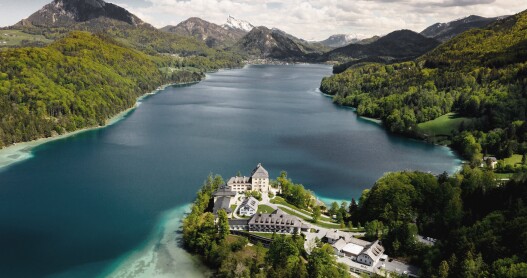
Rosewood Hotels and Resorts has transformed the historic Schloss Fuschl hotel outside Salzburg into a contemporary lakeside escape.
Whether you’re a food fan or adventurer-—or somewhere in between—there’s something to delight your senses in this centrally located European country.
Afar’s resident hotel expert shares the summer 2024 openings that are worth a special trip.
It’s easy to see why these ski chalets and mountain cabins are among the highest rated on Airbnb.
For the sustainably minded craftspeople in Austria’s most design-forward region, the forest has been a source of inspiration for centuries.
RESOURCES TO HELP PLAN YOUR TRIP
Lower Austria’s winemaking regions offer picturesque villages, UNESCO World Heritage sites, and some of the top varietals in Central Europe. Here are the best estates to visit in the area, according to a certified wine expert.
You may have to walk a few minutes from your room to the restaurant, but these hotels without boundaries—where you might sleep in an artist’s retreat or a former bridge keeper’s home—are unlike anything else.
From Lee Krasner in London to Picasso in Potsdam, these exciting European art shows are worth the trip.
Maybe the most stunning of the many palatial mid-19th-century commercial edifices around the Freyung section of Vienna’s Inner City, the Italianate Palais Ferstel hosts the ground-floor Café Central and its tiny outdoor terrace. Fittingly, as it is perhaps the landmark among Vienna’s old-world coffeehouses, Central is, well, central: It boasts a prime location by the Hofburg Palace, meaning it’s touristy for sure. But one look at the forest of Gothic Revival columns and vaulted ceilings in the cathedral-like interior of this former bank building, and you won’t mind if you have to wait a few minutes to be seated. Central has an extensive menu and a huge periodical collection to peruse before you head back out to tour the Inner City’s treasures.
The Dachstein Glacier offers some of Austria’s most incredible Alpine experiences in any season, but particularly in winter. Head to the easily accessible Ice Palace for a fun look deep inside the glacier, or brave the highest suspension bridge in the country for stunning views over the snowy Dachstein Mountains. The truly daring can explore the “Stairway to Nothingness,” which takes visitors down 14 narrow steps to a glass platform jutting out from the rock face.
In the whole of the German-speaking world, no theater outshines the Burgtheater, the Austrian National Theater. One of the Ringstrasse’s fabulous late-19th-century confections, the theater was built across from City Hall, principally by celebrated architect Gottfried Semper. The roots of the Burg go back to 1741 during Empress Maria Theresa’s reign. High society vied to be in the presence of royalty and Mozart premiered his works there. Busts on Semper’s Burg facade represent Goethe, Schiller, and Shakespeare, while magnificent Klimt frescoes adorn the staircases. These days the Burg is renowned for performances by international stars like Klaus Maria Brandauer, Bruno Ganz, and Christoph Waltz.
Central Vienna lies not on the Danube proper, but on its curved canal whose banks were utterly neglected for decades. Today, in warm months, the canal’s banks are a recreational paradise packed with fishermen, bike riders, dog walkers, and joggers. Entire beaches with imported sand and swimming pavilions host a city’s worth of bars and restaurants. Guests at the Strandbar Herrmann, in front of the elegant art nouveau Urania observatory, lounge on deck chairs, while the Badeschiff is a docked boat with a pool. On the left bank of the canal, Tel Aviv Beach bar hosts lively DJ parties on summer evenings. On Danube Island, which sits in the middle of the river, Copa Cagrana Beach has been popular for several decades.
Though the foundations go back hundreds of years prior, Grafenegg Castle as we know it today was constructed in the 19th century and is a fine example of historicism. The interior is open April through October. It’s particularly known for music events throughout the year and a Christmas market.
Living in an era of artistic and intellectual giants competing for attention, Otto Wagner was a celebrated architect, but his fame beyond Austria is not what it should be. But Wagner’s legacy of breathtaking designs lives on in buildings throughout Vienna, with his 1907 Kirche am Steinhof as perfect a little chapel as could be. Inaugurated by Archduke Franz Ferdinand, the art nouveau structure with the gold cupola literally shines from the western hills that lead into the Vienna Woods. With the chapel’s mosaics, visitors have a chance to discover the genius of Koloman Moser, a cofounder of the Wiener Werkstätte arts movement. His glass windows, along with gorgeous sculptural angels by Othmar Schimkowitz, have appeared on a commemorative 100-euro coin.
Following its reconstruction in the postwar years, the facade of the venerable Vienna State Opera House (Wiener Staatsoper) had taken on a black patina, as had all the monumental Hapsburg buildings along the Ringstrasse. In the 1980s, however, the slow removal of grime revealed a stunning honey-colored exterior to this magnificent concert hall built by August Sicard von Sicardsburg and Eduard van der Nüll—and made famous by Gustav Mahler and, later, the conductor Herbert von Karajan. Even if you don’t attend a performance at the Wiener Staatsoper, you can discover its rich history on a guided tour, giving you a chance to learn about such highlights as the first performance in 1869 (Don Giovanni) and the one at its re-inauguration in 1955 (Fidelio), when Austria regained its status as a sovereign state.