Austria

Austria was once part of a mighty empire, which the Habsburgs ruled over from Vienna for some seven centuries. Although Austria today is just a fraction of its former glory, it still maintains its rich cultural and artistic heritage. Vienna is one of Europe’s most attractive cities, combining historic sites with a vibrant creative scene. The city is justifiably famous both for its classical music pedigree and for its elegant grand balls. With two-thirds of the country’s landscape shaped by the Alps, Austria is paradise for anyone eager to explore the mountains—or nature in general. Some of the world’s top ski resorts can be found in the western part of the country. The regions around the Danube, as well as south of Vienna, are known for their many family-run wineries. Austria is also a leader in the farm-to-table movement, and has over 20% of its agriculture, and more than 20,000 farmers, committed to organic farming.

Austria castle at sunset

Shutterstock

Overview

When’s the best time to go to Austria?

Temperatures in spring and fall are usually milder, making it a great time to visit. Winter sports are a major draw to the resort towns in the Austrian Alps, and the skiing is consistently ranked as some of the best in the world. The season lasts from December through late March. Vienna and Salzburg tend to be more crowded in July and August, and during major festivals. Temperatures vary by region and elevation, but averages do not climb above a comfortable high 70s in Vienna during summer.

How to get around Austria

Vienna can be reached via direct flights from several North American cities, including New York (JFK and Newark), Washington D.C., Miami, Chicago, and Toronto, though it is often practical to fly through Munich or Zurich—especially for a trip to Austria’s western provinces. Smaller airports in cities like Salzburg, Graz, Klagenfurt, and Innsbruck can be easily reached. High-speed trains connect Vienna and Salzburg with cities like Munich and Zurich. A hydrofoil travels between Bratislava and Vienna on the Danube. U.S. visitors can stay up to three months with just a passport, after which time a visa is required. If you are entering Austria using a rental car, make sure there is a Vignette (toll sticker) affixed to the windshield.

Cities in Austria are linked by a fast and efficient rail system, with Vienna to Salzburg taking as little as two-and-a-half hours. To explore large towns and cities, public transportation (bus and tram), biking, or walking is best. Driving on Austria’s highways requires a toll sticker—available in ten-day, two-month, and twelve-month increments—which can be purchased at gas stations, post offices, auto clubs, and even in neighboring countries. Renting a car is another great way to explore rural regions and high Alpine routes.

Food and drink to try in Austria

Austria’s cuisine reflects heavily on its imperial past, with influences from Hungary, Italy, and the Balkans. Classic dishes like Tafelspitz (beef, root vegetables, and sauerkraut), Wiener Schnitzel (veal cutlet, flattened and fried), and Gulasch (rich meat stew, often with paprika) can be found throughout the country, while every region is proud of their speciality dishes. But, let’s face it, the major food draw is really the delectable cakes and pastries, including the famous apple strudel and Sachertorte. You’d be forgiven for not knowing that Vienna is the only world capital producing significant quantities of wine within its city limits. White wines dominate the vineyards of the Wachau Valley, while reds prevail in Burgenland and Styria.

Culture in Austria

Some consider Vienna the cultural capital of Europe. The city has been synonymous with the music of Mozart, Beethoven, and Strauss, to name a few, as well as painters like Klimpt. Elegant balls, nights at the Vienna State Opera (one of the world’s best), and hours spent in coffeehouses are quintessential Vienna. The 640-year legacy of the Habsburg dynasty, which officially ended in 2011 with the death of Otto von Habsburg, can be found throughout the city. Oh, and let’s not forget the Boys Choir. Austria has nine inscriptions on the UNESCO World Heritage List: Schönbrunn Palace in Vienna, the Historic Center of Vienna, Wachau Cultural Landscape, Prehistoric Pile Dwellings around the Alps, Historic Center of Salzburg, Hallstatt-Dachstein/Salzkammergut Cultural Landscape, Graz Historic Center and Eggenberg Palace, Fertö/Neusiedlersee Cultural Landscape, and the Semmering Railway.

The year waltzes in with Vienna’s Ball Season in January and February, during which time “Fasching,” Austrian Carnival, also begins. The world famous Salzburg Festival takes place July–August, culminating with a performance of Hugo von Hoffmannsthal’s Everyman. Summer sees a variety of music festivals, from classical to rock (Nova Festival) to avant-garde (Styrian Fall), as well as wine festivals extending into the fall. Austria’s Christmas markets round out the year. Vienna alone lights up with 20 official Christmas markets selling seasonal gifts, decorations, and sweets.

Local travel tips for Austria

Austria has nine provinces: Vienna, Burgenland, Lower Austria, Upper Austria, Salzburg, Styria, Carinthia, Salzburg, Tyrol, and Vorarlberg. While German is the official language, there are regional dialects that German speakers from outside may have trouble understanding. In some cases, totally different words are used. The German Krankenhaus, for example, is Spital (hospital), and a Brötchen is a Semmel (roll). But language shouldn’t be an issue; English is widely spoken. Austria is a parliamentary democracy, and its national holiday falls on October 26—a day of free entry to state museums and many government buildings.

Related video

Guide Editor

READ BEFORE YOU GO
HOTELS
Travel like James Bond in these six beautiful destinations, from the beaches of Jamaica to the mountains of Austria.
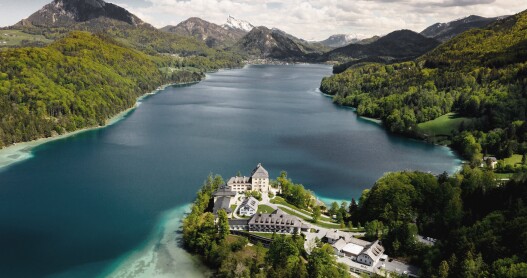
Rosewood Hotels and Resorts has transformed the historic Schloss Fuschl hotel outside Salzburg into a contemporary lakeside escape.
Whether you’re a food fan or adventurer-—or somewhere in between—there’s something to delight your senses in this centrally located European country.
Afar’s resident hotel expert shares the summer 2024 openings that are worth a special trip.
It’s easy to see why these ski chalets and mountain cabins are among the highest rated on Airbnb.
For the sustainably minded craftspeople in Austria’s most design-forward region, the forest has been a source of inspiration for centuries.
RESOURCES TO HELP PLAN YOUR TRIP
Austria’s capital was the seat of the Hapsburg dynasty, and its many historic sites and cultural institutions embody an imperial grandeur. The city is not, however, only a showpiece preserved in aspic, and alongside 19th-century wonders there are also contemporary museums and lively neighborhoods. Here are some of Vienna’s highlights, from Roman ruins to present-day treasures.
Occupying most of a 38-floor Times Square building, the Reverie Saigon initially made waves for its over-the-top flourishes: the house cars are a limited-edition Rolls-Royce Phantom Dragon and a Maybach, both parked out front; the lobby features a $500,000 jade-and-gold Baldi clock; and the property feels like it used all the marble and Murano glass in Italy. What’s surprising, then, is how well it all works—and how quickly you might feel at ease. A large part of that is thanks to the warm, attentive service (sniffle once, for example, and ginger tea will appear at your doorstep) and the 286 airy guest rooms themselves, which—though full of whimsical touches by international design houses like Visionnaire and Provasi—manage to call to mind serene sanctuaries floating high above the city bustle. The on-site dining options (including places for traditional Cantonese, fine-dining French, and modern Italian) draw local crowds, and the two-story spa features an ozone-infused outdoor pool equipped with underwater speakers—plus some of the best therapists in town.
Are there any nobler or more beautiful horses in the world than the gray-white Lipizzans who wow audiences with their high stepping at the Spanish Riding School? In the 16th century, the Hapsburg empire used Andalusian horses to create the breed in Lipizza (located in Slovenia). As they have for centuries, the Lipizzans perform their acrobatic haute école dressage in the Hofburg Palace’s Winter Riding School arena, an all-white baroque hall designed by Fischer von Erlach. Riders still wear the traditional uniform of bicorne hats and tailcoats, part of the reason UNESCO granted the Riding School its Intangible Cultural Heritage status. In addition to watching the performances, visitors can also tour the stables and sit in on morning training sessions set to classical music.
In other cities, Schloss Belvedere would be the grand attraction: The baroque palace turned museum is a UNESCO World Heritage site, and its French-style gardens, enormous pools, and upper and lower pavilions are stunning. But in Vienna, a city that’s chockablock with majestic palaces and marvelous art institutions, the Belvedere winds up being underappreciated by visitors. Formerly the summer palace of the French-born military commander Prince Eugene of Savoy, the early-18th-century palace was designed by Johann Lucas von Hildebrandt, one of the most celebrated architects of his day. Works in the building’s collection range from baroque masterpieces to 20th-century treasures such as Gustav Klimt’s The Kiss as well as pieces by Oskar Kokoschka and Egon Schiele.
It’s pretty amazing what you can do with some old stables. Vienna’s vast former quarters for the imperial horses, designed by the great baroque architect Johann Bernhard Fischer von Erlach, were turned in recent years into the MuseumsQuartier. It could take days to see all the works in this 15-acre, multi-museum complex that lies just off the Ringstrasse and is devoted to collections of modern and contemporary art. The limestone Leopold Museum for Austrian art is named after an early collector of the bold painter Egon Schiele. Its Café Leopold includes courtyard seating under umbrellas. For your Picassos and Giacomettis, the nearby MUMOK specializes in the giants of modern art. The MuseumsQuartier’s huge courtyard is a popular Vienna hangout where many festivals take place and DJs spin on weekends.
Just off the Ringstrasse, the Stadtpark gives visitors to Vienna a chance to marvel at the genius of Otto Wagner: The architect’s art nouveau U-Bahn metro station is a landmark there. With the little Wienfluss (Vienna River) running through it, the 28-acre, English-style, manicured Stadtpark was laid out in the middle 19th century and is perhaps the finest city park in this greenest of cities. For maintaining the historic fountains, ornamental plants, and decorative trees along its winding paths, the botanical specialists and gardening team deserve a tip of the hat. Fine statues of composers Franz Schubert and Anton Bruckner, as well as a gilded-bronze likeness of a violin-playing Johann Strauss II—who performed here—are famous. The café in the Italianate Kursalon Hübner concert hall is a good place for a break from sightseeing.
Classic-film buffs well know the pivotal scene on the Riesenrad, the giant Ferris wheel in Vienna’s Prater park which lies between the Danube and one of its side canals. In the film version of Graham Greene’s noir tale The Third Man, Orson Welles, as Harry Lime, relates his famous Swiss cuckoo clock analogy to Joseph Cotten while on the ride. Built in 1897 for Emperor Franz Joseph I’s golden jubilee, the Ferris wheel was for a long time the world’s tallest. After a period of scruffiness late last century, the Prater and its old-fashioned amusement park are again popular. The greenery alone makes for wonderful strolling or biking, with the Schweizerhaus restaurant’s beer garden the perfect place for schnitzel or succulent Schweinsstelze (pig’s feet).
As rivalries go, this one is up there with Coke vs. Pepsi. Which of these two cultural institutions’ pastry chefs make the best version of Vienna’s famous Sacher torte? The Hotel Sacher is a historic property and, by legal right, has been recognized as the original home of the classic dessert. But a few blocks away on posh Kohlmarkt street, just steps from the Hofburg Palace, the pastry shop Demel proudly still carries the official title of royal confectioner. Both houses ship this spongy chocolate cake, covered with chocolate icing and layered with apricot jam, all over the world. But nothing beats tasting the sweet treat right there in old Vienna.
How can you pass up ordering an Apfelstrudel in one of Dr. Freud’s favorite coffeehouses? Open since 1873 at the bottom of a neobaroque structure with a wedding-cake facade, Café Landtmann is perhaps the oldest establishment along the Ringstrasse, meaning that it even predates the glorious Burgtheater next to it. The Gustavs—Mahler and Klimt—and Marlene Dietrich were just some of the many luminaries who frequented the establishment over its near century of existence. In recent years, the Landtmann added a glassed-in patio out front for even better Ringstrasse views.
The country is reporting the lowest number of cases since October and stands in stark contrast to rising outbreaks across much of Europe.