Austria

Austria was once part of a mighty empire, which the Habsburgs ruled over from Vienna for some seven centuries. Although Austria today is just a fraction of its former glory, it still maintains its rich cultural and artistic heritage. Vienna is one of Europe’s most attractive cities, combining historic sites with a vibrant creative scene. The city is justifiably famous both for its classical music pedigree and for its elegant grand balls. With two-thirds of the country’s landscape shaped by the Alps, Austria is paradise for anyone eager to explore the mountains—or nature in general. Some of the world’s top ski resorts can be found in the western part of the country. The regions around the Danube, as well as south of Vienna, are known for their many family-run wineries. Austria is also a leader in the farm-to-table movement, and has over 20% of its agriculture, and more than 20,000 farmers, committed to organic farming.

Austria castle at sunset

Shutterstock

Overview

When’s the best time to go to Austria?

Temperatures in spring and fall are usually milder, making it a great time to visit. Winter sports are a major draw to the resort towns in the Austrian Alps, and the skiing is consistently ranked as some of the best in the world. The season lasts from December through late March. Vienna and Salzburg tend to be more crowded in July and August, and during major festivals. Temperatures vary by region and elevation, but averages do not climb above a comfortable high 70s in Vienna during summer.

How to get around Austria

Vienna can be reached via direct flights from several North American cities, including New York (JFK and Newark), Washington D.C., Miami, Chicago, and Toronto, though it is often practical to fly through Munich or Zurich—especially for a trip to Austria’s western provinces. Smaller airports in cities like Salzburg, Graz, Klagenfurt, and Innsbruck can be easily reached. High-speed trains connect Vienna and Salzburg with cities like Munich and Zurich. A hydrofoil travels between Bratislava and Vienna on the Danube. U.S. visitors can stay up to three months with just a passport, after which time a visa is required. If you are entering Austria using a rental car, make sure there is a Vignette (toll sticker) affixed to the windshield.

Cities in Austria are linked by a fast and efficient rail system, with Vienna to Salzburg taking as little as two-and-a-half hours. To explore large towns and cities, public transportation (bus and tram), biking, or walking is best. Driving on Austria’s highways requires a toll sticker—available in ten-day, two-month, and twelve-month increments—which can be purchased at gas stations, post offices, auto clubs, and even in neighboring countries. Renting a car is another great way to explore rural regions and high Alpine routes.

Food and drink to try in Austria

Austria’s cuisine reflects heavily on its imperial past, with influences from Hungary, Italy, and the Balkans. Classic dishes like Tafelspitz (beef, root vegetables, and sauerkraut), Wiener Schnitzel (veal cutlet, flattened and fried), and Gulasch (rich meat stew, often with paprika) can be found throughout the country, while every region is proud of their speciality dishes. But, let’s face it, the major food draw is really the delectable cakes and pastries, including the famous apple strudel and Sachertorte. You’d be forgiven for not knowing that Vienna is the only world capital producing significant quantities of wine within its city limits. White wines dominate the vineyards of the Wachau Valley, while reds prevail in Burgenland and Styria.

Culture in Austria

Some consider Vienna the cultural capital of Europe. The city has been synonymous with the music of Mozart, Beethoven, and Strauss, to name a few, as well as painters like Klimpt. Elegant balls, nights at the Vienna State Opera (one of the world’s best), and hours spent in coffeehouses are quintessential Vienna. The 640-year legacy of the Habsburg dynasty, which officially ended in 2011 with the death of Otto von Habsburg, can be found throughout the city. Oh, and let’s not forget the Boys Choir. Austria has nine inscriptions on the UNESCO World Heritage List: Schönbrunn Palace in Vienna, the Historic Center of Vienna, Wachau Cultural Landscape, Prehistoric Pile Dwellings around the Alps, Historic Center of Salzburg, Hallstatt-Dachstein/Salzkammergut Cultural Landscape, Graz Historic Center and Eggenberg Palace, Fertö/Neusiedlersee Cultural Landscape, and the Semmering Railway.

The year waltzes in with Vienna’s Ball Season in January and February, during which time “Fasching,” Austrian Carnival, also begins. The world famous Salzburg Festival takes place July–August, culminating with a performance of Hugo von Hoffmannsthal’s Everyman. Summer sees a variety of music festivals, from classical to rock (Nova Festival) to avant-garde (Styrian Fall), as well as wine festivals extending into the fall. Austria’s Christmas markets round out the year. Vienna alone lights up with 20 official Christmas markets selling seasonal gifts, decorations, and sweets.

Local travel tips for Austria

Austria has nine provinces: Vienna, Burgenland, Lower Austria, Upper Austria, Salzburg, Styria, Carinthia, Salzburg, Tyrol, and Vorarlberg. While German is the official language, there are regional dialects that German speakers from outside may have trouble understanding. In some cases, totally different words are used. The German Krankenhaus, for example, is Spital (hospital), and a Brötchen is a Semmel (roll). But language shouldn’t be an issue; English is widely spoken. Austria is a parliamentary democracy, and its national holiday falls on October 26—a day of free entry to state museums and many government buildings.

Related video

Guide Editor

READ BEFORE YOU GO
HOTELS
Travel like James Bond in these six beautiful destinations, from the beaches of Jamaica to the mountains of Austria.
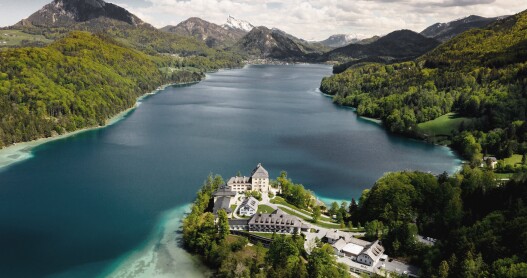
Rosewood Hotels and Resorts has transformed the historic Schloss Fuschl hotel outside Salzburg into a contemporary lakeside escape.
Whether you’re a food fan or adventurer-—or somewhere in between—there’s something to delight your senses in this centrally located European country.
Afar’s resident hotel expert shares the summer 2024 openings that are worth a special trip.
It’s easy to see why these ski chalets and mountain cabins are among the highest rated on Airbnb.
For the sustainably minded craftspeople in Austria’s most design-forward region, the forest has been a source of inspiration for centuries.
RESOURCES TO HELP PLAN YOUR TRIP
The lockdown is expected to last from November 22 until December 13.
Canada opened to vaccinated Americans in August, and numerous European countries changed their entry requirements in September. Here’s the complete list.
Street-food markets are all the rage the world over, and in Vienna you have the chance to visit one that’s been around for many centuries. Built literally over the channeled Vienna River, just beyond the Ringstrasse, the Naschmarkt is devoted to what its name happens to sound like in English: noshing. Whether you order a spicy wurst, browse the fish and cheese stalls, or purchase local products like pumpkin-seed oil and apple vinegar, the Naschmarkt is one of the city’s most enjoyable simple pleasures. In recent years, some gastronomic and ethnic food stalls have expanded into full restaurants. For decades, 400 dealers have set up their Saturday flea market next door, where shoppers hunt for bargains among books, record albums and CDs, and antiques.
You might think of Vienna’s Zentralfriedhof (Central Cemetery) as a Mittteleuropa Walk of Fame. Some of the city’s most important figures are buried in this graveyard that opened in 1874, from Beethoven (his remains were moved here in 1888) to 1980s pop star Falco, with Brahms, Schubert, and Schoenberg in between. The cemetery, which measures almost one and a half square miles, has a section for Austria‘s presidents, and another for Sephardic Jews who came from the Ottoman Empire—the elaborate Alhambra-style Elias family mausoleum is especially impressive. Thanks to shady groves of maple and ash and a beautiful church constructed in the early-20th-century Jugendstil style, it is worth the effort to travel to Simmering, a neighborhood southeast of the city center—even if only for the bucolic setting.
Nestled among the boutiques and restaurants that line the city’s main shopping street, the historic Hotel Goldener Hirsch has all the hallmarks of a Tyrolean hunting lodge right in the heart of medieval Old Town, from vaulted ceilings and mounted antlers to staff dressed in lederhosen and dirndls. Vintage guest-room keys are embellished with stag silhouettes, and even the tableware and linens in the two restaurants (one a former blacksmith, the other a goldsmith) feature the signature leaping-deer motif. Both serve hearty local fare—stop in for schnitzels, beef goulash, and bratwurst with sauerkraut, then call it a night in one of 70 cozy guest rooms, which balance cheerful country textiles and antique furnishings with modern amenities like flat-screen TVs, minibars, and free Wi-Fi.
Closed until 2024 for renovations.

Set on three-and-a-half acres of garden grounds atop Mönchsberg Mountain, the castle-inspired Hotel Schloss Mönchstein is like something out of a fairytale. Be sure to arrive hungry: In addition to a restaurant that serves Austrian and international fare and an indoor/outdoor orangery with light bites and drinks, the hotel has several private dining rooms, including one nestled in the castle’s tower and dubbed the Smallest Restaurant in the World, as well as a neo-Gothic chamber filled with black-hued antiques. The 24 guest rooms have regal touches like damask-patterned velvets and marble bathrooms with soaking tubs and walk-in rain showers, and a vast menu of treatments at the on-site spa, including Dermalogica facials and body wraps, are fit for royalty. After a day of pampering, an infinity pool and hot tub offer panoramic views over the city below.
The site of the now-demolished Brinks Hotel Officers Quarters—which housed U.S. military members during the Vietnam War—has been transformed into this oasis in the heart of the city. Opened in 2005 and renovated in 2015, the Park Hyatt has been crafted in a French colonial style, with lots of polished wood, wrought iron, and oversize windows. The 245 rooms are elegant and airy, mixing classic furnishings with high-tech perks like mini iPads and sensor lighting systems; all suites feature elevated design touches like hand-embroidered textiles, lacquerware pieces, and period antiques, while some offer private terraces or direct access to the pool and gardens. Considered to be among the best in the city, the hotel’s dining options include Square One, for gourmet Western and Vietnamese fare, and Opera, where Italian favorites are whipped up in the open kitchen. Enjoy live music nightly (and the popular Saturday afternoon tea buffet) at the Park Lounge and cocktails and DJs on the weekends at 2 Lam Son. If you’re looking for something a bit more chill, head to the Xuan Spa for a treatment performed with locally grown herbs, fruits, and grains.
Built between 1840 and 1845 by Prince Ferdinand of Saxe-Coburg and Gotha, an extremely influential royal family in Europe, the Palais Coburg is a bright and spacious bit of luxury. Opened in 2003 after extensive restoration, the palais has suites (and only suites) that are clean and classy, sometimes even grandiose with antique furniture and vibrantly lit chandeliers. Many suites are named in honor of important members of the family such as Queen Victoria and Albert of England, and King Leopold I of Belgium, so guests will get a lesson in the history of Europe’s intermarried royal families.

Outside is a quiet garden with a water basin, shade trees, and magnolias. The outdoor café provides sanctuary from the city and is a great place to enjoy breakfast. In addition to two marvelous restaurants, Palais Coburg has an excuisite wine cellar with some 60,000 from four different centuries.
Opened in 2013 in a 100-year-old former bank building, the Park Hyatt has utilized the space well, with a restaurant in the former cashier’s hall and a pool in the former vault. The suites are spacious, and all rooms have more than just the basic requirements for your average traveler, including safes large enough for laptops. While the marvelous Grand Salon is typically used for banquets and business meetings, guests should definitely try and take a peek at this beautifully designed room. The prime location in the historic Innere Stadt, or first district, means most major sights are within walking distance.
The Ritz-Carlton conjured true Viennese grandeur by occupying not one, but four former 19th-century palaces along the Ringstraße for its first Austrian location. Upon entering, guests will be suitably impressed by the beautifully ornate ceiling of the Melounge Lobby Lounge, where they can enjoy a light meal, tea, cocktails, and sweets. Rooms face either a courtyard or out to the city, and all offer plush beds and marble baths. All suites have a terrace or balcony from which to look out on this magical city. The extravagance reaches new heights with the incredible views from the Atmosphere Rooftop Bar, where stylish locals and visitors mingle. During the holiday season, it turns into the city’s most elevated and most exclusive Christmas market.