Greece

Whether your first view of Greece is of the sparkling Mediterranean or the stubbornly steadfast Acropolis, you’ll realize you’re somewhere special. Sit down at any taverna by the sea for a feast of fried fish and baked feta, and get wrapped up in ouzo and the musical flow of the Greek language. For history and classics geeks, the mainland is your treasure trove. The Oracle at Delphi will provide you with answers, and the sheer size of the ruins at Olympia will give you new appreciation for the ancients. Hike through the rugged landscapes and coastlines of the many islands, including Santorini’s fractured caldera, and Crete’s Samaria Gorge. Take the edge off while partying in the whitewashed alleyways of Íos Town, or relax on a lesser-known island like Icaria.

C76JNA Greece, Cyclades Islands, Mykonos, Chora, Church of Panagia Paraportiani. Image shot 2011. Exact date unknown.

Alamy

Overview

When’s the best time to go to Greece?

Although summer in the Mediterranean is never disappointing, late spring and early autumn are by far the best times to visit. Prices remain lower between March and May, and crowds have thinned. The same goes for the end of September to November. The fall season, though sometimes rainy, offers a sea that is still blissfully warm after a scorching summer.

How to get around Greece

Athens is the main travel hub. It’s possible to score fairly priced flights from Europe to some of the more popular islands—especially Santorini, Crete, or Mykonos—but it’s much easier to fly into Athens International Airport. From there, you can take a ferry from Piraeus Port to just about anywhere.

One of Greece’s many charms is that nobody is ever in a rush. This applies to transit as well. Airplanes and ferries are by far the most efficient modes of travel around the country, especially to the islands. On the other hand, the subway system in Athens is actually quite modern, having been built for the 2014 Olympics. It’s handicapped accessible, thanks to elevators in every station. Athens’ bus system is less reliable. On the islands, buses are the way to go, unless you opt for car rental. For all schedules, check out the Greek Travel Pages.

Food and drink to try in Greece

Food is at the heart of Greek living. Seek out the tavernas—you’ll find one in every town—serving steaming bowls of baked feta, fried eggplant, grilled fish, lamb chops, and fresh halva. The Greeks aren’t big drinkers; being inebriated in public is an embarrassment. But the local liquors should be tried: ouzo, raki, and tsipouro are the most common. Tsipouro tends to be underappreciated by travelers. Mix with ice and a small dose of water, and pair with mezedes—generous tapa dishes. If you love wine, head to Santorini. If you’re needing cool refreshment, opt for a frappé, the beloved iced coffee drink of Greek youth.

Culture in Greece

Despite being surrounded by culturally diverse countries like Turkey and Serbia, Greece has held steadfast to its roots. Athens is a bit of an exception, thanks to a large influx of Albanian and Turkish immigrants. For full immersion into Greek culture, head to the lesser-known islands that do not depend on tourism, like Lesbos or Hydra.

Holy Week in April is an exciting time to be in Greece and celebrate Orthodox Easter. Traditionally, celebrations include lamb roasts, fireworks, homemade wine, and dancing in costume. Santorini is one of the best places to celebrate; here people take elaborate care fixing up their property for the event. Carnival in March is a great time to take part in costume parades, drinking, and dancing. Go to Skyros to witness the “goat dance,” or anywhere in the Ionian islands for more Italian-style celebrations. The Athens Festival in June pays tribute to Greek culture and arts. You may be lucky enough to be in town during a feast of the saints, like the Feast of St. Nikolaos or the Feast of St. Demitrius.

Local travel tips for Greece

The locals know that autumn is the best time to visit Santorini. Ferry strikes and Greek protests can often cause delays in travel, but they are usually harmless. Check in advance. Study up on the language a bit before arriving, especially if visiting the quieter islands, where little English is spoken.

Guide Editor

READ BEFORE YOU GO
HOTELS
Around the world, breakfast is emerging as the moment when a luxury hotel’s ambition—and its core values—become most visible.
New hotels along the Athens coastline are helping to redefine what it means to live, and stay, in the Greek capital.
Traveling alone? More hotels are helping solo travelers make connections, stay safe, and have big adventures.
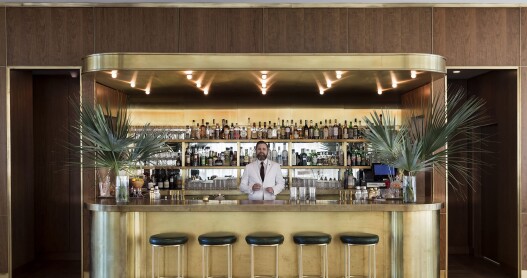
From lobby bars to rooftop lounges, these are the hotel bars Afar editors love checking out when they’re checking in.
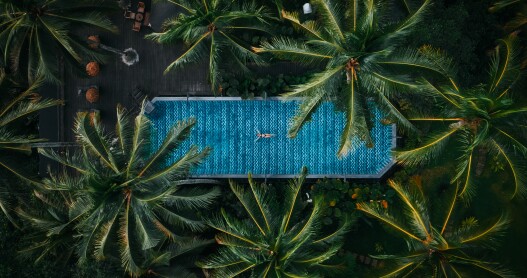
These hotel pools around the globe are worth building a trip around.
AFAR’s picks for the 31 best new hotels in the world.
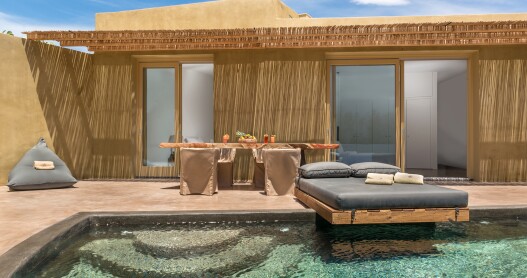
Get a room at one of these 12 spectacular new hotels in Greece, all of which are scheduled open their doors by spring or early summer.
Positioned between the capital’s ancient attractions and countless sandy beaches, One&Only Aesthesis revives ’60s Greek chic.
If you’re looking for serenity in 2024, check out these top destination spas.
From the Swiss Alps to the Brazilian rain forest, these Airbnbs are worth booking just for the views.
RESOURCES TO HELP PLAN YOUR TRIP
Just a mile off Messinia’s coast is the beautiful Proti Island, which is said to resemble a crocodile in shape, and is a haven for history buffs. On land, you’ll find archeological sites and ruins from ancient temples and citadels. Additionally, Proti Island is great for diving due to its clear visibility, 15 dive sits and mix of reef, cave, wall, wreck, canyon, and drift diving. As you swim through turquoise Mediterranean waters, keep your eyes peeled for blue-spotted rays, painted combers, damselfish, sea turtles, and myriad colorful corals and sponges. One company that can take you diving off Proti Island is Navarino Sea by Aqua Divers Club, a Padi Five-Star IDC Resort.
Often described as a Greek paradise, the Polilimnio Waterfalls in Polilimnio Gorge offer something different from Messenia’s usual beaches. Visitors are immersed in a scene of lush greenery, gushing cascades, and green lakes filled with fresh-water crabs perfect for a relaxing dip. And if you’re adventurous, cliff diving is also an option at the highest and deepest of the pools. The hike to the Polilimnio Waterfalls takes about an hour and a half, with the trailhead beginning in Haravgi Village. Follow the paved road until it turns into dirt and you’ll eventually come to a car park at the start of the trail. Make sure to wear sturdy shoes, as the ground can be uneven or slippery—especially after it rains—in some sections. For a guided experience, Navarino Outdoors offers an Ancient Messene & Polilimnio Falls Excursion where you’ll explore the area’s historical stadium and theater; eat traditional Greek food; and visit the beautiful Polilimnio Waterfalls.
From the outside, San Giorgio looks like one of Greece’s ubiquitous whitewashed homes. Inside, traditional Greek textiles and locally made furniture adorn the 33 unfussy rooms. Most feature rough-hewn wooden dressers, large circular jute rugs, and beds canopied with mosquito netting. Some have terraces with views of the Aegean Sea. Guests can relax during the day in cocoonlike hanging swings near the pool or take a 10-minute walk to the popular beaches Paradise and Paranga. In the evenings, it’s not uncommon for DJs such as Bob Sinclar or David Guetta to make guest appearances in the hotel’s open-air lounge.
Mylopotas beach is a stretch of sunny beach lined with bars, restaurants, hotels, and a youthful party scene. Depending on the day or time of day this stretch of beach could be quite and lazy in the sun or have music and people dancing on cars. Either way Karma beach bar is a chill open air bar with pillow seating on the raised floor and hammocks hanging everywhere. The pizza is delicious and perfect for a light beach snack on a sunny day. They have a great drink menu including island cocktails and prosecco fruit mixers. We lounged our first day away in the hammocks here sipping on cool drinks.
There are two Paradise Beaches on Kos. One is northeast of Kefalos. It’s quite nice with facilities, a bar, and crystal clear waters. The other is southwest of Kefalos. It’s also quite nice with facilities, a bar, and crystal clear waters. The difference is the first one is very easy to get to and prone to getting covered in a crush of humanity while the second one (pictured above) is found at the end of a loooong, winding, dirt road (complete with sheer drops!) and only very lighted spotted with a few clothing optional occupants. Don’t worry, the way is clearly marked with signs pointing the way to Kavo Paradiso Beach FKK. FKK of course short for Freikörperkultur — a German movement whose name translates to Free Body Culture. Now when I say it has facilities, I mean it has around 7 or 8 umbrellas to rent with accompanying chairs. And when I say it has a bar, I mean it has a teeny-tiny shed manned by a blissfully quiet Greek fellow selling Mythos beers for 2 euros a bottle. And when I say it has crystal clear waters, I mean it! This was by far my favorite beach on a recent trip to Kos and well worth the death defying drive to reach it!
I stumbled along this place on a recent trip completely by accident. We’d been driving aimlessly for a while west of Kardemena looking for the perfect quiet beach to take in the late afternoon when I spied a few umbrellas through the trees between the road and the shore. I was pretty much equidistant between town and some of the huge resorts further to the west, so I figured I’d found my spot! I pulled off the road, unpacked all my stuff, marched through the trees to the beach and was met with a decent little beach, a small bar, those umbrellas I’d spied from the road and a small collection of older couples... Completely nude older couples. I wasn’t expecting this, but hey, I had no interest in spinning on my heal and re-packing up the car, so I assumed the proper attire (none), spread a towel out on a beach chair and settled in. I’m a go-with-the-flow kind of guy, after all. The beach itself is a mix of sand, pebbles and some larger rocks. The water is immaculately clear. And, as it turns out, the whole spot is watched over by one person Mandy — perhaps the nicest British lady on Kos who greets beach goers with an inviting smile and incredibly pleasant accent. I may not have been looking to take it all off, but knocking back a few Mythos beers with Mandy made for a pleasant end to the day.
The Diamond Deluxe is a multifaceted property that offers a laid-back take on European upscale properties in paradise. The main feature of the place is a idyllic collection of large pools that cluster within its center. Bridges crisscross these expanses of blue leading the way to beautiful boxes basking under the bright Grecian sky. I recently stayed in one of the Diamond Suites which also comes with it’s own decent sized private pool. (Though gardeners were prone to passing by at odd times of day.) The room was well outfitted with spacious showers, plush beds, and competent air conditioning. (In contrast to the high temperatures outside, the internet was positively glacial. Pretty much unusable.) Being prone to typical Euro qualities, don’t expect the best dining experiences or consistent service. (Some employees were great! Others, not so much.) Alcohol is also best procured elsewhere if you’re hoping for a late night by the room. Oh and on some sites I’ve read it was “overlooking one of Kos’s best beaches.” This couldn’t be further from the truth. You will need to travel to get to a great beach. I recommend renting a car. Driving is easy on Kos. All that said, the property to beautiful, bright, blue, and best enjoyed with a laid-back attitude.
In a country full of beautiful historic sites, this may have been my favorite to explore. It has so much: a beautiful hilltop setting that offers views for miles; ruins that you can clamber over; restored Byzantine churches with incredible fresco work covering the walls and ceilings, and peaceful courtyards draped with bougainvillea; a working nunnery, where you might spot a nun going about her daily business; plus lots of cats. There’s an upper section, which is where you’ll find the ruins and the views. We drove up there first, and the nice woman at the ticket desk told us we should explore the upper section, then drive down to the lower, and drew out a route for us so that we could see everything. We spent about 3 hours total wandering and taking it all in. If you’re into Byzantine art, you could spend longer. And, unlike a lot of sites in Greece, the information panels are helpful and interesting, explaining different aspects of daily life in that era: who got to live inside the walls of the fort; where they got their water; burial practices. It’s a fair amount of walking, so stay hydrated, and take breaks in those peaceful courtyards. Then, if you want a spectacular drive, go from here over the mountains to Kalamata. The scenery is spectacular.
Being in Santorini was like a dream come true. The breathtaking views were like none other I had ever seen. The white buildings against the beautiful blue sea. I spotted these two dogs and thought to myself, “Wow! What a life. What I wouldn’t give to be able to live here and enjoy this view on a daily basis.” They looked so relaxed sitting in the warm sunlight. Every time I look at this picture it takes me back to that moment. I was literally speechless. Just soaking in my beautiful surroundings. We were on a tour, headed to a wine tasting, and we stopped for pictures. I had never seen anything so beautiful in my life. This was an unforgettable trip, better than I could have ever imagined.
If you want to get away from the crowds in Santorini, try Megalochori - one of the prettiest, quietest little villages on the island. The town’s location further inland, away from the caldera cliffs, removes it from the typical tourist itinerary. A beautiful bell-tower archway frames the entrance as you drive into town, which is easily accessible by a short car, taxi or bus ride from any part of Santorini. Megalochori features a maze of extremely narrow cobblestone streets passing by hundreds of traditional white-washed houses and churches with accents of bright blue. Let yourself get lost. At the the center of Megalochori is a sleepy town square, with two tavernas and bougainvillea-covered patios. Sit in the welcome shade and order a vibrantly-hued Santorini tomato salad, grilled souvlaki and sesame & honey-coated feta. Try Restaurant Raki (above) in the town square, where the locals go. (Live Greek music at night.) And since Megalochori is the heart of Santorini’s wine industry, be sure to visit a winery, where you can meet the local vintners and sample their goods. If you are looking for a very quiet village and a low-key, relaxing day, this is a wonderful place to visit. Sometimes a really lazy day is just what the doctor ordered. www.santorini.com/villages/megalochorivillage.htm