Germany

While Germany is well-known for its hearty food and beer, fairy-tale castles, and gorgeously preserved medieval towns, the country offers so much more than clichés. In addition to some of Europe’s most distinctive cities—Berlin, Munich, and Hamburg, to name a few—Germany features diverse natural scenery (scenic coastlines, mystical forests, soaring Alps), a heavyweight cultural legacy (including contributions from some of the world’s most famous philosophers and musicians), cutting-edge architecture, and celebrated contemporary art.

Germany-Guide.jpg

Photo by Felix Bruggemann

Overview

When’s the best time to go to Germany?

Summer is the ideal time to visit Germany. The country’s sunlit landscapes—crisscrossed with rivers, peppered with forests and lakes, and dotted with charismatic castles—are in full bloom, and its cities transform into outdoor playgrounds. Still, summer can bring crowds and expensive prices, so spring and autumn are attractive alternatives, helped along by a slew of major events like Munich’s famous Oktoberfest. Winter holds its own charms, especially for ski and snowboard fans, as well as for those who wish to visit Germany’s Christmas markets, which run from late November until December 23, or the Berlin International Film Festival in February.

How to get around Germany

There are over 40 airports spread across Germany, providing easy and convenient access to the country’s 16 federal states. Frankfurt am Main and Munich are the largest airports, followed by Düsseldorf, Berlin, Hamburg, Stuttgart, and Cologne Bonn. Once you’ve arrived in Germany, public transportation is generally excellent, with high-speed trains connecting all major cities as well as destinations across Europe. Some regions, like the Black Forest and Schleswig-Holstein, are more easily explored by car, but even there you can find buses and trains to get around.

Food and drink to try in Germany

Traditional German food is quite substantial—meat dishes like lamb, pork, and beef are popular, along with plenty of fish, rich sauces, and generous sides including potatoes, dumplings, and cabbage. Sausages are ubiquitous, and each region tends to have its own specialty. Be sure to try Rheinischer Sauerbraten (pot roast) in the North Rhine, spätzle (cheesy noodles) in the south, and quirky dishes like Handkäs mit Musik (pungent cheese topped with white onions) around Hesse. Contemporary German cuisine, on the other hand, often consists of lighter, updated versions of classics, and all the big cities offer a diverse range of international food.

Beer, of course, is a trademark of Germany, including the mixed drink Radler (beer with lemonade or any variation of juice), which is popular during the summer. In winter, sipping a steaming mug of Glühwein (mulled wine with spices) is recommended.

Culture in Germany

Germany is often referred to as Das Land der Dichter und Denker (The Country of Poets and Thinkers), which gives more than a clue as to its intellectual and cultural prowess. Famed for its contributions to everything from philosophy and literature to music and art, the country has produced many luminaries known worldwide by their surnames alone: Goethe, Bach, Hegel, Beuys, Hesse, Wagner, Mozart, among them. Germany’s contemporary cultural scene is just as dynamic, as evidenced by an annual calendar of events like the world-renowned Berlin International Film Festival and the Documenta art exhibition in Kassel.

Can’t miss things to do in Germany

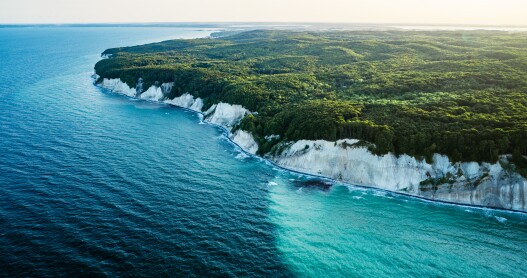
Vibrant urban culture vies with romantic landscapes throughout Germany. The major cities, especially Berlin, Hamburg, Cologne, and Munich, should not be missed, but smaller towns like Bayreuth, Weimar, Nuremburg, Dresden, Bamberg, and Lübeck are also attractive for their impressive architecture and charming atmospheres. Soaring cathedrals and grand palaces can be found across the country, while natural areas like the Black Forest, the Bavarian Alps, and the Baltic and North Sea coastlines provide an alluring mix of recreation and relaxation.

Practical Information

Americans and other non-E.U. citizens need a valid passport to visit Germany for less than 90 days, and a travel visa to stay longer. The local language is German, though the more urban the destination, the more English is spoken, especially among the younger generation. The currency is the euro, the voltage is 230 volts, and the socket type is F (round plugs with two round prongs).

Guide Editor

Paul Sullivan has lived in Berlin since 2008. In addition to running his local website, Slow Travel Berlin, he writes regularly on Berlin and Germany for international publications like The Guardian, The Telegraph, the Sunday Times, and the BBC, and has worked on Berlin and Germany guidebooks for publishers such as Fodors, DK, Rough Guides, Wallpaper, and more.
READ BEFORE YOU GO
HOTELS
Whether you’re a skier or an après-ski enthusiast, these 19 European hotels are ideal for a winter weather getaway.
After a careful two-year renovation, the historic Brenners Park-Hotel & Spa is stepping into a new era of wellness shaped by the surrounding Black Forest.
Around the world, breakfast is emerging as the moment when a luxury hotel’s ambition—and its core values—become most visible.
These women aren’t just breaking barriers. They’re building a more inclusive, dynamic future for hospitality—and your hotel experience will be the better for it.
These are the 24 hotels we recommend most for wellness.
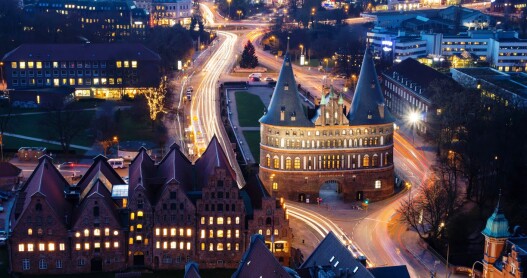
From rococo and baroque facades in Lübeck to Bauhaus in Weimar and Le Corbusier’s modernist neighborhood outside Stuttgart, Germany has a rich architectural history.
Descend into ancient mine shafts, visit skilled woodcarvers, soar to the top of eastern Germany’s highest mountain, and soak up the charm of historic towns.
From the protected Wadden Sea to the historic warehouse districts of Hamburg and beyond, a visit to the former Hanseatic League is a dream trip for sustainably minded travelers who love history.
Berlin is a masterpiece of urban planning, from the Museum Island at the heart of its walkable center to groundbreaking Modernism Housing Estates, plus epic parks and forests waiting just a stone’s throw away.
Explore rich religious traditions and outstanding architecture at the country’s most magnificent cathedrals and monasteries.
RESOURCES TO HELP PLAN YOUR TRIP
The Bayerischer Landtag (Bavarian State Parliament) is housed in the Maximilianeum, an impressive, palatial building at the end of Maximilianstrasse on the border of Haidhausen, overlooking the Isar River. Construction first started on the building in 1857. It has undergone numerous additions since. Stop by in the evening when it’s lit up and particularly impressive.
Kultfabrik claims to be Europe’s largest party zone and it just may well be! Home to over 20 clubs and bars ranging from a cozy Irish pub to discos to table dancing to karokee, there’s something for every nightlife lover who wants to see the wilder side of Munich.
Münchners love to be active, so why not go local and for a swim in Munich‘s most stylish swimming pool, the Müller’sche Volksbad? The baths and showers in the Volksbad date back to a time when having your own bathroom was a rare occurrence, retaining the history but indulging you in luxury. There are also sauna facilities, with the Roman steam bath being the highlight. Relax afterwards in the Volksbad Cafe.
Maximilianstrasse is one of Munich‘s four royal avenues and well, you could say it’s fit for a king! It starts at the Munich Residence, former home to Bavarian Royalty, and offers one kilometre of upscale designer shops, galleries, jewellery stores all framed by neo-Gothic buildings.
Just east of Old Town across the Isar River lies Haidhausen, known as the French Quarter in Munich. It’s one of the city’s prettiest neighborhoods and home to many unique, locally owned stores. The best way to explore is by wandering on foot. Shops are concentrated around Weißenburger Platz, Weiner Platz, and Rosenheimer Platz, but be sure to check out the side streets for hidden gems. Then relax and recharge at one of the area’s charming cafés.
Obletter is Munich‘s largest toy store, and with over 16,000 toys it will delight both adults and children alike. The multi-level store has model trains, cars, and airplanes of all price ranges. It’s also a great place to purchase wooden toys, puppets or Steiff teddy bears, which Germany is famous for. Each level has a different theme, and it’s worth exploring all of them.
Munich’s most popular and busiest shopping place is Kaufingerstrasse, centrally located between Marienplatz and Karlsplatz. The pedestrian-only street is lined with all the major brand names and chain stores. Also check out some of the passageways—you’ll find stores hidden away from the crowds that tend to be more of the speciality types, resulting in some interesting finds.
Built in the 17th century, Nymphenburg Palace is one of the largest royal castles in Europe. Planned as a summer residence for the Bavarian monarchy, it was expanded over time and now features additional pavilions and gallery wings, plus a French Baroque façade by Joseph Effner. The palace exterior and expansive, English-style gardens—complete with lakes, geysers, and waterfalls—are the real highlights here, but the interior, with its Baroque, Neoclassical, and Rococo era rooms, is also worth seeing. Be sure to check out the Steinerner Saal (Stone Hall) with its striking ceiling frescoes, the Schönheitengalerie (Gallery of Beauties) with works by court painter Joseph Karl Stieler, and the palace chapel of St. Magdalena. There are also a few interesting museums on site, including ones dedicated to royal coaches, porcelain, and natural history.
Much of Munich was bombed in WWII, but here and there you can see glimpses of what it looked like before the war. One such example is the remains of the historic gate sandwiched in between two more modern buildings (pictured above) on Maximilianplatz. While you’re in the area, the Wittelsbach Fountain is also worthy of a photo.
The Feldherrenhallewas was modelled after the “Loggia dei Lanzi " in Florence. It was commissioned by King Ludwig I of Bavaria and constructed between 1841 to 1844. It was built as a monument to celebrate the Bavarian army and its victorious generals. Unfortunately it’s also the place of a tragic incident. On November 9, 1923, a confrontation between the Bavarian State Police and an illegally organized march by the followers of Adolf Hitler took place here. When the police issued the stop of the march, the protestors continued. The State Police tried to regain control of the crowd and opened fire. Four policemen and sixteen marchers were killed and many more were injured as a result. Consequently, Hitler was arrested and sentenced to prison.