Germany

While Germany is well-known for its hearty food and beer, fairy-tale castles, and gorgeously preserved medieval towns, the country offers so much more than clichés. In addition to some of Europe’s most distinctive cities—Berlin, Munich, and Hamburg, to name a few—Germany features diverse natural scenery (scenic coastlines, mystical forests, soaring Alps), a heavyweight cultural legacy (including contributions from some of the world’s most famous philosophers and musicians), cutting-edge architecture, and celebrated contemporary art.

Germany-Guide.jpg

Photo by Felix Bruggemann

Overview

When’s the best time to go to Germany?

Summer is the ideal time to visit Germany. The country’s sunlit landscapes—crisscrossed with rivers, peppered with forests and lakes, and dotted with charismatic castles—are in full bloom, and its cities transform into outdoor playgrounds. Still, summer can bring crowds and expensive prices, so spring and autumn are attractive alternatives, helped along by a slew of major events like Munich’s famous Oktoberfest. Winter holds its own charms, especially for ski and snowboard fans, as well as for those who wish to visit Germany’s Christmas markets, which run from late November until December 23, or the Berlin International Film Festival in February.

How to get around Germany

There are over 40 airports spread across Germany, providing easy and convenient access to the country’s 16 federal states. Frankfurt am Main and Munich are the largest airports, followed by Düsseldorf, Berlin, Hamburg, Stuttgart, and Cologne Bonn. Once you’ve arrived in Germany, public transportation is generally excellent, with high-speed trains connecting all major cities as well as destinations across Europe. Some regions, like the Black Forest and Schleswig-Holstein, are more easily explored by car, but even there you can find buses and trains to get around.

Food and drink to try in Germany

Traditional German food is quite substantial—meat dishes like lamb, pork, and beef are popular, along with plenty of fish, rich sauces, and generous sides including potatoes, dumplings, and cabbage. Sausages are ubiquitous, and each region tends to have its own specialty. Be sure to try Rheinischer Sauerbraten (pot roast) in the North Rhine, spätzle (cheesy noodles) in the south, and quirky dishes like Handkäs mit Musik (pungent cheese topped with white onions) around Hesse. Contemporary German cuisine, on the other hand, often consists of lighter, updated versions of classics, and all the big cities offer a diverse range of international food.

Beer, of course, is a trademark of Germany, including the mixed drink Radler (beer with lemonade or any variation of juice), which is popular during the summer. In winter, sipping a steaming mug of Glühwein (mulled wine with spices) is recommended.

Culture in Germany

Germany is often referred to as Das Land der Dichter und Denker (The Country of Poets and Thinkers), which gives more than a clue as to its intellectual and cultural prowess. Famed for its contributions to everything from philosophy and literature to music and art, the country has produced many luminaries known worldwide by their surnames alone: Goethe, Bach, Hegel, Beuys, Hesse, Wagner, Mozart, among them. Germany’s contemporary cultural scene is just as dynamic, as evidenced by an annual calendar of events like the world-renowned Berlin International Film Festival and the Documenta art exhibition in Kassel.

Can’t miss things to do in Germany

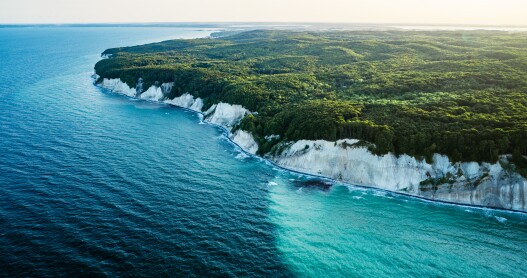
Vibrant urban culture vies with romantic landscapes throughout Germany. The major cities, especially Berlin, Hamburg, Cologne, and Munich, should not be missed, but smaller towns like Bayreuth, Weimar, Nuremburg, Dresden, Bamberg, and Lübeck are also attractive for their impressive architecture and charming atmospheres. Soaring cathedrals and grand palaces can be found across the country, while natural areas like the Black Forest, the Bavarian Alps, and the Baltic and North Sea coastlines provide an alluring mix of recreation and relaxation.

Practical Information

Americans and other non-E.U. citizens need a valid passport to visit Germany for less than 90 days, and a travel visa to stay longer. The local language is German, though the more urban the destination, the more English is spoken, especially among the younger generation. The currency is the euro, the voltage is 230 volts, and the socket type is F (round plugs with two round prongs).

Guide Editor

Paul Sullivan has lived in Berlin since 2008. In addition to running his local website, Slow Travel Berlin, he writes regularly on Berlin and Germany for international publications like The Guardian, The Telegraph, the Sunday Times, and the BBC, and has worked on Berlin and Germany guidebooks for publishers such as Fodors, DK, Rough Guides, Wallpaper, and more.
READ BEFORE YOU GO
HOTELS
Whether you’re a skier or an après-ski enthusiast, these 19 European hotels are ideal for a winter weather getaway.
After a careful two-year renovation, the historic Brenners Park-Hotel & Spa is stepping into a new era of wellness shaped by the surrounding Black Forest.
Around the world, breakfast is emerging as the moment when a luxury hotel’s ambition—and its core values—become most visible.
These women aren’t just breaking barriers. They’re building a more inclusive, dynamic future for hospitality—and your hotel experience will be the better for it.
These are the 24 hotels we recommend most for wellness.
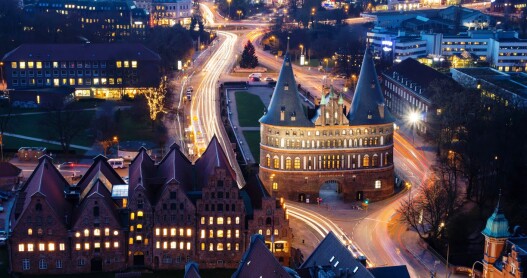
From rococo and baroque facades in Lübeck to Bauhaus in Weimar and Le Corbusier’s modernist neighborhood outside Stuttgart, Germany has a rich architectural history.
Descend into ancient mine shafts, visit skilled woodcarvers, soar to the top of eastern Germany’s highest mountain, and soak up the charm of historic towns.
From the protected Wadden Sea to the historic warehouse districts of Hamburg and beyond, a visit to the former Hanseatic League is a dream trip for sustainably minded travelers who love history.
Berlin is a masterpiece of urban planning, from the Museum Island at the heart of its walkable center to groundbreaking Modernism Housing Estates, plus epic parks and forests waiting just a stone’s throw away.
Explore rich religious traditions and outstanding architecture at the country’s most magnificent cathedrals and monasteries.
RESOURCES TO HELP PLAN YOUR TRIP
The Black Forest is famed for its cuckoo clocks, and the German Clock Museum (Deutsches Uhrenmuseum) in Furtwangen is the best place to get up close and personal with several examples. Here, visitors will find a collection of more than 1,000 iconic clocks, some 160 years old and others extremely rare, as well as troves of information on the history and technology of clock-making, including the concept of timekeeping. Visit the main exhibition to see items like an atomic clock, iron clocks from the 16th century, and the first-ever radio-controlled wristwatch, then check out the library and archive, which features books on horology from the local university. If you have kids in tow, be sure to also take advantage of organized treasure hunts for children, guided tours, and workshops on how to make and decorate a clock.
Located in the wine-growing region of Oberbergen, this long-running restaurant earned a Michelin star way back in 1969—and has held firmly to it ever since. Owner Fritz Keller’s family has been producing and importing wines since the 19th century, and Schwarzer Adler is very much an oenophile’s spot, with a list that spans around 2,500 labels (including bottles from the Keller estate as well as other European wines, with a focus on Burgundy and Bordeaux). The Francophile menu—designed by long-standing chef Anibal Strubinger (who continues to support the team alongside new head chef Christian Baur)—perfectly complements the wines, with dishes like liver pâté, lobster, and poulet Bresse with black truffles. Adding to the food’s classic feel, the dining rooms are old-fashioned and intimate, with wood-paneled walls and vintage tiled stoves. Service is friendly and efficient, and there’s a small terrace for dining outdoors in nice weather.
Built between 1715 and 1718, the Baroque Karlsruhe Castle served as the residence of the electoral princes and grand dukes of Baden for more than two centuries. Designed by Jakob Friedrich von Batzendorf, the palace exterior is especially pleasing—not least because it was planned as the focal point of the city, with streets radiating out from all sides like wheel spokes (which in turn inspired Pierre L’Enfant, planner of Washington, D.C.). The castle also features picturesque pavilions and ornate wings, but for many the real highlight is the Baden State Museum inside. Opened in 1919 and generally regarded as the best in the region, the museum spans pre- and early history, with exhibits on the Ancient Greek and Roman eras as well as sculptures from the Middle Ages, a particularly celebrated art nouveau collection, and an impressive range of 17th-century Ottoman handicrafts.
While construction started on Freiburg’s iconic Gothic church in 1200, it wasn’t finished until almost 300 years later. Today, the cathedral is known mainly for its 380-foot west tower (famously described by art historian Jacob Burckhardt in 1869 as “the most beautiful spire on earth”), but also boasts magnificent pillars, intricate sculptures (including 91 gargoyles), and an equally stunning interior. Incredibly, the church survived several World War II bombings and still contains stained glass windows from medieval times, plus a high altar with an intact triptych by Hans Baldung Grien. The famous tower takes on an octagon shape as you climb to the viewing platform, where, on clear days, you can see across to the Vosges Mountains in France. Be sure to also check out the bell tower, home to the three-ton, 750-year-old Hosanna bell—one of Germany’s oldest.
Gal Ben Moshe’s brand new venture picks up where his former restaurant, the celebrated Glass, left off. The concept is still European-meets-Levantine fine dining, but the game has been raised yet further with a more seductive—dark-toned walls, leather chairs, and low-key lighting—which allows space for the food to shine. As before, guests can choose from six, seven, or eight courses, including a wine-matching option for each; expect a series of immaculately presented taste explosions that include foie gras frozen in nitrous oxide, dukkah pulpo foul with chickpeas, and lamb served with eggplant and sour cherries. We recommend you save room for dessert.
Tucked away in a rear courtyard on trendy Potsdamer Strasse, this dapper restaurant—run by the owner of the equally swanky and highly popular Katz Orange—draws on a famous German children’s book as inspiration, and offers a forward-thinking and global-minded menu that effortlessly spans items like char tacos and venison tartar. The restaurant’s two distinctly different floors, designed by Karoline Butzert and Nora Witzigmann, match comfortable and stylish furnishings to eye-catching artworks such as a bone-shaped neon sign by Kerim Seiler, and a chandelier made of vintage lights by the artist Björn Dahlem. The wine list is top-notch, but in case you fancy a change of scene, the associated Tiger Bar across the courtyard knocks up some killer cocktails.
Schloss Elmau, set at the foot of the craggy German Alps, has a fascinating past. A German theologian opened the hotel in 1916 as a place for visitors to commune with nature while attending religious lectures, public readings, and classical music concerts. In the aftermath of World War II, he lost the property to the U.S. Army, but it was eventually returned to his family. Then in 2005, a fire swept through the original Schloss (castle), causing severe damage, and the owners saw the disaster as an opportunity to rebuild and add another, all-suite hotel on the property to serve as a cultural gathering place. Today, Schloss Elmau still hosts music and literary events—more than 170 each year—and, impressively, served as the site of the G7 Summit in 2015.

Impeccably furnished in shades of soft red, cream, and gold, the 162 rooms are elegant yet understated so as not to distract from the sweeping views of the meadows and mountains beyond. Families will appreciate the larger rooms in the new building, but couples may enjoy soaking up the grand feeling of the original property. The real attraction here, however, is the spas. There are six in all, including one for families, with a large indoor pool and five different types of saunas; the adults-only Badehaus, with three pools, saunas, a yoga center, a beauty salon, and relaxation rooms with floor-to-ceiling windows and open fireplaces; and the Shantigiri spa, featuring separate pools and facilities for adults, families, and “ladies.” Another spa is set on 40 acres with a stream. Once you’re sufficiently blissed out, there are 10 restaurants to choose from, including the Michelin-starred Luce d’Oro.
Along with Kreuzberg’s Curry 36, Konnopke’s in Prenzlauer Berg is one of the most famous currywurst stands in Berlin. The two couldn’t be more different aesthetically, though. While the former has a fairly loud and brash character, Konnopke’s is a gentler, family-run affair that has been serving up street snacks in the same location since 1930. Set below the U-Bahn tracks at a busy rail and traffic junction, the stall offers currywurst (chopped pork sausage in a sauce of ketchup and curry powder) with or without skin as well as a range of other sausages, meatballs, and french fries. Enjoy your treat at one of the standing tables or, in colder weather, in the covered eating area.
Berlin’s German Resistance Memorial Center, close to Potsdamer Platz, recounts the city’s tales of resistance against the Nazis. The center is in the Bendlerblock, a historic military building where the expansion of the German navy was planned during the reign of Kaiser Wilhelm II and the role of the German army was reassessed during the Weimar Republic. In addition, several of those involved in the July Bomb Plot to murder Adolf Hitler and bring down the Nazi regime in 1944 were executed in the building’s courtyard. A permanent exhibition, spread across a couple of atmospheric floors, documents the bravery, as well as the diversity, of those who fought against the Nazi dictatorship.
Only in Berlin could a hulking, aboveground World War II‒era concrete bunker, right in the center of the city, be turned into an art gallery. The structure—too bulky to be blown up after the war—was transformed in 2008 by collector-curator Christian Boros, who lives in a penthouse on top of the building. After extensive renovation, the lower floors house the Boros Collection, around 500 works of art spanning sculpture, installations, paintings, and photography. Works change every couple of years but always feature big international names such as Damien Hirst, Olafur Eliasson, Elizabeth Peyton, Wolfgang Tillmans, Manfred Pernice, Ai Weiwei, and Michel Majerus. You can view the collection only on weekends, as part of a guided tour; book an appointment via the website.