Canada

Canada spans six time zones, and some say that it boasts the longest street in the world. This nation gave the world Leonard Cohen, Leslie Nielsen, Mounties, Tim Hortons, Superman, zippers, the light bulb, and the snowblower. This is a place where polar bears, poutine, and epic panoramas predominate. Canada’s wilderness beckons adventure-seekers from the world over, while the country’s cultural attractions, culinary marvels, hockey rinks, and artistic landmarks thrill visitors of all stripes.

Vancouver Canada totem pole

Jessie Beck

Overview

When’s the best time to go to Canada?

The best time to visit Canada depends on what you wish to experience. The snowy months of winter allow for world-class skiing, snowshoeing, and hockey games. Summer is ripe for sunseekers to explore both the Pacific and Atlantic coasts, the lakes of Ontario, and the wild country of the North. Spring turns the West into one gigantic flowerpot, while fall transforms Eastern Canada into a kaleidoscope of colors. Keep in mind that many Canadians travel during the summer months. Also, national parks and big cities attract thousands of visitors from the United States during school holidays and long weekends, when prices can soar in destinations like Toronto, Vancouver, Jasper, Montreal, Banff, Calgary, and Halifax.

How to get around Canada

Major international airports are spread across the country from Vancouver in the west to Halifax in the east. Many international visitors choose to arrive at U.S. border cities (e.g. Seattle, WA and Buffalo, NY) and then drive across the border. This can be a cheaper way of entering Canada, but be prepared for traffic and extended waits at border checkpoints during peak travel times.

Major cities like Toronto, Vancouver, Calgary, Montreal, and Halifax have excellent public transportation networks: taking the bus, riding the metro, or hailing a cab is a breeze. Smaller cities and rural towns are walkable, but you’ll need a car to get out into the countryside. Public transportation in and out of national parks is virtually nonexistent. The space between metro centers can seem daunting, so consider flying if you wish to cut down on travel times.

Food and drink to try in Canada

Canadian cuisine is as diverse as the country is expansive. On one city block—or on one menu—you may find restaurants serving Ukrainian, Chinese, Irish, German, Portuguese, Haitian, Nigerian, and Ethiopian dishes. Each province and city has its own culinary flair: you’ll find unique Western fare in Calgary and Edmonton, gastro-nouveau in Toronto and Vancouver, fine French dining in Montreal and Quebec City—and the best the ocean has to offer in Halifax, Charlottetown, and St. John.

Culture in Canada

Have you come for the great outdoors, or Winnipeg’s Folklorama? Perhaps you’re in town for Toronto’s MuslimFest, or you made the trek to quirky little Maxville, Ontario, for the Glengarry Highland Games. Massey Hall in Toronto has hosted the world’s largest musical acts for decades, while the Quebec Winter Carnival is Canada’s premiere winter event. The Edmonton International Fringe Festival, held every August, is the largest and oldest fringe fest in North America.

Canadians love to party. Canada Day (July 1) is celebrated from coast to coast, with Canadians and visitors packing public squares, stadiums, parks, and concert halls for massive festivals. The Calgary Stampede takes over Alberta’s largest city every July; Montreal’s International Jazz Festival (June 29–July 9) welcomes 2.5 million visitors each year; and Pride, Scotiabank Caribbean Carnival, The Canadian National Exhibition, and the Toronto International Film Festival bring revelry to Ontario’s capital.

Local travel tips for Canada

English is Canada’s common tongue, though French is spoken throughout Quebec and in many Atlantic cities. That said, you’ll hear nearly every other language in the big metro centers. The currency is the Canadian Dollar ($). Tipping is required (15%) in restaurants, and it is generally expected in taxis and hotels. ATMs are everywhere, and major credit cards are accepted across the country. Electricity is 110v.

Guide Editor

READ BEFORE YOU GO
HOTELS
These hotels around the world—all owned and run by women—reflect a wide range of destinations and styles.
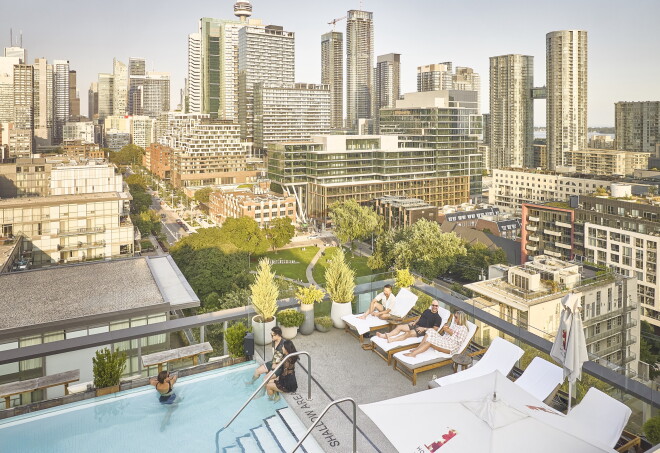
At the 10-room Ode Toronto, local art, vintage shopping, and neighborhood restaurants in Dundas West define the experience.
Sleep under the world’s darkest, clearest skies across six continents at one of these 19 dark sky zone hotels.
Afar editors share the 2025 hotel stays they didn’t want to leave—and would happily return to.
At Nimmo Bay in British Columbia, luxury means snorkeling in 50-degree water, sipping water from cedar-lined mountain streams, and spotting grizzlies from a floating sauna.
In Toronto’s burgeoning hotel scene, you’ll find Canada’s first Ace Hotel, a reimagined St. Regis, and an ultra-cool boutique stay in a private women’s club.
Heli-ski in winter, or hike, bike, and paddle in summer at Eleven Revelstoke Lodge, a revamped heritage property in Revelstoke, British Columbia.
Whether it’s a villa in Italy, a dude ranch in the U.S. West, or a luxury all-inclusive in the Caribbean, here are places where accommodations and experiences are ideal for large family groups with a wide range of ages.
These women aren’t just breaking barriers. They’re building a more inclusive, dynamic future for hospitality—and your hotel experience will be the better for it.
This winter, snuggle up in one of these insanely cozy bubbles, pods, cabins, and geodesic domes.
RESOURCES TO HELP PLAN YOUR TRIP
The Matrix Hotel, located just off Jasper Avenue, is smack-dab in the middle of downtown Edmonton, and there is no better place to stay than its Onyx Suite. The design of the hotel—stylish and modern—suits any style of traveler and most rooms have wide balconies that overlook the city. But only the Onyx Suite has a sprawling walk-out terrace with built-in barbecue, fireplace, and seating for hosting an impromptu rooftop cocktail hour. It’s all within easy walking distance of the Edmonton City Centre mall and countless other shops, plus it’s close to the city’s best nightlife when the occasion calls for a night on the town. Rooms from $195. Contact 1-780-429-2861.
It takes patience and good fortune to create a unique image in a place considered Canada’s second-most-photographed landscape. The Through the Lens Cruise on Maligne Lake gives amateur and professional shutterbugs such an opportunity. While in the boat, the onboard instructor talks technique and composition with aspiring photographers and challenges seasoned veterans to try new perspectives. Once the group arrives at Spirit Island, everyone spends an hour framing the perfect shot. The cruise experience hasn’t changed much since Jasper National Park pioneers Curly Philips and Fred Brewster set up shop at Maligne Lake in the 1920s.
Home to the Toronto Symphony Orchestra, this curved glass building is also a premiere venue for the Toronto International Film Festival. During the year, this iconic building in Toronto serves as concert showcase and special event venue. National Geographic’s Live Series, for example, is great for travel buffs. Tours are available by appointment.
Opened in 2005, the Jasper Brewing Company was the first brewpub within a Canadian national park. It is now a local’s staple hangout. Seven different beers—like the Rockhopper IPA and Honey Bear Ale—are brewed on location, so make sure to order a brewery tour along with a fresh pint. The food menu is pub fare with a special flare to help bring out the flavors of the beer. The brewpub, open daily from 11:30am to 1:00am, is child-friendly, too, as the venue is divided into two, with both a restaurant and pub. Beer from $5.50. Contact 1-780-852-4111.
The province of Quebec is notorious for its quaint, picturesque villages. The compact forests and the thousands of lakes in the Laurentides region certainly make for the picture-perfect Canadian postcard, including the beautiful lakeside chapel in Saint-Alphonse or the wholesome locals of Old-Town Saint-Sauveur. On the other hand, the rolling hills of the Eastern Townships are as bucolic as it gets: villages like Hudson, with its gourmet market, microbrewery and century-old houses have a slight England feel, as does nearby Sutton. However, the ultimate wintery escape from Montreal surely is Quebec City, with the snow-capped Château Frontenac, 400+ year old historic center and festive winter Carnival every February.
The Banff Ave Brewing Company uses pure Canadian Rockies glacier water as its beer’s not-so-secret ingredient. The water makes for a perfectly imperfect beer, as it comes chock-full of minerals usually removed before the brewing process. Open since 2010, the Banff Ave Beer Co has six handcrafted beers on tap at the brewpub in downtown Banff, along with a food menu that puts an eccentric twist on traditional pub fare. The brewpub is popular year-round. In the winter, it’s great for après ski or for a nice meal before sampling some of Banff’s bolder nightlife venues. In the summer, its patio is the perfect place for a refreshing afternoon drink while people watching along Banff Avenue. Open 7 days per week, 11:30am to 2am. Reservations not required. 1-403-762-1003.
Mount Royal Park starts at the edge of the city just beyond the McGill campus and runs alongside neighborhoods like Plateau before rising to the top of 764-foot-tall Mount Royal (Mont Réal), the hill that gives the city its name. The twisting roads and paths of this crown jewel of Montréal’s park system were initially laid out by Frederick Law Olmsted, who also designed New York’s Central Park. While Olmsted’s plan was not followed in all its details, the final result was true to his vision of a woody park that takes advantage of the site’s hilly topography. There are two belvederes with views of the city skyline and the St. Lawrence River, and one of Montréal’s iconic landmarks, a 103-foot-high cross, sits at its northern end. The park is most popular in summer, but residents flock here in every season, to enjoy the colorful foliage in the fall and the cross-country ski trails and toboggan runs in the winter.
The Mile End is Montreal‘s version of Brooklyn, Sodermälm, Shoreditch, and Kreuzberg put together. Hipsters, exotic eateries, and vintage shops abound. Mile End is also the cradle of Montreal’s music scene, cultural diversity and all things trendy and fashionable (but not too mainstream, of course). But more than just a hotbed for tuque-wearers and vintage shops, Mile End is a place where many different cultures coexist and enjoy the best of one another, in a post-industrial meets residential tree-lined avenues type of backdrop. Greek eateries meet Hasidic Jews-owned bagel shops, and artsy coffee shops meet up-and-coming, edgy designers. A dynamic area that should be explored by the senses first and foremost, and where most visitors could easily picture themselves settling down, and never leave. With icons like Wilensky’s, Boris’ doughnuts, and Arts Café, there really is no such thing as being bored in the Mile End—even for Montrealers!
Perhaps due in large part to the city’s notoriously harsh, never-ending winters, Montrealers have a profound appreciation of their green spaces, always jumping at the chance of spending a couple of hours outdoors, basking in the sun. The Mont-Royal Mountain is the most popular, however, simply by its size (529 acres!), its fabulous views over the city and its architect — Frederick Law Olmsted. Parc Lafontaine and Parc Sir Wilfrid Laurier are also local favorites, where sunbathers, young families, BBQ-ers and joggers mingle happily, enjoying every minute of the all too short summer months. The two parks are located near delicious take-out counters (Ma poule mouillée and Lapin pressé, respectively) making it a perfect pique-nique opportunity.
Bota Bota began its life on the water as a ferryboat. Then called the Arthur Cardin, it sailed between the cities of Sorel and Berthier, just east of Montreal, back in the 1950s. Many years later, someone had the idea to transform this mothballed boat, docked in the old port of Montreal, into a floating spa. Mission accomplished. With its 25,000 square feet, 21 treatment rooms, 6 terraces, and 40 different types of services, the Bota Bota makes a pretty grand spa, if you ask me. What’s even greater about the spa is the location. Docked in the old port with stunning views of downtown and Old Montreal, the Bota Bota offers its passengers (not customers!) the healing benefits of a spa while they are lulled by the natural movements of the St Lawrence River.