Canada

Canada spans six time zones, and some say that it boasts the longest street in the world. This nation gave the world Leonard Cohen, Leslie Nielsen, Mounties, Tim Hortons, Superman, zippers, the light bulb, and the snowblower. This is a place where polar bears, poutine, and epic panoramas predominate. Canada’s wilderness beckons adventure-seekers from the world over, while the country’s cultural attractions, culinary marvels, hockey rinks, and artistic landmarks thrill visitors of all stripes.

Vancouver Canada totem pole

Jessie Beck

Overview

When’s the best time to go to Canada?

The best time to visit Canada depends on what you wish to experience. The snowy months of winter allow for world-class skiing, snowshoeing, and hockey games. Summer is ripe for sunseekers to explore both the Pacific and Atlantic coasts, the lakes of Ontario, and the wild country of the North. Spring turns the West into one gigantic flowerpot, while fall transforms Eastern Canada into a kaleidoscope of colors. Keep in mind that many Canadians travel during the summer months. Also, national parks and big cities attract thousands of visitors from the United States during school holidays and long weekends, when prices can soar in destinations like Toronto, Vancouver, Jasper, Montreal, Banff, Calgary, and Halifax.

How to get around Canada

Major international airports are spread across the country from Vancouver in the west to Halifax in the east. Many international visitors choose to arrive at U.S. border cities (e.g. Seattle, WA and Buffalo, NY) and then drive across the border. This can be a cheaper way of entering Canada, but be prepared for traffic and extended waits at border checkpoints during peak travel times.

Major cities like Toronto, Vancouver, Calgary, Montreal, and Halifax have excellent public transportation networks: taking the bus, riding the metro, or hailing a cab is a breeze. Smaller cities and rural towns are walkable, but you’ll need a car to get out into the countryside. Public transportation in and out of national parks is virtually nonexistent. The space between metro centers can seem daunting, so consider flying if you wish to cut down on travel times.

Food and drink to try in Canada

Canadian cuisine is as diverse as the country is expansive. On one city block—or on one menu—you may find restaurants serving Ukrainian, Chinese, Irish, German, Portuguese, Haitian, Nigerian, and Ethiopian dishes. Each province and city has its own culinary flair: you’ll find unique Western fare in Calgary and Edmonton, gastro-nouveau in Toronto and Vancouver, fine French dining in Montreal and Quebec City—and the best the ocean has to offer in Halifax, Charlottetown, and St. John.

Culture in Canada

Have you come for the great outdoors, or Winnipeg’s Folklorama? Perhaps you’re in town for Toronto’s MuslimFest, or you made the trek to quirky little Maxville, Ontario, for the Glengarry Highland Games. Massey Hall in Toronto has hosted the world’s largest musical acts for decades, while the Quebec Winter Carnival is Canada’s premiere winter event. The Edmonton International Fringe Festival, held every August, is the largest and oldest fringe fest in North America.

Canadians love to party. Canada Day (July 1) is celebrated from coast to coast, with Canadians and visitors packing public squares, stadiums, parks, and concert halls for massive festivals. The Calgary Stampede takes over Alberta’s largest city every July; Montreal’s International Jazz Festival (June 29–July 9) welcomes 2.5 million visitors each year; and Pride, Scotiabank Caribbean Carnival, The Canadian National Exhibition, and the Toronto International Film Festival bring revelry to Ontario’s capital.

Local travel tips for Canada

English is Canada’s common tongue, though French is spoken throughout Quebec and in many Atlantic cities. That said, you’ll hear nearly every other language in the big metro centers. The currency is the Canadian Dollar ($). Tipping is required (15%) in restaurants, and it is generally expected in taxis and hotels. ATMs are everywhere, and major credit cards are accepted across the country. Electricity is 110v.

Guide Editor

READ BEFORE YOU GO
HOTELS
These hotels around the world—all owned and run by women—reflect a wide range of destinations and styles.
At the 10-room Ode Toronto, local art, vintage shopping, and neighborhood restaurants in Dundas West define the experience.
Sleep under the world’s darkest, clearest skies across six continents at one of these 19 dark sky zone hotels.
Afar editors share the 2025 hotel stays they didn’t want to leave—and would happily return to.
At Nimmo Bay in British Columbia, luxury means snorkeling in 50-degree water, sipping water from cedar-lined mountain streams, and spotting grizzlies from a floating sauna.
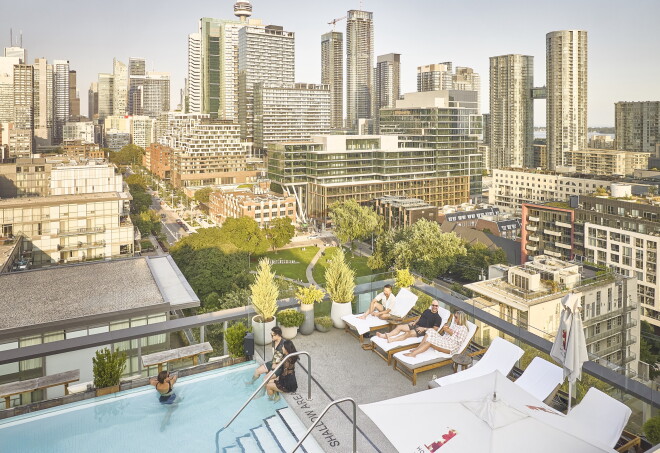
In Toronto’s burgeoning hotel scene, you’ll find Canada’s first Ace Hotel, a reimagined St. Regis, and an ultra-cool boutique stay in a private women’s club.
Heli-ski in winter, or hike, bike, and paddle in summer at Eleven Revelstoke Lodge, a revamped heritage property in Revelstoke, British Columbia.
Whether it’s a villa in Italy, a dude ranch in the U.S. West, or a luxury all-inclusive in the Caribbean, here are places where accommodations and experiences are ideal for large family groups with a wide range of ages.
These women aren’t just breaking barriers. They’re building a more inclusive, dynamic future for hospitality—and your hotel experience will be the better for it.
This winter, snuggle up in one of these insanely cozy bubbles, pods, cabins, and geodesic domes.
RESOURCES TO HELP PLAN YOUR TRIP
The stretch of Boulevard Saint-Laurent between Rue Marianne and Avenue Mont-Royal is known as furniture alley, for all the furniture and home appointment stores that exist there. Latitude Nord was among the first to move to the area and remains the best spot to spy cutting-edge contemporary design items like lamps, chairs, rugs and couches. The focus is on European imports, particularly Italian brands like Cassina, Bisazza and Cappellini, but there’s also minimalist American ware from the likes of Emeco (makers of the ubiquitous Navy Chair) and cushy rugs made in Spain by Alpujarreña. The slick showroom is worth visiting even if you don’t intend to buy.
This handsome resto-bar on Boulevard Saint-Laurent trades in a fantastical aesthetic reminiscent of old timey circuses featuring mustachioed acrobats in striped leotards. The interior is panelled wood with a stuffed dear head and a long pale-wood bar, with disparate chairs around small tables for intimate get-togethers. Their curvy emblem glasses are filled with house cocktails or good beer, and the plates filled with delights conceived by chef Charles-Antoine Crête, of Toqué! fame. Try their Sunday brunch every week starting at 11 am, featuring a salmon feuilleté that will make your day.
Your nose will alert you to the exotic possibilities at hand in this place before you even walk all the way in. This spice emporium has passed through three generations of the Hatzidakis family already, and continues to provide the city’s chefs as well as avid cooks from all walks of life. From cumin to saffron to sumac to oregano, it’s all here among the 600-some spices on hand, along with a knowledgeable staff ready to help with all your questions. They also have bulk goods (including candy) and an impressive array of homemade natural essences, of everything from coconut to orange.
It may not have the design flair of the nearby Magasin Général Bélangermartin, but this home ware store on Rue Dante is beloved citywide for its amazing selection of appliances, cooking tools and all-around useful stuff. Whether you need a meat cleaver, a new Le Creuset or an old school pressure cooker, you’ll find anything you need in the cooking department and more (there’s even a firearm counter dedicated to hunters). It’s become a true neighborhood social club over the years; manager Elena Faita-Vendittelli (mom to Stefano Faita, of the nearby restaurant Impasto) hosts popular cooking classes at the neighboring cooking school, Mezza Luna.
This homely but homey little spot tucked away on Rue Beaubien makes an all-day breakfast that draws people from afar every weekend, and locals every day of the week. Saddle up to one of their handful of tables for their variety of eggs Benedict, all served with tomatoes fresh from the nearby Marché Jean-Talon and golden, chunky home fries. Or if you’re in a lunchy mood, try the BBLAT sandwich: brie, bacon, lettuce, avocado and tomatoes pressed together into an answer to your stomach’s prayers.
A true neighbourhood institution, this dépanneur – Quebec’s answer to the corner store – has such a loyal following that within months they had successfully boycotted a 7/11 type of chain store that opened up across from it. The reason for the following, other than the staff’s boundless charm, is because you’ll find anything you could ever dream of needing in a pinch in this store, and much more: they make sandwiches and take-away meals here that will put your momma’s packed lunches to shame.
The French chef Daniel Boulud made his name in New York, where he oversees seven restaurants and has since expanded his culinary empire to six other outposts around the globe. His venture in Montréal makes perfect sense, with Québecois cuisine combining French traditions and techniques with New World ingredients—not unlike Boulud himself. The space—by Super Potato, one of the hottest design firms today—is elegantly restrained, with smoked glass details, wooden floors, and a contemporary enclosed fireplace warming and lighting the room. Boulud uses the best of Québec’s produce in dishes centered on local foie gras, duck, and salmon. The result is refined yet soulful contemporary French dishes, prepared by Maison Boulud executive chef Riccardo Bertolino. In warmer months, guests can dine alfresco, while in the winter you can take in the snowy scene from the restaurant’s enclosed greenhouse. Image courtesy of Ritz-Carlton Montreal.
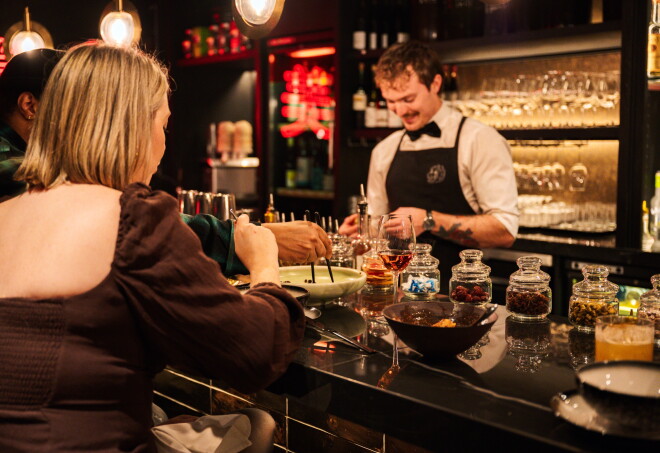
Not to be mistaken for the popular izakaya of the same name (and same owners) down the street, on Boulevard Saint-Laurent and Avenue des Pins, this Big In Japan is on the corner of Boulevard Saint-Laurent and Rue Rachel. You may not notice the sign, or even the door – it adds to the sense of mystery of this high-class drinking establishment (look for the black door near the fast-food restaurant Patati-Patata). From the vaporous curtains to the long shiny U-bar, the atmosphere here is distinctly speakeasy, and the classic cocktails maintain that illusion. The champagne cocktail will never go unwanted, and the Tom Collins is fizzy and tart, as it should be. Or you could dip into the house specialties: sakes, prune wines and Japanese whiskeys, used bottles of which serve as the basis for this stylish spot’s contemporary lamp fixtures.
This favorite spot turned what used to be a dismal block on Avenue du Parc into a happening strip, inspiring a wave of restaurants and businesses to open around it. The bar’s stylish interiors are characterized by narrow, long tables for intimate group gatherings around drinks and one of their delicious roast chickens, served without pomp or circumstance on a wooden board. The constantly evolving wine list is superb and varied in terms of pricing, and their cocktails are straightforward but scrumptious. This is a popular after-work and weekend spot, so expect to wait a bit for a table.
Regulars at this Little Italy joint (and there are lots of regulars) flock here more for the friendly atmosphere and the cheap drinks than for the two bowling lanes that gave it its name (“quilles” is “bowling” in French). Games do happen though, usually more as the night goes on, unless it’s one of the nights when a band uses the lanes as a stage. The drinks are nothing special except that most moments in this down-home haven end up being special, and they go wonderfully with the vegetarian burritos made on the spot. Take a spot at the bar to keep the pints coming, or find a nook in the back or in the turquoise-painted side room to wile away the hours.