Dubai

Few places divide opinion as much as Dubai, the most cosmopolitan city-emirate of the United Arab Emirates. Detractors claim that its newness feels artificial, however Dubai has a long history and archaeological sites dating to the Bronze Age. The culture of this place is intertwined with Bedouin traditions and Arab hospitality. Despite the recent rush of development, you’ll still find gritty backstreets and low-rise neighborhoods amid glitzy shopping arcades and gleaming skyscrapers. For those who take the time to get beneath the skin of the place, Dubai is a compelling and dynamic destination.

Dubai-Guide-Hero-shutterstock-Frantic00.jpg

Photo by Frantic00/Shutterstock

Overview

When’s the best time to go to Dubai?

With year-round sunshine, Dubai’s weather is warm in winter (with a handful of cool days) and sultry in spring and fall. In the summer, temperatures are sizzling, and the humidity fogs your glasses the minute you leave your air-conditioned building or vehicle. While December through March is the most comfortable and lively period, it’s also high season, with plenty of festivals and sports events, and therefore very expensive. Prices are more reasonable in the shoulder periods of fall (October–November) and spring (April–May), but summer (June–September) is when you’ll really find the bargains.

How to get around Dubai

The colossal size of the airport terminals means that it can take forever to get from the plane through immigration to the taxi stand. If you want to make a cultural overture, greet immigration staff in Arabic with As’salam Alaykum (“Peace be upon you”), to which they’ll respond with Wa’alaykum salaam (“Peace right back to you”). For a hassle-free arrival, ensure that your passport is valid for six months. (If it does, you run the risk of being sent back on the next plane.) Avoid carrying codeine (you can buy many medications over the counter in Dubai) and banned materials such as R- and X-rated DVDs or magazines. When you leave the country, it is worth arriving at the airport well in advance of your departure so that you can enjoy the excellent airport shopping.

The winter months, with their slightly cooler temperatures, are a wonderful time to stroll the backstreets and wander the parks of Dubai. The rest of the year—and to traverse longer distances—the Metro can transport you between malls and along Sheikh Zayed Road. An air-conditioned public bus service travels along Jumeirah Beach Road. Check Dubai Government’s Road and Transport Authority for timetables and fares. The abras (open-sided wooden boats) that continually crisscross Dubai Creek are fun for moving between the older neighborhoods of Deira and Bur Dubai, especially if you’re exploring the souqs and the historic waterfront. Taxis are reasonably priced and useful when traveling from the airport to your hotel or when heading out to dinner. Rental cars are also affordable—and UAE roads are excellent—but are only necessary if you’re day-tripping or driving around the country. An international driver’s license is required.

Can’t miss things to do in Dubai

Stroll the backstreets of Satwa, a working-class neighborhood where locals and expats live in modest, sometimes ramshackle, houses with colorful iron gates and peeling paint. Crimson bougainvillea falls over the white walls, chickens scratch about the dusty lanes, and residents can often be seen cooking and eating in the courtyards, or playing cricket or soccer in the vacant sandy lots. On the main streets, you’ll find textile stores and tailor shops, simple eateries, and hole-in-the-wall bakeries where you can buy piping-hot flatbread straight out of wood-fired ovens for one dirham (about 25 cents).

Food and drink to try in Dubai

Eating out is one of the delights of visiting Dubai, and countless restaurants cater to all tastes, styles, and budgets. If you are staying at a five-star hotel, take advantage of its reservation service to book tables at the finest restaurants, however, don’t reserve a table before 8:30 p.m. or you’ll be eating only with other tourists. Arabs eat a late dinner (from 10 p.m. onward), and expats who’ve lived in the city for years do the same. You’ll need to reserve weeks in advance for weekend meals at Dubai’s best restaurants, such as Le Petite Maison and Zuma. Expect to dress up at the high-end places. Liquor is available at restaurants, hotel bars, and special clubs. If you want a drink on your balcony before going out, stock up at the airport duty-free, where allowances are generous.

Culture in Dubai

Dubai is often criticized as being a soulless city without culture, but anyone who tells you that has neither spent much time in the city, nor befriended any Emiratis or expats. The UAE’s culture was intangible until recent years when a contemporary art scene and numerous arts festivals began to evolve. There are no monumental pyramids and no majestic heritage buildings, but visitors will find a rich traditional culture based on things like oral storytelling, song, dance, and poetry.

Dubai has festivals for everything: shopping, food, film, and sports. Most are scheduled from November through March, culminating with the Dubai World Cup, the world’s richest horse race. The Muslim calendar is lunar, so religious festivals always begin with the sighting of the moon, and the night before a religious holiday, alcohol isn’t served. During Ramadan, the holy fasting month, business hours are limited, and it’s forbidden (haram) for anyone—Muslim or non-Muslim—to eat, drink, or smoke in public. Many clubs close for the month, as music is also haram, except for the traditional oud (Arabian lute). At the end of the month, after the breaking of the fast, the streets come alive, malls stay open until midnight, and families picnic in the parks until the wee hours. Other holidays to watch for include Islamic New Year, the birthday of the Prophet Muhammed, Eid Al Fitr (the festival marking the end of Ramadan), and Eid Al Adha (a four-day celebration at the end of the Hajj, or the main pilgrimage to Mecca). If you’re in Dubai for National Day, which takes place on December 2, head to the Dubai Heritage Village and Diving Village after dark to participate in the festivities.

Local travel tips for Dubai

- Do as the long-term expats do: dress modestly if you want to be accepted and value the opportunity to befriend locals. Women should wear skirts to the knees or longer, tops with sleeves, and nothing too tight or revealing. Men should wear long pants and tops with sleeves, no matter what the weather. Leave the swimsuits, shorts, and tanks at the hotel. You’ll see some foreigners wearing less, but this is highly offensive to Emiratis.
- Never shake hands with an Emirati woman unless she offers her hand first, and don’t photograph women without permission. Also don’t photograph sheikhs’ palaces, police stations, military buildings, ports, or airports—although this has more to do with security than culture or religion.
- Avoid public displays of affection, especially during Ramadan, as you run the risk of being fined.
- If you are visiting someone’s home, remove your shoes at the door, don’t show the soles of your feet when sitting down, and avoid eating with your left hand.
- Don’t use rude gestures or swear in public.

Practical Information

Electricity in Dubai is 220/240 V. Don’t forget your 3-pin plug adapter (a Type G). The official language of Dubai is Arabic but you’ll find that many people speak English (as well as other languages from around the world).

Guide Editor

Rend Beiruti is a long-term resident of Dubai. She is passionate about licorice, poetry, and four-day work weeks.

READ BEFORE YOU GO
HOTELS
Dubai has plenty of hotels to choose from, but these will truly connect you to the emirate and its culture.
AFAR’s picks for the 31 best new hotels in the world.
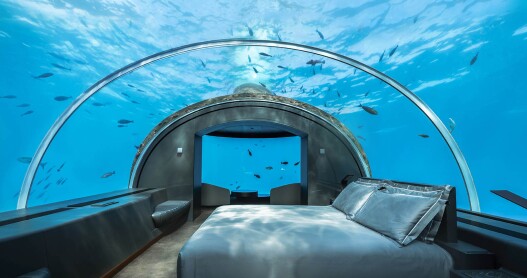
Sleeping with the fishes takes on a whole new meaning at these villas and suites under the sea.
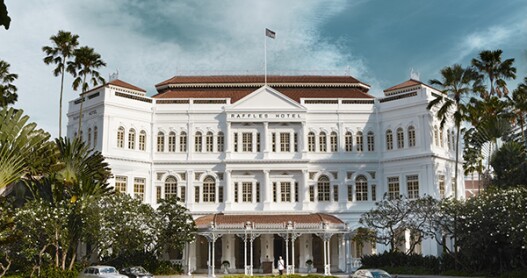
When the iconic Raffles Singapore opened in 1887, it quickly became a glittery haven for well-heeled travelers, and later, a go-to brand for discerning globetrotters.
The retired “Queen Elizabeth 2,” permanently moored in Mina Rashid, has debuted as a 224-room floating resort.
They’ll be home to family-friendly resorts, the Middle East’s first Cirque du Soleil show, and a marine park.
These hotels know how to make an entrance.
RESOURCES TO HELP PLAN YOUR TRIP
Dar al Masyaf is a tranquil boutique hotel at the end of a white-sand beach, away from the package-tour and convention crowds. It’s located within the sprawling Madinat Jumeirah complex of seaside resorts and a shopping souk modeled after a traditional Arabian walled city. It’s all set next to the Persian Gulf coastline within a Venetian-style network of man-made canals. Rooms, served by butlers, are accessible by footpath and electric dhow and occupy 29 two-story courtyard houses with the same traditional wind tower architecture and calm vibe of the resort’s shared Talise Spa. Closer to the resort water park are the seven freestanding Malakiya villas, with huge marble bathrooms and fully equipped kitchens for family life. Getting in and out of the resort grounds, whose more than 50 bars and restaurants are a Dubai nightlife beacon, can mean negotiating a madhouse traffic jam of taxis and high-end sports cars. But thankfully, noise does not penetrate the rooms. The palm-backed beach is large enough for guests to find private space, and evening terrace views of wind tower lights reflecting in the canals can be enchanting.
The Arabian oryx was hunted to extinction on the Arabian Peninsula by the mid-1970s, but became the first animal species upgraded from Extinct in the Wild to Vulnerable by the IUCN index when conservation efforts bolstered wild population numbers to over 1,000 by the early 2010s. Today you’ll see oryx all over the Dubai Desert Conservation Reserve, as well as the Arabian Wildlife Park on Sir Bani Yas Island, standing as a testament to humankind’s ability to reverse the ecological damage we’ve done to parts of the natural world. Flash traveled to Dubai with Goway Travel, the global leader in tailor-made experiences to Dubai, and has been curating experience-driven expeditions to the world’s most remarkable destinations since 1970. Goway can arrange custom trips to Dubai, the Arabian Desert, nearby Abu Dhabi, and beyond. www.goway.com
Dubai’s perpetually glittering Gold Souk has been one of this Emirate’s major attractions for many years—you’ll find dozens and dozens of shops selling gold, silver, platinum, and diamonds, plus plenty of touts hawking “geniune fake” Rolex watches, iPhones, textiles, laptops, and more. The government exercises strict controls over the quality of gold and other precious metals, so you can rest assured that what you’re buying is the real deal—though the same cannot be said for the wristful of watches you’re likely to be talked into purchasing down a back alley. The Gold Souk is a fantastic place to watch Dubai whiz by; pack your camera and plenty of memory cards for a wander through the back alleys, where you’ll encounter friendly folk eager to pose with you for a photo or two.
In the Old Souq at Deira and in traditional boutiques in malls you’ll see colorful jalabiyas or women’s kanduras, which are increasingly being bought by foreign women. When out in public or in the company of men who aren’t family, Emirati women wear the ubiquitous black cloak-like abaya and black shaylah wrapped around their head - tightly if devout, more loose if less conservative. The most religious women we’re a Saudi-style niqab that ties around the head and covers all but the eyes. When worn with gloves and socks, so not an inch of skin is revealed, it’s known as hijab. Underneath the abaya and shaylah, young Emirati women wear designer fashions and jeans and t-shirts. However, when they’re at home with family, along with older ladies, more traditional-minded women will wear a jallabiya or women’s kandura. Some of these are very simple, made from floral cotton prints, while others, like those in the photo above, are a lot more elegant, made from silks and linens, and decorated with applique, sequins, gems, tassles, and crocheted and embroidered features. In the days before the discovery of oil, Emirati women didn’t wear abayas and shaylahs. They wore these dresses in public with a gauzy face veil and baggy pantaloons. These days the pantaloons have been replaced with smart matching trousers. Over the years, jalabiyas and kanduras have increasingly become a popular souvenir. If you’re going to get one, make sure to buy some pretty sequined slippers to match!
The UAE is one of the most multicultural countries in the world and its largest city Dubai the most cosmopolitan. Indians make up one of the largest population groups and have a long history in Dubai dating to its early years as a tiny trading port when most Indians arrived as merchants. My Indian friends in the UAE always swore Dubai had the most authentic Indian food outside India and after 8 years eating it there I can assure you they weren’t exaggerating. It was my go-to for take-away, the food being so good and so cheap there was no reason to cook it at home. My favorite Indian eateries weren’t in hotels but on gritty backstreets in my old Bur Dubai neighborhood -- an area few tourists explore after they’ve done the sights and shopped the souqs. Farida Ahmed, sister of Arva Ahmed, who started Frying Pan Adventures, Dubai’s first culinary walking tours, runs a mouthwatering foodie tour of the Meena Bazaar area, Dubai’s Little India. During the four-hour foodie walk, which will take you through the bustling area, bursting with Bollywood CD and DVD shops, cheap electronics stores, textile shops, and an abundance of simple family-owned eateries, you’ll try everything from fried street food snacks, such as samosas, and piping hot Indian naan breads to Dubai’s best chicken tikka and spice-infused drinks. As with Arva’s Middle Eastern food tour, during the balmy winter months Farida leads you on foot and during the sultrier period uses an air-conditioned car. A must.
To get a feel for the real Dubai, there’s no better way than to book a tour with Frying Pan Adventures. Frying Pan was the first culinary tour outfit in Dubai, and their success is well deserved. A day with Frying Pan will get you out of the glitzy hotel scene and into Dubai’s neighborhoods, which can be hard to imagine when you’re sitting in a bar 25 stories above the city. On Arva’s Middle Eastern food tour you’ll try Syrian, Jordanian, Palestinian, Egyptian, Iranian, and Emirati cuisines. Good Emirati food is difficult to find outside of homes, so the tour is worth doing for that chance alone. You’ll get to sample delectable treats: from succulent Persian kebabs and wonderful Egyptian pastries to baklava dripping with honey and piping hot flat bread straight from the oven. Arva’s walking tours (or air-conditioned vans, in the hotter months), will take you from food trucks to tiny Egyptian kitchens, from Iranian saffron rice to Emirati date-scented desserts. Make sure to book well in advance, especially in the winter months.
During the many years I lived in Dubai, I must have sipped drinks on the wide, breezy veranda of Bahri Bar hundreds of times. It was the bar I took my many visitors to Dubai—from my Mum to my old school friends—on their first night in the city and on their last. On the first night it was all about setting the scene and creating an impression and on the last it was about making my guests already start to miss Dubai—and thereby ensuring they returned again to visit me! Although an expat favorite, it’s undeniably touristy. But there are few lovelier ways to start a vacation in Dubai than settling into a cushioned chair on a deck strewn with Oriental carpets and dripping with lanterns, sipping a glass of wine, a cocktail or icy cold beer, and feeling the warmth of sun on your face and a breeze wafting in from the Arabian Sea. The interior of the colonial-inspired bar is sumptuous and that’s where you’ll want to retreat during the warm (i.e., scorching hot) months of spring and summer. But in the cooler months (i.e., the beautiful stretch of weather from November to April) you need to snag a table on the veranda for views of the abra boats cruising on the man-made waterways, the striking sail-shaped Burj Al Arab, and the sublime sunset. Make sure you book a restaurant for dinner somewhere else, or you might never leave.
The Atlantis Hotel is the focal point of Dubai‘s giant cluster of man-made isthmuses that jut out into the Persian Gulf. Even if you can’t afford to stay at this spectacular hotel, you can still go see what the decadent expat lifestyle feels like for the day by swimming with dolphins in Dolphin Bay or splashing about in the rivers, slides, and pools of Dubai‘s largest water park: Aquaventure. If that doesn’t float your boat (sorry), there’s Atlantis’s dive center, in which you can go diving in a nearly 3 million–gallon tank. You’ll literally be swimming with the sharks (and stingrays) this time. In Atlantis, don’t be surprised to find yourself feeding the rays next to a celebrity—this is one of the places they stay in Dubai.
When the swell is up and the waves are high, Sunset Beach is Surf City, UAE. Count on left-breaking waves at the Jebel Ali end and right-breaking waves at the northern tip of the beach. In between, expect a busy beach full of tourists, locals, and expats soaking up the sun. Palace Beach offers easy access to the waterways of the Palm Jumeirah (perfect for kayakers and stand-up paddleboarders), a glimpse of the great sail of a building that is the Burj Al Arab in the distance, sugary white sand between the toes, and crystalline water all the way to the horizon. If you forgot your water-sports equipment at home, Club Joumana at the sprawling JA Jebel Ali Beach Resort rents it all—from Zapcat inflatable racing boats to paddleboards.
With the largest Korean community in the Arab world, Pyongyang Okryu-Gwan in Deira is a fitting place to begin a Dubai exploration of Korean cuisine. Part of a chain of restaurants based in the troubled North Korean capital, this spot includes a karaoke room, an all-female waitstaff, and real North Korean propaganda music. Try the seafood hot pot or the signature raengmyŏn (Pyongyang–style cold noodles), and, of course, load up on kimchi! A quick heads-up: The Okryu-Gwan restaurants send profits back to North Korea.