Kyoto

Kyoto reigned as the imperial capital of Japan for more than one thousand years. Founded in 794, the “Western Capital” was designed after China’s grand cities. Spared the destruction of World War II, Kyoto is an ode to the beauty and prosperity of Japan’s past. Its stone streets are transportive, graced with 11th-century townhouses, white-faced geisha, and centuries-old temples. The city is striking in all seasons; come to see the Golden Pavilion covered in snow, the Path of Philosophy lined with cherry blossoms, or the vibrant red maples at Kiyomizu-dera temple.

Travel-Guides-Kyoto-calin-stan-unsplash.jpg

Photo by Calin Stan/Unsplash

Overview

Can’t miss things to do in Kyoto

Kiyomizu-dera temple sits in repose halfway up Otowa Mountain; breathtaking views of Kyoto and the surrounding mountains expand from the balcony of this 1,200-year-old structure. Fushimi Inari-taisha, the most revered Shinto shrine in Kyoto, is immediately recognizable thanks to its more than 10,000 crimson gates, which wind up Inari Mountain for 2.5 miles. In Kyoto’s center rule the masterpieces of Japan’s feudal ruling class: Nijo Castle, built by Shogun Tokugawa Ieyasu, and the graceful Imperial Palace, once home to Japan’s emperors.

Food and drink to try in Kyoto

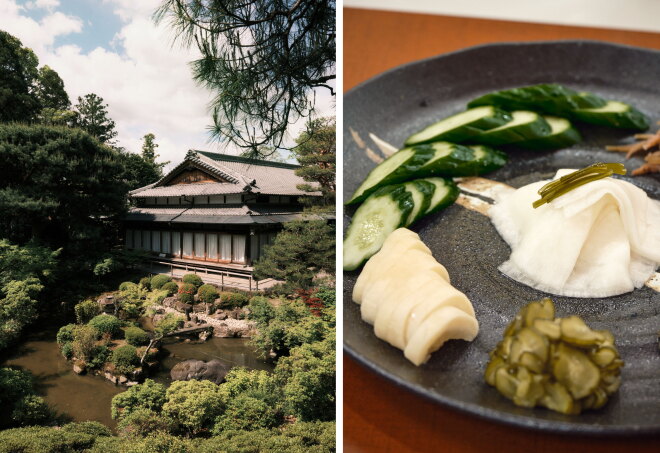
Kyo-ryori (Kyoto cuisine) is among the most sophisticated of all Japanese food, and is prepared with an emphasis on art and seasonality. Kyo-ryori includes yusoku (the food of the Imperial court), kaiseki (multi-course meals that accompany a tea ceremony), shojin ryori (the cuisine of Buddhist monks), and obanzai (traditional cooking).

Culture in Kyoto

Kyoto flourished for 1,000 years as the capital of Japan, and in many ways it remains its cultural heart. Here, Buddhist temples coexist with Shinto shrines, and graceful geisha still perform. The people and the city share a refined elegance, and Japanese hospitality and courtesy are said to exceed even that of other regions. The classic arts of Kabuki and Noh theater, and the tea ceremony known as chado, continue to be honored traditions. The Japanese are both proud of and fascinated by Kyoto’s mesmerizing architecture and landscapes, which have influenced design throughout the world.

Shopping

Kobo-san and Tenjin-san, the two largest outdoor markets, are excellent for antiques, kimonos, and Japanese street food. Because these markets occur only once a month, they’re crowded and lively and fantastic for people-watching. The largest food market in Kyoto, Nishiki Market, is often called “Kyoto’s pantry.” This particular pantry is over 400 years old, and still supplies most of the city’s restaurants. Popular department stores such as Takashimaya and Marui tower along the avenue Shijo-dori.

Practical Information

Late autumn is peak time to view the changing leaves, while mid-March and April are best for cherry blossoms. Visitors may fly into Kansai International Airport, then travel within Kyoto by bus, bike, train, and subway; those planning to travel throughout the country by bullet train should consider purchasing the Japan Rail Pass, which is discounted when purchased outside of Japan.

Guide Editor

READ BEFORE YOU GO
HOTELS
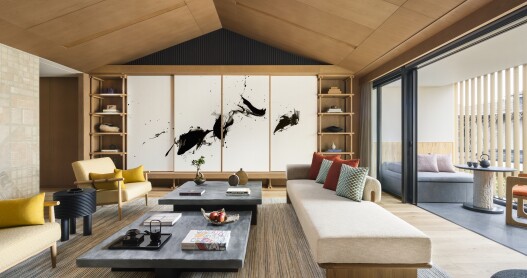
Six Senses Kyoto is the eco-conscious luxury collection’s second urban hotel, and it’s rich in wellness experiences and cultural encounters.
Designed by esteemed Japanese architect Kengo Kuma, the 213-room hotel in Kyoto is available to book for stays beginning April 16, 2020.
2020 shows no sign of slowing down when it comes to luxury hotel openings. Here are 6 openings that I am especially excited about, plus a rundown of what other important brands are up to, highlighted at ILTM Cannes this month.
This Japanese town could be your next Airbnb host.
RESOURCES TO HELP PLAN YOUR TRIP
You’ll feel zen from the moment you drive in from nearby Kyoto, along a narrow road through Japanese cedars and past temples and shrines, to the moment you sink into a hot bath at this intimate ryokan. Refreshed and relaxed, you’ll then sit down to an exquisite kaiseki meal of freshly foraged food prepared by a Michelin-starred chef. Oversized windows bring the outdoors in to the immaculate and simple tatami rooms, which come with both lunch and dinner. Book well in advance, given the inn’s small size and low-tech reservation system.
Japan’s former imperial city offers awe-inspiring Shinto and Buddhist temples, beautiful gardens, streets lined with old wooden town houses, and narrow stone lanes where you might see modern-day geisha and stop at an izakaya for a meal.
The majority of Kyoto’s lodgings tend toward the traditional, ranging from ryokans offering kaiseki dinners to zen-like inns on the river. Of course, there are also more modern options, including big-name brands that still offer a dose of local culture.
In parts of the city’s historic Gion neighborhood, residents are enforcing a photography ban in response to impolite behavior from travelers.
Kyoto’s autumn season means luxurious new hotels, seasonal kaiseki meals, traditional tea ceremonies, and one of the world’s finest displays of fall foliage.
Learn from an expert guide as you go deeper into these must-see spots.
You may have to walk a few minutes from your room to the restaurant, but these hotels without boundaries—where you might sleep in an artist’s retreat or a former bridge keeper’s home—are unlike anything else.
In 794 C.E., Emperor Kammu moved Japan’s capital to Kyoto, chiefly to keep the large Buddhist monasteries in the former capital of Nara from amassing even more power than they already had. (The capital and emperor moved to Tokyo in 1868.) The present imperial palace dates back to 1855, and it’s not the buildings that stand out but the extremely beautiful gardens and park, which is the city center’s main green space. Travelers need to obtain permission to visit the palace from the Imperial Household Agency, but the park is open to all. The plum trees and cherry blossoms bloom in March and April, and all year round the park attracts joggers, cyclists, walkers, and picnickers.

D&Department, a youthful shop housed in a 13th-century Bukkoji temple, focuses on designer housewares, kitchen goods, and foods. Conceived by Kenmei Nagaoka, a professor at Kyoto University of Art and Design, and his students, the store sells products such as sturdy tea mugs and glass tokkuri (Japanese sake sets), and highlights specialty, small-batch food producers whom they’ve met in person. The result is a special range of sesame seed oils, additive-free pickles, and heirloom misos and soys. D&Department will occasionally include imported products that adhere to the founders’ ethos, such as durable Freitag bags from Switzerland, which are made from recycled truck tarps.

While Japan often remains aloof to many first-time visitors, Kyoto feels intentionally difficult to get to know—even to Tokyoites who visit frequently. Getting some kind of entrée to hidden gems is especially useful here. Enter humble American-turned-Kyotoite Nemo Glassman, founder of Plus Alpha Japan. Many years living in Kyoto has given him a deep understanding of the city’s idiosyncrasies, of which there are many. Plus Alpha will arrange insider tours and intimate experiences throughout Kyoto and beyond. His tours aim to facilitate deeper engagement for travelers, whether imbibing with izakaya chefs, practicing zazen meditation with Buddhist abbots, or enjoying a tea ceremony performed by a maiko (apprentice geisha).