Kyoto

Kyoto reigned as the imperial capital of Japan for more than one thousand years. Founded in 794, the “Western Capital” was designed after China’s grand cities. Spared the destruction of World War II, Kyoto is an ode to the beauty and prosperity of Japan’s past. Its stone streets are transportive, graced with 11th-century townhouses, white-faced geisha, and centuries-old temples. The city is striking in all seasons; come to see the Golden Pavilion covered in snow, the Path of Philosophy lined with cherry blossoms, or the vibrant red maples at Kiyomizu-dera temple.

Travel-Guides-Kyoto-calin-stan-unsplash.jpg

Photo by Calin Stan/Unsplash

Overview

Can’t miss things to do in Kyoto

Kiyomizu-dera temple sits in repose halfway up Otowa Mountain; breathtaking views of Kyoto and the surrounding mountains expand from the balcony of this 1,200-year-old structure. Fushimi Inari-taisha, the most revered Shinto shrine in Kyoto, is immediately recognizable thanks to its more than 10,000 crimson gates, which wind up Inari Mountain for 2.5 miles. In Kyoto’s center rule the masterpieces of Japan’s feudal ruling class: Nijo Castle, built by Shogun Tokugawa Ieyasu, and the graceful Imperial Palace, once home to Japan’s emperors.

Food and drink to try in Kyoto

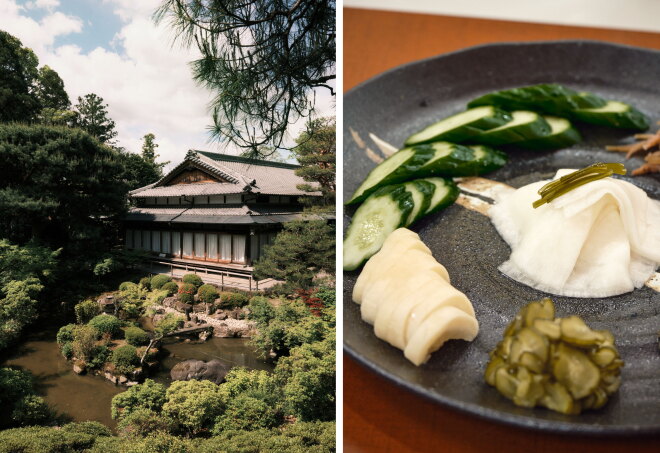
Kyo-ryori (Kyoto cuisine) is among the most sophisticated of all Japanese food, and is prepared with an emphasis on art and seasonality. Kyo-ryori includes yusoku (the food of the Imperial court), kaiseki (multi-course meals that accompany a tea ceremony), shojin ryori (the cuisine of Buddhist monks), and obanzai (traditional cooking).

Culture in Kyoto

Kyoto flourished for 1,000 years as the capital of Japan, and in many ways it remains its cultural heart. Here, Buddhist temples coexist with Shinto shrines, and graceful geisha still perform. The people and the city share a refined elegance, and Japanese hospitality and courtesy are said to exceed even that of other regions. The classic arts of Kabuki and Noh theater, and the tea ceremony known as chado, continue to be honored traditions. The Japanese are both proud of and fascinated by Kyoto’s mesmerizing architecture and landscapes, which have influenced design throughout the world.

Shopping

Kobo-san and Tenjin-san, the two largest outdoor markets, are excellent for antiques, kimonos, and Japanese street food. Because these markets occur only once a month, they’re crowded and lively and fantastic for people-watching. The largest food market in Kyoto, Nishiki Market, is often called “Kyoto’s pantry.” This particular pantry is over 400 years old, and still supplies most of the city’s restaurants. Popular department stores such as Takashimaya and Marui tower along the avenue Shijo-dori.

Practical Information

Late autumn is peak time to view the changing leaves, while mid-March and April are best for cherry blossoms. Visitors may fly into Kansai International Airport, then travel within Kyoto by bus, bike, train, and subway; those planning to travel throughout the country by bullet train should consider purchasing the Japan Rail Pass, which is discounted when purchased outside of Japan.

Guide Editor

READ BEFORE YOU GO
HOTELS
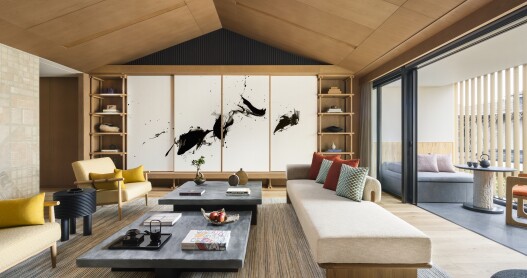
Six Senses Kyoto is the eco-conscious luxury collection’s second urban hotel, and it’s rich in wellness experiences and cultural encounters.
Designed by esteemed Japanese architect Kengo Kuma, the 213-room hotel in Kyoto is available to book for stays beginning April 16, 2020.
2020 shows no sign of slowing down when it comes to luxury hotel openings. Here are 6 openings that I am especially excited about, plus a rundown of what other important brands are up to, highlighted at ILTM Cannes this month.
This Japanese town could be your next Airbnb host.
RESOURCES TO HELP PLAN YOUR TRIP
Rise with the sun to explore temples, find green spaces in Kyoto and Tokyo, and consider some small towns.
Give your summer travels a healthy dose of arts and culture with these spectacular events.
Visit both well-loved and lesser-known places on your next Japan trip.
Because so much was slated to open across Japan in time for the Tokyo 2020 Olympics, this past year saw a number of Kyoto newcomers.
Sitting pretty on the banks of the Kamogawa River, the Ritz-Carlton Kyoto is a luxurious alternative to the traditional ryokans that dominate the area. Guestrooms are minimalist yet plush, with giant windows, in-mirror TVs, soaking tubs, the requisite high-tech Toto toilets, and locally made bath products. Wellness facilities range from a spacious spa to a 20-meter pool, while dining options include a Japanese restaurant serving kaiseki dinners, an Italian spot with a cheese-and-charcuterie cellar, and a Pierre Hermé patisserie. Although cocooned in a quiet setting, the hotel is conveniently located with walking distance of the downtown area, making it a favorite of affluent tourists.
A historic property, Hiiragiya has hosted many a notable writer, artist, celebrity, and imperial family member since its opening in 1818. Operated by the same family for six generations, the ryokan is steeped in centuries-old tradition, etiquette, and service, with the aim of making guests feel at home during their stay. Rooms are spread across two buildings—the original with its classic style, and the newer, sleeker wing, where the color palette is a bit brighter and the windows and doors are more modern. Both feature updated amenities, however, including flat-screen TVs, minibars, and free Wi-Fi. Among the hotel’s other highlights are the kaiseki-style meals, during which kimono-clad guests enjoy course after beautiful course at low tables. Breakfasts and dinners are both included in your stay, and feature seasonal bites served in locally made lacquerware bowls and boxes.
The journey is part of the experience at Hoshinoya Kyoto, where a charming wooden boat ferries guests to the hotel’s scenic perch on the banks of the Oi River. Here, tucked away in a grove of old cypress, maple, and cherry trees, the Hoshinoya offers a respite from urban life. Rooms feature traditional ryokan elements, like onsen-style cedar baths and picture windows overlooking the misty forest outside, and the restaurant serves nine-course, kaiseki-style dinners. A few free activities, including morning stretching sessions and tea ceremonies, contribute to the hotel’s Zen-like atmosphere. Guests can also take ikebana lessons, rent kimonos, and book meditation trips to the nearby temple.
In an area rife with traditional, minimalist ryokans, the Four Seasons Kyoto is a spectacle of grandeur. The opulence is subtle, however, camouflaged by clean, Zen-like style. At the hotel’s heart is a beautiful, 800-year-old pond garden, which features a picturesque teahouse surrounded by cherry, maple, and willow trees. Inside, luxurious details abound, from the seasonal floral arrangements, to the iPads and in-mirror TVs in the guest rooms, to the plush cabanas and atmospheric lighting at the underground pool. For even greater indulgence, guests can head to the spa for such treatments as sake baths, bamboo-and-green-tea scrubs, and jade-stone massages, as well as facials from cult French brand Biologique Recherche. When hunger strikes, the Michelin-starred Sushi Wakon is waiting. Helmed by master chef Rei Masuda, the 10-seat restaurant serves fresh fish, flown in daily from Tokyo’s Tsukiji market.
Given its location right next to Nishiki Market, it’s no wonder this historic ryokan is famous for its food. The kaiseki dinners here include a parade of perfectly crafted dishes, marked by local, seasonal ingredients and an obsessive attention to detail. The miniature works of art arrive beautifully plated on local lacquerware and ceramics and include anything from eggplant with chestnuts and tofu skin, to tiger prawns with grilled mushrooms. After dinner, guests can relax in the communal wooden bath, or retire to traditional guestrooms, complete with tatami-lined floors, futon beds, and shoji doors. Meals are included in the rates here, but, with just seven guestrooms, the place books up fast.
Built in the 14th century as a villa for a powerful shogun, Kinkaku-ji temple, commonly referred to as the Golden Pavilion, is an easy bus ride from the main bus terminal in Kyoto. The temple is one of the most popular buildings in Japan, so expect a lot of fellow gawkers. It exemplifies several different Japanese architecture styles, and the top two levels are completely covered in gold leaf. The extensive gardens are beautifully manicured and serene, despite the abundance of visitors using selfie sticks.