Kyoto

Kyoto reigned as the imperial capital of Japan for more than one thousand years. Founded in 794, the “Western Capital” was designed after China’s grand cities. Spared the destruction of World War II, Kyoto is an ode to the beauty and prosperity of Japan’s past. Its stone streets are transportive, graced with 11th-century townhouses, white-faced geisha, and centuries-old temples. The city is striking in all seasons; come to see the Golden Pavilion covered in snow, the Path of Philosophy lined with cherry blossoms, or the vibrant red maples at Kiyomizu-dera temple.

Travel-Guides-Kyoto-calin-stan-unsplash.jpg

Photo by Calin Stan/Unsplash

Overview

Can’t miss things to do in Kyoto

Kiyomizu-dera temple sits in repose halfway up Otowa Mountain; breathtaking views of Kyoto and the surrounding mountains expand from the balcony of this 1,200-year-old structure. Fushimi Inari-taisha, the most revered Shinto shrine in Kyoto, is immediately recognizable thanks to its more than 10,000 crimson gates, which wind up Inari Mountain for 2.5 miles. In Kyoto’s center rule the masterpieces of Japan’s feudal ruling class: Nijo Castle, built by Shogun Tokugawa Ieyasu, and the graceful Imperial Palace, once home to Japan’s emperors.

Food and drink to try in Kyoto

Kyo-ryori (Kyoto cuisine) is among the most sophisticated of all Japanese food, and is prepared with an emphasis on art and seasonality. Kyo-ryori includes yusoku (the food of the Imperial court), kaiseki (multi-course meals that accompany a tea ceremony), shojin ryori (the cuisine of Buddhist monks), and obanzai (traditional cooking).

Culture in Kyoto

Kyoto flourished for 1,000 years as the capital of Japan, and in many ways it remains its cultural heart. Here, Buddhist temples coexist with Shinto shrines, and graceful geisha still perform. The people and the city share a refined elegance, and Japanese hospitality and courtesy are said to exceed even that of other regions. The classic arts of Kabuki and Noh theater, and the tea ceremony known as chado, continue to be honored traditions. The Japanese are both proud of and fascinated by Kyoto’s mesmerizing architecture and landscapes, which have influenced design throughout the world.

Shopping

Kobo-san and Tenjin-san, the two largest outdoor markets, are excellent for antiques, kimonos, and Japanese street food. Because these markets occur only once a month, they’re crowded and lively and fantastic for people-watching. The largest food market in Kyoto, Nishiki Market, is often called “Kyoto’s pantry.” This particular pantry is over 400 years old, and still supplies most of the city’s restaurants. Popular department stores such as Takashimaya and Marui tower along the avenue Shijo-dori.

Practical Information

Late autumn is peak time to view the changing leaves, while mid-March and April are best for cherry blossoms. Visitors may fly into Kansai International Airport, then travel within Kyoto by bus, bike, train, and subway; those planning to travel throughout the country by bullet train should consider purchasing the Japan Rail Pass, which is discounted when purchased outside of Japan.

Guide Editor

READ BEFORE YOU GO
HOTELS
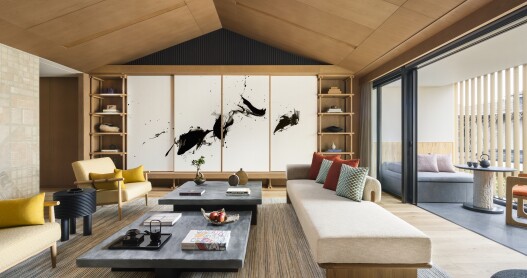
Six Senses Kyoto is the eco-conscious luxury collection’s second urban hotel, and it’s rich in wellness experiences and cultural encounters.
Designed by esteemed Japanese architect Kengo Kuma, the 213-room hotel in Kyoto is available to book for stays beginning April 16, 2020.
2020 shows no sign of slowing down when it comes to luxury hotel openings. Here are 6 openings that I am especially excited about, plus a rundown of what other important brands are up to, highlighted at ILTM Cannes this month.
This Japanese town could be your next Airbnb host.
RESOURCES TO HELP PLAN YOUR TRIP
Fushimi Inari Taisha on Inariyama mountain is dedicated to the Shinto gods of rice and sake, but Inari is also the god of merchants and that brings a lot of businesspeople to worship here. Everyone else stops by to see the thousands of vermilion torii, or gates (each of which is funded by a Japanese company). They lead to the main shrine, which was built in 1499. Walking underneath the gates is like passing through a fiery tangerine tunnel, and visitors leave behind tiny torii replicas as part of their prayer.

It’s said that the human eye can see more shades of green than any other color. Put the theory to the test at the Koke-dera, or Moss Temple, a veritable spectrum of jades, mints, artichokes, emeralds, and olives. The UNESCO World Heritage site, formally known as Saihoji, is home to around 120 types of moss, which carpet the temple ground’s forested floor in ways Akira Kurosawa couldn’t have dreamed up. Reservations to the temple must be made by snail mail months in advance in Japanese. After arrival, visitors are also asked to participate in Koke-Dera’s religious activities by observing kito and shakyo (respectively, the chanting and copying of Buddhist scriptures, called sutra).
There’s a lot of tourists Instagram-browsing in Kyoto’s famed Nishiki Market shops, which hawk salt-pickled cherry blossoms, barrels of other pickled vegetables, and takoyaki (fried octopus balls). But step off the bustling main drag and into this legendary knife shop to discover a rarefied world of chefs deliberating over blue steel boning knives with magnolia handles, or 12-inch Japanese alloy with rosewood and water buffalo horn. The tiny shop is chockful of handmade blades and cutting utensils gleaming like evidence behind glass cases. But Aritsugu is principally known for its custom-made knives, especially popular with lefties. The shop will also engrave your name or initials on your blade for free via the revolving whetstone behind the counter.
5 Great Places to Drink Matcha in Japan
This is how to get an authentic taste of the best markets around the world.
In a city known for its rich history, a new wave of artisans is making Kyoto the place to be.
Where he ate and drank while exploring Japan’s Golden route.
You don’t necessarily need to know how to wield a paintbrush to participate in these seven art-filled tours.