


Welcome to the ultimate guide to Japan’s most alluring hotels outside of Tokyo and Kyoto—from new high-rise retreats in Osaka and Fukuoka to serene ryokan getaways tucked amid green forest in Niigata. Whether you crave minimalist design, luxury onsen hot springs, or cultural immersion, these 23 handpicked stays on our Hotels We Love Japan list showcase the country’s unmatched fusion of tradition, innovation, and hospitality.
Asaba
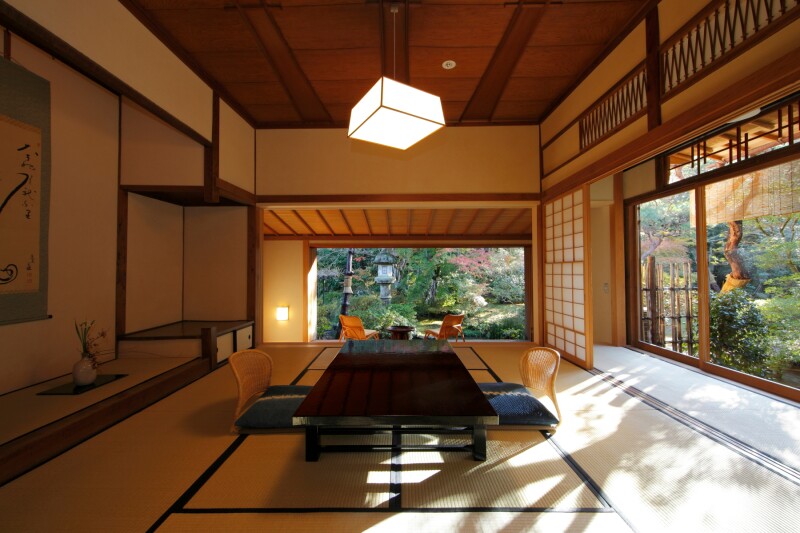
Asaba has been family owned and run since 1494.
Courtesy of Asaba
Why we love it: A 500-year-old ryokan complete with private onsen baths and seasonal kaiseki
Rates: From $1,020
Since 1494, the Asaba family has been welcoming guests to their esteemed namesake ryokan in Shuzenji, a hot spring town founded more than a millennium ago by Buddhist monk Kobo Daishi. A member of Relais & Châteaux, this intimate inn has 12 traditional guest rooms with tatami mat flooring, each overlooking a tranquil pond, a bamboo forest, and a historic Noh stage still used for occasional performances. Meals are served in-room while guests relax in yukata robes; a seasonal kaiseki dinner might feature black rice sushi with anago eel, corn tempura, and locally grown muskmelon. A traditional Japanese breakfast is also included. Every room has its own private onsen bath—just be sure to request a Western-style bed if preferred.
Azumi Setoda

Azumi Setoda was designed by Kyoto-based architect Shiro Miura.
Courtesy of Azumi Setoda
Why we love it: Rooms open onto a private Zen-inspired outdoor space with cedar and cypress finishes and a balcony or garden view
Rates: From $815
Ikuchijima Island is famous for its lemons and Shimanami Kaido cycle route. And leave it to Adrian Zecha, founder of Aman Resorts, to create an entirely new reason to come here: Azumi Setoda, a retreat in the 150-year-old former home of the island’s prominent Horiuchi family. For the 22-room minimalist inn, which is in the town of Setoda, he hired Kyoto-based architect Shiro Miura. The retreat captures the languorous mood of the Seto Inland Sea while still offering access to the broader Seto Inland Sea art scene, including Naoshima, with its famous yellow pumpkin installation by Yayoi Kusama. Curved roof tiles, exposed beams, and a courtyard with a cherry tree offer a taste of Old Japan. The guest rooms have rice paper screens, cypress wood bathtubs, and gardens that face a landscaped courtyard, while the community bathhouse across the street is complimentary for guests.
Azuma Farm Koiwai

Most of the materials used for Azuma Farm Koiwai were sourced on the farm or in surrounding areas.
Courtesy of Azuma Farm Koiwai
Why we love it: A rural retreat set within a century-old dairy farm in Tohoku that’s most rewarding as a gateway to local food, history, and craft
Rates: From $1,500 for two guests, with meals and select on-site activities included
Set in the pine and cedar forests of Iwate Prefecture, two hours north of Tokyo by shinkansen, Azuma Farm Koiwai is a collaboration between 93-year-old Adrian Zecha (Aman Resorts founder) and Fumitomo Hayase of Kyoto-based hospitality group Naru Developments, who cofounded the ryokan brand Azumi with Zecha. The 24 villas, designed by Shiro Miura of Rokukakuya and built from locally sourced red pine and cedar trees, are spare and light filled, with windows on three sides.
Dining takes place in a central lodge, where chef Yoshitaka Oyama, an Iwate native, skillfully works with the ingredients he grew up with, from seafood on the Sanriku coast to Koiwai dairy. Highlights include grilled kichiji, a local fatty fish with bottarga, and a Tankaku wagyu T-bone with charcoal-grilled carrots. Days can be as unstructured or as programmed as guests prefer: guided stretching, staff-led stargazing, twilight aperitifs, and self-guided biking, or more immersive cultural experiences, including lacquerware classes, wasabi farm visits, horseback riding, sea kayaking, and time at the temples and gardens of the Hiraizumi UNESCO World Heritage site. —Yukari Sakamoto
Related: This Idyllic Farm Retreat Is Just Two Hours From Tokyo by Train—and We Were the First to Stay
Bettei Otozure
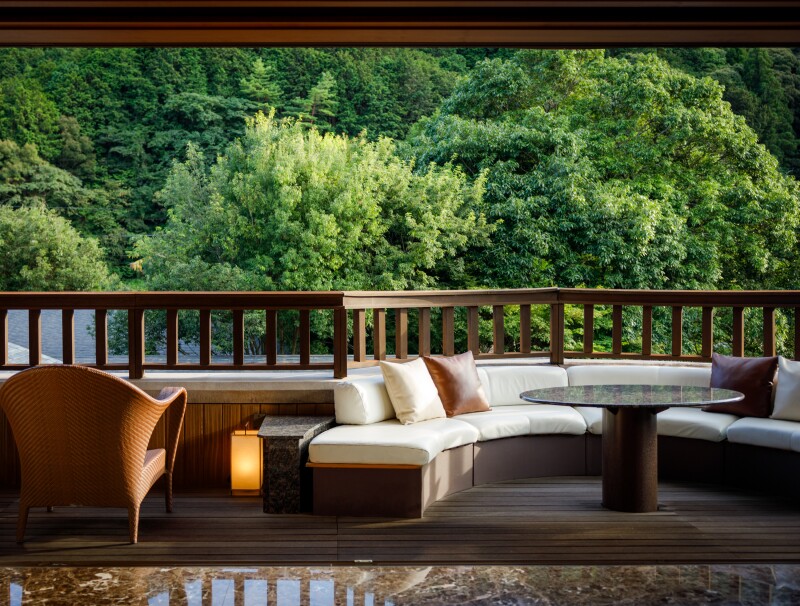
Bettei Otozure’s guest rooms have private in-room hot spring baths.
Courtesy of Bettei Otozure
Why we love it: For its peaceful atmosphere by the river, and its selection of modern or traditional tatami mat rooms
Rates: From $600, including breakfast and dinner
The serene heritage ryokan sits on a wooded bank of the Otozure River in the sacred onsen town of Nagato, two hours from bustling Fukuoka. The town is famed for its 600-year-old alkaline Yumoto Onsen, where a rare shinto shrine stands within the bath. The landmark 18-room property has its own garden, library, and grand outdoor bath and played host to Japan’s Emperor and Prime Minister as well as several luminaries over the years. Its rooms, whether modern feeling with hardwood floors or traditional tatami mat sanctuaries, all have private balcony onsen.
The ryokan’s excellent restaurant serves Yamaguchi kaiseki, with local specialties like fugu sashimi and minced lotus root with maitake and yuzu. Fifth-generation owner Kazuhiro Otani recommends pairing these with local sake or his personal favorite, mineral-forward Swiss wines, carefully selected for the ryokan’s cellar. For a more affordable stay, book a room at the property’s 116-room three-star adjacent sister property called Ōtani Sansō, a full service Showa-era warren of onsen, restaurants, shops and lounges.
Related: You’ll Want to Stay at These Hotels in Japan Before They Get Too Hard to Book
Cova Kakuda

Cova Kakuda is set within tranquil Ise-Shima National Park.
Courtesy of Cova Kakuda
Why we love it: A rare retreat that connects guests to Japan’s pearl-diving culture in Ago Bay
Rates: From $1,600 for two including breakfast and dinner
Set on a former pearl farm in forested Ise-Shima National Park, Cova Kakuda is a sea-facing, four-room property that opened in 2023 in a former pearl farm with its own private onsen. A constellation of standalone timber villas feature floor-to-ceiling sliding windows, full kitchens, framed calligraphy prints, heated oak floors, and large stone soaking baths with bay views. The hotel overlooks Ago Bay, where pearl harvesting continues today.
On-site activities include sunset cruises, stand-up paddleboarding, kayaking, and guided pearl farm tours, while the resort’s bay-front sauna is an ideal spot to retire to during sunset. Dinners emphasize local Satoumi cuisine with seafood caught in the Shima Peninsula. Think Ise ebi (lobster), abalone, whelk, noble scallop, Akoya oyster, dried sea lettuce, blue crab, striped horse mackerel, Matsusaka beef, and freshly picked vegetables.
Four Seasons Hotel Osaka
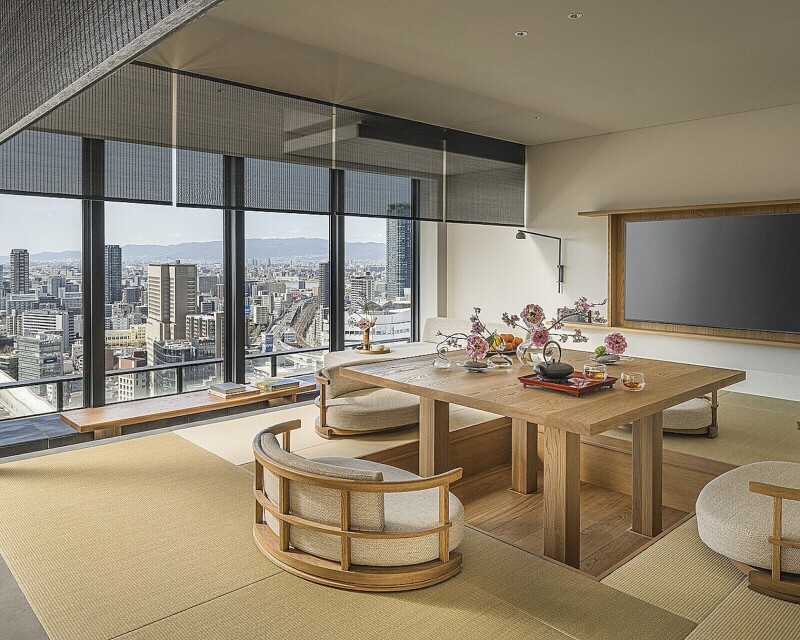
Four Seasons Hotel Osaka is as much a culinary destination as it is a hotel.
Courtesy of the Four Seasons Hotel Osaka
Why we love it: Pilgrimage-worthy restaurants, rooms that evoke an urban ryokan
Rates: From $850
Think of the Four Seasons Hotel Osaka as two hotels in one: 154 rooms are Western-style, done up in muted tones inspired by spices, while the 28th floor houses Gensui, the city’s first urban ryokan, with 21 rooms lined with tatami mats and bedding from 450-year-old brand Nishikawa. On the 36th floor is a spa with ofuros (traditional baths), a sauna, and a 52-foot-long infinity pool that looks out over Osaka Castle in the distance.
Four Seasons adds to the city’s impressive culinary lineup with Jiang Nan Chun, a Cantonese restaurant serving dim sum at lunchtime, and Sushi L’Abysse Osaka, a partnership between French chef Yannick Alléno and Japanese chef Itaru Yasuda, who pair French bites with unique twists on sushi and focus on low-waste ingenuity, such as wasabi peel simmered in soy sauce as a garnish for sashimi.—Yukari Sakamoto
Related: At this New Hotel in Osaka, Michelin-Starred Dining Meets Japanese Hospitality
Fufu Kawaguchiko

Lake Kawaguchi is about three miles from the hotel.
Courtesy of Fufu Kawaguchiko
Why we love it: Every room has a private onsen with front-row views of Mount Fuji
Rates: From $525
It’s hard to top the Mount Fuji views at the contemporary-feeling Fufu Kawaguchiko, which opened in 2018 in the wine country town of Kawaguchiko, about two hours southwest from Tokyo by bullet train. The 32 guest rooms have giant glass windows that face serene Lake Kawaguchi, which lies about three miles away, and all have private balcony onsen tubs made with Fuji lava stone. The setting gets extra cozy with outdoor firepits and cashmere throws. The on-site restaurant pairs local wine with such seasonal dishes as Fuji Sakura Pork seared on lava stone with blueberry butter.
Gora Kadan Fuji

Breakfast at Gora Kadan Fuji comes with mountain views.
Courtesy of Gora Kadan Fuji
Why we love it: Mount Fuji views, private hot spring baths, multi-course kaiseki meals—need we say more?
Rates: From $870
Gora Kadan Fuji is a master stroke of Japanese design, opened in 2025 on Fuji’s western slope as a sister property to the original 1948 property near Hakone. The property occupies land once part of the Fuji Golf Course, where director Akira Kurosawa was a member in the 1960s. Like its older sibling, it is steeped in precious materials—lacquered cherry bark tea containers, thousand-year-old fossilized cedar tables, woven white robes from Imabari in Shikoku, and artworks ranging from Hiroshi Sugimoto prints to 1,200 year old Yayoi era pottery.
While the views of Fuji are postcard-worthy, the baths are the true reason to come. Each room has its own private ofuro positioned for uninterrupted views of the iconic stratovolcano, which is also the source of the property’s alkaline onsen water. Most baths are made from fragrant hiba, a prized variety of Japanese cypress, while others are formed from granite or volcanic Ōya stone. Guests can choose from four in-house restaurants, including multi-course kaiseki, kappo, sushi, or teppanyaki.
Related: Japan’s Mount Fuji Has a New Luxury Hotel With Private Hot Springs and Michelin-Worthy Dining
Guntû

Guntû is a floating ryokan on the Seto Inland Sea.
Courtesy of Guntû
Why we love it: A floating ryokan with cypress baths and exquisite dining
Rates: From $3,500 for two nights, all inclusive
A floating ryokan rather than cruise ship, Guntû is on par with some of country’s most revered inns. The 17-cabin vessel, designed by architect Yasushi Horibe, moves slowly through the Seto Inland Sea, but the focus remains inward: wood paneled rooms have hardwood floors, sliding doors, and picture windows framing a shifting seascape, many with private cypress infinity baths.
In the spirit of ryokan-style hospitality, meals are taken across three distinct settings, from an intimate sushi bar to a dining room offering both washoku and yōshoku cuisine. The spa includes treatment rooms, communal baths infused with seasonal elements such as yuzu fruit in the winter, along with saunas, a relaxing room, and a compact gym.
Guntû sails for three- to four-day itineraries through a region of roughly 700 islands, calling on the Art Islands and lesser known islets, beaches, seaside towns and harbors.
Hoshinoya Karuizawa

Kaiseki meals draw from the flavors of the surrounding forest.
Photo by Hirofumi Inaba
Why we love it: A century-old mountain hotel-ryokan hybrid retreat with alpine kaiseki meals
Rates: From $500
The first Hoshinoya resort remains the brand’s flagship. Originally opened in 1914, Hoshinoya Karuizawa was reborn in 2005 as a defining luxury hotel-ryokan hybrid. Set in the wooded enclave of Karuizawa in Nagano Prefecture—a longtime summer retreat for the Japanese imperial family and only an hour by bullet train from Tokyo—the property is centered around a small lake. The 77 mizunami (water-side) rooms and steep-roofed pavilions are scattered among hardwood trees that serve as a sanctuary for wild birds and flying squirrels.
Guests take part nature programs like forest bathing, horseback riding, and guided wildlife programs, while lakeside massages and sleep retreats help those in need of deeper relaxation. Rooms are spacious, with geothermal heated floors, sliding glass doors, and terraces overlooking the lake and forest; many include private onsen-fed baths.
The communal bath experience is essential: an artful, immersive space arranged in three progressively darker chambers, designed as a watery meditation. The resort’s alpine-kaiseki cuisine draws from its forest surroundings to make use of foraged fall mushrooms, sensei (spring shoots), and wild duck and venison.
Hoshinoya Okinawa

Hoshinoya Okinawa is on the island’s laid-back southwest coast.
Courtesy of Hoshinoya Okinawa
Why we love it: A coastal retreat that pairs Okinawan culture with seaside living
Rates: From $400
Located in serene Yomitan, a village on the southwest coast of Okinawa long known for its ceramics and sweet potatoes, and about an hour’s drive from the main airport in Naha, Hoshinoya Okinawa was designed by Tokyo-based architect Rie Azuma. It’s set along a long, narrow stretch of coastline. One side faces a coral-fringed beach, with all 100 rooms oriented toward sea views in shifting shades of blue; the other opens onto a subtropical courtyard garden filled with hibiscus, palm trees, papaya, and bougainvillea.
Activities are a major draw, ranging from karate classes—based in Okinawan tradition—to sanshin concerts featuring the island’s three-stringed instrument, as well as horseback riding on the beach and a “Blue Zone” program exploring Okinawa’s culture of longevity. Rooms are finished in marine and periwinkle tones, with blue-hued bingata textiles on the walls, while covered patios and generous dining areas and kitchens allow for in-room meals, from shabu-shabu to sushi.
Hotel Cultia Dazaifu

Hotel Cultia Dazaifu sits next to the Tenmangū shrine in Dazaifu.
Courtesy of Hotel Cultia Dazaifu
Why we love it: A beautifully restored traditional house steps from Dazaifu Shrine
Rates: From $280
Leafy temple town Dazaifu and its Tenmangū shrine are a quiet world apart from busy Fukuoka, Kyushu’s largest city, which is 30 minutes away by car. Located across the street from the 3,000-acre shrine complex is the 13-room, tile-roofed Hotel Cultia Dazaifu, comprising three 150-year-old buildings and manicured ponds; the shrine’s grounds with their 6,000 plum trees are a short walk away.
The former residence of the Yoshitsugu family, whose paintings and scrolls still decorate doors and walls, is connected by outdoor stone paths, each room screened off by sheer linen noren, some with private gardens, stone lanterns, and vaulted ceilings. All are accented with pops of modernity like Danish chairs and phone charging points. Don’t miss the hotel’s French fusion restaurant, which plates up dishes like sautéed red gurnard, Mitsuse chicken confit, and tender Hakata wagyu beef.
Kai Beppu

Kai Beppu offers a contemporary spin on the traditional Japanese ryokan.
Courtesy of Kai Beppu
Why we love it: A contemporary ryokan that embraces Beppu’s vibrant onsen culture—intimate hot spring dips included
Rates: From $440
Opened in 2021, the 68-room oceanfront Kai Beppu is in the onsen town Beppu, 90 minutes from Fukuoka on Japan’s southernmost island of Kyushu. Designed by renowned architect Kengo Kuma, the structure is cloaked in sho sugi ban, a method of charring cedar so it doesn’t burn. Like many properties in Beppu, guests come for the restorative onsen, which takes many forms here: private balcony ofuro tubs, a landscaped ground-level onsen, and a hanging glassy infinity footbath, all high in hydrogen carbonate.
Inspired by onsen towns, Kai Beppu has an in-house street food market and nightly performances of a rhythmic onsen jug band—a true “only in Japan” experience. The multi-course Ryukyu Dashi-chazuke cuisine at the property’s restaurant is served in finely crafted bamboo ware and includes an assortment of marinated fish and shellfish harvested in Beppu Bay and the Pacific Ocean’s Bungo Curren.
Kayotei Ryokan

To maximize seclusion at Kayotei, book a room with a private onsen.
Courtesy of Kayotei Ryokan
Why we love it: An elegant ryokan connecting nature and craftsmanship
Rates: From $800
There’s a reason why Kayotei Ryokan has long drawn travelers to Yamanaka Onsen, a hot springs town in Honshu’s seaside Ishikawa prefecture. This 10-room inn offers a beautiful take on kaiseki and omotenashi, with meals built almost entirely around regional ingredients from the Sea of Japan and surrounding farmland. Every ingredient has a story: The rice maker uses ducks for pest and weed control in place of chemicals, and the midwinter nori, or seaweed, is harvested by brave souls who face the large waves and slippery rocks along the coast.
Rooms are traditional and intimate, many with private onsen baths fed by mineral springs, while the broader experience includes encounters with nearby artisans working in lacquerware, wood, and pottery. Book a tatami-floored room with a private bath, and take time to peruse the impressive collection of antique tansu scrolls and pottery throughout the retreat.—Jennifer Flowers
Nishimuraya
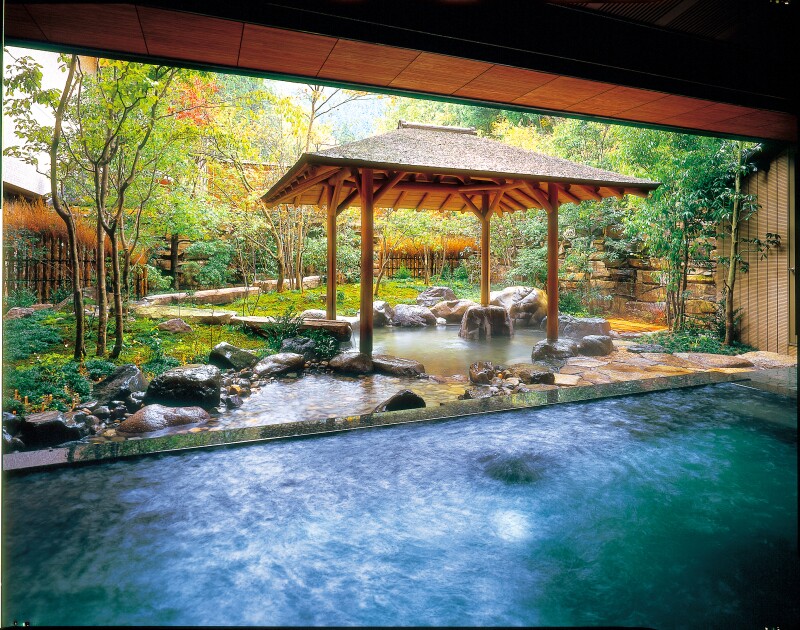
Nishimuraya Hotel Shogetsutei offers a classic Japanese onsen experience.
Courtesy of Nishimuraya Hotel Shogetsutei
Why we love it: A ryokan in a storied onsen town with private forest-view baths, garden-facing rooms, and access to Kinosaki’s beloved seven public hot springs
Rates: From $580
The charming seaside town of Kinosaki Onsen, 2.5 hours northwest of Kyoto, is home to Nishimuraya, set along the willow-lined Otani-gawa River. The eighth-century town’s seven tattoo-friendly onsen each have their own individual appeal, and it’s common to hear the sound of wooden geta sandals on the pavement, worn by visitors who are hopping from onsen to onsen.
Nishimuraya has two properties: the new Hotel Shogetsutei, and the older Honkan, which has 29 rooms built in the Sukiya style modeled after teahouses, with wooden terraces, sliding screens, and big windows facing Japanese gardens with sculpted shrubs and trees. The private onsen at Nishimuraya Hotel Shogetsutei are the most dramatic in town. They look out onto a 30-acre mountain forest and are ideal for guests who want more privacy.
One Fukuoka

Many of the guest rooms at One Fukuoka have large balconies.
Courtesy of One Fukuoka
Why we love it: A high-rise retreat with rare space, views, and a local following
Rates: From $400
Opened in April 2025, One Fukuoka is a contemporary boutique hotel that occupies the top floors of the One Fukuoka tower, offering views of bustling Fukuoka that stretch all the way to the Kanmon Straits. The art-filled lobby attracts stylish young locals for cocktails and coffee. But the property’s 41 rooms are the draw—especially spacious, many with sliding dark wood louver doors leading to large, plushly furnished balconies overlooking Tenjin and Hakata Bay.
The signature restaurant is Wan Steak House, a 16-seat teppanyaki counter where Japanese cuts of wagyu take center stage, including sirloin, tongue, and rump, alongside abalone, spicy mentaiko (pollack roe) creations, and Kyushu’s trademark sweet soy sauce. A lounge is stocked with art and design books and snacks like matcha doughnuts during the day and beer, wine, and sake in the evening. A wellness center includes ofuro baths, a Finnish-style sauna with a löyly stove, a cold plunge, an open-air relaxing lounge, and a large gym.
Park Hyatt Niseko Hanazono

The hotel attracts powder lovers in the winter, but it’s a year-round retreat with plenty of warm weather activities.
Photo by Aaron Jamieson
Why we love it: An alpine sanctuary for both powder lovers and summertime adventurers
Loyalty program: World of Hyatt
Rates: From $310
Park Hyatts in Japan are arguably the most Japanese of the international chains in the country, with generous touches of omotenashi throughout. Park Hyatt Niseko Hanazono’s 100 spacious rooms—including 28 suites, each with a private onsen—occupy four separate buildings and overlook the Annupuri range. The spa is surrounded by a stream and hemmed by birch trees. It includes a pool and a tattoo-friendly onsen—a rarity in Japan, where tattoos are often still found to be taboo.
Accommodations have deep soaking tubs, oversize beds, huge walk-in closets for storing bulky winter luggage, and sofas that convert to an extra bed for families or small groups. Close to a dozen restaurants are on offer, including a deli, sushi counter, cozy charcoal-grill robata, French Japanese teppanyaki, and a private karaoke dining room. On-site ski valet services pamper powder pilgrims, while an early-bird First Tracks program with the general manager himself gets you on the piste before it opens. Summer activities bookable on site include everything from golf and zip-lining to cycling, rafting, and excursions to the National Ainu Museum, which showcases the culture of the Ainu people.
Patina Osaka

A junior suite at Patina Osaka
Courtesy of Patina Osaka
Why we love it: Historic elegance with cutting-edge wellness next to Osaka Castle
Rates: From $660
Opened in 2025 with interiors shaped by natural light, smooth woodwork, and organic textures, Patina Osaka is a modern retreat that sits between Osaka Castle and the commercial district of Umeda. The 221-room property has minimalist suites with large soaking tubs, some with castle views. But the top draw may be its wellness center, which includes cryotherapy, oxygen chambers, forest-bathing rituals, and even poolside yoga in a dramatic glass-walled space. Among the five dining concepts are a rooftop Basque restaurant, a modern teppanyaki grill, and a tea lounge that nods to traditional Japanese teahouses.
The Ritz-Carlton Nikko

A guest room at the Ritz-Carlton, Nikko
Courtesy of the Ritz-Carlton, Nikko
Why we love it: A lakeside sanctuary with an onsen, panoramic verandas, and dining amid shrines and cedar forests
Loyalty program: Marriott Bonvoy
Rates: From $695
Located in Nikkō National Park—home to marshy grasslands, dense forests, and sacred peaks—the Ritz-Carlton, Nikko offers 94 modern guest rooms, each with a veranda overlooking either Lake Chūzenji or Mount Nantai. The hotel is the first in the Ritz-Carlton portfolio to have an on-site hot spring, drawing its restorative waters from nearby Yumoto Onsen. Guests can unwind here after a day of cross-country skiing, guided nature walks, or temple visits led by local monks. Japanese and Western design influences blend throughout the property, from Nikko-bori woodcarvings and kumiko latticework to the use of Mashiko pottery in the restaurants. Dining highlights include local specialties like yuba (soy milk skin) and Tochigi wagyu beef, while Western menus are overseen by noted chef Kanji Kobayashi.—Yukari Sakamoto
Ryugon

One of the best times to visit Ryugon is in the winter.
Courtesy of Ryugon
Why we love it: A restored farmhouse retreat that celebrates snow
Rates: From $350
A manor house at the foot of Mount Sakado, Ryugon is a love letter to Japan’s Snow Country architecture and design, becoming nearly buried in snow each winter, a reminder of the region’s stark seasonality. The 37 rooms of the restored 19th-century farmhouse have been modernized and feature yukimi shoji (snow-viewing windows), hanging washi lanterns, and private rotenburo baths on terraces facing the gardens or surrounding rice paddies, where some of Japan’s best rice is grown.
A spacious in-house lounge and library, with velvet-upholstered cabanas and a sunken irori hearth, offers a place to warm up during snow days, while e-bike rentals, cooking classes with a local in the earthen-floor kitchen, and nightly concerts encourage guests to connect with Niigata’s Snow Country heritage. The restaurant emphasizes Uonuma-grown koshihikari rice, Niigata wagyu, sea perch, and foraged and fermented wild vegetables and herbs; the Niigata sake selection is among Japan’s finest.
Shisui, a Luxury Collection Hotel

An onsen in a suite at Shisui, a Luxury Collection Hotel, in Nara
Courtesy of Shisui, a Luxury Collection Hotel
Why we love it: A modern sanctuary steps from Nara Park, with private outdoor onsen in guest rooms
Loyalty program: Marriott Bonvoy
Rates: From $430
On the eastern edge of Nara, just across from the grazing deer and greenery of Nara Park and the Mount Kasuga Primeval Forest, sits Shisui, a Luxury Collection Hotel. Opened in fall 2023 and redesigned by Kengo Kuma and Associates, the property centers around a low-slung wooden building originally constructed in 1922 as the Nara governor’s residence. Classical touches like a tiled roof gate and the tranquil Yoshikien garden—once part of a temple complex—imbue the hotel with a strong sense of place.
The 43 guest rooms are bright and serene, thanks to floor-to-ceiling windows that frame views of nearby Mount Wakakusa; select deluxe rooms and suites have in-room hot springs or open-air baths. Guests can also relax in the hotel’s spa and onsen, which uses volcanically fed waters, or take advantage of a 24/7 fitness center. Dining options include a sushi bar and Suiyou, a restaurant inspired by the Silk Road culinary traditions that shaped Nara during its era as Japan’s capital (710–794 C.E.). But the standout may be the elegant bar that spills into the garden—an ideal place to sip sparkling sake during the blue hour after a day spent exploring Nara’s UNESCO-listed treasures.
Simose Art Garden Villas

Simose Art Garden Villa was built by architect Shigeru Ban, a Pritzker Prize winner.
Courtesy of Simose Art Garden Villa
Why we love it: A floating art resort on the Seto Inland Sea
Rates: From $1,600
Simose Art Garden Villas, a new art complex and resort on the Seto Inland Sea in Otake, which is part of the Hiroshima prefecture, opened in April 2023 near Miyajima’s UNESCO-listed Itsukushima Shrine. The constellation of buildings are the work of Pritzker Architecture Prize–winner Shigeru Ban. Four of the 10 villas date back to the 1990s and were rebuilt here this year and include Le Corbusier-inspired structures with colorful Mondrian panels.
Five new waterside villas use an Austrian lightweight Kielsteg design featuring sliding wooden panels with keyholes to let in light, while two rooms have deep cypress ofuru tubs. A glass-walled French restaurant and a mirrored museum featuring floating and glowing gallery modules, both designed by Ban, are open to the public, but museum access is exclusive and free to guests in the evenings and mornings.
Tocen Goshoboh

Tocen Goshoboh
Courtesy of Tocen Goshoboh
Why we love it: For its salt-rich onsen, kaiseki dining, and idyllic alpine setting
Rates: From $262
The 15th-generation Tocen Goshoboh ryokan in the village of Arima Onsen is a scenic 12-minute ride from Kobe via the Rokko–Arima Ropeway, a cable car that soars over evergreens and waterfalls in the steep Rokko Mountains. More than 800 years old, the 10-room property, each with its own private bath, is filled with art, from rare Japanese sculpture and ceramics to glassworks, set against a restrained Western-leaning aesthetic. It is best known for its rare, nonvolcanic, salt-rich kinsen (gold-colored) onsen, fed by a mineral-rich subduction zone with a salt concentration roughly twice that of seawater and containing seven of the nine minerals designated in Japan as therapeutic.
A newer private open-air bath is designed like a tree house, with the feel of a crow’s nest. Kaiseki meals are a highlight, with marbled Kobe wagyu sukiyaki, fresh sashimi from nearby Kobe Port, and simmered dishes with sansho pepper, a local Arima specialty, often paired with taruzake, aromatic sake aged in cedar casks.
Related: You’ll Want to Stay at These Hotels in Japan Before They Get Too Hard to Book
This article was originally published in June 2025. It was updated with new reporting in April 2026.


