Paris

A hub for hedonists, a wellspring of inspiration for artists, and a haven for history buffs: Paris is a fantasy destination for millions of travelers each year. The storied bakeries, iconic museums, and corner cafés feel anchored in another time, but the zeitgeist of the city leans forward into a dynamic, multicultural food scene dominated by young French and foreign talents. It is precisely this juxtaposition of old and new that makes Paris the perpetually perfect place to visit. So go exploring, get lost, eat until your belly hurts—and then do it all over again. The City of Light shines on.

Paris-filip-mishevski-eZ2aHgA6Xds-unsplash.jpg

Photo by Filip Mishevski/Unsplash

Overview

When’s the best time to go to Paris?

You’re likely to be disappointed if you arrive expecting the image of springtime in Paris that you see in Hollywood films. In the last several years, the months between April and June have reported below-average temperatures and record-high precipitation—a far cry from the endless days of sunshine in the movies. The weather is wholly unreliable, which foils many travelers’ ambitions for a dry early-season trip. Late summer and early fall typically yield the warmest sojourns (though the summers in general appear to be getting warmer), plus this is when Paris is most culturally active, unveiling new exhibits and welcoming the return of the some of the most anticipated festivals. December and January provide a more festive experience, with Christmas markets lining the well-heeled boulevards and twinkling lights illuminating the city’s boutiques. All weather aside, there is hardly a bad time to visit Paris, rain or shine.

How to get around Paris

From either of the city’s two airports, the RER B, a regional rail line, is the fastest way to reach the city center. Taxis are convenient, but they can be costly.

Getting around: There are few cities as walkable as Paris. For further distances, le métro is the quickest and most reliable means of getting to and from your destinations (sometimes faster than a taxi). Google Maps is a reliable way of figuring out which train to catch. Ubers operate here.

Paris also has excellent bike infrastructure. On nice days, grab a bike share with Vélib, the city’s successful bike-share program, or Lime.

Can’t miss things to do in Paris

– Whether at the peak of summer or in the moodiness of a winter’s night, nothing elicits a chorus of oohs and ahs like a leisurely after-dinner stroll across the city’s iconic bridges and along the banks of the Seine River. Amble across the Pont des Arts toward the Institut de France and continue along the docks of the river, watching the Bâteaux Mouches glide by and illuminate the river with their lights. Keep wandering until you reach a spot to pause for an unobstructed view of a twinkling Eiffel Tower (every hour, on the hour, after sundown). It’s free and absolutely stunning at all times of year.

– If time allows, you really shouldn’t miss visiting the Louvre, the Musée d’Orsay, and Sacré-Cœur, or taking a stroll through the Luxembourg Gardens.

– Following the devastating fire in April 2019, Notre-Dame Cathedral remains closed for restoration work. Officials have said the forecourt in front of the church could open as early as March 2020, but for now, you’ll only be able to snap a picture from afar.

Culture in Paris

Every international city has its iconic landmarks and cultural institutions. In Paris, most travelers would cite the Louvre as the must-visit art stop, but curious visitors should look beyond the usual suspects and explore places like the Musée de la Vie Romantique, the Jewish Art and History Museum, the Cinémathèque Française, and the Fondation Cartier.

Dive a little deeper into a fascinating chapter of 20th-century Parisian history with a historian-led Context walking tour that focuses on the city’s occupation by Nazi Germany, a time marked by unrest, bravery, and heroism. – Given the Parisians’ well-documented penchant for celebrating art, culture, and design in all its forms, you can count on a packed schedule of festivals all year long. Whether for a neighborhood street parade or larger-scale happenings like Paris Plage and Nuit Blanche, it’s worth planning your vacation around the city’s celebratory timetable.

Local travel tips for Paris

  • Always greet shop owners and restaurant staff with “bonjour” when entering and before asking a question or making a request.
  • When metro train cars are crowded, give up your folding seat and stand.
  • A baguette is always better with cheese—the older the cheese, the better.
  • Do not overlook the city’s farmers’ markets as potential lunch spots.
  • Macaron loyalties teeter between Ladurée and Pierre Hermé, so try both and decide for yourself.
  • The Champs-Élysées has few redeeming qualities and is considered the Times Square of Paris by locals. Skip it and opt for a bird’s-eye view from the top of the Arc de Triomphe.

Practical Information

  • U.S. visitors to France do not need a visa for stays of less than 90 days.
  • France uses type E and C plugs, so visitors from the U.S. will need an adapter.
  • France’s official currency is the euro.
  • The official language is French, though you’re likely to hear several languages spoken, as Paris is an international city.

Guide Editor

READ BEFORE YOU GO
HOTELS
These 19 hotels around the world immerse you in their destinations while carving out space for unhurried time together.
These are the 20 best luxury hotels and resorts in France outside of Paris, according to insiders—whether you’re seeking a bucolic Provençal getaway or an immersion in a bygone era of the French Riviera.
These are the top places to stay in the City of Light.
Not all Eiffel Tower views are created equal. These hotels prove why only some are worth the splurge.
This curated list of “maisons,” boutiques, and family-run hotels showcase the kind of style and attitude only Parisian hotels can deliver.
Once home to artists and writers, Paris’s Left Bank still delivers cobblestoned charm and leafy boulevards—and these timeless hotels will put you in the center of it all.
Stylish, central, and surprisingly affordable—Locke’s new Paris hotel brings townhouse elegance to the Latin Quarter.
Palace hotels are the highest distinction a hotel can achieve in France. Here’s what they are—and what makes them so special.
The French capital is filled with stylish hotels that are big on personality—and easy on the bank account.
Airbnb has launched a new category called “Icons” for its most over-the-top stays and experiences (Prince’s “Purple Rain” house, anyone?). It also added a new feature to make booking group trips easier.
RESOURCES TO HELP PLAN YOUR TRIP
The great macaron debate may forever wage on, but from the first time I tucked into a small box of Pierre Hermé’s diminutive cookies, perfectly crisp on the outside and melt-in-your-mouth soft on the inside, I knew I’d remain loyal to his interpretation. Perhaps best known for his unique flavors—foie gras and chocolate, lemon and fennel, vanilla and basil, among many others—it’s his Ispahan croissant, with rose almond paste and crushed raspberry flakes, that really keeps me going back.
At first glance, this cookware emporium feels like a dusty relic. But dig a little deeper, especially in the basement, and you’ll find just about anything you could need for the kitchen, along with plenty of treasures you don’t—duck press, anyone?—but would love all the same. Knives, copper cookware, and ceramics are the selection’s biggest strengths.
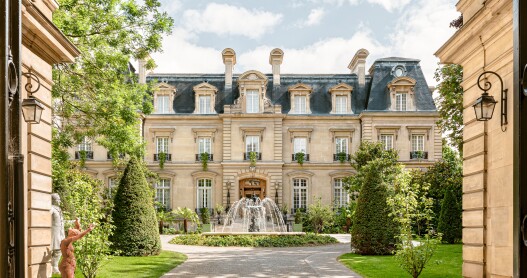
Among the increasingly trendy streets of the Upper Marais, this intimate hotel offers a refreshingly low-key place to unpack. Named for the classic Francois Truffaut film, and set in a former precious metal factory, Jules & Jim has a low-fi artistic bent. The ground-floor lobby and bar—both set off a central, glass-roofed courtyard and garden—feature a rotating collection of works by local painters, photographers, and graphic artists, as well as residential-style seating and bookshelves lined with bric-a-brac. Spread over three structures, the 23 rooms range in size; the “Jules” options in the main building are the smallest and best for solo travelers, while the “Hi-Macs,” “Sous Les Toits,” and “Duplex” accommodations work better for two guests or longer stays. Some categories include perks like terraces, sofa-beds, Nespresso machines, and views of Montmarte, but all come with Bluetooth sound systems, free Wi-Fi, rainfall showers, and access to 24-hour room service (note that there are no mini-bars or fridges).
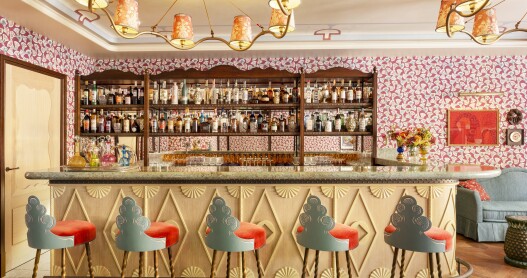
Mama Shelter’s owners, who launched the Flèche d’Or indie rock club across the street, turned an outlying location in the 20th arrondissement into an advantage. They enlisted Philippe Starck to design the restaurant, bar, pizzeria, and summer rooftop terrace—which now attract poets, artists, and counterculture types from across the city. The hotel’s street cred is still intact years after the 2008 opening, and the decor—black ceilings turned into graffiti chalkboards bearing literary quotations; Mexican wrestling and Halloween masks turned into lamp shades; tree trunks used as stools—remains relentlessly hipster without being overwhelming; guests could be young parents with sleeve tattoos toting baby carriers in the elevators.
Paris is known for many things but until recently, ethnic fare wasn’t one of them. In the hip neighborhood south of Pigalle, YOOM is my go-to spot for wildly delicious dim sum in an environment that is both cozy and contemporary - not the dive we all tend to imagine for good Asian bites. It’s a mix of New York style and Hong Kong spirit but universally delicious.
After glowing stints at Fauchon and Le Bon Marché, pastry chef and author Sébastien Gaudard opened his own pâtisserie on rue des Martyrs, just south of Pigalle, 9 months ago; the speed of his ascent into the annals of traditional pastry-making left him and his team of 14 stunned. But it’s no surprise he achieved such wild success so quickly - he doesn’t just revisit pastry classics, he brings them back to life giving new vigor to everything from the Paris-Brest and Mont Blanc to Tarte au Citron, macarons and divine chocolates. His shop feels like an old school candy store with jars full of French bonbons and cases full of indulgent desserts. It’s a stunning pastry shop with stellar sweets well worth the detour for those staying (or living, like myself) on the other side of the city. In the summer, try a carton of their homemade ice cream. click on the link below for more photos!
Context Travel offers history, architecture and culinary tours in various European cities. I went on the " foodie” tour that began on a beautiful fall Paris morning in the toney neighborhood of St. Germain- de- Pres by meeting our friendly English speaking guide, a culinary and food history writer living in Paris, at cafe across from the Abbey. Our guide immediately taught our small group about the importance of the baguette to the French, and various virtues of real baguette verses machine- made by sampling both on the street and in a nearby boulangerie. We then took the handmade baguette and visited a cheese monger (Androuet fromagerie) to learn about different french cheeses. Next an exquisite artisan chocolate shop and finally an ice creamery . Highly educational, recommended for foodies and especially curious fist-time visitors to Paris.
Passages were designed in the 19th century to give Parisians protection from muddy streets and horse-drawn vehicles. Some 20 of these covered walkways remain today, including the Passage Verdeau; they are an excellent way to journey back into Parisian history. Located across from Passage Jouffroy in Les Grands Boulevards area of Paris, Passage Verdeau has shops carrying antique cameras, books and engravings. The passage takes its name from Sir Verdeau, one of the promoters and shareholders of the arcade (and also the inventor of the concept of linen rentals for hotels).
Shopping passages were built in the 19th century to give Parisians protection from muddy streets and horse-drawn vehicles. Galerie Vivienne is a beautiful restored 19th-century passage with entrances at the Rue des Petits-Champs, Rue de la Banque, and Rue Vivienne. Built in 1823 in a neoclassical Pompeian style that includes a gorgeous canopy and is decorated inside with mosaics, paintings, and sculptures, Galerie Vivienne’s most famous resident is the Jean-Paul Gaultier shop. Some passage entrances are easy to miss, so be on the lookout! A stroll through these fascinating galeries is a fun and free activity on a rainy day.
There are two entrances to this historical restaurant. The main entrance on the rue de l’Ancienne-Comedie and a “back” entrance that is part of a lovely passage called Le Passage de Cour de Commerce Saint-Andre. There are many passages still remaining in Paris [note, I am going to do a separate post on some of the ones we visited and will link to it when I do]. They are covered shopping areas that allowed the wealthy to shop unencumbered by the elements. Architecturally they are fantastic to visit and photograph, some have endured better than others. This passage was opened in 1735, and was built on part of the old wall of Paris, around the time of the King of France, Phlippe Auguste. This wall made up the limit of Paris during the Middle Ages! The entrance to this passage is at 128 Blvd St. Germain. No matter what door you enter, Le Procope is a great restaurant to experience a traditional (and yes, heavy) French meal. The menu has all the classics: coq au vin (chicken in wine sauce), entrecot (steak), magret de canard (duck breast); beouf tartare, as well as several fish selections. The starters are equally traditional with terrines, salades and escargot (snail), among others.