
Cuba

The Caribbean’s largest island, Cuba remains mysterious to many American travelers, as it was only after a diplomatic détente introduced in 2014 that permissible travel categories expanded significantly. Leisure travel for Americans remains prohibited, and U.S. citizens and residents must justify their trip under one of 12 reasons allowed by the Department of Treasury’s Office of Foreign Assets Control. It can be confusing and challenging to plan a trip, but those who are persistent will be rewarded with one of the most intriguing, vibrant cultures in the region, where Spanish and African influences continue to exert themselves in food, music, art, and architecture. Beyond Havana, the capital, are 14 provinces to explore, many with beautiful scenery and endemic fauna not found elsewhere on the planet.

Everything Americans Need to Know Before Traveling to Cuba

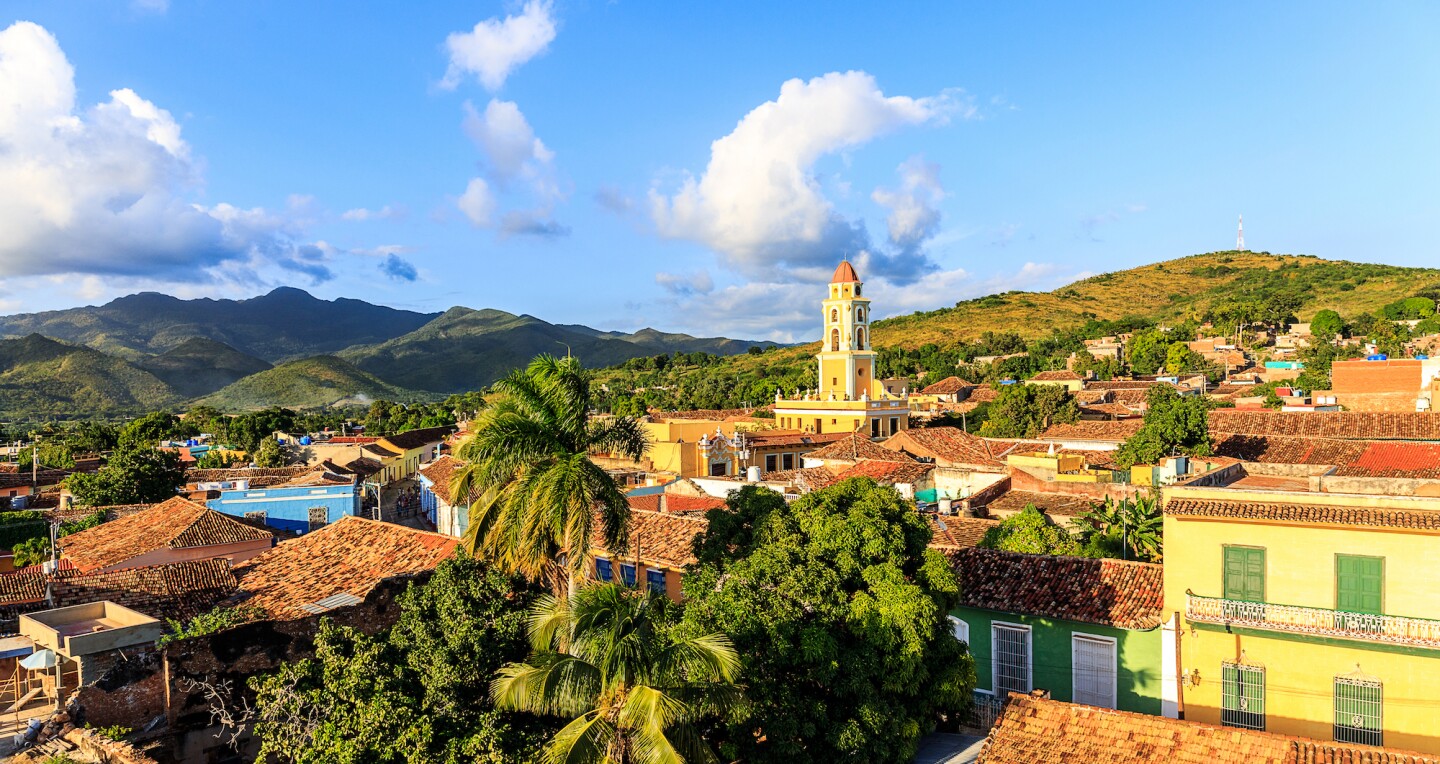
Trinidad is a town in central Cuba known for its colonial-style buildings and cobblestone streets.

Photo by rphstock/Shutterstock

Overview

When’s the best time to go to Cuba?

As with other Caribbean destinations, Cuba is hot and humid year-round, but especially so in summer, and hurricane season spans June to November. September and October are typically the months most prone to hurricane action and recent hurricanes that have made landfall have been severe. December and January and early summer are peak tourism months, and you’ll pay the price accordingly. If budget is an issue, late winter is Cuba’s shoulder season and offers cooler temperatures and slightly better prices than other times of the year.

How to get around Cuba

Direct commercial flights are now available from several U.S. cities, including New York City and Miami, among others. JetBlue, American, and Delta all fly to Cuba, and service multiple destinations beyond Havana, including the cities of Cienfuegos, Trinidad, and Holguín. Once you’re on the ground, it’s best to get around by taxi or bicycle taxi (bicitaxi) in Havana; outside the capital, a car rental is the most reliable, albeit expensive, option. Maps, signage, and road conditions all leave something to be desired.

Can’t miss things to do in Cuba

Cuba’s capital, Havana, is a UNESCO World Heritage Site, and never fails to charm visitors with its colonial architecture, its atmospheric waterfront, and, of course, its people. While there, be sure to stop by the capital’s famous ice cream emporium, Coppelia, wander around Habana Vieja, the city’s historic heart, and take in live music at a venue like Casa de la Música. Cienfuegos is another UNESCO site, and many other towns and cities throughout the country offer opportunities for exploration of Cuba’s distant and more recent history at museums, cultural centers, and historical sites. Those interested in revolutionary history will want to visit Santiago, where Fidel Castro’s revolution was launched, and where he is buried.

Food and drink to try in Cuba

Cuba doesn’t exactly have a global reputation for exceptional cuisine, a fact that can be attributed to decades of hardship caused by the U.S. embargo. Travelers staying in hotels will likely find their options to be more expansive, while those who stay in a casa particular (a sort of Cuban-style B&B) may be treated to Cuban home cooking. Traditional dishes include moros y cristianos (“Moors and Christians,” or black beans and rice), sweet or fried plantains (maduros or tostones), and pork or chicken. Bucanero and Cristal are local beers, and who can come to Cuba without trying Havana Club, the national rum? Teetotalers might want to stick to guarapo, a fresh juice pressed from sugar cane.

Culture in Cuba

Politics aside, the Cuban Revolution was definitely a boon to Cuban culture, with the government actively supporting and promoting the visual and performing arts, as well as literature and music. Museums abound, and a growing number of independent art galleries dot Havana. Visitors to the country are likely to notice that art in Cuba isn’t just for the more moneyed class; everyone here, it seems, appreciates the arts and find these integrated into their daily lives in some way.

For Families

Cuba is a remarkable destination for family travelers, not the least reason being that Cuban culture is incredibly kid-friendly. In Havana, families will find plenty to keep them busy, including several puppet theaters, a cinema that’s specifically for kids, and other experiences that are unique to Cuba: Try riding in coco-taxis, coconut-shaped taxis powered by motorbikes. Outside the capital are all-inclusive resorts in Varadero, where families will enjoy pools, on-site activities, and kids’ clubs, and numerous other cities and towns where adventures in culture, history, and nature await.

Local travel tips for Cuba

Locals know that prices are almost always in Cuban convertible pesos (CUC), not Cuban pesos (CUP). CUC, or the convertible, is the form of currency that most travelers to Cuba will use, while CUP is the currency used more often by locals. If in doubt about the currency quoted, ask! Otherwise, you’ll find yourself burning through your vacation budget more quickly than expected. Also, be aware that an automatic 10% tariff will be imposed upon your exchange of USD, so your buck doesn’t go as far in Cuba as you might think.

Guide Editor

Julie Schwietert Collazo has been a bilingual freelance writer, editor, and translator for the past 10 years and loves (almost) every minute of it. She does, however, tell people that if she could have any other job, it would be a gig as a Mexico City evangelist. The Mexican capital is her former home and the first place she always wants to go when she gets on a plane. Read more at collazoprojects.com and Cuaderno Inedito.

READ BEFORE YOU GO
RESOURCES TO HELP PLAN YOUR TRIP
Author Gabriela Garcia on Cuban history, writing matriarchal fiction, and what it was like growing up in Miami as the daughter of Cuban and Mexican immigrants.
Though it lacks a beach, this family-owned and professional diver–managed resort on the rocky coast just south of George Town has direct ladder access into the Caribbean. Grand Cayman’s two famous underwater sites, Eden’s Rock and Devil’s Grotto, are just a short swim away, and boat trips offer the option of two daily dives (including night dives). Images by some of the world’s most respected underwater photographers decorate many of the tiled and comfortable smoke-free rooms, some of which have kitchens and private balconies or terraces. The vibe is laid-back; post dive, guests sit by the pool or swap stories at the palapa bar, which has the island’s best sunset vista. Managers Anne Briggs and Lisa Evans, the granddaughters of Sunset House’s founders, make sure everything runs smoothly and ensure visitors explore the best of Grand Cayman both on shore and underwater.
This atmospheric all-inclusive resort opened in 1986 on the white sands of Little Cayman’s Preston Bay and consists of eleven rooms in wood and stone cottages, some of which are oceanfront. Guests, mainly advanced divers and repeat visitors, come for healthy corals, diverse marine life, and the hospitality. Since 2015, owner and manager Susan Howard has carried forward the legacy of her mother and the original owner of Pirates Point Resort, Gladys Howard, by fostering an “Island Home Away From Home” vibe. In addition to complimentary bicycle rentals and island-wide conservation efforts, Howard opens up her home on Friday nights for a champagne and sushi cocktail reception.

The resort operates on a safari schedule with wake up and breakfast bells, daily and untimed dives at numerous sites, and hearty lunches upon return to the lodge around 3pm. The hotel sea front view is lovely, with hammocks strung on the white sand beach and easy, protected swimming and snorkeling within the barrier reef.
Updated in 2017, the rooms and public areas in this attractive, airy resort have an island-themed decor. Rooms now come equipped with marble bathroom vanities, Smart LED Samsung televisions, and Starbucks Coffee. But the star attraction remains a prime, crowd-free position on Grand Cayman’s Seven Mile Beach, famous for clear water and powder-fine white sand. Resort sun loungers are spread far apart to give guests a sense of privacy. A day camp with fun activities and a healthy meals program for kids (ages 4-to-12) means parents get guiltless downtime (or scuba diving and other water sports). Shopping and alternative dining are within walking distance.
Buda Bar, on the other side of the Havana tunnel in Cabaña, is a meditation center by day and a bumping party by night. Go after 10PM from Friday to Sunday to hear anything but reggaeton, play domino, or get your future told by an Osho card reader underneath the trees. Ask a young local for directions, as the spot is somewhat secret!
This museum was once the home and studio of famed Ecuadorian painter Oswaldo Guayasamín, who happened to be a supporter of the Cuban Revolution and painted Fidel Castro on several occasions. Exhibitions in the patio-like first floor feature international artists of diverse backgrounds, while the permanent exhibitions upstairs give you a view of the artist’s work and living quarters.
Gaze at the beautiful floor to ceiling mosaic that pictures the marine life and coral reef in Grand Cayman as you climb the double helix staircase to the top of the 75ft observation tower. Located in Camana Bay, this tower offers 360 degree panoramic views of Seven Mile Beach, George Town, and the North Sound. Not up for the big climb? No worries, there’s a full service elevator available to take you to any floor for observation, including the very top.
Put on your comfortable shoes and head to the many trails of Cayman Brac to see wildlife, as well as scenic and geological sights. There is a path for all skill sets. Listen to the mating calls of the parrots flying above at the National Trust Parrot Reserve Hiking Loop, or descend carefully into Peter’s Cave and move through the various layers to discover a truly breathtaking natural wonder. Most hotels have a brochure of all the hiking trails; this includes images, difficulty, and a brief description of each trail.
This honky-tonk-inspired bar has a hometown feel and a country vibe, and has great local beers on tap—like Grand Cayman’s classic premium lagers, the CayBrew and Caylight. Don’t miss out on the Thursday night Rock & Roll Bingo: It can get rowdy and is a lot of fun. Lone Star Bar and Grill is well known for its BBQ, including Texas-style ribs as well as barbecue chicken and burgers. When you get the munchies after a few beers it’s a nice break from the gamut of seafood offered at other establishments.
The 1905 Cadillac sparkling under the bright lights really commands the attention of the room. This hot ride, in the center of the Cayman Motor Museum, is the exact model of the first car ever driven on the island. Browse through more than 55 classic and exotic vehicles as well as 18 various vintage motorcycles. This museum displays rare and one of a kind automobiles and isn’t just for motor enthusiasts. Cars like the original Batmobile used in the 1960’s television series of Batman as well as Elton John’s Rolls Royce make this museum a must-see.