Costa Rica

Costa Rica is a small Central American nation that shelters nearly six percent of the world’s biodiversity. Expect to see gorgeous orchids, colorful birds and butterflies, howler monkeys, and maybe even the elusive margay, a spotted nocturnal cat that lives in the rain forest. In addition to natural beauty, there’s a lot to love about a place that hasn’t had an army since 1949. Costa Rica’s Ticos (as locals are called) have managed to avoid the conflicts that have devastated neighboring nations.

Costa-rica-KatieOrlinsky.jpg

Photo by Katie Orlinsky

Overview

Can’t miss things to do in Costa Rica

Most visitors come to Costa Rica for nature. Twenty-five percent of the country is protected, and most natural areas are easily accessible, though some require going off the beaten path. There are 186 areas protected by the National Conservation Areas System, including 32 national parks and 51 wildlife refuges. More than 10 conservation areas are within reach of San José, the country’s capital, alone, and each offers a different nature experience. From the last remaining tropical wet forests in the Mesoamerican Pacific, located in Corcovado National Park, to the stalagmite- and stalactite-filled caves of Tempisque Conservation Area, travelers can see a variety of habitats in one trip. As for accommodations, there are plenty of options for roughing it, but Costa Rica also features upscale resorts where you can retreat and recharge after a day outside.

Food and drink to try in Costa Rica

Local food is a way of life in Costa Rica. Corn, beans, and root vegetables are grown here and find their place on most Tico tables. Start the day with locally produced coffee, served alongside such Costa Rican fruits as pineapple, cashew fruit, and sapote. Don’t be surprised by the heaping portions of gallo pinto, a rice and bean dish served any time of day. At breakfast, it’s usually accompanied by an egg, tortilla, and thick slice of farmers’ cheese. Plantains and meat often join gallo pinto at lunch and dinner. Costa Rican food is not spicy; if you need an extra pop of flavor, splash a dash of the local favorite Lizano Sauce (akin to HP Sauce) on your meal.

Culture in Costa Rica

Costa Rica is an anomaly in Central America. Like its neighbors, the country traces its cultural heritage back to indigenous groups that occupied the land before the Spanish colonial period, but its modern history is quite distinct. Political choices to embrace democracy, abolish the national army, and protect rather than develop its natural assets have put the country in an economic and social position in which the quality of life here generally exceeds that of most Central American countries. Costa Rica has repeatedly been designated among the happiest countries in the world by international development researchers. Visitors come from around the world to discover the secret of pura vida, or pure life.

Shopping

Unlike most of its Central American neighbors—most notably Guatemala, which offers one of the region’s largest markets, Chichicastenango—Costa Rica does not have a thriving handicraft culture. However, there are a few Costa Rican goods worth taking home—such as hammocks, jewelry made of fruit and tree seeds, and non-perishable food products like homegrown coffee and the popular Lizano Sauce. In Costa Rica, your money is best spent on epic experiences, from hiking and zip-lining to exploring caves and active volcanoes. Those memories will last longer than any souvenir.

Practical Information

  • Costa Rica has several international airports. Most visitors fly into San José, the capital, or Liberia.
  • Costa Rica’s official language is Spanish, and the currency is the colón. Credit cards are widely accepted.
  • When you leave the country, you will be required to pay a U.S. $29 departure or exit tax; many airlines include the fee in their ticket prices.
  • Voltage and plugs are the same as in the United States.

Guide Editor

Julie Schwietert Collazo has been a bilingual freelance writer, editor, and translator for the past 10 years and loves (almost) every minute of it, but tells people if she could have any other job, it would be a gig as a Mexico City evangelist. The Mexican capital is her former home and the first place she always wants to go when she gets on a plane. Read more at collazoprojects.com and Cuaderno Inedito.

READ BEFORE YOU GO
HOTELS
Waldorf Astoria opens in Costa Rica with rainforest views, spa rituals centered on Indigenous healing practices, and ambitious sustainability goals—while navigating the scale of a nearly 200-room property.
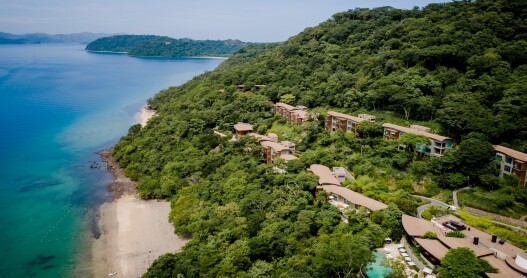
Occupying a peaceful corner of Costa Rica’s biodiverse Peninsula Papagayo, the new Nekajui, a Ritz-Carlton Reserve, lets travelers commune deeply with nature and local culture.
If health is the new wealth, then Blue Zones travel offers one of the most immersive get-rich-quick schemes on Earth. Afar takes a closer look at a program at Andaz Costa Rica at Peninsula Papagayo.
At these rental properties around the world, you can commune with wildlife and farm animals.
The best way to embrace the country’s pura vida is by staying in one of these nature-surrounded rental properties.
From the Swiss Alps to the Brazilian rain forest, these Airbnbs are worth booking just for the views.
The world’s best beach resorts put cultural and environmental preservation front and center.
Located on the green Osa Peninsula, this resort offers a comfortable base for nature-filled adventures.
RESOURCES TO HELP PLAN YOUR TRIP
What better way to rejuvenate than a yoga class and massage on the beach? Lorena at ReFLEXion Yoga Tamarindo is a gifted and soothing yoga instructor and healer. Besides the yoga classes (for all levels), she also offers an array of other healing therapies for the body and mind, including massage and reiki sessions. Sometimes being on vacation can start to get... well, stressful. This is the perfect solution.
The Gold Coast is a legendary surfing destination, and veteran surfers make pilgrimages from all over the world to catch these waves. Playa Grande is the granddaddy of all Costa Rican surfing beaches, and it doubles as a nesting ground for leatherback sea turtles. Other popular surf spots in the area are Playas Avellanas & Negra (where the 1994 surf classic The Endless Summer II was filmed), and Tamarindo. If you’re a beginner or novice and need lessons, Point Break Surf is a great option.
Marino Las Baulas National Park is a protected area compising Playa Grande, Ventana and Langosta. Together they are the stage for one of the most magical occurrences in the animal kingdom: the nesting of the gigantic baula (leatherback turtle), an endangered species. The hatching of these turtles is a remarkable highlight each year as they make their way out to sea. The egg-laying season goes from October-November.
Local Costa Ricans taking some time out from the perfect surf on Playa Guiones. This beach near Nosara is the most relaxing, perfect surf break we have visited. The town is small enough to be peaceful with just the right amount of great restaurants and hotels to make it easy. Fly into Liberia, CR and you are a four hour drive to Nosara. If you are in the area, Casa Romanitica is the perfect hideaway hotel walking distance to the surf and small town. Don’t worry, you don’t have to be romantic to stay there. Just wanting an authentic, chilled experience in this part of CR.
North of Santa Teresa, in Playa Hermosa, you’ll find sushi master Koji Hyodo carving yellowfin tuna, red snapper, and sea bass at his tinkling, tin-roofed restaurant, Koji’s. His signature Koji Roll wraps spicy tuna around fresh shrimp paste and avocado. Then the entire roll is drizzled with a secret sauce and dipped in crunchy tempura bits. The grilled octopus is lightly fired, then sprinkled with sea salt; his lobster sashimi, sliced so thin you can almost see through it, starts with a crunch and finishes sweet.
Tucked in the Rainforest of Costa Rica is this incredible Ecolodge. We whitewater rafted all morning to arrive at the lodge, our river guides acted as chefs and general grounds keepers upon arrival, and we were treated to the absolute best food we had the entire trip in Costa Rica. The bungalows do not have any electricity, but the staff lights candles in all the rooms and pathways each evening, and dinner is eaten by candle light. Talk about romance!! While staying they have horseback riding through the jungle, hikes, rappelling, zip lining and of course more rafting. Definitely will not be our last trip to this lodge!! The attention to sustainability efforts was also fantastic and commendable.
El Pelicano is a local spot recommended by some folks that live in the area. It’s a lovely beachfront spot that drops ‘fresh from the water’ seafood on your plate, along with ice cold beer (or wine) to accompany it. The dining area is big, open and airy, and big enough to seat the masses. The crashing of the waves is also soothing as you down ‘just one more bite’ of that locally crafted meal that came from the water you can hear.
Some dispute that okra originates from West Africa but there’s no denying that the word okra is of Western African origin. Okra soup and banku is a traditional recipe from western Africa and is most popular in Ghana. Banku is made from partially-fermented ground maize and grated Cassava. We met the Okra Lady in Mallam Atta market (also known as Malata market). If you want a true local market experience, you’ll find it here. In the three hours we were there we didn’t see any other tourist and you won’t find African masks or other tourist handcrafts at this market.
The thermal hot springs in Rincón de La Vieja at Rio Negro (Black River) may not be as well known as those in the Arenal area, but we had the pools and surrounding forest to ourselves. From where we stayed at the Hacienda Guachipelin Rincón de La Vieja, the springs were accessible by horseback or vehicle, followed by a short hike and crossing a rather dubious hanging bridge. The pools are heated by the Rincón de La Vieja Volcano, so you definitely want to test the steaming water. There are seven pools to sample of different shapes, sizes and temperatures. The first pool was too hot to plunge more than our toes into. And the pool that was “just right” was the last one, which happened to be ideally situated next to the churning river. After two days of horseback riding, hiking, canyon ziplining and rappelling, it was great to unwind at this private oasis. If a rainforest/volcano adventure beckons you, I recommend staying at Hacienda Guachipelin Rincón de La Vieja and getting an adventure pass from Adventure Tours--both are at Rincón de La Vieja National Park.
While Tamarindo in Costa Rica is no longer a sleepy beach town known only to a lucky few, we can still settle ourselves onto the sand and feel like we have the vast skyline to ourselves. Staying in Playa Langosta, the beach just south of Tamarindo, provides a welcoming relief from clusters of tourists while keeping us close enough for sunsets like this! Extra bonus: Have a friend or loved one in one hand and a cocktail in the other.