Canada

Canada spans six time zones, and some say that it boasts the longest street in the world. This nation gave the world Leonard Cohen, Leslie Nielsen, Mounties, Tim Hortons, Superman, zippers, the light bulb, and the snowblower. This is a place where polar bears, poutine, and epic panoramas predominate. Canada’s wilderness beckons adventure-seekers from the world over, while the country’s cultural attractions, culinary marvels, hockey rinks, and artistic landmarks thrill visitors of all stripes.

Vancouver Canada totem pole

Jessie Beck

Overview

When’s the best time to go to Canada?

The best time to visit Canada depends on what you wish to experience. The snowy months of winter allow for world-class skiing, snowshoeing, and hockey games. Summer is ripe for sunseekers to explore both the Pacific and Atlantic coasts, the lakes of Ontario, and the wild country of the North. Spring turns the West into one gigantic flowerpot, while fall transforms Eastern Canada into a kaleidoscope of colors. Keep in mind that many Canadians travel during the summer months. Also, national parks and big cities attract thousands of visitors from the United States during school holidays and long weekends, when prices can soar in destinations like Toronto, Vancouver, Jasper, Montreal, Banff, Calgary, and Halifax.

How to get around Canada

Major international airports are spread across the country from Vancouver in the west to Halifax in the east. Many international visitors choose to arrive at U.S. border cities (e.g. Seattle, WA and Buffalo, NY) and then drive across the border. This can be a cheaper way of entering Canada, but be prepared for traffic and extended waits at border checkpoints during peak travel times.

Major cities like Toronto, Vancouver, Calgary, Montreal, and Halifax have excellent public transportation networks: taking the bus, riding the metro, or hailing a cab is a breeze. Smaller cities and rural towns are walkable, but you’ll need a car to get out into the countryside. Public transportation in and out of national parks is virtually nonexistent. The space between metro centers can seem daunting, so consider flying if you wish to cut down on travel times.

Food and drink to try in Canada

Canadian cuisine is as diverse as the country is expansive. On one city block—or on one menu—you may find restaurants serving Ukrainian, Chinese, Irish, German, Portuguese, Haitian, Nigerian, and Ethiopian dishes. Each province and city has its own culinary flair: you’ll find unique Western fare in Calgary and Edmonton, gastro-nouveau in Toronto and Vancouver, fine French dining in Montreal and Quebec City—and the best the ocean has to offer in Halifax, Charlottetown, and St. John.

Culture in Canada

Have you come for the great outdoors, or Winnipeg’s Folklorama? Perhaps you’re in town for Toronto’s MuslimFest, or you made the trek to quirky little Maxville, Ontario, for the Glengarry Highland Games. Massey Hall in Toronto has hosted the world’s largest musical acts for decades, while the Quebec Winter Carnival is Canada’s premiere winter event. The Edmonton International Fringe Festival, held every August, is the largest and oldest fringe fest in North America.

Canadians love to party. Canada Day (July 1) is celebrated from coast to coast, with Canadians and visitors packing public squares, stadiums, parks, and concert halls for massive festivals. The Calgary Stampede takes over Alberta’s largest city every July; Montreal’s International Jazz Festival (June 29–July 9) welcomes 2.5 million visitors each year; and Pride, Scotiabank Caribbean Carnival, The Canadian National Exhibition, and the Toronto International Film Festival bring revelry to Ontario’s capital.

Local travel tips for Canada

English is Canada’s common tongue, though French is spoken throughout Quebec and in many Atlantic cities. That said, you’ll hear nearly every other language in the big metro centers. The currency is the Canadian Dollar ($). Tipping is required (15%) in restaurants, and it is generally expected in taxis and hotels. ATMs are everywhere, and major credit cards are accepted across the country. Electricity is 110v.

Guide Editor

READ BEFORE YOU GO
An exclusive-use lodge in British Columbia’s Great Bear Rainforest, Fawn Bluff combines exceptional wilderness access with a nonprofit model that channels all net profits into Homalco First Nation community initiatives.
HOTELS
The 2026 FIFA World Cup is bringing the world to Vancouver this summer. Here are the 12 hotels worth booking, whether you’re coming for the games or finally making the trip to this dreamy British Columbia city.
These hotels around the world—all owned and run by women—reflect a wide range of destinations and styles.
At the 10-room Ode Toronto, local art, vintage shopping, and neighborhood restaurants in Dundas West define the experience.
Sleep under the world’s darkest, clearest skies across six continents at one of these 19 dark sky zone hotels.
Afar editors share the 2025 hotel stays they didn’t want to leave—and would happily return to.
At Nimmo Bay in British Columbia, luxury means snorkeling in 50-degree water, sipping water from cedar-lined mountain streams, and spotting grizzlies from a floating sauna.
In Toronto’s burgeoning hotel scene, you’ll find Canada’s first Ace Hotel, a reimagined St. Regis, and an ultra-cool boutique stay in a private women’s club.
Heli-ski in winter, or hike, bike, and paddle in summer at Eleven Revelstoke Lodge, a revamped heritage property in Revelstoke, British Columbia.
Whether it’s a villa in Italy, a dude ranch in the U.S. West, or a luxury all-inclusive in the Caribbean, here are places where accommodations and experiences are ideal for large family groups with a wide range of ages.
These women aren’t just breaking barriers. They’re building a more inclusive, dynamic future for hospitality—and your hotel experience will be the better for it.
RESOURCES TO HELP PLAN YOUR TRIP
This hotel is on our list of The Best Hotels in Canada.

Over the past seven years, 1 Hotels has proven that eco-conscious luxury can be successful in North American cities ranging from New York to West Hollywood. The 1 Hotel Toronto, in the center of town, is no exception. Architecture and design firm Rockwell Group partnered with the developer Athens Group for 1 Hotel’s first Canadian property, bringing in Toronto-based craftspeople to build custom dining and side tables out of local wood in the 112 biophilic guest rooms and public spaces, where native plants fill shelves. The hotel works with recycling partner Green Planet to convert leftover kitchen oil and grease into biofuel.
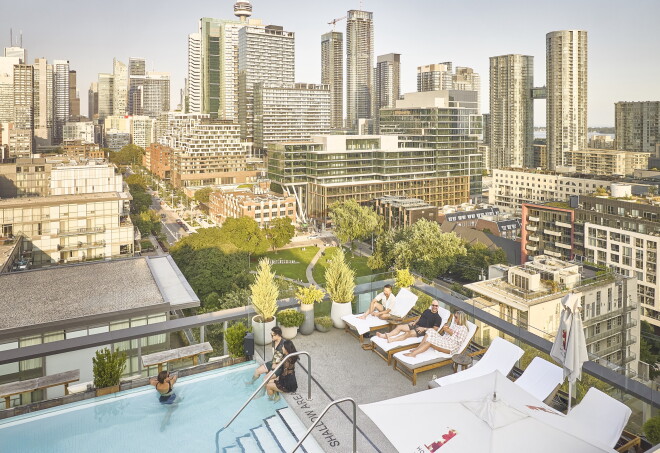
Conveniently located near the subway, museums, and upscale boutiques and galleries of Toronto’s swish Yorkville neighborhood, the Park Hyatt Toronto originally opened in 1929. Seventy years later, a south tower was added to the hotel, with the art deco–influenced lobby space linking the two. The spacious rooms have a soothing palette of pale peach, dusky pink, beige, and gold. The Annona restaurant has a similarly rich color scheme, boldly decked out in shades of plum and gold, with plush banquettes and floor-to-ceiling windows overlooking Yorkville. The 18th floor offers sweeping views over Queens Park and the CN Tower, but the main attraction may be the Roof Lounge’s bartender, Joe Gomes: He’s been shaking up cocktails here for the past 50 years, so guests can order a martini from a man who knows how to make them just right. A host of other extras, including complimentary town car service within a five-kilometer radius, free Wi-Fi, and even a kosher kitchen, add to the hotel’s charms.
AFAR’s CEO and cofounder just returned from a memorable trip and offers three top reasons to go.
Far from an excessively consumerist city, Montreal likes its goods select, well designed and generally not too showy. Bling has very little place here, where status tends to be demonstrated with understated finds rather than a season’s international It piece. That means that the best stores around carry small, recherché brands, with a focus on things made here or near. From clothes to design objects to homeware, here’s a list of shops that will inspire you to keep room in your luggage.
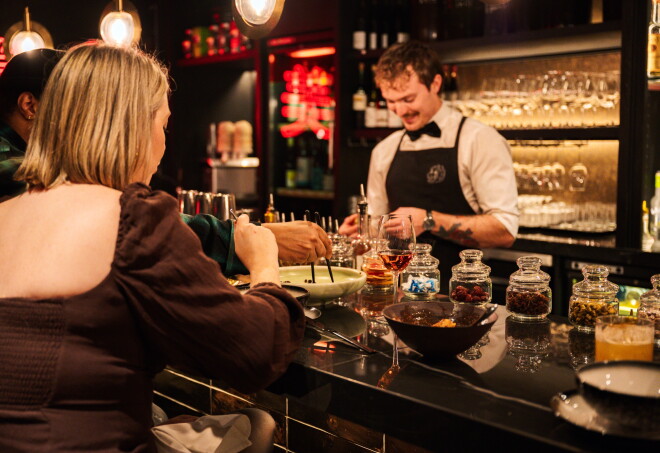
Vancouver’s cocktail bar scene is top notch, featuring award-winning bartenders, excellent hospitality, and some truly innovative cocktail lists. If you want to go really local, ask your bartender to use a BC-made spirit in your drink. The area’s microdistilleries are producing some of the world’s best liquors. Of course, the wine and craft beer scene offers plenty of delights too. Oh, there are plenty of happy hour spots worth popping into too if you’ve got food and drink on your mind. Stay an extra week. You’re going to need the time.
Montreal’s coolest neighborhood is also it’s most sought-after; as a kind of love child of Brooklyn, Shoreditch, and Sodermälm, Plateau Mont-Royal is inherently hip and has been setting trends for well over two decades now. Quirky shops, colorful buildings with twirling iron staircases, and third-wave coffee shops are among Plateau Mont-Royal’s most popular things to do, as are having picnics in Parc Laurier and designer shopping on Montreal’s iconic Boulevard Saint-Laurent.
This hotel is on our list of The 10 Best Hotels in Canada.

First opened for business in 1912, the iconic Ritz-Carlton Montreal—known as “the grande dame of Sherbrooke Street"—began a $200 million facelift in 2008, opening its doors again in 2012. Quebec’s most luxurious and historic hotel could tell endless celebrity secrets but is, of course, far too discreet to utter a word. It’s no secret, though, that Elizabeth Taylor married Richard Burton here, that the Rolling Stones rented the entire sixth floor in 1972, and that a who’s who of world leaders, movie stars, and royalty are still regular guests. Situated in the downtown culture and shopping hub that is the Golden Square Mile, the hotel oozes money-is-no-object luxury from every pore: from the ornate duck pond and immaculately manicured garden and terrace to the 100-year-old chandeliers, the sweeping staircases, and the belle époque golden glow of the lobby and palm court. Rooms have a white-and-gray minimalist palette with splashes of signature purple. Antiques and original features blend with ultra high-tech design such as Japanese Toto toilets in all bathrooms, heated floors, and motion-sensor lighting.
This hotel is on our list of The 10 Best Hotels in Canada.

Fogo Island Inn sits at the very edge of the north Atlantic on isolated Fogo Island in Newfoundland. Designed by internationally renowned architect Todd Saunders, the inn’s arresting modern appearance is suggests an iceberg from a distance, with its raised section representing the island’s traditional stilted fishing platforms. But when visitors get close, they see the wooden boards layered together, and it’s clear that everything is handmade. The by-hand ethos covers all the furniture and furnishings, created by local artisans who’ve worked with artists in residence to create contemporary versions of traditional objects.

Staying at the inn is admittedly expensive, but this is essentially a living art piece that supports the local community and aims to honor the island’s past while carrying it to the future. It feels like a grand home with attentive staff. A private 42-seat cinema, partnered with the National Film Board, carries a movie library for guests to enjoy at any time; there’s also an art gallery, a well-stocked library, and a supply of Gore-Tex hiking boots and other outdoor equipment to borrow. The inn shows off the dazzling landscape, and it’s easy to spend all day at the windows watching the sea while whales breech, icebergs float past, or storms dash on the rocks.
Opened in 1915 as Tent City—a string of luxury canvas tents along Lac Beauvert, with vistas of Whistlers Peak and Pyramid Mountain—the iconic Fairmont Jasper Park Lodge was possibly North America’s first “glamping” site. The destination proved wildly popular, and in 1922 a main lodge was opened, as well as a series of luxury log cabins spread across 700 acres in the heart of Jasper National Park, a UNESCO World Heritage site. Bristling with Douglas firs and pine trees, the property sees herds of elk nibbling the grass, chipmunks scurrying through the trees, and even the occasional bear. The 442 rooming options—all of which were renovated between 2015 and 2017—include cozy spots in the main building, fireplace-equipped Junior Suites, and bring-the-whole-family Signature Cabins, all with views across the lake or the forest and mountains. The newly introduced Estate Cabins, located near the golf course, feature a private gated entrance for a more residential feel. Classic lodge-style interior design is the order of the day in the cabins, with wood beams and a combination of earthy and granite tones, while rooms and suites are clean-lined and decked out in fresh white bedding and light wood accents.
This hotel is on our list of The 10 Best Hotels in Canada.

Originally opened in 1927, Vancouver‘s Hotel Georgia was the celebrity haunt of everyone from Elvis and the Rat Pack to Errol Flynn and Katharine Hepburn. The hotel closed in 2006 for a multimillion-dollar restoration project and reopened as the Rosewood Hotel Georgia in 2011. Elvis may have left the building, but the old-school glamour remains—with a modern twist. The spacious rooms glow with a soft palette of warm gold, vanilla, and cocoa. Rain showers, heated marble floors in the bathrooms, and fine linens add to the hotel’s luxury appeal. The wood-paneled lobby buzzes with guests and locals en route to the acclaimed Hawksworth restaurant. The hotel has a large private art collection and there are pieces on display from founders of Canada’s modern art movement and famous international artists; the reverse-perspective Patrick Hughes piece opposite the reception desk is fantastic—walk back and forth to see the painting “move.” At the gleaming bar, guests can try the Hotel Georgia cocktail—a modern take on the original Prohibition-era recipe.