London

Historic and contemporary, sophisticated and scruffy—London’s the city that does it all. Its sprawling boroughs reach out from the River Thames to the infamous M25, the circular motorway that divides the city from the suburbs. Whether it’s live theater at Shakespeare’s Globe or DJ sets in the East End, Londoners see themselves as tastemakers to the world, so throw yourself into its cultural life, its bar scene, and its restaurants before you get the last tube home.

London-johan-mouchet-unsplash.jpg

Photo by Johan Mouchet/Unsplash

Overview

When’s the best time to go to London?

London doesn’t have an off-season, and even when the British weather lets you down you’ll be far too busy to mind the rain. The long summer nights are a particular draw—you can get a lot of sightseeing done when it stays light till 10 p.m.—but there’s something special about the city lights at night during winter, too.

How to get around London

Naturally, London is well served by airports, even if a pricey train ticket is needed to access the city from most of them. If you’re arriving late-night, know that the trains stop running around 11 p.m., so a night at an airport hotel may be more economical than an expensive taxi ride. The Heathrow and Gatwick express trains will get you into the city within 30 minutes, but if you’re looking to save money, and you’ve got the time, take the Piccadilly line from Heathrow or the Southern stopping service from Gatwick. Stansted and Luton airports are located in towns outside the city. London City Airport caters mostly to business and short-destination flights, but it can offer a spectacular low-flying approach over the city.

London’s public transportation may be the number-one topic of grouching for locals, but it’s still one of the best systems in the world. You’ll need an Oyster card, which you can pick up for a small deposit at any Underground station. The tube is good for most journeys, so long as you remember that trains stop running around midnight. Buses are plentiful, but it’s worth spending a quid or two on a London Bus Checker app to help you plan journeys and give you (live) waiting times. London taxis are as good as their reputation, although they can get expensive for long journeys. Mini-cabs should always be prearranged, and there are information lines and apps to help you find local companies—never get into a car with someone soliciting for business on the street. Cycling’s a good clean alternative; plan your route ahead and use the backstreets and bike lanes. Main roads are very busy, and you should be a confident cyclist to attempt them.

Can’t miss things to do in London

Take the Thames Clippers east along the river from Waterloo. It’s the cheapest boat trip in London—you can use your Oyster card—and the journey will take you past the most famous bits of London skyline, including the Houses of Parliament, the London Eye, and the Tower of London. Plus, once you pass Tower Bridge, the speed limit ends and you start zooming along the water.

Food and drink to try in London

You can get any kind of cuisine you like in London (and probably a few that you don’t). Aside from the fine dining at expensive restaurants and hotels, many communities cook up regional fare. Want Indian? Head to the East End. Turkish? Go to Green Lanes. Italian—well, you can find that everywhere. And you wouldn’t want to leave without visiting Chinatown. If you don’t know what you want, there’s always Soho, a West End area bursting with places to eat and drink, from new openings to ancient establishments.

Culture in London

The West End (for theater) and the South Bank (for theater, music, the Tate Modern, and the British Film Institute) are the two absolute must-visits. The Tate Britain in Pimlico, and the National Gallery and National Portrait Gallery on Trafalgar Square, house some of the greatest collections of art in the world; the Barbican is a fantastic arts center for contemporary music, theater, and film. London boasts a burgeoning, year-round fringe, so keep an eye out for the bars, pubs, warehouses, and other unlikely buildings all over the city that offer alternative creative spaces.

London celebrates every kind of music known to man, from the rock-and-roll weekend festival of Lovebox to the classical season of the BBC Proms and the alternative strains of Meltdown festival at the Southbank Center. London Fashion Week, part of the couture world’s “Big Four”, takes place in September, as does Totally Thames festival, an excuse for a giant street party on the banks and bridges of the river. The Lord Mayor’s Show, in November, is a piece of grand pageantry held every year since 1215 with processions and fireworks. But these are just a few highlights—London guarantees some kind of festival every week.

The harrowing experience of Londoners during WWII and the privations that lingered for decades after the war still reverberate, even in the modern day city. A historian-led walking tour that focuses on life during the Blitz—organized by AFAR’s partner Context Travel—will shed some light on a period that shaped the city’s psyche.

Local travel tips for London

- The Victoria is the quickest and most reliable Underground line; the Northern is the worst.
- Leicester Square cinemas are more expensive than the others in town; the ODEON Panton Street just behind the square offers the same film for half the price.
- Oxford Street is oppressively busy and you can get the same brands elsewhere.
- Let passengers off the tube carriage before you attempt to get on.
- Only tourists eat at Angus Steakhouses.

Guide Editor

READ BEFORE YOU GO
London may be one of the world’s most expensive cities, but these 13 hotels prove you don’t need a luxury-hotel budget to stay somewhere stylish.
HOTELS
Afar editors share the 2025 hotel stays they didn’t want to leave—and would happily return to.
Opening in February 2026 just north of London’s West End, the Newman takes cues from Fitzrovia’s bohemian history, balancing thoughtfully designed rooms with street-facing spaces meant to be shared.
Whether it’s a villa in Italy, a dude ranch in the U.S. West, or a luxury all-inclusive in the Caribbean, here are places where accommodations and experiences are ideal for large family groups with a wide range of ages.
The luxury hotel industry is changing fast. The Langham Hospitality Group CEO Bob van den Oord discusses how his brand is adapting—and what the future holds for high-end travel.
Open to the public who book hotel rooms and suites, the Twenty Two is also opening its second location in NYC this fall.
Sleek design. Hot chefs. Prime location. The alluring new Mandarin Oriental Mayfair is the first new hotel to open in this London neighborhood in a decade.
From lobby bars to rooftop lounges, these are the hotel bars Afar editors love checking out when they’re checking in.
British luxury hotel group Maybourne has opened the Emory, London’s first all-suite hotel, next to Hyde Park.
Omer Acar, the CEO Raffles and Fairmont, shares his vision behind the recent growth of both luxury hotel brands and talks about what great hospitality truly means. (Spoiler alert: It’s all about people.)
AFAR’s picks for the 31 best new hotels in the world.
RESOURCES TO HELP PLAN YOUR TRIP
Bold. Innovative. The food of modern Jerusalem bang in the middle of Soho. Customers sit along the long, chrome bar chatting with the chefs in the open kitchen. Pots clank and cocktail shakers keep time with the funky soundtrack as customers line up outside the door. Palomar’s small plate menu is a fusion of flavors from North Africa, Southern Spain and the Levant. Thankfully, sharing plates is encouraged so you can sample a little bit of almost everything, but don’t leave without trying the Polenta Jerusalem! Make sure to book ahead. There is a small dining room if sitting at a bar isn’t your thing. Don’t be surprised if you find yourself on your phone, booking another table before the bill arrives.
Do you fancy tootling around London on a classic double-decker bus whilst sipping tea and eating pastries? Of course you do. BB Bakery adds wheels and a French twist to the tradition of afternoon tea. A uniformed driver zips past London’s iconic sights as you enjoy your tea. ...the London Eye, Houses of Parliament, Hyde Park and more. Book early and get a seat on the top deck for the best view and don’t forget to raise a cup to the Queen as you roll past Buckingham Palace. It’s only proper.
Ah, The Langham for tea? Excellent choice. You’ve dressed up, of course, and the top-hatted gentleman nods his approval before opening the door to a most glamorous afternoon tea. Tea in the Palm Court is an elegant affair. A jazz pianist provides perfect accompaniment to the clinking champagne glasses and china teacups. The discrete, well-trained staff floats among the tables delivering tray after tray of delectable sandwiches, cakes and scones. A tea sommelier stands at the ready to help you choose the perfect blend. You while away the afternoon piling feathery scones with clotted cream and preserves, sipping tea from Wedgwood cups and enjoying the the relaxed luxury of afternoon tea in Palm Court. Just when you think you can’t eat another bite, the dessert tray arrives bearing sweets almost too beautiful to eat. Almost.
The Beaumont’s 1926 exterior isn’t altogether conventional. The curious, cubelike sculpture on the left-hand corner of the facade is the creation of one of Britain’s foremost artists. Antony Gormley is best known for creating works such as the “Angel of the North” in the English town of Gateshead, but on this occasion he agreed to create ROOM—an “inhabitable sculpture” with a luxury suite hidden inside—at the behest of his old friend Jeremy King.

King, for those not familiar with London’s restaurant scene, is one half of Corbin & King. The pair have been working together for 30 years and have accrued a following at spots including the Wolseley, the Delaunay, Brasserie Zédel, and Colbert.

It’s perhaps fitting, then, that the first thing guests encounter upon entering the Beaumont is a pair of double doors pointing the way to the Colony Grill Room and the American Bar. Both spaces are fitted with decadent walnut finishes, Art Deco artwork, and dim, atmospheric lighting. The look and feel recapture the glamour of America during the 1920s and 30s, and that theme pervades the hotel.
Housed in a 19th-century French hospital, the Covent Garden Hotel is the oldest and most historic of Tim and Kit Kemp’s celebrated Firmdale hotels portfolio. Opened in 1996 by the husband-and-wife team, it bears a staid style that reflects its early position in the cannon of hotels, which have since become far more exuberant and quirky. The hotel’s muted, pared-back look will undoubtedly appeal to those who crave discretion. It’s not unusual to spot venerable British actors tucked away in a corner, quietly conducting a meeting. This is, after all, the heart of Theatreland—or London’s West End—where a recognizable clientele comes with the territory. However, the Covent Garden Hotel is by no means the see-and-be-seen spot of its media-magnet sister properties, including Charlotte Street Hotel, The Soho Hotel, and Ham Yard. Instead, go here to sequester yourself with a book in the upstairs drawing room, which, with its crackling stone fireplace and wood-paneled walls, resembles the traditional lounge of an English country house.
Most London hotels can’t claim to have a bowling alley in the basement. But then Ham Yard isn’t most hotels. The new address, opened in June 2014, also features a 190-seat cinema with Dolby surround sound, a spa with its own Hypoxic Studio for high-altitude training, a roof terrace with a full vegetable garden, and a karaoke bar curated by Lucky Voice. Ham Yard is the eighth opening for Firmdale Hotels, the chain run by husband-and-wife team Tim and Kit Kemp. Tim brings business brains to the partnership, while Kit handles the interior design. It’s this aspect for which the brand is best known, and Ham Yard is the most exuberant of Kit’s colorful creations. Kit has filled the space with her trademark mismatched fabrics and art works sourced from the likes of Shilo Engelbrecht. Curious touches, such as light installations from cult-creator Gods Own Junkyard, lend the hotel an idiosyncratic edge. The unusual name derives from the Soho square in which the hotel stands. Ham Yard’s emergence has not only created London’s hottest new opening, but also a courtyard space where locals come to sit and linger at the hotel’s partner shops, including Brazilian beachwear brand Frescobol Carioca and a Press London juice bar.
Having built the Savoy Theatre, English agent Richard D’Oyly Carte opened a nearby hotel in 1889 to accommodate the wealthy American patrons who came to see the celebrated Gilbert & Sullivan operas. In the years following, the hotel welcomed such regulars as Winston Churchill, Coco Chanel, Frank Sinatra, Charlie Chaplin, Mel Brooks, and Katherine Hepburn; some of these famous former guests are now celebrated in the menu of theatrical Character Cocktails served at the hotel’s decadent Beaufort Bar, while others have inspired the nine elegant Personality Suites. Anecdotes abound at The Savoy, including the time Marilyn Monroe stopped by for a press conference in 1956 to promote The Prince and the Showgirl with costar Laurence Olivier and caused a media frenzy when she appeared in a black dress that, tantalizingly, revealed her midriff.

But The Savoy, now managed by Fairmont, is not one to languish in the past. The hotel completed an ambitious $350 million renovation in 2010—in time to celebrate its 125-year anniversary—and now features timeless spaces with every modern convenience. The 267 rooms and suites include Art Deco or Edwardian décor, custom-made furnishings, bespoke rainfall showerheads, and Penhaligon’s amenities; many of the higher category options look out over the Thames or city landmarks, and have extras like claw-foot tubs or, in Deluxe Junior Partial Riverview Suites and above, the legendary Savoy Butler service. Rotating programming—from arts and culture events to a writer-in-residence series and expert-led masterclasses—keep guests engaged, while the six dining and drinking outlets include Simpson’s In the Strand (beloved for its Sunday roast), Gordon Ramsay’s Savoy Grill, and the Thames Foyer for the iconic Afternoon Tea.
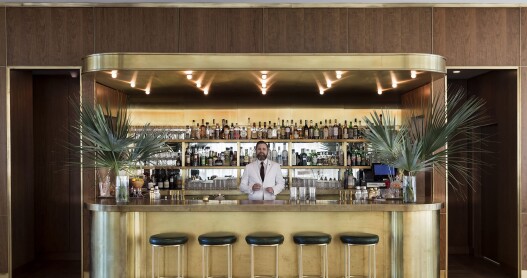
Stepping into the London EDITION, it’s clear to see that Ian Schrager, the man responsible for the legendary nightclub Studio 54, and mastermind of the first-ever “boutique hotel,” has yet again repeated his successful formula. Since it launched in September 2013, the EDITION has become a celebrity favorite, with all the attendant publicity that brings. It’s not without merit, either. The open-to-all Lobby Bar is—in signature Schrager style—the communal hub of the hotel, where freelancers click away on free-to-use iMacs during the day and a statuesque, fashionable crowd transforms the space into a lively cocktail bar at night. The EDITION’s somewhat unlikely partnership with Marriott seems to be a hit, with Schrager bringing his particular brand of cool to the marriage and Marriott investing a discernible level of service, which transforms what could have been an intimidatingly hip address into what is a genuinely comfortable place to be.
It says a lot about the values of Claridge’s that the hotel once refused Katharine Hepburn entry because she was wearing trousers (strictly not allowed for women at that time). Instead, one of the world’s greatest actresses was asked, politely, if she would enter through the back door. Though this outdated tradition no longer stands, there is much about the historic Mayfair hotel that remains timeless. The downstairs Art Deco lobby looks as elegant as the day it was built in 1931, thanks to a renovation at the turn of this century. And the staff, who got their moment in the spotlight when the BBC aired its Inside Claridge’s documentary in 2012, continue to busy themselves, discreetly meeting the wants and whims of every guest. Upstairs, the story is slightly different, with the hallways and corridors starting to show their age. But the hotel’s willingness to work with a trove of contemporary designers—Diane von Furstenberg, India Mahdavi, and David Linley among them—has ensured the rooms, and the hotel, have not been left to languish entirely in the past.
Business at the front, party at the back: that’s the ethos behind this hotel, which opened in London’s financial district in 2012. Weekdays, the clientele in the lobby bar and brasserie is all business, the conversation a gentle hum of meetings. But the hotel has a lively side. On weekends, a young, fashionable crowd from nearby Shoreditch and the ever-growing tech center Silicon Roundabout comes for the DJs that regularly include big names such as Ricardo Villalobos. Owners D&D London—the city’s leading hospitability group and brains behind such restaurants as Coq d’Argent—have made food the focus of their first hotel. Within one year of opening, the top-floor, fish-focused restaurant, Angler, already had a Michelin star. And then there’s the art. Sir Terence Conran’s design firm created modern interiors accented with pop-art prints, full-wall installations, and playful sculptures, many created by British artists living and working in the area.