Paris

A hub for hedonists, a wellspring of inspiration for artists, and a haven for history buffs: Paris is a fantasy destination for millions of travelers each year. The storied bakeries, iconic museums, and corner cafés feel anchored in another time, but the zeitgeist of the city leans forward into a dynamic, multicultural food scene dominated by young French and foreign talents. It is precisely this juxtaposition of old and new that makes Paris the perpetually perfect place to visit. So go exploring, get lost, eat until your belly hurts—and then do it all over again. The City of Light shines on.

Paris-filip-mishevski-eZ2aHgA6Xds-unsplash.jpg

Photo by Filip Mishevski/Unsplash

Overview

When’s the best time to go to Paris?

You’re likely to be disappointed if you arrive expecting the image of springtime in Paris that you see in Hollywood films. In the last several years, the months between April and June have reported below-average temperatures and record-high precipitation—a far cry from the endless days of sunshine in the movies. The weather is wholly unreliable, which foils many travelers’ ambitions for a dry early-season trip. Late summer and early fall typically yield the warmest sojourns (though the summers in general appear to be getting warmer), plus this is when Paris is most culturally active, unveiling new exhibits and welcoming the return of the some of the most anticipated festivals. December and January provide a more festive experience, with Christmas markets lining the well-heeled boulevards and twinkling lights illuminating the city’s boutiques. All weather aside, there is hardly a bad time to visit Paris, rain or shine.

How to get around Paris

From either of the city’s two airports, the RER B, a regional rail line, is the fastest way to reach the city center. Taxis are convenient, but they can be costly.

Getting around: There are few cities as walkable as Paris. For further distances, le métro is the quickest and most reliable means of getting to and from your destinations (sometimes faster than a taxi). Google Maps is a reliable way of figuring out which train to catch. Ubers operate here.

Paris also has excellent bike infrastructure. On nice days, grab a bike share with Vélib, the city’s successful bike-share program, or Lime.

Can’t miss things to do in Paris

– Whether at the peak of summer or in the moodiness of a winter’s night, nothing elicits a chorus of oohs and ahs like a leisurely after-dinner stroll across the city’s iconic bridges and along the banks of the Seine River. Amble across the Pont des Arts toward the Institut de France and continue along the docks of the river, watching the Bâteaux Mouches glide by and illuminate the river with their lights. Keep wandering until you reach a spot to pause for an unobstructed view of a twinkling Eiffel Tower (every hour, on the hour, after sundown). It’s free and absolutely stunning at all times of year.

– If time allows, you really shouldn’t miss visiting the Louvre, the Musée d’Orsay, and Sacré-Cœur, or taking a stroll through the Luxembourg Gardens.

– Following the devastating fire in April 2019, Notre-Dame Cathedral remains closed for restoration work. Officials have said the forecourt in front of the church could open as early as March 2020, but for now, you’ll only be able to snap a picture from afar.

Culture in Paris

Every international city has its iconic landmarks and cultural institutions. In Paris, most travelers would cite the Louvre as the must-visit art stop, but curious visitors should look beyond the usual suspects and explore places like the Musée de la Vie Romantique, the Jewish Art and History Museum, the Cinémathèque Française, and the Fondation Cartier.

Dive a little deeper into a fascinating chapter of 20th-century Parisian history with a historian-led Context walking tour that focuses on the city’s occupation by Nazi Germany, a time marked by unrest, bravery, and heroism. – Given the Parisians’ well-documented penchant for celebrating art, culture, and design in all its forms, you can count on a packed schedule of festivals all year long. Whether for a neighborhood street parade or larger-scale happenings like Paris Plage and Nuit Blanche, it’s worth planning your vacation around the city’s celebratory timetable.

Local travel tips for Paris

  • Always greet shop owners and restaurant staff with “bonjour” when entering and before asking a question or making a request.
  • When metro train cars are crowded, give up your folding seat and stand.
  • A baguette is always better with cheese—the older the cheese, the better.
  • Do not overlook the city’s farmers’ markets as potential lunch spots.
  • Macaron loyalties teeter between Ladurée and Pierre Hermé, so try both and decide for yourself.
  • The Champs-Élysées has few redeeming qualities and is considered the Times Square of Paris by locals. Skip it and opt for a bird’s-eye view from the top of the Arc de Triomphe.

Practical Information

  • U.S. visitors to France do not need a visa for stays of less than 90 days.
  • France uses type E and C plugs, so visitors from the U.S. will need an adapter.
  • France’s official currency is the euro.
  • The official language is French, though you’re likely to hear several languages spoken, as Paris is an international city.

Guide Editor

READ BEFORE YOU GO
HOTELS
These 19 hotels around the world immerse you in their destinations while carving out space for unhurried time together.
These are the 20 best luxury hotels and resorts in France outside of Paris, according to insiders—whether you’re seeking a bucolic Provençal getaway or an immersion in a bygone era of the French Riviera.
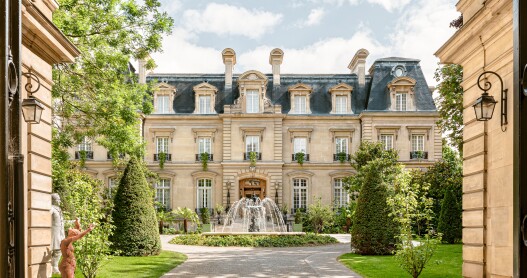
These are the top places to stay in the City of Light.
Not all Eiffel Tower views are created equal. These hotels prove why only some are worth the splurge.
This curated list of “maisons,” boutiques, and family-run hotels showcase the kind of style and attitude only Parisian hotels can deliver.
Once home to artists and writers, Paris’s Left Bank still delivers cobblestoned charm and leafy boulevards—and these timeless hotels will put you in the center of it all.
Stylish, central, and surprisingly affordable—Locke’s new Paris hotel brings townhouse elegance to the Latin Quarter.
Palace hotels are the highest distinction a hotel can achieve in France. Here’s what they are—and what makes them so special.
The French capital is filled with stylish hotels that are big on personality—and easy on the bank account.
Airbnb has launched a new category called “Icons” for its most over-the-top stays and experiences (Prince’s “Purple Rain” house, anyone?). It also added a new feature to make booking group trips easier.
RESOURCES TO HELP PLAN YOUR TRIP
At Maison Verot, locals get in line to stock up on all kinds of elaborate goodies. Verot has been making some of Paris’s best charcuterie since 1930, and it is still winning prestigious awards. Products vary with the season but will most likely include elaborate pâtés baked in pastry, local sausages, preserved meats called rillettes, a selection of deli salads, and a variety of products preserved in aspic. Verot’s location is convenient to the Luxembourg Gardens, so perfect for a nearly instant picnic.
This picturesque street in one of Paris’s poshest quartiers is dotted with gourmet sweet shops. Beginning at the eponymous Rue du Bac metro station, Chapon offers decadent taste-tests of single-estate chocolate mousses. On the next corner, Jacques Genin sells mouthwateringly good caramels along with his famous chocolate treats. The shops Des Gâteaux et du Pain and La Pâtisserie des Rêves also sell sweets, but this time they’re enveloped in a pastry delivery system. Le Bac à Glaces tries another sugary route: It scoops out the city’s most infamous dark chocolate sorbet. End the stroll at the gourmet temple La Grande Epicerie de Paris, a grocery store filled with more unforgettable tastes of Paris to tuck in your bag and take home.
Known for the poetic hippie style of her jewelry designs, Emmanuelle Zysman works from a Paris atelier, designing pieces in hammered silver, vermeil, and gold studded with semiprecious stones, like black diamonds, garnets, and turquoise. She began her career designing leather wallets and bags, but her silver good-luck bracelets became impossible to keep in stock, so she expanded the jewelry selection to include stackable rings and stringed bracelets. This gifted designer can even give simple hoop earrings an extra sense of swag.
Tammy & Benjamin offers an antidote to the modern disposable lifestyle with a selection of limited-edition leather bags. The shelves are stocked with streamlined backpacks, practical yet charming totes, and pocketbooks that could have been worn in the ‘40s yet still create fashion envy today. The line’s workshop is just blocks from the flagship store, which ensures that all the craftsmanship for sale here is locally sourced.
L’Atelier Renard has been making custom handbags for France’s elite for generations, using a technique that was originally created for horse saddles. Atelier Renard handcrafts elegant bags destined to become family heirlooms. Briefcases, handbags, evening bags, and luggage are custom-made for clients from across the globe. The prices are similar to famous international designer brands, but these bags are one of a kind. Choosing from an existing model, patrons can then customize every aspect of their bag, designing the form they need, selecting the leathers for inside and out, and choosing the hardware.
Empreintes is a craft concept store housed on three light and airy floors of a mansion in the upper Marais. The jewelry, furniture, garments, and housewares displayed here have been created exclusively by members of a French artist collective. Season café serves drinks and treats from mugs, plates, and glasses that are conveniently available for purchase. There is a bookstore for those looking for inspiration. The indigo-dyed scarves are a très Parisien souvenir for friends and family at home, and the wooden bowls and small vases pack nicely into most luggage.
Dinner cruises on the Seine have been on the Parisian visitor’s bucket list since they were first introduced. Some of the modern boats lack charm, and the expensive food they serve is often less than stellar, two developments that threaten to give the tradition a bad name. Le Calife, a 1939 wooden barge full of nautical brass, is a glamorous exception. The boat cruises the river twice a day on two-hour itineraries and serves a light and creative menu with inspired vegetarian options for each course. A glass-enclosed dining deck provides a clear view of the city, regardless of the weather.
Derek Lamberton’s gorgeous maps—of Paris, London, Boston, and other cities—allow urban explorers to survey architectural styles, chocolate shops, breweries, and more.
The beloved French pastry received a 21st century revamp. It looks—and tastes—better than ever.
If you’ve been to the Louvre, one of the city’s top attractions, you know that most of the restaurants and bars in the near vicinity are mediocre tourist traps. Fortunately, Le Fumoir is an exception, a restaurant-bar-café-tearoom that serves a good meal and a better martini in a sophisticated setting. Despite its name, you can no longer smoke inside this Art Deco spot, but it retains a clubby feel, with a majestic wood bar, leather seating and book-filled shelves at the back.