Canada

Canada spans six time zones, and some say that it boasts the longest street in the world. This nation gave the world Leonard Cohen, Leslie Nielsen, Mounties, Tim Hortons, Superman, zippers, the light bulb, and the snowblower. This is a place where polar bears, poutine, and epic panoramas predominate. Canada’s wilderness beckons adventure-seekers from the world over, while the country’s cultural attractions, culinary marvels, hockey rinks, and artistic landmarks thrill visitors of all stripes.

Vancouver Canada totem pole

Jessie Beck

Overview

When’s the best time to go to Canada?

The best time to visit Canada depends on what you wish to experience. The snowy months of winter allow for world-class skiing, snowshoeing, and hockey games. Summer is ripe for sunseekers to explore both the Pacific and Atlantic coasts, the lakes of Ontario, and the wild country of the North. Spring turns the West into one gigantic flowerpot, while fall transforms Eastern Canada into a kaleidoscope of colors. Keep in mind that many Canadians travel during the summer months. Also, national parks and big cities attract thousands of visitors from the United States during school holidays and long weekends, when prices can soar in destinations like Toronto, Vancouver, Jasper, Montreal, Banff, Calgary, and Halifax.

How to get around Canada

Major international airports are spread across the country from Vancouver in the west to Halifax in the east. Many international visitors choose to arrive at U.S. border cities (e.g. Seattle, WA and Buffalo, NY) and then drive across the border. This can be a cheaper way of entering Canada, but be prepared for traffic and extended waits at border checkpoints during peak travel times.

Major cities like Toronto, Vancouver, Calgary, Montreal, and Halifax have excellent public transportation networks: taking the bus, riding the metro, or hailing a cab is a breeze. Smaller cities and rural towns are walkable, but you’ll need a car to get out into the countryside. Public transportation in and out of national parks is virtually nonexistent. The space between metro centers can seem daunting, so consider flying if you wish to cut down on travel times.

Food and drink to try in Canada

Canadian cuisine is as diverse as the country is expansive. On one city block—or on one menu—you may find restaurants serving Ukrainian, Chinese, Irish, German, Portuguese, Haitian, Nigerian, and Ethiopian dishes. Each province and city has its own culinary flair: you’ll find unique Western fare in Calgary and Edmonton, gastro-nouveau in Toronto and Vancouver, fine French dining in Montreal and Quebec City—and the best the ocean has to offer in Halifax, Charlottetown, and St. John.

Culture in Canada

Have you come for the great outdoors, or Winnipeg’s Folklorama? Perhaps you’re in town for Toronto’s MuslimFest, or you made the trek to quirky little Maxville, Ontario, for the Glengarry Highland Games. Massey Hall in Toronto has hosted the world’s largest musical acts for decades, while the Quebec Winter Carnival is Canada’s premiere winter event. The Edmonton International Fringe Festival, held every August, is the largest and oldest fringe fest in North America.

Canadians love to party. Canada Day (July 1) is celebrated from coast to coast, with Canadians and visitors packing public squares, stadiums, parks, and concert halls for massive festivals. The Calgary Stampede takes over Alberta’s largest city every July; Montreal’s International Jazz Festival (June 29–July 9) welcomes 2.5 million visitors each year; and Pride, Scotiabank Caribbean Carnival, The Canadian National Exhibition, and the Toronto International Film Festival bring revelry to Ontario’s capital.

Local travel tips for Canada

English is Canada’s common tongue, though French is spoken throughout Quebec and in many Atlantic cities. That said, you’ll hear nearly every other language in the big metro centers. The currency is the Canadian Dollar ($). Tipping is required (15%) in restaurants, and it is generally expected in taxis and hotels. ATMs are everywhere, and major credit cards are accepted across the country. Electricity is 110v.

Guide Editor

READ BEFORE YOU GO
An exclusive-use lodge in British Columbia’s Great Bear Rainforest, Fawn Bluff combines exceptional wilderness access with a nonprofit model that channels all net profits into Homalco First Nation community initiatives.
HOTELS
The 2026 FIFA World Cup is bringing the world to Vancouver this summer. Here are the 12 hotels worth booking, whether you’re coming for the games or finally making the trip to this dreamy British Columbia city.
These hotels around the world—all owned and run by women—reflect a wide range of destinations and styles.
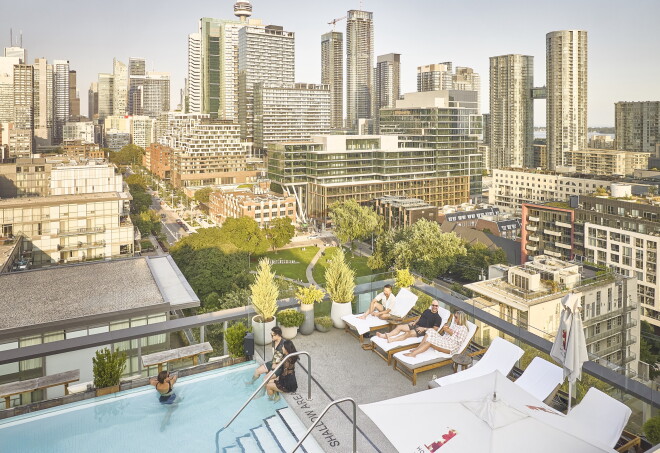
At the 10-room Ode Toronto, local art, vintage shopping, and neighborhood restaurants in Dundas West define the experience.
Sleep under the world’s darkest, clearest skies across six continents at one of these 19 dark sky zone hotels.
Afar editors share the 2025 hotel stays they didn’t want to leave—and would happily return to.
At Nimmo Bay in British Columbia, luxury means snorkeling in 50-degree water, sipping water from cedar-lined mountain streams, and spotting grizzlies from a floating sauna.
In Toronto’s burgeoning hotel scene, you’ll find Canada’s first Ace Hotel, a reimagined St. Regis, and an ultra-cool boutique stay in a private women’s club.
Heli-ski in winter, or hike, bike, and paddle in summer at Eleven Revelstoke Lodge, a revamped heritage property in Revelstoke, British Columbia.
Whether it’s a villa in Italy, a dude ranch in the U.S. West, or a luxury all-inclusive in the Caribbean, here are places where accommodations and experiences are ideal for large family groups with a wide range of ages.
These women aren’t just breaking barriers. They’re building a more inclusive, dynamic future for hospitality—and your hotel experience will be the better for it.
RESOURCES TO HELP PLAN YOUR TRIP
The worldwide success of this Montreal-born leather goods brand, which now has stores everywhere from Paris to Tokyo to Hong Kong, is no secret: m0851 bags are beautifully crafted here in the city by artisans who have worked for the Mamarbachi family for decades. The no-sweatshop mentality surprisingly doesn’t equate excessive prices, and the best thing is, these bags are designed to last, made in materials that change and improve as they age. Every year brings a new palette of beautiful earthy colors, and in addition to the bags and travel gear, there are coats and clothes perfectly suited to any Canadian season. This is the flagship location, but you’ll find three other sales points within greater Montreal.
When it isn’t occupied by the Grands Ballets Canadiens or Opéra de Montréal, this largest concert hall in Montreal’s Place des Arts cultural complex has been known to host big musical names, including Maria Callas, Bob Dylan, Radiohead, Luciano Pavarotti and Ella Fitzgerald. The sound system is the utmost in refinement, and, combined with the cushy seats and hushed atmosphere, it makes for a sophisticated listening experience indeed. Half the fun is the opportunity to wander through the impressive 1960s building, punctuated by salons and bars for that ubiquitous intermission gin & tonic. Go ahead of time and reserve a table at one of the famous glassed-in restaurants on the Quartier des Spectacles, Brasserie T! or F Bar.
This sleek, LEED-certified beech-wood concert hall at Place des Arts is the performance space that Montreal’s award-winning symphony orchestra has deserved for years. Designed expressly for impeccable unamplified acoustics, the shoebox space can transform depending in the needs of the performance, accommodating up to 120 musicians and 200 voices onstage at once. Its flawless sound quality was achieved by building the structure like a box inside a box, protecting the inner sanctum of the hall from all and any exterior noise pollution. Sitting in one of the many balconies, you’ll forget anyone else exists, despite the 2,100-seat capacity – the concentration this space inspires is remarkable.
On Jean-Talon near Parc Avenue in the rapidly gentrifying neighborhood between Mile End and Park Ex known as Mile Ex, Bar Le Ritz PDB is a large open space with a few tables by the big front windows (always open in summer afternoons so that the fun spills out into the street) and a warm, relaxed atmosphere. It’s better known as a show-bar than a hangout bar, though that is slowly changing with expanded opening hours and a wider range of drink options. Like most Montreal music clubs, anyone can reserve a spot to play here; but the average night tends to lean towards indie rock, post-punk, alternative pop sounds.
Almost unchanged since 1912, the Théâtre Corona (Corona Theatre) in Little Burgundy was built to host showings of silent films accompanied by live music and comedy shows by local troupes. You can still find an orchestra pit and the original dressing rooms under the stage, but since the late 1990s—after coming close to demolition—it has served mainly to host live music, by acts like Buck65, La Roux, and Arcade Fire. The heritage décor, with painted ceiling, gilded columns and heavy jacquard brocade curtains, and the relatively small capacity for 700 spectators, make this a singularly intimate place to see a show. The best sightlines are from the balcony, but there’s nothing like the feel of a smooth wooden dance floor beneath your soles.
The name makes it sound like the driest place in Christendom, but the SAT, as it’s known by locals, is at the forefront of coolth. This giant building on Boulevard Saint-Laurent near Rue Sainte-Catherine is dedicated to electronic culture and entertainment, which means it hosts some of the best art events, dance parties and music performances in town. The top level of its four storeys includes the famous Satosphere, a dome structure that allows for mind-blowing, immersive 360-degree visual projections. Events include presentations and master classes in addition to dance nights by the likes of Borgore, Brodinski and MYD. Don’t forget to stop by the in-house restaurant, the FoodLab, which is constantly pushing the gastronomical envelope. Photo: Sébastien Roy
The duo of José Manuel St-Jacques and Simon Bélanger is made in heaven. They design graceful, luxurious clothes for the modern woman who aims at Marlene Dietrich elegance in her every gesture. From crisp white crêpe suits to flowing pleated lamé skirts, their designs are the sort that make you walk taller and feel like you’ve arrived, whether it’s on the red carpet or at a soirée among friends. UNTTLD are masters at blending textures, like see-through evanescent silk worn with a structured cotton pencil pant, and they are known for their unique prints. They sell directly out of their Mile End loft (upon appointment), or through exclusive stores such as Ogilvy.
Camping
In a remote spot off Vancouver Island in British Columbia, surrounded by rain forest, mountains, and beaches, the Clayoquot Wilderness Retreat first opened in 1998 as an overnight floating lodge experience; since then, it has grown into a luxury tent retreat. While the camp has a rugged outpost atmosphere, with huge stone fireplaces and a long wooden cookhouse, it’s an outpost with every possible luxury: from white linen tablecloths and polished silverware to soft comforters and high-thread-count bedding.
The Place Bonaventure is widely recognized as one of the most important buildings constructed in Canada in the 1960s, though that’s not to say it’s universally loved. It’s a regular contender for the title of Montreal’s ugliest building. For the student of architecture, however, whether armchair or otherwise, it’s worth a visit to see an outstanding example of brutalist architecture. Architect Raymond Affleck’s vision was to turn the city inside-out in a building appropriate for its location in a cold climate. The Place Bonaventure was designed to include a conference center, hotel, and several floors of retail space, all along internal streets while the building presents a foreboding exterior of ribbed concrete (echoing the design of the seminal Architecture School at Yale University by Paul Rudolph) to the street. The entire complex included 3.1 million square feet of floor space, making it the largest building in the world when it was completed (in 1967). Much of the retail space was converted to offices in later renovations, though the conference center and the hotel (now the Hôtel Bonaventure Montréal) remain. The photo here was taken inside the hotel—a walk around their common spaces will give you a taste of Affleck’s vision for a new urban architecture.
Architect Moshe Safdie’s Habitat 67 apartment complex was built for Expo 67, a key moment in Montreal‘s emergence as one of the world’s cultural capitals. While many buildings from the late 60s haven’t fared well with time, Habitat 67 still achieves Safdie’s goal: demonstrating that contemporary housing projects can be original and appealing works that create a sense of community among their residents. For a public who had come to associate housing projects with off-putting towers set in windswept plazas, Habitat 67 was a revelation with its 354 prefabricated concrete blocks stacked to construct 146 units. Apartments here continue to be coveted and command a premium price. Habitat 67 is a little out of the way from most of the other sites you’ll likely visit, on a peninsula facing Old Montreal. Take a cab to get there and note that the complex is private property—you’ll be turned away by security if you try to enter but you can admire this modernist vision from the street.