Amsterdam

With its Golden Age canals, 17th-century mansions, world-class museums, and well-established counterculture, Amsterdam is a European capital with an edge. While some come for tulips, cheese, and windmills, others are drawn by the city’s reputation for easy sex, drugs, and rock ’n’ roll. Whatever brings you to this charismatic global village, you’re sure to be charmed by its fairy-tale landscapes, tolerant vibe, and historical legacy that harks back to the small, 13th-century fishing village on the Amstel River that would become an international capital.

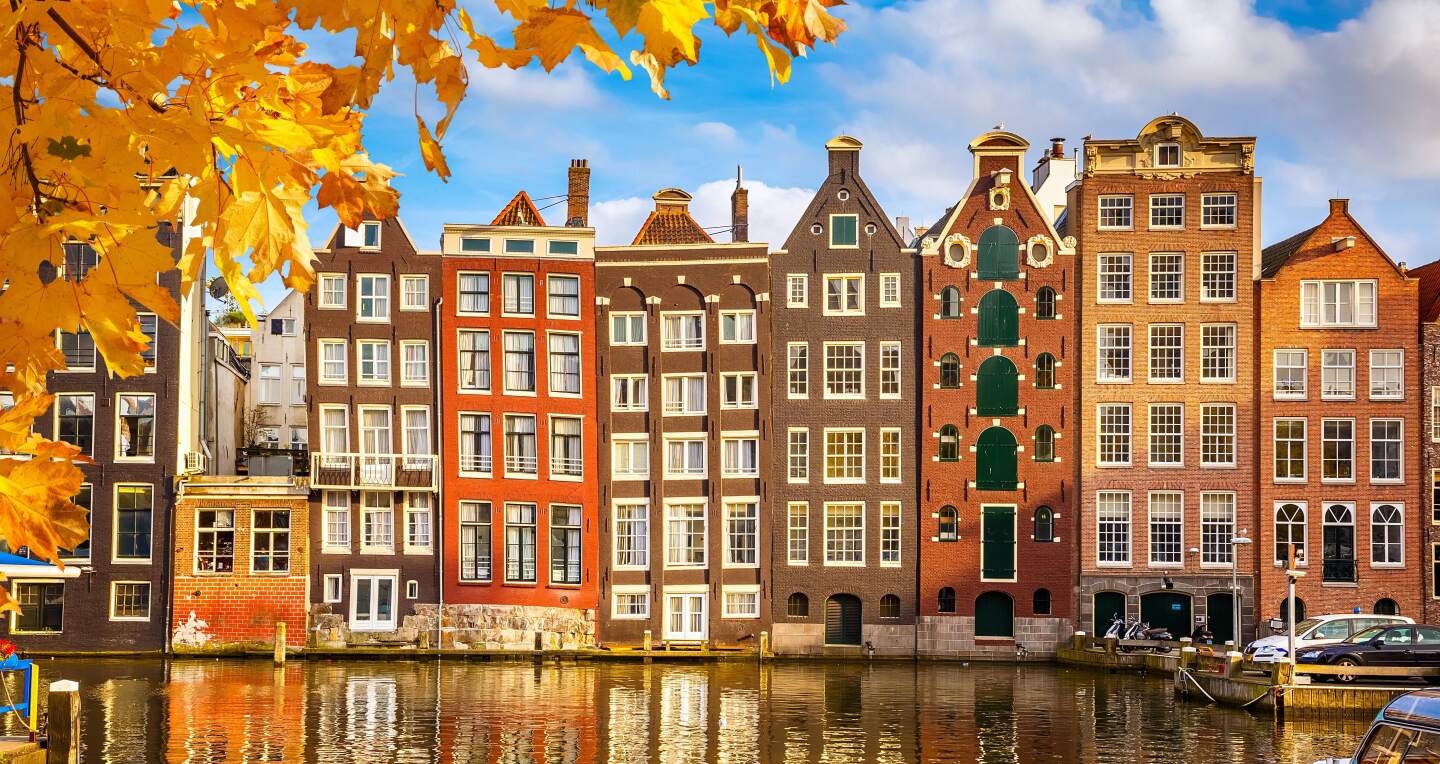
Amsterdam canal at fall, several tall little houses in a row next to the river canal

Sergey Borisov / Alamy/Alamy

Overview

When’s the best time to go to Amsterdam?

Winter may be cold (with January and February the coldest months), but tourists are gone and locals have reclaimed the town. Before the holidays, In Leidseplein and Rembrandtplein, two of the city’s open squares, skating rinks and oliebollen stands appear (oliebollen are the local doughnuts). Twinkling lights decorate bridges; seasonal trimming transform streets into fairy-tale lanes. Amsterdam Fashion Week sashays through town in January, drawing international style-makers. In the spring, tulips bloom, flowers spill over balconies, tourists jam museums, and locals celebrate the lengthening days. Millions arrive to viist Lisse’s Keukenhof, a stunning flower garden. Summer means picnics in Vondelpark, Museumplein, Amsterdam Bos, and all the city’s green spaces. During Open Garden Days in June, many canal houses open private courtyards for viewing. Outdoor concerts and festivals abound, restaurant patios overflow with diners, and locals head to urban beaches. In the fall, as the leaves change color, Amsterdam ushers in the cultural season. New exhibits open at galleries and museums and opera season kicks off.

January: Amsterdam International Fashion Week February: Chinese New Year Festival March: Amsterdam Restaurant Week April: Koningsdag (King’s Day, formerly Koninginnedag or Queen’s Day) May: Art Amsterdam (previously Kunst RAI) June: Holland Festival, Vondelpark Open Air Theater, Taste of Amsterdam, Nuit Blanche, Open Garden Days July: Amsterdam Roots Festival, Kwakoe Zomer Festival August: Robeco Summer Nights, Gay Pride, Grachtenfestival; Pluk De Nacht, Sail Amsterdam, Uitmarkt September: Open Monument Days, Jordaan Festival, Amsterdam Restaurant Week October: Amsterdam Dance Event, Amsterdam Marathon November: Museum Night, Amsterdam Antique Fair, High Times Cannabis Cup, International Documentary Film Festival, Sinterklaas arrives

How to get around Amsterdam

Amsterdam is an international hub for many airlines. Flights arrive at Schiphol, which is about half an hour from the city center by public transportation. Trains arrive at Central Station, where countless connections to the rest of the Netherlands and all of Europe are available. Eurostar buses terminate at Amstel Station. Boat travel is an option for U.K. and Scandinavian travelers, via P &O North Sea Ferries, Stenaline, and Scandinavian Seaways. City parking is rare and expensive. If you must arrive by car, take the A10 Ring into town from any major freeway.

Amsterdam is among the most compact of the world’s major cities, making it easy to get around by foot or bike. An excellent system of GVB trams and buses facilitates travel throughout the city and beyond. A metro line connects Centrum with the suburbs.

Can’t miss things to do in Amsterdam

There’s no sign, no agenda, and no boundaries at Supperclub, where it’s always a memorable evening. From the Salon Neige, where you’ll dine like a sultan to the gay urinal that doubles as a smoking room, this is experimental fun unfettered by convention. Expect eclectic cuisine and entertainment from the seductive to the bizarre, encompassing vaudeville, burlesque, and cabaret.

Food and drink to try in Amsterdam

Holland is known for hearty comfort food, not haute cuisine. Yet its capital competes with the best of Europe on the dining front with nearly 1,500 options, from Michelin-starred restaurants and historic watering holes to gay cafés and Irish pubs. Amsterdam’s culinary melting pot includes diverse fare encompassing Indonesian rijstaffel, Spanish tapas, and Dutch favorites such as stamppot, bitterballen, and pannekoeken. Sample Asian flavors in Chinatown, near Nieuwmarkt, or cruise Haarlemmerstraat, Utrechtsestraat, or Reguliersdwarsstraat for dining options. Avoid touristy Leidseplein. On the street, try Vlaames frites—twice-fried potatoes smothered in mayo—or raw herring served with pickles and onions. Turkish pizza is popular, as are gyros, reflecting Middle Eastern influences. In the wee hours, buy a kroquet or burger from coin-operated windows at FEBO (the Dutch fast-food automat chain), where you’ll see locals trying to be inconspicuous as they grab a late-night snack. Heineken and Amstel are the local beers. For a stiffer drink, try Dutch jenever, which is juniper-flavored gin.

Culture in Amsterdam

With classical music at Concertgebouw, theater at Stadsschouwburg, jazz at Bimhuis, contemporary music at Muziekgebouw, and cabaret at Royal Theater Carré, Amsterdam’s cultural scene offers plenty of variety. Renowned pop and electronic music venues include Air, Melkweg, Paradiso, Sugar Factory, and Escape.

AFAR’s travel partner, Context, offers visitors a private tour, led by a local historian, artist, or architect, of the city’s streets and canals called The Dutch Golden Age, with a focus on how a relatively small Amsterdam came to hold a global position of power in the 1600s.

Local travel tips for Amsterdam

  • Never buy drugs from street dealers.
  • Urinating on the street will cost you €60.
  • Taxi drivers may rip you off unless you know exactly where you’re going.
  • Don’t overtip for inferior service at Dutch bars and restaurants.
  • Establishments along Damrak and in Leidseplein are touristy, overpriced, and often mediocre.

Guide Editor

READ BEFORE YOU GO
HOTELS
Once an orphanage and Palace of Justice, Rosewood Amsterdam is the Dutch capital’s most anticipated new hotel—and one of the city’s last debuts for a while.
A Boeing 737-800 is the main draw of the 1,200-square-foot suite at the Corendon Amsterdam New-West, and the whole room has been recently refurbished to be even cooler.
A recent announcement included numerous measures aimed at controlling what has become an irrepressible flood of visitors.
Who needs a hotel lobby when the city—and its canals—are right on your doorstep?
RESOURCES TO HELP PLAN YOUR TRIP
Don’t dress up to visit this grunge bar tucked on Marnixgracht in Amsterdam‘s Oude West. Don’t be put off by the abundant graffiti covering its gritty exterior, either. Inside, Café Soundgarden is a welcoming, unpretentious pub with a spectacular canal-side terrace and an alternative vibe. The laid-back joint boasts a pool table, pinball machines and table soccer, in addition to a full bar. Belly up for some of the cheapest beer in town, including a wide selection of domestic and imported brands. Beyond inexpensive drinks, the real attraction of the place is an expansive rear deck overlooking Singlegracht canal. Come as you are to share a beer and a joint with locals, expats and possibly a few tattooed tourists who’ve stumbled upon the gezellig terrace, offering a view of passing boats and the Nassaukade street scene. Stay for live music and party like a rock star while DJs spin techno-tunes late into the night.
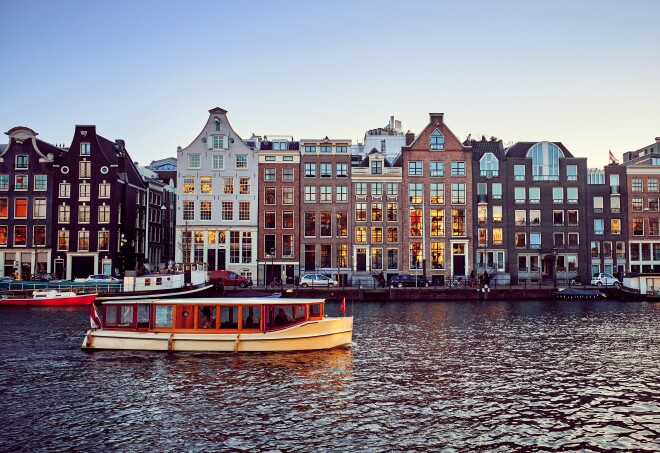
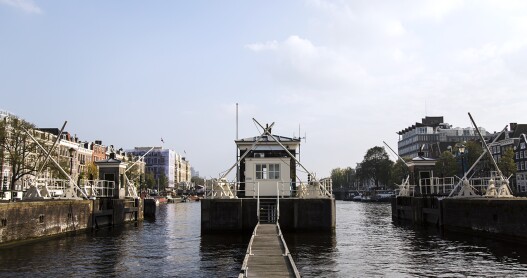
Beyond tulips, windmills, and weed, Amsterdam’s global image is entwined with water. The Canal Ring (Grachtengordel) is made up of 165 fluid channels developed during the 17th-century Dutch Golden Age. In the ensuing years, the water network has supported maritime trade while evolving into a centerpiece of one of the world’s most recognizable urban landscapes. In 2013, on its 400th birthday, UNESCO added the Grachtengordel to its list of World Heritage sites. Today the Canal Ring is both a historic transportation system and a stunning backdrop for local festivals and celebrations. The canals, notably Prinsengracht, are packed with partygoers on annual festivals like King’s Day (formerly Queen’s Day), in April, as well as Gay Pride and Grachtenfestival in August. Canal cruises offer an excellent introduction to city sights and are a great way to see Amsterdam.
Few restaurants have been immortalized in both a popular book and a movie. Nam Kee, operated since 1981 by the Chan family in Amsterdam’s Zeedijk is one. A Chinatown favorite long before Dutch novelist Kees van Beijnum alerted foodies to oysters’ sensual pleasures in De Oesters van Nam Kee (The Oysters of Nam Kee) in 2000, the Cantonese eatery was named Best Chinese Restaurant in the Netherlands by Lonely Planet. In 2009, Time Out Amsterdam recognized it as Best Chinese Restaurant in Amsterdam. A 2010 renovation has replaced the former cold, white tiles with warm woodwork, stone accents and the obligatory Chinese calligraphy scrolls. The revamp has failed to make Nam Kee upscale or fancy, so don’t expect anything romantic or gezellig (cozy). A brightly lit dining room is simply furnished but filled with the flavors of salty soy and sweet ginger wafting from sizzling dishes of classic Cantonese favorites. The fabled Oysters of Nam Kee arrive steamy in their craggy shells, swimming in pools of silky black bean sauce, garnished with crunchy green scallions. My hot and sour soup with seafood was spicy, laden with chunks of shellfish. Friends shared a velvety corn soup with shrimp and minced pork. For light eaters, dim-sum-size appetizers include renditions of classics like Chinese Spring Rolls, Fried Won Tons and Sesame Prawn Toast. Main dishes are more substantial and include such Cantonese specialties as Salt and Pepper Squid redolent of peppercorns and crisp Peking Duck.
Ever wondered how it feels to sit behind one of those curtained windows in Amsterdam‘s Red Light District (RLD)? Find out from women who’ve been there at the Prostitute Information Center (PIC), near the statue of Belle on Oudekerksplein engraved with the words, “Respect sex workers all over the world.” Founded in 1994 by former prostitute Mariska Majoor, the PIC offers a glimpse into Amsterdam’s infamous sex trade while working to reduce prejudice and misunderstanding about window prostitution. In its furnished mock-brothel room, soak in the vibe of a place dedicated to satisfying prurient needs for a price. Learn about Amsterdam’s intriguing sex industry in the mini-museum and check out Jaap Majoor’s paintings of prostitutes and his haunting mural depicting the RLD. While Mariska’s father abhorred the idea of his teenage daughter working as a prostitute, painting enabled him to portray some of the beauty of sex-for-hire and to work out his feelings about Mariska’s chosen profession. The PIC offers walking tours of the RLD, as well as presentations about prostitution aimed at providing an accurate view of the world’s oldest profession―a practice that’s been legal throughout the Netherlands since 2000. Pick up a book about Amsterdam’s sex industry, a painting or other souvenir of your visit to the PIC in the Wallenwinkel, adjacent to the center. Purchases help the PIC survive, as it receives no governmental support.
Dutch restaurants are not renowned for their customer service. But at Yumi Sushi off Max Euweplein, you control when and what you’re served because you fetch your own selections from a rotating conveyor belt. Plates are color-coded according to price and the bill is calculated by counting plates. At €2.25‒6/plate, you can rack up quite a bill if you’re not careful. But the food is fresh and delicious (nothing stays on the belt for more than two hours), and you can be in and out quickly if time is an issue. The concept is not new, but it’s especially nice in Amsterdam, where hospitality personnel are paid more than servers in America, thus typically don’t exert themselves for tips. Here, you’re on your own at the bar, where fresh offerings come around immediately after they’re prepared by Dutch and Asian sushi chefs as you watch. The interactive component adds to the fun. The sleek, contemporary restaurant is adjacent to Leidseplein, so you have an overview of the people parade through big windows that keep the place bright. It’s not the most gezellig dining option in this bustling area, but it’s a great spot for a fast, no-frills (if somewhat pricey) meal. At tables, €12–40 menus come with miso soup, rice, dumplings, 12–40 pieces of sushi, and fried bananas with ice cream—a better deal than the rotating sushi if you don’t mind the chef’s selections. Hot dishes like chicken yakitori, breaded shrimp, gyoza dumplings and grilled asparagus also can be ordered at the bar.
From its new location on the Singel, Supperclub maintains the old traditions of one of Amsterdam’s most innovative nightclubs. In few other upscale restaurants can you take off your shoes, get in an oversize bed with friends, and savor an unconventional five-course meal over the course of an evening. But supperclub is not for everyone. Part culinary journey, burlesque/vaudeville club, cocktail bar and experimental free state, it’s a unique if somewhat pricey venue for a fun, quirky evening with friends or business colleagues. When not wintering in India, flamboyant Howie may greet you, ushering your posse to La Salon Neige, where you’ll scoop courses from hospital bowls, ash trays and sensual models dressed in slices of Carpaccio, brandishing salad dressing in syringes and deep-fried cricket tidbits—crunchy croutons! Opt for the upper level lounge and you can watch from above as dykes, belly dancers and aerial artists perform. Don’t worry about crumbs in bed; get into the act while the drag queens vamp and the dancers swirl. Between courses, enjoy a Lavender Love or Leap of Faith cocktail in the Chapter 21 bar. Or venture to the downstairs smoking room that doubles as a gay toilet. While puffing on a joint, don’t be surprised if spontaneous music erupts or locals engage you in conversation. There are supperclubs in Istanbul, London, Los Angeles and San Francisco, but this is the original. And there’s nothing conventional about it!
Amazing brew and an even better view—what’s not to love about Hannekes Boom, a relaxing beer garden in the revitalized neighborhood surrounding Amsterdam’s Central Station? In addition to drinks and hearty nachos, sandwiches, and burgers (all made with organic ingredients), this place offers stunning vistas of the city and of Nemo (the interactive science museum that resembles a green whale). Pull up a barstool, grab a terrace bench, or plunk down on the dock to dangle your toes in the water while watching small boats bob past.
Amsterdam’s State Museum reopened in 2013 after a decade of renovations, and it is oh so worth a visit! Weave your way through the museum’s vast assemblage of historic art (there are over 8,000 pieces!) to check out works from Dutch masters such as Rembrandt, Van Dyck, and Vermeer in person. The collection’s best-known and most prominently displayed piece is Rembrandt’s Night Watch, but visitors can find everything from sculptures to artifacts from both the Netherlands and Dutch-colonial territories around the world. Opt for the multimedia tour for a special surprise.
It has been a decade since the major museums on the Museumplein—a grassy square connecting Amsterdam’s main art centers—have all been open at the same time. Here’s what to check out at Stedelijk Museum. The modern art gallery’s controversial new wing (the exterior looks like a giant bathtub) houses a restaurant, a gift store, and expanded exhibition spaces.
Wynand Fockink founded his namesake distillery on this narrow alleyway off Dam Square in 1724 (and the building is even older, dating to 1679); some 70 varieties of jenever (Dutch gin), fruit brandy, and liqueur are still produced here today. In the small, beautifully preserved tasting tavern you can learn about—and more importantly, sample—both oude (old) and jonge (young) jenevers, as well as classic Dutch liqueurs like Bruidstranen (bride’s tears), an orange-flavored cordial with flakes of silver and 22-karat gold. Let the bartenders guide you on the traditional method: Bend down and slurp from the tulip-shaped glass—no hands allowed! You can also sign up for a one-hour tasting session and tour of the distillery; the cost is €17.50 (about $20).