Panama

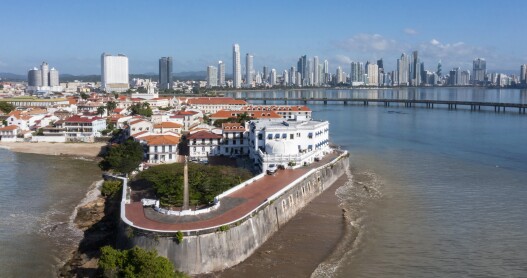
The first thing you’ll get when visiting Panama is a warm, sloppy, atmospheric kiss; relative humidity never falls below 80% and temperatures never dip beneath 77˚F. The nation’s capital city rises at the northern limits of the Gran Chocó, the planet’s rainiest geographic region. Though it’s small compared to other Latin American capitals, Panama City’s location and historical role as a port and a canal that brought together people, commodities, and customs from every corner of the planet, have endowed it with a strikingly cosmopolitan air that’s hard to find in other cities its size. In Panama, everything—shopping, watersports, mountain hiking, getting out into nature, and visiting historic sites—is close by and can be done in a single day.

Aerial view of Boquete in the Chiriqui province of western Panama.

Photo By Curioso.Photography/Shutterstock

Overview

When’s the best time to go to Panama?

Panama isn’t subject to the standard four seasons, just a rainy period from May to November—characterized by merciless sun and sudden downpours—plus a dry season from December to April. The best time to visit is in December and January, when the weather transitions through both periods and cold fronts from further north sweep across the Caribbean Basin, meaning cool breezes caress the Central American isthmus.

How to get around Panama

By air, Panama City is one of the Western Hemisphere’s best-connected spots. There are “tourist taxis” that connect Tocumen International Airport with downtown Panama City. Cars are available for rental, as are Uber and Cabify rides. Good public transport from Tocumen is lacking but the Metro’s Línea 2 (part of the first subway in Central America) seeks to solve that problem starting in 2019. Buses—both in town and heading toward the suburbs and the countryside—are reliable if not perfectly comfortable. Domestic flights connect Panama City to other tourism destinations in the country like Bocas del Toro, David, Chitré, San Blas, and Darién.

Can’t miss things to do in Panama

Without a doubt, the Panama Canal is an absolute must-do on any trip to the country. This engineering feat was, is, and will continue to be a key factor in the role Panama plays on the world stage, as well as in the profile of its people and culture. The rain forest is also a mandatory stop, especially because you can get there so easily from the capital. As its geography might suggest, the Isthmus of Panama is a bottleneck where a great deal of all tropical biodiversity comes together, lives together, and fuses.

Food and drink to try in Panama

Cultural diversity is Panamanian cooking’s forte. From earliest childhood, for example, the people of Panama lap up Chinese culinary traditions alongside Africa-derived cuisines. That said, if you’re looking try something from the country’s traditional menu—something simple, tasty, and hearty—ask for the chicken soup called sancocho, arroz con pollo, or a tamale (they come in the style you’ll recognize and also in casserole form)…and that’s just a handful of essential favorites. As for drinks, the spirit known as aguardiente seco (no relation to the anise-flavored liquor enjoyed in Colombia) as well as rum, are the typical choices. A 10% tip is customary in restaurants. Any sort of obligatory service or set-up fees, as may be the practice in other countries, are against the law in Panama and you should refuse to pay them.

Culture in Panama

The people of Panama take pride in their traditions and history and, above all, their struggles for full territorial sovereignty, a goal finally achieved in 1999. The nation prides itself on its raucous nightlife, and pub crawls called arranques (not unlike the Spaniards’ marchas) are an institution for locals, especially between Thursday and Sunday nights. Soccer is winning over fans, but baseball still reigns supreme; provincial-town matches make for a colorful study in popular customs and quirks. Not least of all, you can’t understand the culture of Panama without considering Carnaval: though its pageantry and opulence are lesser than what you see in Rio or Barranquilla, its explosion of street-level flirtation and revelry is unknown in other regional countries.

For Families

Panama is an ideal family destination, above all for those who like spending time in the great outdoors. Activities include visiting a plethora of natural areas a short hop from the capital. The Museo de la Biodiversidad as well as the Punta Culebra nature center—operated by the Smithsonian Tropical Research Institute in the Amador region—support interactive activities for explorers of all ages.

Local travel tips for Panama

Panamanians are cordial, but deal with life on their own schedule, so don’t always expect lightning-fast responses to your requests; try to take things easy. Although posted rates exist for taxis, these are disregarded as a matter of course; you’ll need to negotiate fares before getting underway. Your status as a foreigner may tempt a price hike; be ready to say no at first to reach a more reasonable charge. While the weather in Panama is hot, running around too scantily clad is not seen as very good form; in fact, men who ply city streets shirtless may be in for a police hassle. Also expect a vast contrast between outside heat and the gelid temperatures to which most AC systems are adjusted.

Guide Editor

Roberto Quintero is a storyteller and dramatist who has lived in Madrid, Buenos Aires, and now calls Panama City home. Under the stage name Winnie Sitton, he has enjoyed an outrageous stand-up comedy career in Panama that he supplements by writing travel journalism for publications at home and abroad.

READ BEFORE YOU GO
HOTELS
At these 14 luxury resorts, it’s possible to have that dream vacation on a private island—without having to own one.
AFAR’s picks for the 31 best new hotels in the world.
Panama City is best known to travelers for its famous canal, but a new hotel from Sofitel Legend is elevating the city’s profile.
Nayara Bocas del Toro offers a new—and luxurious—way to experience Panama’s wildlife-rich islands in the Caribbean Sea.
RESOURCES TO HELP PLAN YOUR TRIP
Hotel La Compañia del Valle, a Tuscan retreat–inspired hotel in Panama, is home to just 70 rooms and suites and an 18,000-square-foot Elysium Spa, which opens in July 2025. Of course, massages and other body treatments are on the menu, but other unexpected additions—like chocolate and wine therapy, underground Roman baths, and Reiki healing—allow you to design your ideal day.
Considering a move abroad with your crew? These destinations offer attractive benefits such as excellent education, universal health care, generous parental leave, and other family-friendly perks.
Take the road less traveled for thrilling cities like Cape Town, the distinctive cuisine of Osaka, and exotic wildlife sightings in Australia.
Start planning your 2023 travels to these 12 places—the most creative, delicious, and soul-reviving destinations of the year.
It’s small compared to other capitals, but Panama City’s historical role as a port and part of a canal that brought together people, commodities, and customs from every corner of the planet endows it with a cosmopolitan air. Come visit a tiny giant.
Why we love it: A private island resort where guests can truly disconnect

The Highlights:
- Just eight casitas and 400 acres of nature
- A strong commitment to sustainability
- A hyper-local culinary program

The Review:
Off the Pacific coast of Panama, near the border with Costa Rica, floats a lush island that indigenous people dubbed Palenque, or “sanctuary.” Once home to an ancient, pre-Columbian community, the island stood empty for hundreds of years—save for the all the wildlife, birds, and flora—until Ben Loomis arrived. For five years, the architect and designer lived on site, sleeping in a hammock by night and getting to know the land by day. Eventually, he put both his background and love for nature to use by creating this private island resort, dedicated to the principles of sustainable luxury.

There are just eight beachfront casitas and one Villa Estate on the 400-acre island, so privacy is a given. Each of the 650-square-foot casitas has direct beach access, an outdoor tub, organic bath products, daybeds and hammocks, artisan-made furnishings, and a mini-bar stocked with local juices, snacks, and beers. Standout amenities include binoculars, a yoga mat, and a meditation cushion, plus a water bottle to use around the resort; Wi-Fi is free, but “island speed.” In addition to the main beach that fronts the casitas, guests have access to six other sandy stretches, along with nature walking and hiking trails, a main infinity pool, a spa, and complimentary use of kayaks, snorkels, and paddleboards. Meals are full of fresh, sustainably sourced ingredients and vibrant Panamanian flavors; rates include three meals a day, along with snacks and non-alcoholic drinks. An Island Foraging experience brings you closer to the culinary process as you learn to fish using ancient techniques, pick goodies from the island’s orchards, and hunt for wild ingredients along rainforest trails. Off-island excursions like whale watching, island hopping, and more can also be arranged, but with the run of a place like this, it’ll be hard to leave.
Panama’s extensive, sinuous coastline provides some of the world’s most delicious seafood. Options are infinite, especially at the capital city’s Mercado de Mariscos. The offering is downhome, traditional and absolutely scrumptious. Pick up something to cook later or just plop down at one of several in-market restaurants for instant gratification. Savoring your ceviche and an ice-cold brew as the market roils around you is pure Panama.
Always a crowd, but how could it be otherwise? Shore panoramas frame breathtaking nature, turquoise seas and sugary, white sand. Mighty close to the perfect beach, dreamy and hot, with great sightseeing opportunities. Keep eyes peeled for jumbo starfish and other marvelous creatures, now a main beach attraction. The shopping’s good, too, especially for artisanal handicrafts and dishware.
For the location of their first independent hotel, Atelier Ace (the creative arm behind the buzzy Ace Hotel Group) chose Panama City’s historic Casco Viejo, a once gang-ridden neighborhood now teeming with trendy restaurants, cafes, and wine bars in 16th- and 17th-century buildings. The American Trade Hotel occupies a stately property on Plaza Tómas Herrera, complete with 50 minimal-chic rooms and suites outfitted in Frette linens and custom, reclaimed-wood furnishings. Plush “Jardin” suites open onto a private garden courtyard, while others feature vaulted ceilings or views of the Gulf of Panama. On-site dining and drinking options abound, ranging from Café Unido for pour-over coffee made from Panama Geisha beans, to a jazz club created by Grammy-winning Panamanian jazz pianist and composer Danilo Perez.
Set amid the mangrove swamps, coastal lagoons, and stretches of coral reef in Portobelo National Park, this Design Hotels property features just five colorful villas. The “houses” range from a small, one-bedroom retreat nestled near a waterfall, to an over 8,000-square-foot residence spread over two floors. The whole property is awash in a kaleidoscope of vibrant hues, from the bright interiors with their boldly patterned tiles, decorative fabrics, and local artwork, to the multi-colored lounge chairs surrounding the infinity pool, which seems to merge seamlessly with the turquoise Portobelo Bay. Those seeking adventure can take a deep-sea dive to explore the wreck of a C-45 airplane, while guests looking to relax can book an outdoor massage on the hotel’s century-old barge.