Germany

While Germany is well-known for its hearty food and beer, fairy-tale castles, and gorgeously preserved medieval towns, the country offers so much more than clichés. In addition to some of Europe’s most distinctive cities—Berlin, Munich, and Hamburg, to name a few—Germany features diverse natural scenery (scenic coastlines, mystical forests, soaring Alps), a heavyweight cultural legacy (including contributions from some of the world’s most famous philosophers and musicians), cutting-edge architecture, and celebrated contemporary art.

Germany-Guide.jpg

Photo by Felix Bruggemann

Overview

When’s the best time to go to Germany?

Summer is the ideal time to visit Germany. The country’s sunlit landscapes—crisscrossed with rivers, peppered with forests and lakes, and dotted with charismatic castles—are in full bloom, and its cities transform into outdoor playgrounds. Still, summer can bring crowds and expensive prices, so spring and autumn are attractive alternatives, helped along by a slew of major events like Munich’s famous Oktoberfest. Winter holds its own charms, especially for ski and snowboard fans, as well as for those who wish to visit Germany’s Christmas markets, which run from late November until December 23, or the Berlin International Film Festival in February.

How to get around Germany

There are over 40 airports spread across Germany, providing easy and convenient access to the country’s 16 federal states. Frankfurt am Main and Munich are the largest airports, followed by Düsseldorf, Berlin, Hamburg, Stuttgart, and Cologne Bonn. Once you’ve arrived in Germany, public transportation is generally excellent, with high-speed trains connecting all major cities as well as destinations across Europe. Some regions, like the Black Forest and Schleswig-Holstein, are more easily explored by car, but even there you can find buses and trains to get around.

Food and drink to try in Germany

Traditional German food is quite substantial—meat dishes like lamb, pork, and beef are popular, along with plenty of fish, rich sauces, and generous sides including potatoes, dumplings, and cabbage. Sausages are ubiquitous, and each region tends to have its own specialty. Be sure to try Rheinischer Sauerbraten (pot roast) in the North Rhine, spätzle (cheesy noodles) in the south, and quirky dishes like Handkäs mit Musik (pungent cheese topped with white onions) around Hesse. Contemporary German cuisine, on the other hand, often consists of lighter, updated versions of classics, and all the big cities offer a diverse range of international food.

Beer, of course, is a trademark of Germany, including the mixed drink Radler (beer with lemonade or any variation of juice), which is popular during the summer. In winter, sipping a steaming mug of Glühwein (mulled wine with spices) is recommended.

Culture in Germany

Germany is often referred to as Das Land der Dichter und Denker (The Country of Poets and Thinkers), which gives more than a clue as to its intellectual and cultural prowess. Famed for its contributions to everything from philosophy and literature to music and art, the country has produced many luminaries known worldwide by their surnames alone: Goethe, Bach, Hegel, Beuys, Hesse, Wagner, Mozart, among them. Germany’s contemporary cultural scene is just as dynamic, as evidenced by an annual calendar of events like the world-renowned Berlin International Film Festival and the Documenta art exhibition in Kassel.

Can’t miss things to do in Germany

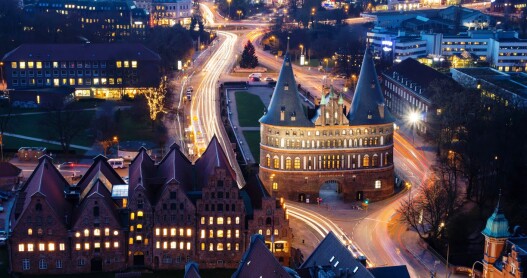
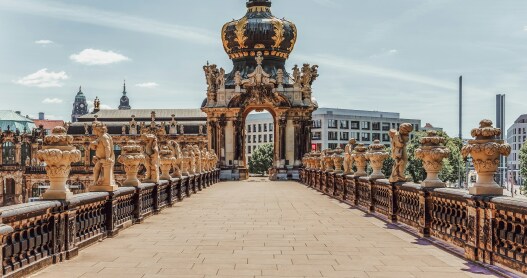
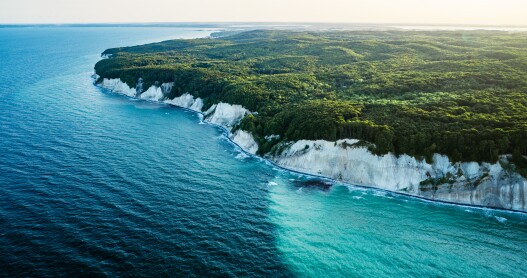
Vibrant urban culture vies with romantic landscapes throughout Germany. The major cities, especially Berlin, Hamburg, Cologne, and Munich, should not be missed, but smaller towns like Bayreuth, Weimar, Nuremburg, Dresden, Bamberg, and Lübeck are also attractive for their impressive architecture and charming atmospheres. Soaring cathedrals and grand palaces can be found across the country, while natural areas like the Black Forest, the Bavarian Alps, and the Baltic and North Sea coastlines provide an alluring mix of recreation and relaxation.

Practical Information

Americans and other non-E.U. citizens need a valid passport to visit Germany for less than 90 days, and a travel visa to stay longer. The local language is German, though the more urban the destination, the more English is spoken, especially among the younger generation. The currency is the euro, the voltage is 230 volts, and the socket type is F (round plugs with two round prongs).

Guide Editor

Paul Sullivan has lived in Berlin since 2008. In addition to running his local website, Slow Travel Berlin, he writes regularly on Berlin and Germany for international publications like The Guardian, The Telegraph, the Sunday Times, and the BBC, and has worked on Berlin and Germany guidebooks for publishers such as Fodors, DK, Rough Guides, Wallpaper, and more.
READ BEFORE YOU GO
HOTELS
Whether you’re a skier or an après-ski enthusiast, these 19 European hotels are ideal for a winter weather getaway.
After a careful two-year renovation, the historic Brenners Park-Hotel & Spa is stepping into a new era of wellness shaped by the surrounding Black Forest.
Around the world, breakfast is emerging as the moment when a luxury hotel’s ambition—and its core values—become most visible.
These women aren’t just breaking barriers. They’re building a more inclusive, dynamic future for hospitality—and your hotel experience will be the better for it.
These are the 24 hotels we recommend most for wellness.
From rococo and baroque facades in Lübeck to Bauhaus in Weimar and Le Corbusier’s modernist neighborhood outside Stuttgart, Germany has a rich architectural history.
Descend into ancient mine shafts, visit skilled woodcarvers, soar to the top of eastern Germany’s highest mountain, and soak up the charm of historic towns.
From the protected Wadden Sea to the historic warehouse districts of Hamburg and beyond, a visit to the former Hanseatic League is a dream trip for sustainably minded travelers who love history.
Berlin is a masterpiece of urban planning, from the Museum Island at the heart of its walkable center to groundbreaking Modernism Housing Estates, plus epic parks and forests waiting just a stone’s throw away.
Explore rich religious traditions and outstanding architecture at the country’s most magnificent cathedrals and monasteries.
RESOURCES TO HELP PLAN YOUR TRIP
Famous for being Southern Germany’s hub of the Enlightenment during the late 18th century (Hegel and Hoffmann both lived here), Bamberg is also home to a superbly preserved medieval town center, which was declared a UNESCO World Heritage site in 1993. Here, visitors find an endless array of architectural styles, from Gothic and Renaissance to Baroque and neoclassical, all spread through three distinct areas: the episcopal town, the island town, and the market gardeners’ town.

The Romanesque-Gothic cathedral of St. Peter and St. George is Bamberg’s most prominent building (it’s home to the famous Bamberg Horseman statue, the tomb of Henry II and Cunigunde, and the only papal grave in Germany), but the New Palace and the Alte Hofhaltung Palace are also must-sees, as are the town hall, the tanners’ cottages, and “Little Venice,” a former fishermen’s village with half-timbered houses and tiny gardens. If you’re a suds fan, be sure to sample Bamberg’s famous smoked beer before leaving.
The main challenge when visiting Berlin’s hippest vegetarian restaurant is finding the place—it’s hidden in an unglamorous backyard behind the Westin Grand Hotel, and a nondescript door lit by a telltale bulb marks the entrance. Once inside, though, guests are greeted by a chic, loftlike interior with exposed brick walls, gentle lighting, and low ceilings, and simple white tablecloths contrast with dark red chairs and banquettes. The trendy staff are both efficient and attentive in serving food that takes vegetarian dining up a notch: Gone are the usual staples of pasta, tofu, and rice, replaced by sumptuous, imaginative ingredients such as beluga lentils, Parmesan dumplings, and wild herb salads. The wine list is also excellent, or you can head next door for a cocktail at Crackers, a restaurant and bar.
When Berlin was divided, Checkpoint Charlie was the most famous of the border crossings between the eastern and western halves of the city. It was here that Allied soldiers registered before crossing over into the Soviet-controlled sectors. Thanks to its appearances in Cold War thrillers from Bond movies to John Le Carré novels, it has become a symbol of that era in the city’s, and world’s, history. A small museum nearby includes a replica of the guardhouse that once stood here.
The former residence of Würzburg’s prince-bishops, this UNESCO World Heritage site is one of the most important Baroque palaces in Europe. It was—remarkably, given its scale and level of detail both inside and out—built almost entirely within a single generation. Court architect Balthasar Neumann oversaw the construction, while leading architects from Germany and France created the fabulous ornamentation. Woodcarvers, sculptors, and artists from Italy—including Giovanni Battista Tiepolo, regarded as one of the greatest fresco painters of the 18th century—also contributed to the design.

Rebuilt after World War II, the palace now features a bevy of architectural styles, from German and Viennese Baroque to French château. Inside, the White, Imperial, and Garden halls are can’t-miss attractions, as are the grand staircase and ceiling fresco by Tiepolo and the Mirror Cabinet. Before leaving, be sure to take a walk in the court gardens, which feature fountains, charming yew trees, and a group of cherub statues by Johann Peter Wagner.
The Inca Trail is perhaps the most famous trek in Peru. This is the road to Machu Picchu, an ancient route that leads from the Sacred Valley into the heart of the Andes. You must obtain a permit and hire an official guide in order to hike the Inca Trail proper. There are plenty of tour operators in Cusco that offer trips up to Machu Picchu, so you should definitely look at reviews before you choose. For better or for worse, the tours are all-inclusive. The local tour operators employ porters to carry your packs and set up a camp. A team of local chefs will prepare three meals a day, and many hikers come back raving about the delicious meals. Keep in mind that the trek can be tough, especially in the first few days. The trail is often narrow, and it flirts with formidable heights. The mountains in this part of the Andes can rise well over 13,000 feet, and many hikers find themselves suffering from altitude sickness. Make sure to take a few days (in Cusco or the Sacred Valley) to acclimatize before you begin the journey. Finally: make sure to plan ahead! The Peruvian government limits trail access to 500 people per day, including porters. This regulation protects the local ecosystem and the delicate ruins, and it ensures that the trail won’t be too crowded. However, it also means that permits for the peak summer season sell out months in advance. If you aren’t able to get a permit for the classic Inca Trail, never fear: there are various other trails that lead to Machu Picchu.
Every day at noon at the Plaza de Armas (also called Plaza Mayor), trumpets blare, drums pound, and cymbals crash as the guard changes outside the presidential palace. Enjoy the Spanish fanfare like a local: from a plaza bench with an ice cream cone. The Plaza is also the site of festivals, concerts, and the much-loved annual National Pisco Day when the fountain spouts free high-proof grape brandy for all.
You’ll never sleep anywhere closer to Machu Picchu than Belmond Sanctuary Lodge—it’s adjacent to the site entrance, and the only hotel on the mountain. In fact, the lodge is built on the former staging area for American explorer Hiram Bingham, who rediscovered the “Lost City of the Incas” in 1911. You’ll pay a pretty penny but consider the price a once-in-a-lifetime splurge. If you arrive the day before your visit to Macchu Picchu on the bus up from Aguas Calientes, you can be at the gates right when they open at 5 a.m. and get a head start on most of the crowds—and the sunrise. And if you’re coming off a days-long hike on the Inca Trail, the spacious showers and plush robes will be the best you’ve ever experienced.

There are only 31 rooms here, some with terraces and mountain views but all with exquisitely comfortable beds and marble bathrooms. The light-filled restaurant—only open to guests—serves both international and Peruvian dishes, and the bar is a great place to enjoy a pisco sour after a day of exploring the ruins. If you really want to stay in style, consider arriving by the elegantly restored Belmond Hiram Bingham train from Cuzco—the hotel offers packages.
Part third-wave coffee shop, part gallery, Distrikt is a great spot to enjoy high quality coffee as well as discover local up-and-coming artists. The exposed brick walls are perfect backgrounds for the rotating displays of artwork, as well as the café’s regular events, which include stand-up comedy evenings and even small operas. As well as locally-roasted coffee blends, you can also find whole-leaf teas and a brunch menu with antipodean influences.
While several spots can justifiably claim to serve up the best burger in Berlin (the Bird, Burgermeister, Shiso Burger), there is something effortlessly simple and exquisitely tasty about Tommi’s version that makes it particularly good. The limited menu, handwritten on signs above and to the side of the counter, basically consists of the extra toppings (bacon, avocado, cheese) or sides (fries) you may want with your handmade patty of organic Scottish beef. The burger is flame-grilled and placed between a soft, freshly baked bun filled with crunchy lettuce, tomatoes, and other delicious additions. Despite the American-influenced, casual shacklike interior, this place is actually run by an Icelandic family that has similar outlets in London, Copenhagen, and Reykjavík.
Set in a historic building renovated by local architects Hild and K and Albert Weinzierl, Munich’s Louis Hotel has a prime location on the edge of the vibrant Viktualienmarkt. Stylistically, it mixes the Baroque with the contemporary, complementing detailed stucco, French balconies, and walnut bed frames with luxurious Italian fabrics, oiled oak floors, and designer furnishings. In addition to 72 chic rooms, guests can look forward to a lobby with a large fireplace, an in-house gym and sauna, a trendy Japanese restaurant, and a rooftop terrace with sweeping views over city landmarks like St. Peter’s Church.