Berlin

Whether your interests lean toward history or culture or shopping or out-all-night fun or, even better, a mix, Berlin is sure to become one of your essential vacation spots. The city is loaded with writers and artists who are driving the conversation about the history city forward. The once divided city has turned into one of Europe’s cultural hot spots, where the fun goes on into the early hours of the morning before kicking right back off again. But Berlin’s ultra-modern present sits side-by-side with Germany’s history—most notably the country’s role during the 20th century and World War II. The city doesn’t shy away from its past, with sites including the Memorial to the Murdered Jews of Europe. Other worthwhile history stops include Checkpoint Charlie and the Brandenburg Gate.

Four people with big pints of beer cheersing

TTstudio / Shutterstock

Overview

When’s the best time to go to Berlin?

Berlin is famous for its summers—not that they’re especially warm, but there is just so much to do. The summer season can be wet, so it’s best to pack an umbrella—though rain doesn’t stop Berliners from enjoying their city. May is often considered the best time to visit, with good weather and plenty of festivals and events. Winters in Berlin are cold (below freezing in January and February), but the cultural events don’t disappear. Locals stay busy with seasonal festivities and quirky adventures like skiing on the grounds of the former Tempelhof Airport, which is now a giant city park.

How to get around Berlin

Berlin is served by two main airports. Tegel (TXL) is conveniently located within the city limits. Public buses (20 minutes) run from Tegel regularly to Berlin Hauptbahnhof and Alexanderplatz. Schonefeld Airport is connected to the city by S-Bahn and regional trains (30 minutes).

Berlin’s transportation system, the BVG, is reliable, convenient, and vast, and it includes buses, trains, and trams. As in many European countries, the BVG runs on the honor system, so make sure to validate your ticket before boarding. At random times, officers check the tickets of each passenger. The U-Bahn trains (underground lines) run until late and are round-the-clock on weekends; S-Bahn trains (commuter lines) traverse the city, making them best for fast connections. Taxis in Berlin are readily available, as are services like Uber.

Can’t miss things to do in Berlin

To really get a feel for Berlin’s cultural life, it’s best to visit one of the many parks and public spaces on a sunny afternoon or early in the evening. Görlitzer Park is one of the most popular hangouts, but you’ll find more locals at the Volkspark Friedrichshain. There’s a beer garden, a small hill for hiking, and even a fairy-tale fountain (the Märchenbrunnen). Museum goers should head straight to Museum Island, where five exquisite museums (all on one ticket) await.

For an overview of all that happened before, during, and since the Holocaust, seek out the Jüdisches Museum (Jewish Museum). The museum is a challenging but extremely worthwhile place to spend time.

Food and drink to try in Berlin

Food in Berlin runs the gamut—from cheap street foods (don’t miss the ubiquitous doner kebabs) to fine dining. Each Berlin neighborhood, or kiez, typically has its own food market. Fresh vegetables, produce, and bread can be bought at the markets, and many have small stands selling lunch or snacks.

Though, years ago, few people would have shouted “Berlin!” if asked for one of the world’s best food cities, things have changed. Trendy brunch spots, Vietnamese restaurants, and traditional German fare all play a role in today’s Berlin. Most tourists flock to the bars around Görlitzer Bahnhof and Schlesisches Tor, but there are plenty of other areas worth exploring. Branch out into Neukölln for the freshest crop of good bars. And rather than hitting the restaurants on Simon-Dach Strasse in Friedrichshain, go a few blocks east to Boxhagener Platz.

Culture in Berlin

With hundreds of independent galleries in addition to its many city-owned museums, Berlin has history and culture in spades. Museums cover everything from typography (Buchstabenmuseum) to film (Film and Television Museum). Art galleries in Berlin have a solid reputation among enthusiasts. Berlin was a hotbed for culture in the 1920s, and in recent years the city has again embraced its creative classes. Get some deep background on what life was like in Berlin during the Cold War by participating in Divided City, a private walking tour led by a local historian or architect from AFAR’s partner, Context Travel.

Artists, musicians, and innovators have made Berlin home in the past couple of decades, changing the very face of the city—sometimes quite literally. Street art and graffiti in Berlin is often ranked among the world’s best thanks to Berliners’ need to speak up and be heard.

In a city as diverse as Berlin, festivals and events happen all year long. Summertime sees an influx of music festivals: watch out for MyFest, Christopher Street Day gay pride, Carnival of Cultures, and Berlin Music Week. The winter has its fair share of festivals as well, most notably the star-studded Berlinale indepedent film festival.

Practical Information

  • The first language of Berlin is German. There’s a good chance you’ll run into English speakers in the city but a translation app or German language guide is definitely helpful.
  • Germany is a member of the European Union and uses the Euro as its currency.
  • The country’s standard voltage is 230v. Power sockets throughout the country require a type F adapter (though type C and E plugs will also work).

Guide Editor

READ BEFORE YOU GO
HOTELS
Berlin is a masterpiece of urban planning, from the Museum Island at the heart of its walkable center to groundbreaking Modernism Housing Estates, plus epic parks and forests waiting just a stone’s throw away.
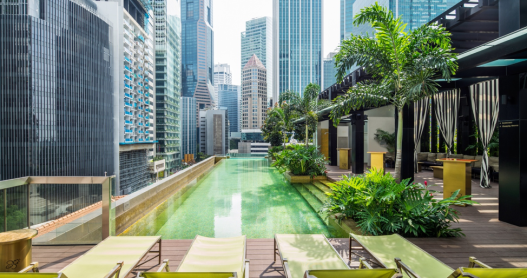
From shopping sprees in Singapore to thumping clubs in Berlin, the world is full of cool cities that move to the pulse of pop culture. Staying at the right hotel is one way to find the hippest places to eat, shop, and play.
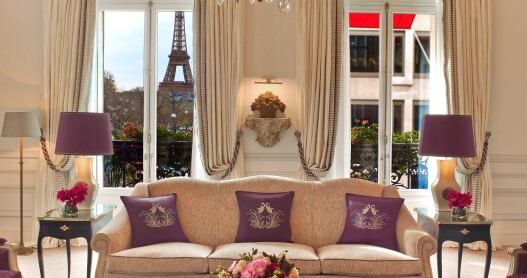
There’s nothing dreamier than a room with a view, and these luxurious hotels are perfectly positioned to give you the best views of some of Europe’s most memorable sights.
RESOURCES TO HELP PLAN YOUR TRIP
The Hotel Adlon Kempinski undoubtedly boasts the most distinguished location in the city—right on historic Pariser Platz, opposite the Brandenburg Gate. The original incarnation opened in 1907 with the blessing of none other than Kaiser Wilhelm II. Despite playing host to such illustrious guests as Tsar Nicholas II, Albert Einstein, and Franklin Roosevelt, the building was almost destroyed after World War II. A new hotel was eventually opened in 1997 and continues to draw celebrities, politicians, and the occasional aristocrat—in 2002, it was here that Michael Jackson notoriously dangled his nine-month-old son out the window.

Needless to say, the hotel is the last word in stately—if somewhat conservative—luxury, as heralded by its glamorous, balconied lobby, which greets guests with the sounds of live piano and a trickling fountain. The sumptuous rooms come with marble bathrooms, full-size work desks, and entertainment centers; the three restaurants include the two-Michelin-starred Lorenz Adlon Esszimmer, serving classic European dishes such as braised shoulder of lamb (there’s a four-week waitlist for reservations, so plan accordingly). A luxury spa and a range of boutiques offering everything from fine wines to jewelry to porcelain are also on-site.
An enviable location in the quietly upscale embassy quarter on the edge of sprawling Tiergarten Park is only part of SO Berlin Das Stue’s appeal. Occupying a graceful, gray-stone 1930s building that once housed the Danish embassy, the hotel features soothing, sophisticated interiors by Spanish architect Patricia Urquiola, who decorated the public areas with animal sculptures—a reference to the neighboring zoo—and colorful, comfortable furnishings. Two original travertine staircases lead up to the 78 rooms and suites, which offer a blend of modern conveniences (rain showers, HD entertainment systems, and iMacs in each room) and considered design touches (black-and-white fashion photographs, hardwood floors, sliding walls, handle-less cupboards), plus views of either the park or the zoo. Guests can enjoy the hotel’s glamorous work and relaxation areas—some with libraries of books on art and design, fashion, and architecture—as well as a spa offering holistic Susanne Kaufmann treatments, and a fitness center with an indoor swimming pool and Finnish sauna. The new staff uniforms come from Viktor & Rolf. Dining options include a chic bar serving light bites (and live music every other Friday); The Casual, offering all-day shareable plates both indoors and out; and the Michelin-starred, Mediterranean-accented Cinco from chef Paco Pérez. A newer wing, designed by Axthelm Architects, features rooms with more direct views of the zoo—which hotel guests can access via the terrace’s exclusive private entrance.
Run by the famous Spanish shoe brand, Casa Camper is a stylish boutique hotel neatly situated in the middle of Mitte’s hip fashion and culture district. Designed by Jordi Tió and Fernando Amat—the founder of Barcelona’s iconic design store Vinçon—the devilishly good-looking interior is defined by clean lines and striking furniture set against rust-red walls. The rooms are deliberately minimal, with wooden floors and slick designer furnishings, but are decidedly comfortable and include eco-friendly touches such as water-recycling showers. Instead of an in-room minibar concept, the hotel offers a 24-hour buffet that is free for guests. Plus, the hotel’s prime location ensures easy access to the swanky drinking, dining, and shopping options in the neighborhood.
This club, housed in an old industrial warehouse, does not look unlike a mental ward and, inside, has as many fascinating levels as an Escher drawing. To dance with a sea of the coolest kids in Berlin (and Europe for that matter—it’s a landmark destination for partiers across Europe), stay on the ground floor. For a smaller scene, head to the top floor, which gradually attracts a more queer crowd as the weekend goes on. That’s the other thing: it’s only open from Friday until Monday morning. Wear plain clothes and no smile to get past the doorman. If at first you don’t succeed, come back on Sunday nights when the line is shorter and the bouncers are known to be less prickly.
Silo is one of the newest coffee spots in Berlin, opened by two Australians. The atmosphere inside is one of the best (and most spacious) and their beans are among Berlin‘s finest. Filter coffee specials and blends are among the most popular choices.
It’s often a surprise for visitors to Berlin to discover that Turkish postwar immigrants created the popular döner kebab here. The city takes its kebabs seriously, and there are several hot spots whose reputation precedes them. One such is Mustafa’s in West Berlin, which has reached a kind of cult status as much for its vegetable (gemüse) kebabs as for its chicken ones. Every day around lunchtime the modest stall has lines that stretch along the road, as people wait patiently for a crispy pita filled with the special mix of vegetables, salad, and homemade sauces, topped off with crumbled goat cheese. Get here outside peak mealtimes if you want to avoid the crowds.
Everyone in Berlin has a favorite place to eat currywurst—tasty chopped pork sausage doused in a sauce made of curry powder and ketchup—but Curry 36 in Kreuzberg (along with Konnopke’s in Prenzlauer Berg) is one of the most consistently popular spots to procure this famous street-food snack. In fact, the place is so trendy that it sells Curry 36 merchandise in the shape of hoodies and even its own branded ketchup. Besides currywurst, the stall serves other sausage-y delights such as bockwurst and krakauers, as well as related meat products like burgers and meatballs. To be extra authentic, order your currywurst ohne darm (without skin) and enjoy it while standing at one of the outdoor tables.
For the past 10 years, Mario, the owner of VEBorange, has been selling DDR (East Germany) collectables and other German antiques. Most items in the shop on Oderberger Strasse are objects made and sold between 1950 and 1980, making this a great place to find kitschy and totally unique goods. When I visited on a sunny Saturday afternoon, Mario was tinkering with a Sputnik relic from the CCCP. Not everything that he collects or receives ends up on the shelves. Behind the counter are the things deemed interesting or noteworthy—things that might fit in a museum. If the nearby Mauer Park turns out to be too disappointing for you, head over to VEBorange (a short three-minute walk away) to find truly unique and special items. You can find everything from old Soviet war medals to clothes and furniture.
The weekly flohmarkt (flea market) in Friedrichshain’s Boxhagener Platz is a popular spot where locals meet up for shopping, drinking, or just a bit of fun each Sunday. While the Mauer Park flea market gets most of the tourists, this one is far less touristy. You’re much more likely to find a good deal on used books, cool T-shirts (some by local designers, even!), music records, and knickknacks. Because the market is relatively small, it’s quite enjoyable to take a stroll through the stalls and then enjoy a picnic on the grassy area in the middle of the square. Many cafes and restaurants are situated on the streets bordering Boxhagener Platz so you won’t be bored for things to do. The market is open Sundays during daylight. On Saturdays in the same area you’ll find a fresh food & produce market.
This smoky, retro-style bar in Prenzlauer Berg, on the trendy Stargarder Strasse, is a great place for a leisurely cocktail on weekend nights. Often crowded, it might be best to arrive early if you want a seat. Otherwise you’ll end up hanging out on the street outside thanks to the often full bar area inside. It’s also popular on Wednesday evenings, which is the official gay night.