Paris

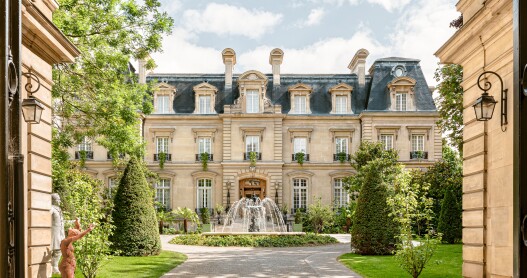
A hub for hedonists, a wellspring of inspiration for artists, and a haven for history buffs: Paris is a fantasy destination for millions of travelers each year. The storied bakeries, iconic museums, and corner cafés feel anchored in another time, but the zeitgeist of the city leans forward into a dynamic, multicultural food scene dominated by young French and foreign talents. It is precisely this juxtaposition of old and new that makes Paris the perpetually perfect place to visit. So go exploring, get lost, eat until your belly hurts—and then do it all over again. The City of Light shines on.

Paris-filip-mishevski-eZ2aHgA6Xds-unsplash.jpg

Photo by Filip Mishevski/Unsplash

Overview

When’s the best time to go to Paris?

You’re likely to be disappointed if you arrive expecting the image of springtime in Paris that you see in Hollywood films. In the last several years, the months between April and June have reported below-average temperatures and record-high precipitation—a far cry from the endless days of sunshine in the movies. The weather is wholly unreliable, which foils many travelers’ ambitions for a dry early-season trip. Late summer and early fall typically yield the warmest sojourns (though the summers in general appear to be getting warmer), plus this is when Paris is most culturally active, unveiling new exhibits and welcoming the return of the some of the most anticipated festivals. December and January provide a more festive experience, with Christmas markets lining the well-heeled boulevards and twinkling lights illuminating the city’s boutiques. All weather aside, there is hardly a bad time to visit Paris, rain or shine.

How to get around Paris

From either of the city’s two airports, the RER B, a regional rail line, is the fastest way to reach the city center. Taxis are convenient, but they can be costly.

Getting around: There are few cities as walkable as Paris. For further distances, le métro is the quickest and most reliable means of getting to and from your destinations (sometimes faster than a taxi). Google Maps is a reliable way of figuring out which train to catch. Ubers operate here.

Paris also has excellent bike infrastructure. On nice days, grab a bike share with Vélib, the city’s successful bike-share program, or Lime.

Can’t miss things to do in Paris

– Whether at the peak of summer or in the moodiness of a winter’s night, nothing elicits a chorus of oohs and ahs like a leisurely after-dinner stroll across the city’s iconic bridges and along the banks of the Seine River. Amble across the Pont des Arts toward the Institut de France and continue along the docks of the river, watching the Bâteaux Mouches glide by and illuminate the river with their lights. Keep wandering until you reach a spot to pause for an unobstructed view of a twinkling Eiffel Tower (every hour, on the hour, after sundown). It’s free and absolutely stunning at all times of year.

– If time allows, you really shouldn’t miss visiting the Louvre, the Musée d’Orsay, and Sacré-Cœur, or taking a stroll through the Luxembourg Gardens.

– Following the devastating fire in April 2019, Notre-Dame Cathedral remains closed for restoration work. Officials have said the forecourt in front of the church could open as early as March 2020, but for now, you’ll only be able to snap a picture from afar.

Culture in Paris

Every international city has its iconic landmarks and cultural institutions. In Paris, most travelers would cite the Louvre as the must-visit art stop, but curious visitors should look beyond the usual suspects and explore places like the Musée de la Vie Romantique, the Jewish Art and History Museum, the Cinémathèque Française, and the Fondation Cartier.

Dive a little deeper into a fascinating chapter of 20th-century Parisian history with a historian-led Context walking tour that focuses on the city’s occupation by Nazi Germany, a time marked by unrest, bravery, and heroism. – Given the Parisians’ well-documented penchant for celebrating art, culture, and design in all its forms, you can count on a packed schedule of festivals all year long. Whether for a neighborhood street parade or larger-scale happenings like Paris Plage and Nuit Blanche, it’s worth planning your vacation around the city’s celebratory timetable.

Local travel tips for Paris

  • Always greet shop owners and restaurant staff with “bonjour” when entering and before asking a question or making a request.
  • When metro train cars are crowded, give up your folding seat and stand.
  • A baguette is always better with cheese—the older the cheese, the better.
  • Do not overlook the city’s farmers’ markets as potential lunch spots.
  • Macaron loyalties teeter between Ladurée and Pierre Hermé, so try both and decide for yourself.
  • The Champs-Élysées has few redeeming qualities and is considered the Times Square of Paris by locals. Skip it and opt for a bird’s-eye view from the top of the Arc de Triomphe.

Practical Information

  • U.S. visitors to France do not need a visa for stays of less than 90 days.
  • France uses type E and C plugs, so visitors from the U.S. will need an adapter.
  • France’s official currency is the euro.
  • The official language is French, though you’re likely to hear several languages spoken, as Paris is an international city.

Guide Editor

READ BEFORE YOU GO
HOTELS
These 19 hotels around the world immerse you in their destinations while carving out space for unhurried time together.
These are the 20 best luxury hotels and resorts in France outside of Paris, according to insiders—whether you’re seeking a bucolic Provençal getaway or an immersion in a bygone era of the French Riviera.
These are the top places to stay in the City of Light.
Not all Eiffel Tower views are created equal. These hotels prove why only some are worth the splurge.
This curated list of “maisons,” boutiques, and family-run hotels showcase the kind of style and attitude only Parisian hotels can deliver.
Once home to artists and writers, Paris’s Left Bank still delivers cobblestoned charm and leafy boulevards—and these timeless hotels will put you in the center of it all.
Stylish, central, and surprisingly affordable—Locke’s new Paris hotel brings townhouse elegance to the Latin Quarter.
Palace hotels are the highest distinction a hotel can achieve in France. Here’s what they are—and what makes them so special.
The French capital is filled with stylish hotels that are big on personality—and easy on the bank account.
Airbnb has launched a new category called “Icons” for its most over-the-top stays and experiences (Prince’s “Purple Rain” house, anyone?). It also added a new feature to make booking group trips easier.
RESOURCES TO HELP PLAN YOUR TRIP
The limited-edition Nikes and kiosk of independent magazines (Corpus, Out of Order, System) at this brilliantly edited multibrand boutique in the upper Marais recall the city’s renowned concept shop Colette. But its abundant natural light, and market-fresh, Scandinavian-influenced café make it a place of its own. Minimalist, rustic decor and sparsely furnished racks reinforce a feeling of calm. An in-house florist is in the works. 12 Rue Perrée, 33/(0) 1-44-61- 53-60. This appeared in the October 2013 issue.
The café Saint-Régis, located on the quaint and quiet island of Ile Saint-Louis, just a few meters from Notre-Dame, is one of those cafés that make Paris what it is. Professional waiters in black-and-white uniforms tend from one table to another frantically, while locals talk all things fashion, philosophy, or politics, or quietly read an enthralling book by the window. While this scene was accurate 50 years ago and still is today, there are notable differences, technology-wise, as the café is equipped with free Wi-Fi. So laptops and smartphones abound, for the pleasure of Instagram users. Atmospheric, historic, cozy and, well, of course, pricey. That’s the Saint Régis. My favorite time to go? Right before sunset after a long stroll on the banks of the Seine in the winter, either outside under the warm lights or inside, away from the hustle. But regardless of the weather, it’s always a good time at St. Régis...
Past the bouncer and down a black staircase 32 feet below ground is Paris‘s most buzzed-about semi-private club, Le Silencio. Housed where Molière was allegedly buried and Zola printed “J’accuse”, it’s of little surprise that the enigmatic director David Lynch would select the location for his louche lounge-cum-entertainment space, which he designed (expect gold-leaf walls, raw wood cladding, bespoke neo-1950’s furniture) - mere steps into the labyrinthine halls and you’ve entered the entrails of another world, one that evidently takes cues from Lynch’s art. Before midnight, it’s member’s only but once midnight strikes, a smartly dressed crowd of cocktail-crazed creatives floods inside, snatching up seats in the art library, loafing at the bar or lighting up in the mirrored smoking room that was conceived to resemble a forest. Killer cocktails and exclusivity aside, Le Silencio’s biggest draw is its broader offering. Presentations from the local artistic set are frequent as are culinary/cultural events, intimate concerts and private screenings. As the guest of a member, my first visit was not so much to explore the space (though there is plenty to unearth here) but for a private tasting of chef Flora Mikula’s work. A couple hours into the evening and I realized Le Silencio wasn’t about being seen but about discovery - of high culture and the utterly bizarre.
A boon to taco-starved expats when it opened five years ago, this taqueria-meets-cocktail lounge has been consistently good since day one. Tuck into tacos, tostadas and deliciously chunky guacamole in the narrow taqueria, then head past the unmarked door at the back of the kitchen for prohibition-style cocktails and great music. Tight quarters—one large communal wood table and a handful of bar seats—demand early arrival. Upside: stop by anytime during the day for a quick bite if claustrophobic dining doesn’t suit you. Why opt for Mexican fare on a trip to Paris, you may be wondering? It’s one of the best spots to mingle with locals and offers a true glimpse into the modern Parisian hangout.
Little needs to be said about Paris‘s peerless art scene and the iconic museums that greet throngs of visitors each day but we hear very little about spaces like the non profit Fondation Cartier for Contemporary Art nestled in the 1'4th arrondissement, a hike from the city’s artistic epicenter. My enthusiasms run more toward the impressionist era so the offbeat styles housed within the Centre Pompidou and countless galleries across the city are often lost on me. Gearing up for my first visit to the Fondation Cartier several years ago, I expected much of the same. Instead I found myself surrounded by fascinating and evocative works spanning multiple disciplines, from photography to performance art. An exhibit on street art and graffiti hooked me in and I’ve been a fan ever since. Creative workshops and family visits are also offered (kid friendly!)
The Palais Garnier, the national opera house of Paris, is a magnificent building dripping in ornate details and glittering with gold. The five-ton chandelier, made famous in The Phantom of the Opera, still takes center stage in the auditorium. It is surrounded by a swirling, colorful ceiling painting by Marc Chagall. The decoration goes beyond the auditorium: The grand foyer rivals the Hall of Mirrors at Versailles, and the grand staircase is an entryway fit for royalty. You don’t need to buy a ticket to the opera to see the space: Tours are given daily in a variety of languages.
One of the most talked about hotels in Paris, Hotel Costes is located in one of the most fashionable streets, Rue Saint Honore. The hotel is best known for its fine bar and courtyard cafe and for its sexy atmosphere and crowd. If you don’t book a room there, make sure to come at least for a drink.
The French are well known for their delicate baguettes, the ricH butter croissants, and sweet and colorful macaroons. Macaroons or in French ‘le macaron,’ are small round meringue like cookies, made of sugar and eggs, stuffed with light cream or crushed almond cream. There are endless bakeries in Paris, and so many patisseries that sell and serve macaroons but my favorite one was Ladurée, which became a prestigious brand name for macaroons. My most visited Ladurée was the one on 21 Rue Boneparte, a cute cornered patisserie with a colorful magical and tempting gift shop next door.
Did you know that only 25% of French people buy their cheese from a fromagerie? And of that 25, only 3-4% go to an affineur (cheese refiner). Both are the sad realities of a dying tradition in France of sourcing provisions from neighborhood artisans. Young affineur Baptiste Yapar doesn’t let the disheartening takeover of corporate food business dull his passion. The firebrand cheese master focuses his energy on running his shops Au Coeur du Marché (at the Marché d’Aligre) and educating the public. At La Cuisine Paris cooking school, he takes a small group through a complete background of cheese (it didn’t begin in France!), methods of production and the various designations and families of cheeses available. A copious tasting of 7-10 different cheeses (with wine) follows the contextual debut and is, as my friend and I agreed by the end, the closest thing approximating cheese heaven on earth. It is a fascinating two-hour experience that will not only inform how you consider the nuances of cheese in the future but will have you excited to seek out your nearest independent cheese shop for more.
Lions and tigers and bears…oh my, this museum has everything for the aspiring naturalist. Examining the relationship of human and animal throughout history, original displays of classic and contemporary art mingle with taxidermic animals, rifle collections, and archives in a 17th-century mansion. Visitors, especially kids, will love opening the wooden drawers to find contents like scat and paw-print samples, or hunting down a trompe l’oeil mousehole. Founded by the François Sommer Foundation, the museum is committed to promoting the global discussion about our environment. The result is a compelling selection of temporary exhibitions, conferences, and events that change with the seasons.