Costa Rica

Costa Rica is a small Central American nation that shelters nearly six percent of the world’s biodiversity. Expect to see gorgeous orchids, colorful birds and butterflies, howler monkeys, and maybe even the elusive margay, a spotted nocturnal cat that lives in the rain forest. In addition to natural beauty, there’s a lot to love about a place that hasn’t had an army since 1949. Costa Rica’s Ticos (as locals are called) have managed to avoid the conflicts that have devastated neighboring nations.

Costa-rica-KatieOrlinsky.jpg

Photo by Katie Orlinsky

Overview

Can’t miss things to do in Costa Rica

Most visitors come to Costa Rica for nature. Twenty-five percent of the country is protected, and most natural areas are easily accessible, though some require going off the beaten path. There are 186 areas protected by the National Conservation Areas System, including 32 national parks and 51 wildlife refuges. More than 10 conservation areas are within reach of San José, the country’s capital, alone, and each offers a different nature experience. From the last remaining tropical wet forests in the Mesoamerican Pacific, located in Corcovado National Park, to the stalagmite- and stalactite-filled caves of Tempisque Conservation Area, travelers can see a variety of habitats in one trip. As for accommodations, there are plenty of options for roughing it, but Costa Rica also features upscale resorts where you can retreat and recharge after a day outside.

Food and drink to try in Costa Rica

Local food is a way of life in Costa Rica. Corn, beans, and root vegetables are grown here and find their place on most Tico tables. Start the day with locally produced coffee, served alongside such Costa Rican fruits as pineapple, cashew fruit, and sapote. Don’t be surprised by the heaping portions of gallo pinto, a rice and bean dish served any time of day. At breakfast, it’s usually accompanied by an egg, tortilla, and thick slice of farmers’ cheese. Plantains and meat often join gallo pinto at lunch and dinner. Costa Rican food is not spicy; if you need an extra pop of flavor, splash a dash of the local favorite Lizano Sauce (akin to HP Sauce) on your meal.

Culture in Costa Rica

Costa Rica is an anomaly in Central America. Like its neighbors, the country traces its cultural heritage back to indigenous groups that occupied the land before the Spanish colonial period, but its modern history is quite distinct. Political choices to embrace democracy, abolish the national army, and protect rather than develop its natural assets have put the country in an economic and social position in which the quality of life here generally exceeds that of most Central American countries. Costa Rica has repeatedly been designated among the happiest countries in the world by international development researchers. Visitors come from around the world to discover the secret of pura vida, or pure life.

Shopping

Unlike most of its Central American neighbors—most notably Guatemala, which offers one of the region’s largest markets, Chichicastenango—Costa Rica does not have a thriving handicraft culture. However, there are a few Costa Rican goods worth taking home—such as hammocks, jewelry made of fruit and tree seeds, and non-perishable food products like homegrown coffee and the popular Lizano Sauce. In Costa Rica, your money is best spent on epic experiences, from hiking and zip-lining to exploring caves and active volcanoes. Those memories will last longer than any souvenir.

Practical Information

  • Costa Rica has several international airports. Most visitors fly into San José, the capital, or Liberia.
  • Costa Rica’s official language is Spanish, and the currency is the colón. Credit cards are widely accepted.
  • When you leave the country, you will be required to pay a U.S. $29 departure or exit tax; many airlines include the fee in their ticket prices.
  • Voltage and plugs are the same as in the United States.

Guide Editor

Julie Schwietert Collazo has been a bilingual freelance writer, editor, and translator for the past 10 years and loves (almost) every minute of it, but tells people if she could have any other job, it would be a gig as a Mexico City evangelist. The Mexican capital is her former home and the first place she always wants to go when she gets on a plane. Read more at collazoprojects.com and Cuaderno Inedito.

READ BEFORE YOU GO
HOTELS
Waldorf Astoria opens in Costa Rica with rainforest views, spa rituals centered on Indigenous healing practices, and ambitious sustainability goals—while navigating the scale of a nearly 200-room property.
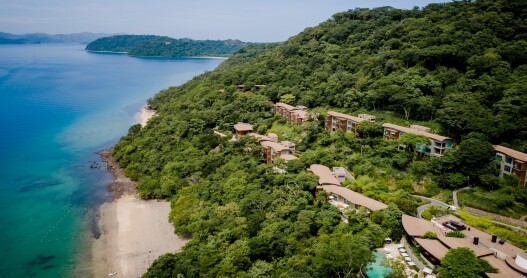
Occupying a peaceful corner of Costa Rica’s biodiverse Peninsula Papagayo, the new Nekajui, a Ritz-Carlton Reserve, lets travelers commune deeply with nature and local culture.
If health is the new wealth, then Blue Zones travel offers one of the most immersive get-rich-quick schemes on Earth. Afar takes a closer look at a program at Andaz Costa Rica at Peninsula Papagayo.
At these rental properties around the world, you can commune with wildlife and farm animals.
The best way to embrace the country’s pura vida is by staying in one of these nature-surrounded rental properties.
From the Swiss Alps to the Brazilian rain forest, these Airbnbs are worth booking just for the views.
The world’s best beach resorts put cultural and environmental preservation front and center.
Located on the green Osa Peninsula, this resort offers a comfortable base for nature-filled adventures.
RESOURCES TO HELP PLAN YOUR TRIP
Set tight in the jungles around Hotel Casa Chameleon, at Las Catalinas, the restaurant Sentido Norte is 45 minutes from the Guanacaste provincial capital, Liberia. A hilltop restaurant helmed by Costa Rican chef José López, it showcases a mix of local tastes and other modern classics, from sunrise until sunset daily. French toast with plantains, and ceviche punta penca (shrimp, octopus, and avocado) are current top orders; don’t miss the liquid enchantment on offer at the bar, perfect for sunsets, and aguas de sapo, a sweet, spiky pop made with guaro aguardiente.
Guests at this 13-room retreat in Costa Rica’s central highlands can tour the estate’s 36 acres of coffee fields. After the walk, try a “cupping,” or tasting, of the shade-grown organic blends. End with a soak in your suite’s jungle-view tub. From $250. (305) 395-3042


After a couple days resting up at The Retreat Costa Rica, I was off on my next adventure. Finca Rosa Blanca, which doubles as a boutique hotel and coffee plantation, proved the perfect setting for exploration both near and far. I stayed in the La Guaria junior suite—each has it’s own name—this one named after a local flower. Having come from New York where apartments are cramped, I was pleasantly surprised by the spacious layout of the villa. The entrance leads into a circular area, with sky lights above that form a sort of dome. There’s a separate kitchen and dining area, a bathroom complete with a whirlpool, and a separate bedroom featuring a kingsize bed. My favorite part of La Guaria were the two balconies. There’s a small one right off of the bedroom, where I’d usually listen to the rain falling hard against the roof in the afternoon. In the mornings and again in the evenings, I’d make myself a cup of coffee and catch up on my emails outside on the larger terrace. It overlooks a large grass farm, as well as the flowers that grow on the property.


Speaking of coffee, Finca Rosa Blanca, is also a coffee plantation. On my first full day at the hotel, I signed up for their guided coffee tour, where I learned the ins and outs of coffee-making in Costa Rica—things like how Arabic coffee is the only type of coffee grown here and how the blonder the roast, the more caffeine it has; I always assumed the opposite. Our tour group was small but we had a guest appearance by the finca’s two adopted dogs—aptly named Finca and Rosa. It’s a mother and daughter, and I loved watching them run around the plantation and play in the little waterfall separating one bank from the other. The second part of the tour was an actual coffee tasting, where we sampled a “good” cup of coffee and an “over roasted” cup. I was surprised how many flavors and aromas I could pick up despite always claiming that I have a poor sense of smell...and silently resolved to skip the milk and sugar next time.


As for the food and lounge areas, there are some really creative spots. The El Tigre Vestido restaurant has both outdoor and indoor seating; I mostly ate in their open-air sections but definitely took advantage of the fire crackling in the evenings. It can get a little chilly there at night. On my last full day at Finca Rosa Blanca, I went all out. First up was a scenic (and very uncrowded) hike to Barva volcano. I learned that, while a national park, it’s one of Costa Rica’s hidden secrets. There were few tourists along our path, allowing us to feel like we had wandered into an enchanted forest out of a story book. Back at the finca, I indulged at their spa, with their Pura Vida Coffee Detox Package: a Swedish full-body massage, a coffee and chocolate body scrub and a refreshing facial. After a challenging hike that morning, it was just what the doctor ordered. Fun fact: There’s some great art here and I’m not just talking about the murals on the walls (there are some super colorful ones at the pool); One of the owners, Glenn, is an artist by trade and he designed all the metal work seek throughout the property, right here on-site.
On the west side of Arenal Volcano, this 900-acre tropical reserve was a labor of love for owner and architect Jaime Mikowski, who spent years planting acres of native plants and coaxing the land’s natural mineral springs into a river that now flows throughout the property, spilling over into dozens of waterfalls and pools that range from 72 to 105 degrees. Spacious rooms have marble floors and streamlined furnishings; splurge on a suite, which features a private terrace and a Jacuzzi tub—a little superfluous considering all the other options for soaking in warm water here, but who’s complaining? There are also five swimming pools, one with a swim-up bar and waterslide, and a spa comprising 12 bungalows with treatments that all include, you guessed it, a dip in a thermal spring-fed tub. While the property is also open to day trippers, guests of the resort have exclusive access to Shangri-La Gardens, an adults-only lounge area with pools, cabanas, and a folliage-filled bar.
The 165-acre Springs Resort & Spa sits 1,000 feet above the Arenal Valley, higher than any other resort in the area and affording each one of its 47 polished-wood guest rooms commanding views of the Arenal Volcano and surrounding countryside. Impressive as those vistas are, the luxury resort’s biggest draw is its 28 mineral thermal pools, which wind through four lush acres. The setting is undeniably romantic—the resort was featured in an episode of The Bachelor—but families are welcome, with activities for kids of all ages. Club Rio, on the resort’s half-mile of river frontage, offers tubing, kayaking, mountain biking, and horseback riding; there’s also a wildlife preserve for rescued native animals, including monkeys, ocelots, jaguarundis, sloths, and a puma. Five restaurants (and five bars) mean there are plenty of options, from casual poolside dining to tasting-menu elegance.
Interior designer and owner Denis Roy eschewed the palapa-inspired elegance employed by so many Costa Rican resorts in favor of a tropical take on European influences—Victorian architecture, French colonial touches, and Grecian columns among them—creating a resort like no other on the country’s west coast. Owing to its vantage point 1,100 feet above the entrance to the Gulf of Nicoya, the views of the rain forest, ocean, and sunsets are stunning, especially from the infinity pool. Rooms in the main building are fairly basic, but suites and villas offer more luxurious touches, such as Jacuzzis, private ocean-facing terraces, and plunge pools. The property has its own beach (with sun beds, showers, and a snack bar), but since it’s at the bottom of a steep hill, the resort provides hourly transfers. Retreat to the open-air yoga studio, then head to the bar atop the Greek amphitheater to linger over a martini at the nightly sunset happy hour.
Hugging the golden crescent of Playa Conchal on Costa Rica’s northern Pacific Coast, the 2,400-acre Westin Playa Conchal is an all-inclusive (Westin’s only one) that has put great care into navigating the needs of both families and guests who prefer a more peaceful experience. A kid-friendly club features designated suites, all-day assistance of a “family concierge,” and exclusive activities, while the adults-only Royal Beach Club is almost a resort-within-a-resort, with its own lounge and private pool. Both have access to the greater resort, including the huge lagoon-style pool with swim-up bar, Jacuzzi, 10 restaurants and five bars, and the fitness club. All of the rooms and suites have balconies or terraces, and the Royal Beach Club suites also have a large outdoor tub. Guests also have access to the par-71 golf course designed by Robert Trent Jones, Jr.
With its pristine beaches, emerald lagoons, and wildlife-filled jungles, Manuel Antonio National Park is considered one of the world’s most beautiful natural wonders. There’s no better place from which to explore it than the five-star Arenas del Mar, an 11-acre hotel and reserve that’s set atop rain-forested cliffs overlooking the Pacific and delivers just the right amount of luxury within walking distance of the park. (Just don’t be surprised to cross paths with the occasional monkey, sloth, crab, or iguana.) The rooms on the upper level have ocean views and feature hot tubs on large terraces; beachfront rooms are a particularly good choice for families with children thanks to easy access to the lower pool and the casual Playitas Restaurant. But the resort is also an unexpected culinary beacon, serving sustainable dock-to-dish seafood caught by local fisherman that morning and certified gluten-free options alongside traditional Costa Rican specialties.
The scenic drive to Poás National Park alone makes a stay at El Silencio Lodge worth it, but you don’t need to leave the grounds to see the country’s largest active volcano. The 16 Zen cottages enjoy serene views of the steaming mass from private decks and also have gas fireplaces, outdoor whirlpool tubs, king beds, and an earth-hued color scheme that evokes the tropical setting in streamlined luxury. Fruits and vegetables from a 5,000-square-foot organic greenhouse on site are used to make continental fare (osso buco risotto, parmesan-crusted chicken) and Costa Rican favorites (cassava croquettes, tamarind pork), which are served in two elegant glass-walled restaurants. An open-air yoga studio invites you to reflect on the beauty of your surroundings, while locally sourced treatments at the spa incorporate healing ingredients like Costa Rican clay and chocolate. Those who prefer more active leisure can join the designated eco-concierge for guided hikes along the property’s private cloud forest trails, spotting waterfalls, hummingbirds, and seasonal quetzals along the way.
On a quiet white-sand beach within the gates of the historic Hacienda Pinilla ranch, just a few miles from the bustling surf town of Tamarindo, the JW Marriott is an ideal choice for families, offering a wide range of on-site activities for every fitness level—think surfing, volleyball, golf, hiking, kayaking, horseback riding, and the list goes on. The kids’ club provides organized daily adventures for children ages four to 12 while parents steal a few relaxing hours at the oceanfront infinity pool or indulging in beachside massages at the spa. Five restaurants and two bars serve everything from casual burgers for picky eaters to sushi, Asian fusion, and contemporary Costa Rican for those with more refined palates. And all of the 310 guest rooms have balconies or terraces with ocean, garden, or pool views, as well as marble bathrooms with oversize tubs for maximum comfort. Spring for a spacious one-bedroom suite, which has a separate living-room area—a great plus if your little ones are early risers.
Renowned Costa Rican architect Ronald Zürcher looked to his country’s colonial past when designing this hacienda-style property—witness its central courtyard, arched doorways, and terra-cotta roofs. Set amid a 30-acre coffee plantation just outside the capital city of San Jose, the hotel’s 308 traditional accommodations follow suit with dark wood furnishings, but a modern aesthetic pervades renovated guest rooms with streamlined furniture, intricately patterned bathroom tiles, and expansive views that extend from green lawns to forested mountains and urban skyline; some include small balconies that overlook the hotel’s two pools. On-site dining options include gourmet takes on Costa Rican fare at Hacienda Kitchen, Peruvian specialties at La Isabela, and fresh-made sushi at La Castilla, as well as a sports bar and café. The open-air great room invites reading and quiet conversations, but if you’re up for something a little more energetic, there are tennis courts, a driving range, a fitness center, and invigorating coffee scrubs at the spa.