Austria

Austria was once part of a mighty empire, which the Habsburgs ruled over from Vienna for some seven centuries. Although Austria today is just a fraction of its former glory, it still maintains its rich cultural and artistic heritage. Vienna is one of Europe’s most attractive cities, combining historic sites with a vibrant creative scene. The city is justifiably famous both for its classical music pedigree and for its elegant grand balls. With two-thirds of the country’s landscape shaped by the Alps, Austria is paradise for anyone eager to explore the mountains—or nature in general. Some of the world’s top ski resorts can be found in the western part of the country. The regions around the Danube, as well as south of Vienna, are known for their many family-run wineries. Austria is also a leader in the farm-to-table movement, and has over 20% of its agriculture, and more than 20,000 farmers, committed to organic farming.

Austria castle at sunset

Shutterstock

Overview

When’s the best time to go to Austria?

Temperatures in spring and fall are usually milder, making it a great time to visit. Winter sports are a major draw to the resort towns in the Austrian Alps, and the skiing is consistently ranked as some of the best in the world. The season lasts from December through late March. Vienna and Salzburg tend to be more crowded in July and August, and during major festivals. Temperatures vary by region and elevation, but averages do not climb above a comfortable high 70s in Vienna during summer.

How to get around Austria

Vienna can be reached via direct flights from several North American cities, including New York (JFK and Newark), Washington D.C., Miami, Chicago, and Toronto, though it is often practical to fly through Munich or Zurich—especially for a trip to Austria’s western provinces. Smaller airports in cities like Salzburg, Graz, Klagenfurt, and Innsbruck can be easily reached. High-speed trains connect Vienna and Salzburg with cities like Munich and Zurich. A hydrofoil travels between Bratislava and Vienna on the Danube. U.S. visitors can stay up to three months with just a passport, after which time a visa is required. If you are entering Austria using a rental car, make sure there is a Vignette (toll sticker) affixed to the windshield.

Cities in Austria are linked by a fast and efficient rail system, with Vienna to Salzburg taking as little as two-and-a-half hours. To explore large towns and cities, public transportation (bus and tram), biking, or walking is best. Driving on Austria’s highways requires a toll sticker—available in ten-day, two-month, and twelve-month increments—which can be purchased at gas stations, post offices, auto clubs, and even in neighboring countries. Renting a car is another great way to explore rural regions and high Alpine routes.

Food and drink to try in Austria

Austria’s cuisine reflects heavily on its imperial past, with influences from Hungary, Italy, and the Balkans. Classic dishes like Tafelspitz (beef, root vegetables, and sauerkraut), Wiener Schnitzel (veal cutlet, flattened and fried), and Gulasch (rich meat stew, often with paprika) can be found throughout the country, while every region is proud of their speciality dishes. But, let’s face it, the major food draw is really the delectable cakes and pastries, including the famous apple strudel and Sachertorte. You’d be forgiven for not knowing that Vienna is the only world capital producing significant quantities of wine within its city limits. White wines dominate the vineyards of the Wachau Valley, while reds prevail in Burgenland and Styria.

Culture in Austria

Some consider Vienna the cultural capital of Europe. The city has been synonymous with the music of Mozart, Beethoven, and Strauss, to name a few, as well as painters like Klimpt. Elegant balls, nights at the Vienna State Opera (one of the world’s best), and hours spent in coffeehouses are quintessential Vienna. The 640-year legacy of the Habsburg dynasty, which officially ended in 2011 with the death of Otto von Habsburg, can be found throughout the city. Oh, and let’s not forget the Boys Choir. Austria has nine inscriptions on the UNESCO World Heritage List: Schönbrunn Palace in Vienna, the Historic Center of Vienna, Wachau Cultural Landscape, Prehistoric Pile Dwellings around the Alps, Historic Center of Salzburg, Hallstatt-Dachstein/Salzkammergut Cultural Landscape, Graz Historic Center and Eggenberg Palace, Fertö/Neusiedlersee Cultural Landscape, and the Semmering Railway.

The year waltzes in with Vienna’s Ball Season in January and February, during which time “Fasching,” Austrian Carnival, also begins. The world famous Salzburg Festival takes place July–August, culminating with a performance of Hugo von Hoffmannsthal’s Everyman. Summer sees a variety of music festivals, from classical to rock (Nova Festival) to avant-garde (Styrian Fall), as well as wine festivals extending into the fall. Austria’s Christmas markets round out the year. Vienna alone lights up with 20 official Christmas markets selling seasonal gifts, decorations, and sweets.

Local travel tips for Austria

Austria has nine provinces: Vienna, Burgenland, Lower Austria, Upper Austria, Salzburg, Styria, Carinthia, Salzburg, Tyrol, and Vorarlberg. While German is the official language, there are regional dialects that German speakers from outside may have trouble understanding. In some cases, totally different words are used. The German Krankenhaus, for example, is Spital (hospital), and a Brötchen is a Semmel (roll). But language shouldn’t be an issue; English is widely spoken. Austria is a parliamentary democracy, and its national holiday falls on October 26—a day of free entry to state museums and many government buildings.

Related video

Guide Editor

READ BEFORE YOU GO
HOTELS
Travel like James Bond in these six beautiful destinations, from the beaches of Jamaica to the mountains of Austria.
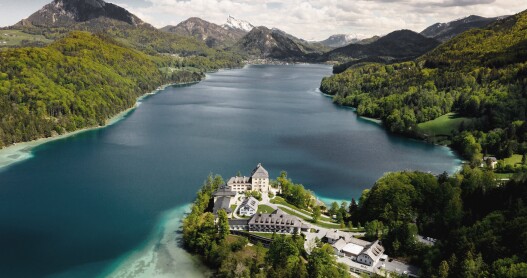
Rosewood Hotels and Resorts has transformed the historic Schloss Fuschl hotel outside Salzburg into a contemporary lakeside escape.
Whether you’re a food fan or adventurer-—or somewhere in between—there’s something to delight your senses in this centrally located European country.
Afar’s resident hotel expert shares the summer 2024 openings that are worth a special trip.
It’s easy to see why these ski chalets and mountain cabins are among the highest rated on Airbnb.
For the sustainably minded craftspeople in Austria’s most design-forward region, the forest has been a source of inspiration for centuries.
RESOURCES TO HELP PLAN YOUR TRIP
When Mozart was a child, he performed here for Empress Maria Theresa; Franz Joseph I was born and died here, and his unhappy wife, Sisi, presumably sulked inside. Schönbrunn Palace, in the western Hietzing district, naturally invites comparisons to Versailles, as the Hapsburgs built it to rival the French palace. Today, the 1,441-room baroque masterpiece designed by Fischer von Erlach is a World Heritage site, with its Great Gallery and carriage museum among the draws. Its gardens are so vast that a small train takes you around to the palm house, an orangery, and a zoo. The recently renovated, columned Gloriette structure and its café look over the palace and, beyond, Vienna. Schönbrunn’s grandeur never ceases to impress—not bad considering that the palace was only a summer retreat for the Hapsburg rulers.
Gottfried Semper and Karl von Hasenauer may not be household names abroad, but in the Vienna of Franz Joseph’s time they were towering architects. The duo was responsible for the soaring cupolas and sweeping staircases of two stunning mirror-image cultural institutions on the Ringstrasse. In the Kunsthistorisches (Art History) Museum, famous stairwell-roof frescoes are by Gustav Klimt, and the rich assemblage of works includes Pieter Brueghel’s Tower of Babel, Caravaggio’s David with the Head of Goliath, and works by Dürer, Raphael, and Velázquez. The sister Naturhistorisches (Natural History) Museum is home to one of Europe’s oldest pieces of art: the famous Paleolithic goddess figure known as Venus of Willendorf. There are also displays that range from insects to dinosaurs and flora and fauna collected worldwide.
The name Fleischmarkt goes back to the medieval butchers who worked along this Inner City street. The surrounding blocks are still home to long-standing merchants like Mühlbauer Hut, a century-old hatmaker. Strolling the area also takes you to Vienna’s oldest church, the tiny Romanesque Ruprechtskirche. Located in a Biedermeier-era house, the nearby Stadttempel synagogue survived Kristallnacht. The Orendi-Hof at Fleischmarkt 1 is a stunning art nouveau building, followed a few doors down by Max Kropf’s richly detailed 1899 neoclassical building and then by a Byzantine-style Greek Orthodox church, all in one short block. In recent decades, the Fleischmarkt bar area gained the nickname Bermudadreieck—the Bermuda Triangle—in reference to tipsy revelers getting lost in its twisting alleys.
Based on an idea by Simon Wiesenthal and erected in 2000, British artist Rachel Whiteread’s Nameless Library in the Judenplatz sits in one of the most tranquil squares in Vienna’s Inner City. The simple, stark, 12-foot-high concrete block is dedicated as a Holocaust memorial. Since the Middle Ages, Viennese Jewish life centered around the Judenplatz, and excavations during the memorial construction revealed a synagogue that had been destroyed in the pogroms of 1421. The square’s Misrachi-Haus, with its baroque facade dating from 1694, is now a branch of the Jewish Museum Vienna (its main location is in the Palais Eskeles). Johann Bernhard Fischer von Erlach’s stately Bohemian Court Chancellery building and a monument to the Enlightenment author Gotthold Ephraim Lessing also face the square.
The Celts were in Austria long before the Romans were, but it was the latter who left a more lasting imprint. With a population of 30,000 at its peak, the Roman legion camp of Vindobona was considered the edge of the world. As old as the Roman presence in Vienna is, the Römermuseum only dates back to 2008. On the Hoher Markt, one of the oldest squares in the city (and one with a fabulous gilded baroque fountain), the museum lies right over the Roman officers’ compound. Displays on everything from cooking utensils to toys are enhanced with a 3-D film on life at the time. Across the square, the Ankeruhr, an intricate and gorgeous art nouveau mechanical clock, was erected in 1914 on a bridge joining two sections of the Anker insurance building.
A cruise skeptic changes her tune after a voyage down the Danube.
There’s nothing quite as magical as a horse-drawn sleigh ride through the snowy wonderland that is the Alps in winter. For the most romantic option, head to Salzburg and take a ride through the Salzach River Valley, past snow-topped Alpine chalets, quaint inns, and huge glaciers. Panorama Tours offers excellent December tours, during which guests snuggle beneath warm blankets before warming up with traditional Styrian cuisine in Ramsau.
This beloved Austrian dessert is more than a culinary classic—it’s a source of national pride.
By 1773 the Mozart family had outgrown their residence on bustling Getreidegasse and moved across the river to the more spacious Tanzmeisterhaus, the former home of the court dancing instructor. Mozart lived here until 1781, when he moved to Vienna. His father Leopold remained until his death in 1787. More than half the building was bombed during World War II, but it was restored and opened as a museum in 1996. Inside the house are documents, portraits, and instruments that detail what life was like for the Mozart family during their time here. The Wohnhaus and Mozart’s Birthplace are both worth checking out, particularly if you’ve purchased a Salzburg Card that provides entrance to both; this one, however, is usually less crowded.
Those Picasso and Monet paintings aren’t what they seem at this fascinating art museum. And that’s precisely the point.