Austria

Austria was once part of a mighty empire, which the Habsburgs ruled over from Vienna for some seven centuries. Although Austria today is just a fraction of its former glory, it still maintains its rich cultural and artistic heritage. Vienna is one of Europe’s most attractive cities, combining historic sites with a vibrant creative scene. The city is justifiably famous both for its classical music pedigree and for its elegant grand balls. With two-thirds of the country’s landscape shaped by the Alps, Austria is paradise for anyone eager to explore the mountains—or nature in general. Some of the world’s top ski resorts can be found in the western part of the country. The regions around the Danube, as well as south of Vienna, are known for their many family-run wineries. Austria is also a leader in the farm-to-table movement, and has over 20% of its agriculture, and more than 20,000 farmers, committed to organic farming.

Austria castle at sunset

Shutterstock

Overview

When’s the best time to go to Austria?

Temperatures in spring and fall are usually milder, making it a great time to visit. Winter sports are a major draw to the resort towns in the Austrian Alps, and the skiing is consistently ranked as some of the best in the world. The season lasts from December through late March. Vienna and Salzburg tend to be more crowded in July and August, and during major festivals. Temperatures vary by region and elevation, but averages do not climb above a comfortable high 70s in Vienna during summer.

How to get around Austria

Vienna can be reached via direct flights from several North American cities, including New York (JFK and Newark), Washington D.C., Miami, Chicago, and Toronto, though it is often practical to fly through Munich or Zurich—especially for a trip to Austria’s western provinces. Smaller airports in cities like Salzburg, Graz, Klagenfurt, and Innsbruck can be easily reached. High-speed trains connect Vienna and Salzburg with cities like Munich and Zurich. A hydrofoil travels between Bratislava and Vienna on the Danube. U.S. visitors can stay up to three months with just a passport, after which time a visa is required. If you are entering Austria using a rental car, make sure there is a Vignette (toll sticker) affixed to the windshield.

Cities in Austria are linked by a fast and efficient rail system, with Vienna to Salzburg taking as little as two-and-a-half hours. To explore large towns and cities, public transportation (bus and tram), biking, or walking is best. Driving on Austria’s highways requires a toll sticker—available in ten-day, two-month, and twelve-month increments—which can be purchased at gas stations, post offices, auto clubs, and even in neighboring countries. Renting a car is another great way to explore rural regions and high Alpine routes.

Food and drink to try in Austria

Austria’s cuisine reflects heavily on its imperial past, with influences from Hungary, Italy, and the Balkans. Classic dishes like Tafelspitz (beef, root vegetables, and sauerkraut), Wiener Schnitzel (veal cutlet, flattened and fried), and Gulasch (rich meat stew, often with paprika) can be found throughout the country, while every region is proud of their speciality dishes. But, let’s face it, the major food draw is really the delectable cakes and pastries, including the famous apple strudel and Sachertorte. You’d be forgiven for not knowing that Vienna is the only world capital producing significant quantities of wine within its city limits. White wines dominate the vineyards of the Wachau Valley, while reds prevail in Burgenland and Styria.

Culture in Austria

Some consider Vienna the cultural capital of Europe. The city has been synonymous with the music of Mozart, Beethoven, and Strauss, to name a few, as well as painters like Klimpt. Elegant balls, nights at the Vienna State Opera (one of the world’s best), and hours spent in coffeehouses are quintessential Vienna. The 640-year legacy of the Habsburg dynasty, which officially ended in 2011 with the death of Otto von Habsburg, can be found throughout the city. Oh, and let’s not forget the Boys Choir. Austria has nine inscriptions on the UNESCO World Heritage List: Schönbrunn Palace in Vienna, the Historic Center of Vienna, Wachau Cultural Landscape, Prehistoric Pile Dwellings around the Alps, Historic Center of Salzburg, Hallstatt-Dachstein/Salzkammergut Cultural Landscape, Graz Historic Center and Eggenberg Palace, Fertö/Neusiedlersee Cultural Landscape, and the Semmering Railway.

The year waltzes in with Vienna’s Ball Season in January and February, during which time “Fasching,” Austrian Carnival, also begins. The world famous Salzburg Festival takes place July–August, culminating with a performance of Hugo von Hoffmannsthal’s Everyman. Summer sees a variety of music festivals, from classical to rock (Nova Festival) to avant-garde (Styrian Fall), as well as wine festivals extending into the fall. Austria’s Christmas markets round out the year. Vienna alone lights up with 20 official Christmas markets selling seasonal gifts, decorations, and sweets.

Local travel tips for Austria

Austria has nine provinces: Vienna, Burgenland, Lower Austria, Upper Austria, Salzburg, Styria, Carinthia, Salzburg, Tyrol, and Vorarlberg. While German is the official language, there are regional dialects that German speakers from outside may have trouble understanding. In some cases, totally different words are used. The German Krankenhaus, for example, is Spital (hospital), and a Brötchen is a Semmel (roll). But language shouldn’t be an issue; English is widely spoken. Austria is a parliamentary democracy, and its national holiday falls on October 26—a day of free entry to state museums and many government buildings.

Related video

Guide Editor

READ BEFORE YOU GO
HOTELS
Travel like James Bond in these six beautiful destinations, from the beaches of Jamaica to the mountains of Austria.
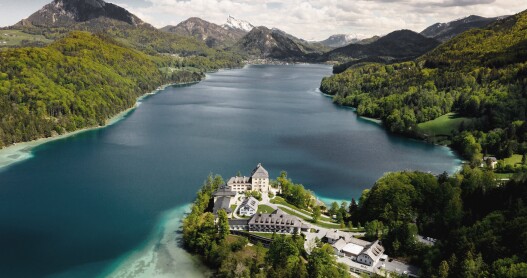
Rosewood Hotels and Resorts has transformed the historic Schloss Fuschl hotel outside Salzburg into a contemporary lakeside escape.
Whether you’re a food fan or adventurer-—or somewhere in between—there’s something to delight your senses in this centrally located European country.
Afar’s resident hotel expert shares the summer 2024 openings that are worth a special trip.
It’s easy to see why these ski chalets and mountain cabins are among the highest rated on Airbnb.
For the sustainably minded craftspeople in Austria’s most design-forward region, the forest has been a source of inspiration for centuries.
RESOURCES TO HELP PLAN YOUR TRIP
As the largest fully preserved fortress in central Europe, the more-than-900-year-old Hohensalzburg has long been the medieval crown above an elegantly baroque city. Its current appearance dates back to the 1495–1519 reign of Prince-Archbishop Leonhard von Keutschach, during which the fortress was expanded using funds generated from the nearby salt and silver mines. Inner courtyards lead to an extensive, but not exhausting, collection of medieval curiosities and other artifacts from the political elites of the Holy Roman Empire. The apartments of the prince-archbishops—including the ornately decorated Golden Chamber and Bed Chamber—are highlights of a wonderfully maintained interior, while the views over the city are simply stunning. Access to the fortress is by foot or a short funicular ride.
Consider taking your 2018 travels onboard with these family-friendly adventures.
Across the river from the heart of the old town, the historic Gablerbräu dates back to 1429 and offers the usual mix of Austrian favorites, including schnitzel, Tafelspitz, and goulash, plus seasonal apricot dumplings and the local Salzburger Nockerl pastry. The local draft beer, Gabler Zwickl, is a good choice, but it’s the atmosphere that really makes this place worth a visit. While the chance to dine outdoors on a cool summer evening in Salzburg is hard to pass up, the classic decor inside should not be missed. Ask for a spot in the Richard-Mayr-Stube, a cozy dining area with murals, vaulted ceilings, stained-glass windows, and a charming old tile stove.
With 24 hours’ notice, AFAR sent writer Tom Rachman to Vienna where, on his quest to discover 
the soul of the Austrian capital, he 
stumbled upon the city’s 
darker side.
From pickle juice to hearty stews, these post-drinking cures are here to help.
Believe it or not, a taste of vinegar can reveal a place’s essence just as well as a sip of fine wine can.
Up until the end of World War I in 1918, the Hofburg was the center of the Habsburg dynasty and the Austro-Hungarian Empire. The massive complex includes the Österreichische Nationalbibliothek (National Library), Schatzkammer (Imperial Treasury), and, the most recent addition, the Neue Burg, completed in 1913. A visit should include the Imperial Apartments, each lavishly decorated in Baroque and Rococo styles, and the Sisi Museum, covering the life of Austria’s beloved (and actually Bavarian) Empress. It is also the official seat of the president of Austria.
Salzburg’s 17th century Baroque cathedral, built upon a site where cathedrals have stood since the 8th century, is connected with St. Peter’s church and the Residenz by arcades to form a cluster of Salzburg’s most important structures.

Inside is not entirely different from other major cathedrals, with beautiful artwork, ornate carvings and a selection of relics (Virgil, Rubert and Martin of Tours among others). Most notably, however, is that it contains the baptismal font used for Salzburg’s most famous resident, Wolfgang Amadeus Mozart. It rests on four lions which, being designed at a time when very few knew what an actual lion looked like, resemble something more like a beastly bulldog than king of the jungle.
It’s easy to walk right by the Christmas Museum and be none the wiser. But, these two rooms above a cafe at Mozartplatz offer an interesting look into the holiday as experienced in Salzburg. With so many great sights and experiences in Salzburg, it’s difficult to call this a “must-see”, however, with two or more days and a Salzburg Card to cover admission, it deserves at least a quick visit. From vintage Advent calendars to ornaments and depictions of Santa and his Alpine accomplice for the naughty kids, Krampus, the museum takes visitors through traditional Christmas in Austria from the 1800s up to 1940. The final display brings with it a strong dose of nostalgia: a 1930s living room lit by the warm glow of Christmas lights.
Just a short trip from Innsbruck, the Stubaital is beautiful valley that is perfect for unwinding in one of the most parts of Tyrol. This unspoiled landscape is filled with cool streams and lush Alpine fauna, along with a few charming little villages like Mieders and Neustift im Stubaital. The beautiful Grawa waterfall is also nearby and a highlight of any hike.