
This is part of our Native American Heritage series, guest edited by Tlingit author Kate Nelson. Read on for what America 250 means to Indigenous communities, Native American experiences in NYC, and Indigenous-led tours across North America.
To many Native people, home is Turtle Island: what is now known as Canada, Mexico, and the United States. Here, we explore it through day trips and a multinight adventure led by Indigenous-owned companies and communities whose knowledge of these lands spans generations.
Ride horseback in the quiet forest near Glacier National Park
Time: 2.5 hours, May to September
Book It: blackfeetoutfitters.com
The only way into Badger–Two Medicine’s roadless 130,000 acres is by foot or horseback. Blackfeet Outfitters owner Alger Swingley leads travelers on his own horses through the northwestern Montana forest on half-day cultural trail rides. Considered Blackfeet homelands, the area is just south of Glacier National Park and far less crowded. The small groups—merely four guests, with Swingley as their guide—make for an intimate outing. “The flowers and trees are beautiful, and we have some great views of the Continental Divide,” Swingley says. Midway through the journey, riders dismount to stretch their legs and take in everything from wolf tracks to limestone peaks in the distance.
Hear oral histories while floating across North America’s deepest river gorge

Nez Perce Tourism tours, often led by founder Stacia Morfin (left), float along Hells Canyon—known as Saqánpa to the Nimiipuu (Nez Perce)—which has served as a fishing, gathering, trading, and living grounds for more than 16,500 years.
Photo by Nick Cote (L); photo by Zack Frank/Shutterstock (R)
Time: 5 hours, May to September
Book It: nezpercetourism.com
Since 2019, Nez Perce Tourism has been leading excursions through Nimiipuu Country. The “Hear the Echoes of Our Ancestors” jet boat tour begins at the confluence of the Snake and Clearwater rivers and winds through Idaho’s Hells Canyon, the deepest river gorge in North America, known as Saqánpa to the Nimiipuu (Nez Perce). Each journey pairs storytelling from the region’s original inhabitants with visits to sites such as ˀilaˀqatp’áatpa (Where Light Touches Earth), also called Buffalo Eddy, home to hundreds of ancient petroglyphs. “Basalt columns, canyon walls, and river corridors come alive through the sharing of oral histories and traditional teachings,” says Stacia Morfin, founder of Nez Perce Tourism. “The canyon reminds us that we are part of something much larger than ourselves—and that we all have a responsibility to care for the places we call home.”

Witness humpback whales breach during their Hawai‘i migration
Time: 2–3 hours, December to April
Book It: haleiwasharktours.com
Native Hawaiians consider humpback whales, or koholā, to be relatives and ancestors. They’re also a marvelous sight to behold, even for people like Kala Alexander, cofounder of Haleiwa Shark Tours, O‘ahu’s only Indigenous-owned whale-watching (and shark diving) outfitter. “To see a 60-foot animal jump 40 feet out of the water or come up next to the boat and look at you eye to eye is a pretty emotional experience,” Alexander says. Guides provide insight about whale behavior and migration patterns, and the day concludes with sunset at Pua‘ena Point, north of Hale‘iwa Town. Peak season is between January and March.
Hook a prized Lahontan cutthroat trout with an Indigenous fly-fisherwoman
Time: 4 or 8 hours, November to April
Book It: kooyooepaaguides.com
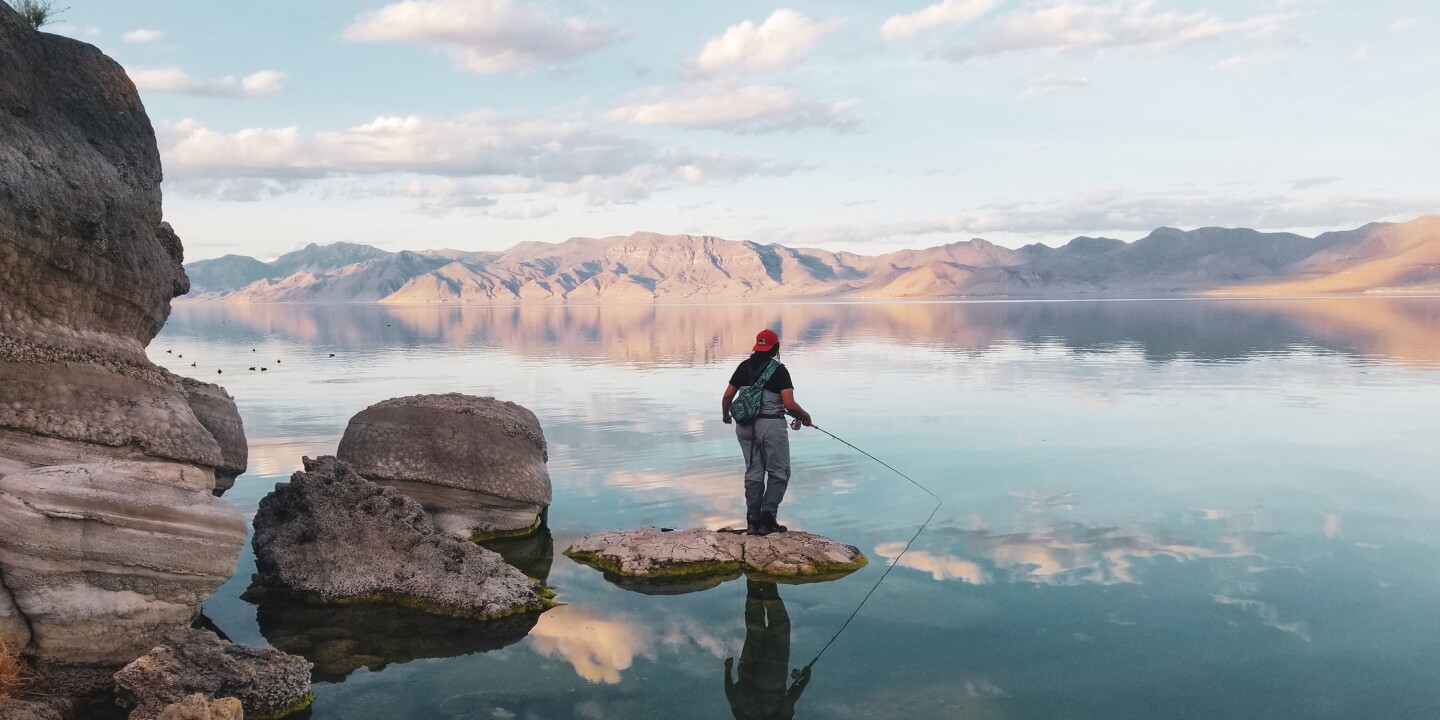
Autumn Harry is an Indigenous woman angler and the first Numu (Northern Paiute) woman licensed fly-fishing guide to offer trips on Pyramid Lake, about 45 minutes north of Reno. The 125,000-acre body of water is the largest remnant of Lake Lahontan, which covered much of western Nevada, and holds 9,000 years of history for area tribes. Harry’s business, Kooyooe Pa’a Guides, attracts participants of all skill levels, who practice catching and releasing Lahontan cutthroat trout, a species no longer endangered thanks to conservationists like Harry. “My guiding style centers Indigenous peoples, how we connect to the land, water, and fish, and how that’s still part of sustaining ourselves with our ancestral foods,” she says.
Marvel at century-old totem poles in an Alaskan temperate rainforest

The totem poles of the Organized Village of Kasaan are within the 16.7-million-acre Tongass National Forest. Tribal president Mike Jones is among many people fighting to save the forest, which faces logging threats that could forever change the Alaskan landscape.
Photo by Mike Jones (L); photo by Danita Delimont/Shutterstock (R)
Time: 2 hours, year-round
Book It: kasaan.org
“As Haida, we are the original totem pole people,” says Organized Village of Kasaan tribal president and historian Mike Jones. A tour with Jones or one of his fellow guides in Kasaan—a community on Prince of Wales Island—stops at the monumental, 100-year-old, hand-carved sculptures. Visitors also view the last traditional Haida longhouse in the world. Built in 1880 by Chief Son-I-Hat, it served as a hub for the community and a home for his family. Both the totem poles and the longhouse are located within the 17 million–acre Tongass National Forest, the largest temperate rainforest on Earth.
Taste Zapotec dishes in one of Mexico’s culinary capitals
Time: 6 hours, year-round
Book It: familialula.com
The city of Oaxaca, the gastronomic capital of the eponymous Mexican state, is known for its cooking traditions and bustling mercados. Betsaida López Díaz of Familia Lu’la’ hosts walking tours, sharing her hometown’s culinary culture through the lens of the Zapotec people, who have resided in the region for more than 2,500 years. Travelers visit 20 de Noviembre, Sánchez Pascuas, and Benito Juárez markets, sampling corn-based dishes such as nicuatole (a maize dessert), tejate (a toasted cacao drink), and huitlacoche (a smoky, earthy fungus). “These pre-Hispanic foods and beverages continue to shape Oaxacan cuisine today,” López Díaz says. “They are living traditions that Indigenous communities have preserved for thousands of years and remain an important part of everyday life in Oaxaca.”
Shuck Native-harvested oysters with a Houma oysterman
Time: 2–3 hours, year-round
Book It: bayourosaoysters.com
“Oysters aren’t just a piece of meat on a shell; they are food, medicine, culture, economy, and memory,” says Jason Pitre, founder of Bayou Rosa Oysters. Long before New Orleans became known for Mardi Gras festivities and Creole culture, the Houma people stewarded the bayou and harvested its abundant wild oysters. Pitre carries on his oysterman grandfather’s legacy, growing mollusks near his native Lafourche Parish and selling them to restaurants around the city. During the “Bayou-to-You Experience,” visitors learn how to shuck briny varieties, savoring them with Louisiana pairings (think Cajun mignonette and rémoulade), while Pitre explains the food’s meaning to Indigenous peoples, who once built sacred shell mounds along the Gulf Coast.
View undisturbed Ancestral Puebloan cliff dwellings and petroglyphs
Time: 7 hours, April to October
Book It: utemountaintribalpark.info, 970-993-0069
In the Four Corners area, the Ute Mountain Tribal Park’s 125,000 acres contain petroglyph and pictograph rock art carved by Ancestral Puebloans. The tribally owned and operated park first opened to the public in 1972 and today caps tourists at 30 per day. Visitors can experience its preserved sites on a walking tour alongside a Ute guide. The full-day itinerary highlights a stop at the Eagle’s Nest cliff dwelling—reachable by a 28-foot ladder—which features 15 rooms, a kiva (ceremonial space), and unmatched views of the surrounding canyon.
Forage for a precontact meal on Ontario’s Manitoulin Island

Travelers participating in the Anishinaabe Culinary Experience hike the scenic Warrior Trail—a section of the Bebamikawe Memorial Trail on the TransCanada Trail network, the longest multiuse system of recreational greenways, paths, and waterways in the world.
Photo by Alex Dumitrescu/Shutterstock
Time: 3.5 hours, June to November, depending on ingredient seasonality
Book It: wikytours.com
The Wiikwemkoong Unceded Territory is home to the Three Fires Confederacy—the Ojibwe, Odawa, and Potawatomi nations. Located on Odawa Mnis (Manitoulin Island), it is Canada’s only officially recognized Unceded Indian Reserve. On Wiikwemkoong Tourism’s “Anishinaabe Culinary Experience,” visitors hike 1.3 miles on the Warriors Trail along Lake Huron, harvesting edible plants that become part of a meal. Prepared outdoors by chef Vince Manitowabi, dishes include precolonial ingredients such as clay-baked trout or stone-cooked venison, wild hawberries, mushrooms, and mint. —Debbie Olsen
Chopper across Jasper National Park’s alpine landscapes

On tours with Fall Mountain, Moberly shares the meanings of traditional names for landmarks, including the the river Athabasca (“where there are reeds” in Cree).
Photo by Fallen Mountain
Time: 4 hours, year-round
Book It: fallenmountain.com/helitours
A tour with Fallen Mountain offers an aerial view of Jasper National Park’s prodigious peaks, glaciers, and lakes with owner Lauren Moberly, a member of the Aseniwuche Winewak Nation, and partner company Jasper Hinton Air. As travelers fly over attractions such as Solomon Peak, Moberly shares the story of her ancestors, who were forcibly removed from their home when Jasper was designated a park in 1907. “We are known as the Rocky Mountain People,” Moberly says. “We have many legends related to these lands, and I love sharing them.” The trip ends with a landing near Grande Cache, an area overlooking the Smoky River at the edge of the Alberta Rockies, where snacks such as candied smoked salmon and fry bread are served. —D.O.
Take an Arctic safari on Nunavut’s icy, lively coastline
Time: 4–10 days, May and June
Book It: arcticbayadventures.com
The floe edge, where coastline ice meets open water during the spring melt, has long been important to Inuit communities. Arctic Bay Adventures in Nunavut, Canada’s largest and northernmost territory, brings visitors to the dynamic liminal zone to engage in local culture and life. The fully equipped expedition includes transportation via snow machine and qamutiik (a traditional Inuit sled), generator-powered base camp accommodations, and possible side trips such as mountain climbing and Arctic char ice fishing. “You see animals that can’t be seen anywhere else in the world,” says the company’s general manager, Chris Mitchell. “We camp out on the ice and make daily safaris to the floe edge to see Arctic birds, seals, polar bears, narwhal and beluga whales, and other wildlife.” —D.O.
Tour a petrified sand dune from the Navajo perspective

The name Antelope Canyon comes from local Navajo stories and the antelopes that once roamed the area.
Photo by Henri Buenen/Unsplash
Time: 1.5 hours, year-round
Book It: navajotours.com
Antelope Canyon, a popular destination in the American Southwest, has long been a site of significance to the Navajo people. Near Page, Arizona, Antelope Canyon Navajo Tours owner Dalvin Etsitty shares the history of the slot canyon, which is part of the Navajo Tribal Parks system and accessible only with a guide. Travelers move through the geological wonder, known as Tsé bighánílíní (Place Where Water Runs Through Rocks), while Etsitty tells stories passed down by his grandparents about the air, water, and fire that formed the petrified sand dune 5 million years ago. “In Navajo, kéyah means ‘what is underneath my foot,’” he says. “To us, kéyah is the earth. This place slows you down, brings you back to earth, and sets your two beautiful feet on the ground again.”
Bird-watch and trek to the secluded Maya city of Yaxchilán
Time: 7 hours, year-round
Book It: [email protected]; Facebook.com/EcoturismoSelvaLacandona
The Ch’ol or Wiñik people, who mainly reside in the southern Mexican state of Chiapas, are among the 6 million Maya descendants still alive today. Sharing that living history is Silvano López Gómez, who founded Siyaj Chan Bio-Archaeological Tourism in 2007. On the “Culture and Nature” tour, travelers take a boat ride along the Usumacinta River and walk on a trail in Mexico’s largest remaining tropical rainforest. Here, wildlife includes howler and spider monkeys, toucans, and numerous species of butterflies. The roughly 1.2-mile hike culminates in the ancient city of Yaxchilán, which once served as a Mesoamerican religious and political center before the Maya Empire’s 9th century decline. Of Yaxchilán’s 130 surviving monuments and preserved architectural features, López Gómez says, “The detailed art carved in stone on the stelae, altars, and lintels is considered among the finest in the Maya world.”
Glide down the revitalized Klamath River in a rare redwood canoe
Time: 2 hours, June to October
Book It: visityurokcountry.com
After the completion of the world’s largest dam removal project in 2023, the Klamath River is flowing freely again through the Yurok Tribe’s ancestral territory in northern California. The guided paddle starts at the Yurok Country Visitor Center, about 50 minutes south of the Oregon border. Travelers float down the vital waterway in a rare handcrafted redwood dugout canoe and across a variety of tributaries, depending on daily conditions. “I really enjoy canoeing the Terwer Valley, which is our main route,” says tour captain Kobe Mitchell. “It tends to be warmer, and we always seem to see more animals, such as bears, otters, seals, bald eagles, great blue herons, and osprey.”


