

This is part of our Native American Heritage series, guest edited by Tlingit author Kate Nelson. Read on for what America 250 means to Indigenous communities, Native American experiences in NYC, and Indigenous-led tours across North America.
Native Americans are a quintessential part of New York City’s identity—and their impacts are everywhere, if you know where to look. When I moved to Manhattan in 2022, I uncovered those Indigenous roots at art shows, culinary pop-ups, and other cultural events.
As a Lakota-Dakota person, I will admit that my local Native knowledge isn’t as extensive as someone of Lenape heritage, the original peoples of this land long called Lenapehoking. But like New York City’s many Indigenous residents—estimated at more than 180,000 people, among the country’s largest urban Native populations—I have spent a lot of time exploring how Indigenous influences shaped this place centuries before Dutch colonists arrived in the early 1600s.
Running the length of modern-day Manhattan, the 13-mile Wickquasgeck Trail was an important route, lined with Lenape villages, that European settlers eventually paved and renamed Broadway. Near the bottom of this path, near present-day City Hall, is Foley Square, once known as Collect Pond, a natural spring that hydrated tribes and colonies alike. Also on the trail is Union Square, whose popular farmers’ market features heirloom fruit and vegetable varieties that, like Broadway, have inextricable Lenape links. And uptown, Welikia Project’s interactive map reveals how Central Park was once a major fishing, hunting, and gathering hub. Many Indigenous attractions are scattered across the city, and Barnard College’s Indigenous Walking Tour is one excellent way to learn about them.
To immerse yourself in New York City’s Native side, here are five places I think everyone should visit, whether you’re a local or a traveler.
Gochman Family Collection
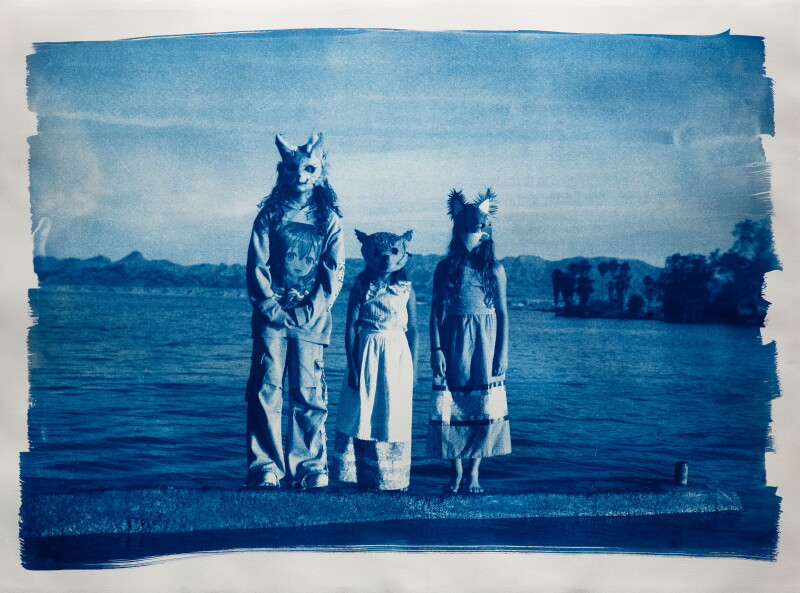
The Gochman Family Collection has a magnitude of Indigenous art on display, including When Animals Were People (A Study) by Cara Romero.
Courtesy of the artist
RSVP for address, Upper East Side, New York
There’s a true Native arts renaissance underway in New York City, with an impressive array of Indigenous fine arts on display. Helping propel this movement is the Gochman Family Collection (GFC), a cultural institution and private art collection. GFC features more than 750 artistic works by contemporary Native artists—one of the largest assemblages of its kind—out of a residential home, which opened for select viewings in 2021. The institution lends pieces to museums like the Whitney Museum of American Art and events such as the Venice Biennale.
Helming the GFC’s creative direction is curator and artist Rachel Martin (Tlingit), who acquires genre-defying pieces such as provocative weavings by Tyrrell Tapaha (Diné), the humorous sculpture Hi-Tech Peace Pipe by James Luna (Payómkawichum, Ipai, and Mexican), and an intriguing photograph of masked children printed on silk organza by Cara Romero (Chemehuevi). “There is no single way to make contemporary Native art,” says Martin. “The work can be funny, strange, beautiful, political, deeply specific—and completely of the present.”
This month, the GFC is also unveiling sister space Branchline, a 10,000-square-foot arts and exhibition venue in New York’s Hudson Valley. The Upper East Side location—which reveals its address only to tourgoers after they’ve registered—has monthly public visiting hours that are announced by newsletter and social media.
Lakota Frybread Co.
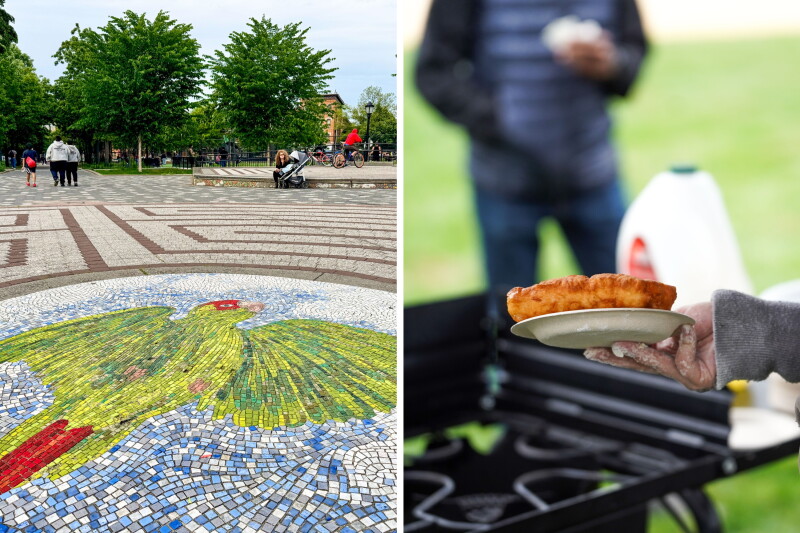
Order a warm fry bread with wójapi in Maria Hernandez Park.
Photo by Here Now/Shutterstock (L); courtesy of Lakota Frybread Co. (R)
Maria Hernandez Park, Bushwick, Brooklyn
New York City doesn’t have any permanent Native-led restaurants, so I was excited to see Lakota Frybread Co. popping up in Bushwick’s Maria Hernandez Park in August 2026. Sometimes called Indian tacos, these deep-fried discs of dough can be served with savory or sweet toppings.
As a Lakota-Dakota person, my first experience of Native food was fry bread. It’s a nostalgic treat for me that holds a complicated history. In the 1860s, the Navajo and other tribal communities were removed from their ancestral homelands and unable to access their traditional foods, such as blue corn, tepary beans, and wild game like deer and antelope. The U.S. government instead provided processed European ingredients such as white flour, sugar, and lard. These components could be cooked together quickly in a pan or over an open fire, resulting in this starchy postcolonial staple.
Today, fry bread is a food that, while beloved, symbolizes Indigenous oppression, resistance, and resilience—representing what is possible from making something from nothing. Lakota Frybread Co. founder Raini Skye Field (Cheyenne River Sioux) pairs her version with wójapi, a warm berry sauce traditionally made by Great Plains tribes with chokecherries, today often substituted with blueberries, strawberries, cranberries, and the like. “I grew up with wójapi being made by my mom,” says Field. “It’s such a comfort food for me.” Get yours most Sundays at noon until they sell out.
National Museum of the American Indian
1 Bowling Green, Financial District, New York
“What makes New York a Native place?” That’s the question at the heart of the sprawling interactive exhibition Native New York, which takes visitors on a visual journey to 12 Indigenous places across the state at the Smithsonian’s National Museum of the American Indian. Since 1994, the cultural institution has aimed to act as an “honest and thoughtful conduit to Native cultures—present and past—in all their richness, depth, and diversity,” according to its website. Leading those efforts is director Cynthia Chavez Lamar (San Felipe Pueblo), who in 2022 became the first Native woman to head a Smithsonian museum.
At the Alexander Hamilton U.S. Custom House in lower Manhattan, Indigenous identities are explored in contemporary and historical exhibitions as well as during engaging cultural events, including a July 2026 concert by Plains Cree and Salish R&B musician Tia Wood. Current exhibitions include Jeffrey Veregge: Of Gods and Heroes, the Salish artist’s comic story filled with bright action figures designed in Pacific Northwest formline style, and Ancestral Connections, featuring 10 artists interpreting their tribes’ painting, pottery, and other artistic techniques inflected by their unique perspectives and lived experiences.
Relative Arts
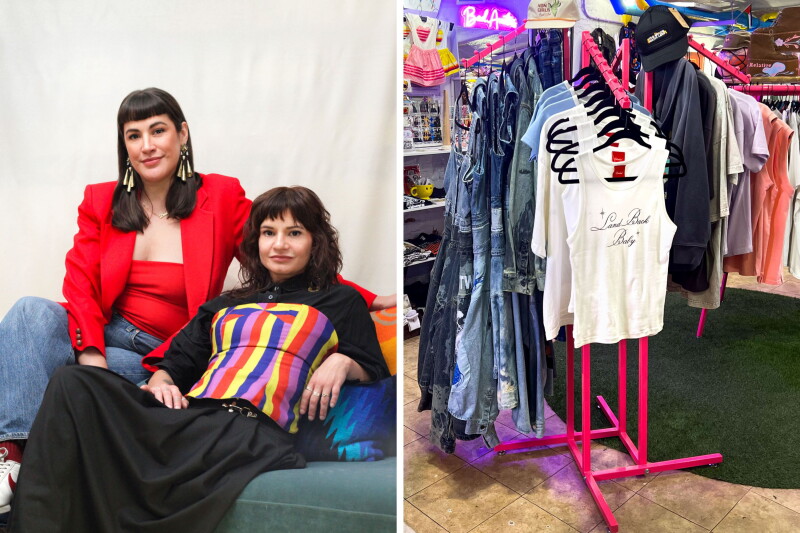
Korina Emmerich and Liana Shewey opened an Indigenous futurism clothing store in the East Village.
Photo by Miah Mccarthy (L); courtesy of Relative Arts (R)
367 E. 10th St., East Village, New York
The first and only “Indigenous futurism” shop in the five boroughs is Relative Arts, which features fashion, jewelry, accessories, home goods, and contemporary works made by more than 50 Indigenous artists from across the Americas. But there’s a lot more on offer at this petite East Village storefront, which opened in 2023. It also doubles as a peer-run creative studio, a pop-up concert and art exhibition venue, and a community gathering space, as envisioned by fashion designer Korina Emmerich (Puyallup) and community organizer Liana Shewey (Mvskoke).
“So much of Indigenous design is Indigenous storytelling,” Emmerich says. “When people walk into Relative Arts, we want them to feel like they’re walking into their relatives’ place—like home.” Last year, Emmerich and Shewey also launched Indigenous New York Fashion Week to foster an even larger platform for Native creatives showcasing their work. This year’s affair highlighted looks by 30 designers from across the globe.
Brooklyn Botanic Garden’s “Ohkehteau (Plants of the Earth): A Shinnecock Oral History”
990 Washington Ave., Brooklyn, New York
The city’s countless high-rises and planned parks can leave you wondering about New York City’s original landscape. The Brooklyn Botanic Garden offers a glimpse through Ohkehteau (Plants of the Earth): A Shinnecock Oral History, an exhibit within the Native Flora Garden. In the accompanying audio commentary, historian Chenae Bullock (Shinnecock) explains plant names in her Native language and shares stories of her tribe’s relationship to each species. For instance, sassafras bark oil was largely used for medicinal purposes by Indigenous groups and then became wildly popular among European settlers, who believed the plant to be a panacea, using it to flavor root beer, tea, and candy.
In a bustling metropolis where you often can’t see the literal land you’re walking on, this tour is the most grounding experience in local Native culture I’ve come across. It gives a living human voice to New York State tribes that otherwise aren’t readily represented. The exhibit also serves as a reminder that even as the land changes over time, the impacts and influences of a place’s original peoples—and plants—live on.


