Vietnam

The Vietnamese countryside can feel like an impossibly beautiful place, with rice paddies extending in every direction, or at least up to the highlands, a mountain chain often shrouded in blue mist that forms the western spine of the country. The eastern side of Vietnam faces the South China Sea, with palm-lined beaches and islands that are emerging as popular resort destinations. You may also be surprised by the length of the country—at roughly 1,025 miles, it’s longer than California, and offers a surprising variety of destinations from bustling Ho Chi Minh City (Saigon) in the south to Hanoi in the north, with countless historic sites and natural wonders between the two. Halong Bay has left poets and painters—and travelers—in awe for centuries, while the country’s hill stations provide cool, literally, escapes.

Vietnam Has Reopened Borders to All Travelers

Photo by Nguyen Quang Ngoc Tonkin/Shutterstock

Overview

When’s the best time to go to Vietnam?

Given Vietnam’s enormous length, it can be difficult to pick a perfect time of year if you want to visit the entire country with the southern and northeastern monsoons impacting different regions at different times of the year. The safest months, however, are in the fall (September to December) and spring (March and April). The north of the country, and the highlands generally, can be cold in the winter while lower areas can become sweltering hot, and wet, in the summer.

How to get around Vietnam

Vietnam’s train service is dependable if not glamorous, and a good way to travel the length of the country. The journey from Ho Chi Minh City to Hanoi takes about 30 hours in all, though you will most likely want to stop en route at Hoi An, Hue, Da Nang, or other cities along the coast. If you prefer the freedom of your own car, hotels and travel agents can assist with hiring one with a driver. Given the relative cheapness of taxis, there’s little need to attempt to navigate the public transportation systems of Vietnam’s cities.

Can’t miss things to do in Vietnam

The must-see sites in Vietnam includes its two major cities. Ho Chi Minh City (Saigon) is the bustling, brash and buzzing metropolis of the south, which even 40 years after unification remains the country’s economic powerhouse. Hanoi, in the north, is the country’s capital and relatively more sedate. It has also managed to preserve more of its historic districts and buildings. Halong Bay is a can’t-miss-sight not just for Vietnam, but for the world generally. The UNESCO World Heritage Site has thousands of islands and karst formations that create an otherworldly seascape. Vietnam’s smaller cities like Hoi An and Hue provide relaxed and atmospheric counterpoints to the country’s metropolises and compared to the other parts of Southeast Asia, many of Vietnam’s beach resorts have yet to be overwhelmed by mass tourism.

Food and drink to try in Vietnam

In recent years, Vietnamese cuisine has made inroads around the world, with pho, banh mi, and other dishes are now familiar to diners far from the country. Given that Vietnamese cooking emphasizes fresh ingredients, however, there’s no comparing a banh mi served in Brooklyn or Berlin to one prepared using cilantro from a stand’s own garden and fish straight the sea. In Vietnam’s major cities, you’ll find a range of international restaurants and whether you are in the mood for pasta, sushi, or Chinese noodles, you won’t go hungry. The French influence in Vietnam extends to its food, and you’ll find excellent baguettes and pastries throughout the country.

Culture in Vietnam

Many of Vietnam’s cultural highlights are architectural: the Champa ruins at My Son; the 16th-century buildings of Hoi An, reflecting Japanese and Chinese influences; and boulevards, churches, and theaters constructed by the French and found throughout the country, though many are increasingly threatened by development. There are, however, other cultural highlights from water puppetry performances to the textiles and crafts created by Vietnam’s indigenous peoples.

Guide Editor

Singapore-based writer Sanjay Surana has traveled extensively in Vietnam and throughout Southeast Asia.

READ BEFORE YOU GO
HOTELS
At these properties, the children’s programming goes far beyond basic caregiving services with immersive experiences that offer younger guests a deeper look into culture, nature, sustainability, and even themselves.
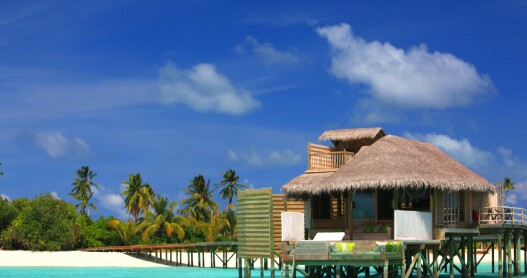
The world’s best beach resorts put cultural and environmental preservation front and center.
RESOURCES TO HELP PLAN YOUR TRIP
Situated to the south and east of Lake Hoan Kiem, the French Quarter has a different feel from the rest of Hanoi—one characterized by a profusion of space. The French began shaping this part of the city in the late 1800s (in part by knocking down Vietnamese buildings and monuments), and by the early 20th century had firmly established their imprint. Today, the district retains the broad avenues, wide sidewalks, and colonial architecture from the era of French rule. Highlights include the Sofitel Legend Metropole, with its distinctive white facade and green shutters, and the iconic Hanoi Opera House, modeled on the Palais Garnier in Paris.
Situated closer to Cambodia than Vietnam in the Gulf of Thailand, Phu Quoc has arguably the best beaches in the country. An international airport opened in 2012, raising the island’s profile and bringing in droves of visitors. Despite this, the island retains a laid-back, underdeveloped charm, and its coast is still dotted with small fishing villages with brightly painted boats. The interior of the island includes plenty of forest, while some of the land is earmarked for growing black pepper—pepper from here is famous throughout Vietnam. The best beach lies to the west of the town of Phu Quoc; it’s a 13-mile long straight stretch with golden sands, coconut palms, and clear turquoise waters. The An Thoi Islands, south of Phu Quoc but still part of its marine park, offer excellent snorkeling and diving during the dry season from December through May.
Behind these buttery walls, the most fashionable tailors are ready to help you design a gorgeous new wardrobe. Yaly may take an extra day or two for your items to be perfect, but it’s worth the extra appointments... and the price. Sure, you can go to any number of tailors in Hoi An to get a blazer made in less than 24 hours, but as with most things, you get what you pay for. Eighteen months later and the items I designed here are still most coveted pieces in my closet. Don’t know where to start? Take a stroll through thousands of fabric bolts in everything from wool to the finest locally made silks, or sift through pages of designer books as you sip on cucumber juice. And, be sure to bring photos of your desired item...Yes, even that DVF dress you swooned over in Vouge Italia last month!
The Rex Hotel remains the most historic hotel in District 1. It’s undergone massive renovations since its heyday as a hangout for journalists during the war, including the addition of a luxury ground floor filled with pricey shopping. Skip that and head to the hotel’s rooftop bar. Some of my favorite memories have been talking to visitors who were here in the 1970s back to the setting of so many of their evenings. Everyone has told the same story- Saigon has changed but the roof remains frozen in time. The same kitschy elephant statues, stiff drinks, small steaks and the rotating golden crown illuminating the local Vietnamese band playing some pop love ballads. The Rex Hotel 08038292185 141 Nguyen Hue, Quan 1, Ho Chi Minh City
Recalling Saigon’s past, Cuc Gach Quan offers fine Vietnamese fare in a cozy setting that re-creates the home of the owner’s grandmother—a French-colonial house with worn, wood-plank floors; retro furnishings; warm lighting; and a floating staircase to connect the two levels. It’s grown in popularity ever since Brad and Angelina ate here in 2011, but the menu continues to focus on Vietnamese dishes while following the approach summarized in its motto: “Eat green, live healthy.” Expect menu items such as fresh spring rolls with shrimp, crispy sea bass, and fantastic homemade tofu fried with chili and lemongrass.
Hoi An is one of my favorite travel destinations in all of Asia. Sure, it’s undeniably touristy, but it’s also quite laid back and relaxed - nothing like other South East Asia tourist hotspots like Chiang Mai, for instance. Hoi An has a wonderful beach, gorgeous old town (a UNESCO World Heritage Site) and some of the best food on the planet - surely well known to AFAR readers by now. Hoi An is also a great place for shopping. Of particular interest here are tailored suits and dresses, but the city also has a neat little cottage industry of lantern makers. There are quite a few scattered throughout the city, with some of the best being found on the southern side of the river. That’s where I came across this atmospheric little shop. If I ever have a hipster wedding, I’ll be buying my lanterns in Hoi An. Prices are, as all things in Vietnam, wildly negotiable.
We arranged a private tour of the Mekong River Delta through the Park Hyatt Saigon. We were driven from the hotel to Cai Be in a Cadillac with snacks and drinks, then escorted to our private river boat (also loaded with fresh fruit, coffee and tea, and other snacks). Our english-speaking tour guide brought us onto a small rowed boat through the smaller channels of the delta, explaining local life and the various trades of the people who live there. We saw a floating market and had lunch at Mr. Kiet’s historic house. Highly recommend spending the morning and afternoon on this tour.
...or take the elevator (seriously!) to experience this network of temples and intricate sculpture. Incense is sold throughout the complex, and people sell all kinds of marble wares on the street level.
A couple of blocks west of the Sofitel Legend Metropole Hanoi, Hoan Kiem Lake—meaning Lake of the Restored Sword—is one of Hanoi’s anchors. It contains a number of sites worth visiting, like Ngoc Soc Temple and the picturesque, red-lacquered Huc Bridge. The greatest fun here is people watching, from men and women jogging round the perimeter to retired folks doing tai chi or dancing. Many locals come to socialize or just take a few moments to escape the city’s chaotic roads and traffic. Visit in the morning as the city is waking up and the air remains blissfully cool. Photo by Binder.donedat/Flickr.
It took ages to find the (much acclaimed at AFAR) sunken B-52 bomber in Ha Noi. The twisted pile of metal hardly resembles a plane anymore, but it was interesting nonetheless. Even more fascinating to me was the ‘lake’ it had fallen into. This emerald green pool was literally bubbling from some mysterious living sludge... I half expected the three-eyed fish from the Simpsons to crawl out! It was awesome.