

Even if it is stormy around La Romana in the Dominican Republic, other parts of the Caribbean may have perfectly fine weather.
Courtesy of jeanestrella/Unsplash
The words “hurricane season” can drive fear into the heart of travelers, whose ideal Caribbean vacation is full of sunny skies, light breezes, and calm water. But before you shy away from traveling to the Caribbean from June through November, consider the positives. The region spans approximately 1 million square miles of the Caribbean Sea, and when major hurricanes do occur, they usually affect only a small part of the islands at a time. “Even if a hurricane is impacting the southern Bahamas, most of the region would likely have ideal tropical weather,” says Frank J. Comito, the now-retired CEO and director general of the Caribbean Hotel and Tourism Association.
By vacationing in the Caribbean during off-season, you’ll find lower prices and far fewer crowds, and this is a particularly good year to visit the Caribbean during hurricane season. A strong, perhaps even super, El Niño is forecasted, which would significantly lower the chance of a hurricane. Still, it’s important to be prepared for a chance of serious storms and severe weather. Here’s what you need to know about traveling to the Caribbean during hurricane season.
When is hurricane season in the Caribbean?
According to the U.S. National Weather Service (NWS), hurricane season in the Caribbean runs from June 1 through November 30 and normally peaks in August and September. The Caribbean region is within the Atlantic hurricane basin, whose storms also affect Florida and other parts of the coastal southern United States (and a bit higher north during the past few years). In 2025, the National Oceanic and Atmospheric Administration (NOAA) counted 13 named storms and nine hurricanes, the worst of which landed in late October and devastated Jamaica. NOAA will announce its 2026 hurricane predictions on May 21; although a strong El Niño lessens the likelihood of hurricanes, they can still occur.
To be better prepared, check for updates from the National Hurricane Center before your trip. This NWS division tracks and predicts weather in the tropics and issues hurricane warnings and updates on weather conditions across the Atlantic Ocean up to 48 hours in advance.
Even if there are no reports of hurricanes in the weather forecast, you may experience rain and tough weather patterns at your destination. Be prepared and take your most waterproof luggage, pack a rain jacket, and consider bringing a dry bag to keep important items like your camera and phone dry while out and about.

The Caribbean’s unique geography makes it vulnerable to storms.
Photo by dibrova/Shutterstock
How different are tropical storms and hurricanes?
The difference between a tropical storm and a hurricane comes down to wind speed, the most important factor in determining the severity of a storm and its classification. According to the U.S. National Weather Service, a tropical storm has wind speeds of 39–74 miles per hour. A hurricane, typhoon, or tropical cyclone has wind speeds of 74 miles per hour or higher. Hurricanes, typhoons, and tropical cyclones are all names for the same weather phenomenon—the only difference among them is where in the world the storm is happening.
Hurricanes occur in the North Atlantic, central North Pacific, and eastern North Pacific regions, while the same weather pattern is called a typhoon in the northwest Pacific. In the warm waters of the Indian Ocean and the South Pacific, the more generic “tropical cyclone” term is used to describe severe storms, no matter how strong the winds are.
Why is the Caribbean prone to hurricanes?
The Caribbean region’s warm water and high humidity result in wet summer months. As this warm air evaporates and rises, it irritates the ocean’s surface and quickly results in tropical storms and thunderstorms. Warm water keeps hurricanes active—something you can certainly find a lot of in this region.
Think of a hurricane as a massive group of thunderstorms concentrated in a single area. When a huge amount of rain meets with strong winds, an influx of water can be kicked inland. But as soon as tumultuous weather systems hit land and begin to cool off, you often see storms start to slow.
How does El Niño impact Caribbean hurricane season?
Under normal conditions in the Pacific, trade winds blow east to west along the equator, pushing warm water from South America towards Asia. To replace that warm water, cold water then rises from the depths of the Pacific. During El Niño, these trade winds weaken and can start blowing west to east instead, and the surface temperatures in the eastern central and tropical Pacific become substantially warmer than average.
How does this impact Caribbean hurricanes? Wind from El Niño essentially suppresses the winds that lead to Atlantic hurricane season, significantly lowering the chances of hurricanes. According to the Weather Channel and NOAA, there were 90 named hurricanes between 1966 and 2025, only 13 of which occurred during El Niño years. Of course, weather is unpredictable, and an El Niño year doesn’t guarantee fewer hurricanes.
Where to go in the Caribbean to avoid hurricanes
For the best chance of avoiding a hurricane during your Caribbean vacation, head to the islands that are outside the Caribbean hurricane belt. These are the southern Caribbean islands closest to South America and include:
- Aruba, Bonaire, and Curaçao, world-class scuba diving destinations collectively known as the ABC Islands
- Barbados, whose capital, Bridgetown, is a UNESCO World Heritage site
- Trinidad and Tobago, where you can dive to see the world’s single largest brain coral
- Grenada is known for its rum distilleries and stunning beaches
And although not an island, Panama is outside the hurricane belt and Belize is relatively protected from the worst hurricane activity, and both have gorgeous Caribbean coastlines.
Related: A First Timer’s Guide to Visiting the Caribbean’s Underrated “ABC” Islands
It’s more affordable to visit the Caribbean from June to November
Hurricane season is certainly the least expensive time to travel to the Caribbean. Airlines and hotels don’t explicitly market “hurricane rates,” but you can expect lower hotel fares, cheaper flights, and smaller crowds. (Some islanders even take advantage of deals themselves to travel within the Caribbean.)
Keep an eye on flight deals by setting up an alert in Google Flights or signing up for a deal newsletter such as Going, which regularly shares affordable flights to the Caribbean and other destinations.
Do note that during hurricane season, many Caribbean hotels close for maintenance for a few weeks or even a months, so double-check before you commit to an island.
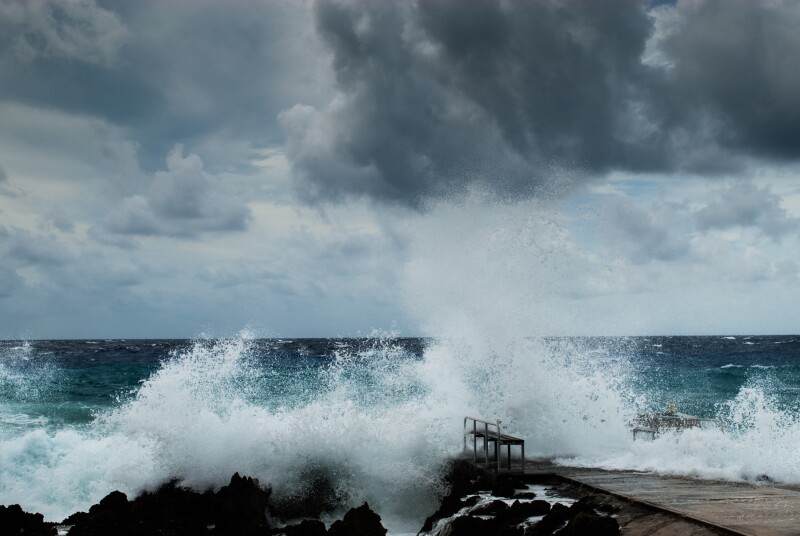
To remain prepared, check for updates from the National Hurricane Center before your trip.
Photo by Drew McArthur/Shutterstock
Buy travel insurance before you go
Travel insurance is always a good idea. Be sure your policy includes NOAA warnings and alerts and that tropical storms are covered. Most travel insurance also covers hotel and flight cancellations if a destination is deemed uninhabitable—as long as the policy was purchased before a hurricane or tropical storm was named. Sites like InsureMyTrip.com, which casts a wide net, and TravelInsurance.com, which offers tighter, more curated lists, let you shop for and compare the best travel insurance policies. Trip cancellation or interruption due to inclement weather and natural disasters, whether you’re unable to reach your cruise port or a storm has hit your island hotel, is covered under World Nomads’ standard and more premium “explorer” plans.
According to Stan Sandberg, cofounder of TravelInsurance.com, purchasing a travel insurance plan is a necessary precaution to take, and it’s more affordable than most think. “You can get high-quality coverage for what amounts to the cost of a nice dinner out on vacation,” Sandberg says.
While prices vary depending on destination, trip cost, desired benefits, and even travelers’ ages and residences, travel insurance costs between 3 and 10 percent of the trip being covered—less than $100 or $200 for two people planning a $2,000 vacation.
Consider booking a cruise
Cruise ships will reroute when they receive storm warnings, meaning that your vacation will be less affected by unexpected storms. Caribbean cruise line options range from the high-luxury small ships of Silversea, Seabourn, and Azamara to the big vessels of Celebrity, Carnival, and NCL.
What to do if a hurricane strikes
If you’ve booked a trip—and didn’t buy travel insurance—don’t panic if a hurricane hits. “In the Caribbean, we’ve become experienced at dealing with the impact of storms. We know as soon as any system forms and have pretty accurate predictions as to ETAs,” says Johnson JohnRose, former communications specialist for the Dutch island of Sint Eustatius and the Caribbean Tourism Organization. Local governments and hotels keep a close eye on storm development and have detailed activation plans in place for evacuating or sheltering guests.
If an impending storm looks serious, hotels and airlines often let guests cancel or reschedule without penalties. Ask about policies when you book, and if trouble seems to be looming, ask again about your options. “We are regularly made aware of instances where guest satisfaction levels increase during a storm,” says Frank J. Comito of the Caribbean Hotel and Tourism Association. “They are well taken care of by the resort and staff.”
Related: The 25 Best Luxury Resorts and Hotels in the Caribbean You Should Book Right Now
This article was originally published in 2015 and most recently updated on May 16, 2026, with current information. Jessie Beck, Erika Owen, and Sophie Friedman contributed to the reporting of this story.


