Amsterdam

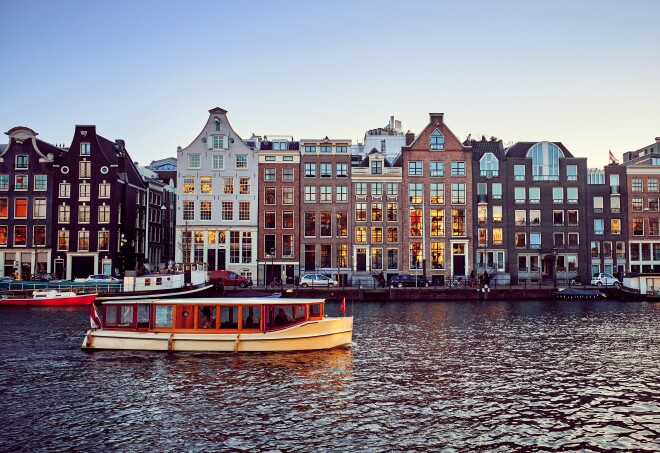
With its Golden Age canals, 17th-century mansions, world-class museums, and well-established counterculture, Amsterdam is a European capital with an edge. While some come for tulips, cheese, and windmills, others are drawn by the city’s reputation for easy sex, drugs, and rock ’n’ roll. Whatever brings you to this charismatic global village, you’re sure to be charmed by its fairy-tale landscapes, tolerant vibe, and historical legacy that harks back to the small, 13th-century fishing village on the Amstel River that would become an international capital.

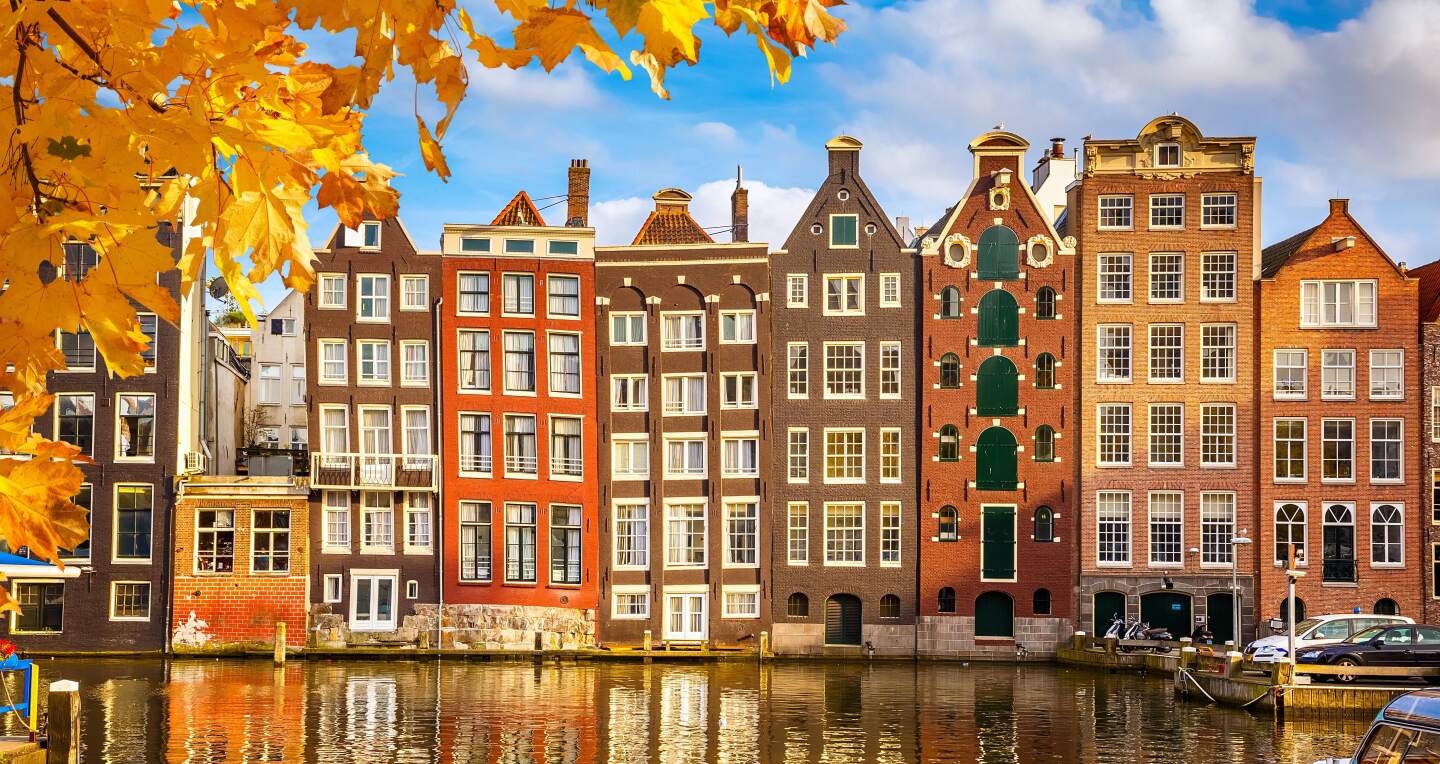
Amsterdam canal at fall, several tall little houses in a row next to the river canal

Sergey Borisov / Alamy/Alamy

Overview

When’s the best time to go to Amsterdam?

Winter may be cold (with January and February the coldest months), but tourists are gone and locals have reclaimed the town. Before the holidays, In Leidseplein and Rembrandtplein, two of the city’s open squares, skating rinks and oliebollen stands appear (oliebollen are the local doughnuts). Twinkling lights decorate bridges; seasonal trimming transform streets into fairy-tale lanes. Amsterdam Fashion Week sashays through town in January, drawing international style-makers. In the spring, tulips bloom, flowers spill over balconies, tourists jam museums, and locals celebrate the lengthening days. Millions arrive to viist Lisse’s Keukenhof, a stunning flower garden. Summer means picnics in Vondelpark, Museumplein, Amsterdam Bos, and all the city’s green spaces. During Open Garden Days in June, many canal houses open private courtyards for viewing. Outdoor concerts and festivals abound, restaurant patios overflow with diners, and locals head to urban beaches. In the fall, as the leaves change color, Amsterdam ushers in the cultural season. New exhibits open at galleries and museums and opera season kicks off.

January: Amsterdam International Fashion Week February: Chinese New Year Festival March: Amsterdam Restaurant Week April: Koningsdag (King’s Day, formerly Koninginnedag or Queen’s Day) May: Art Amsterdam (previously Kunst RAI) June: Holland Festival, Vondelpark Open Air Theater, Taste of Amsterdam, Nuit Blanche, Open Garden Days July: Amsterdam Roots Festival, Kwakoe Zomer Festival August: Robeco Summer Nights, Gay Pride, Grachtenfestival; Pluk De Nacht, Sail Amsterdam, Uitmarkt September: Open Monument Days, Jordaan Festival, Amsterdam Restaurant Week October: Amsterdam Dance Event, Amsterdam Marathon November: Museum Night, Amsterdam Antique Fair, High Times Cannabis Cup, International Documentary Film Festival, Sinterklaas arrives

How to get around Amsterdam

Amsterdam is an international hub for many airlines. Flights arrive at Schiphol, which is about half an hour from the city center by public transportation. Trains arrive at Central Station, where countless connections to the rest of the Netherlands and all of Europe are available. Eurostar buses terminate at Amstel Station. Boat travel is an option for U.K. and Scandinavian travelers, via P &O North Sea Ferries, Stenaline, and Scandinavian Seaways. City parking is rare and expensive. If you must arrive by car, take the A10 Ring into town from any major freeway.

Amsterdam is among the most compact of the world’s major cities, making it easy to get around by foot or bike. An excellent system of GVB trams and buses facilitates travel throughout the city and beyond. A metro line connects Centrum with the suburbs.

Can’t miss things to do in Amsterdam

There’s no sign, no agenda, and no boundaries at Supperclub, where it’s always a memorable evening. From the Salon Neige, where you’ll dine like a sultan to the gay urinal that doubles as a smoking room, this is experimental fun unfettered by convention. Expect eclectic cuisine and entertainment from the seductive to the bizarre, encompassing vaudeville, burlesque, and cabaret.

Food and drink to try in Amsterdam

Holland is known for hearty comfort food, not haute cuisine. Yet its capital competes with the best of Europe on the dining front with nearly 1,500 options, from Michelin-starred restaurants and historic watering holes to gay cafés and Irish pubs. Amsterdam’s culinary melting pot includes diverse fare encompassing Indonesian rijstaffel, Spanish tapas, and Dutch favorites such as stamppot, bitterballen, and pannekoeken. Sample Asian flavors in Chinatown, near Nieuwmarkt, or cruise Haarlemmerstraat, Utrechtsestraat, or Reguliersdwarsstraat for dining options. Avoid touristy Leidseplein. On the street, try Vlaames frites—twice-fried potatoes smothered in mayo—or raw herring served with pickles and onions. Turkish pizza is popular, as are gyros, reflecting Middle Eastern influences. In the wee hours, buy a kroquet or burger from coin-operated windows at FEBO (the Dutch fast-food automat chain), where you’ll see locals trying to be inconspicuous as they grab a late-night snack. Heineken and Amstel are the local beers. For a stiffer drink, try Dutch jenever, which is juniper-flavored gin.

Culture in Amsterdam

With classical music at Concertgebouw, theater at Stadsschouwburg, jazz at Bimhuis, contemporary music at Muziekgebouw, and cabaret at Royal Theater Carré, Amsterdam’s cultural scene offers plenty of variety. Renowned pop and electronic music venues include Air, Melkweg, Paradiso, Sugar Factory, and Escape.

AFAR’s travel partner, Context, offers visitors a private tour, led by a local historian, artist, or architect, of the city’s streets and canals called The Dutch Golden Age, with a focus on how a relatively small Amsterdam came to hold a global position of power in the 1600s.

Local travel tips for Amsterdam

  • Never buy drugs from street dealers.
  • Urinating on the street will cost you €60.
  • Taxi drivers may rip you off unless you know exactly where you’re going.
  • Don’t overtip for inferior service at Dutch bars and restaurants.
  • Establishments along Damrak and in Leidseplein are touristy, overpriced, and often mediocre.

Guide Editor

READ BEFORE YOU GO
HOTELS
Once an orphanage and Palace of Justice, Rosewood Amsterdam is the Dutch capital’s most anticipated new hotel—and one of the city’s last debuts for a while.
A Boeing 737-800 is the main draw of the 1,200-square-foot suite at the Corendon Amsterdam New-West, and the whole room has been recently refurbished to be even cooler.
A recent announcement included numerous measures aimed at controlling what has become an irrepressible flood of visitors.
Who needs a hotel lobby when the city—and its canals—are right on your doorstep?
RESOURCES TO HELP PLAN YOUR TRIP
You can find cozy Café de Sluyswacht on a bustling street in the heart of Amsterdam, steps away from the Rembrandt House. Originally constructed in 1692 as a home for the sluyswacht, the man who controlled the neighboring lock, the charming building has been converted into a welcoming gathering spot for locals and visitors alike. Sip your Jupiler beer on a patio overlooking the canal, or break for tea and hot chocolate at one of the adorable tables inside. If you’re hungry, try the bitterballen—Dutch meatballs.
From morning until late afternoon every day (except Sunday), this blocks-long outdoor street market in De Pijp district teems with locals and tourists shopping for everything from produce, fish, and spices to clothing, fabric, and household goods. Among the 300-odd stalls you’ll find a wealth of Dutch delicacies including its famed cheeses, freshly made stroopwafels (a crunchy caramel-filled treat), kibbeling (fried-fish bites), and, for the brave, raw herring. There are also plenty of souvenirs to be had (clog key chains, canal-house magnets, Amsterdam T-shirts), and it’s a great place to pick up for cheap anything you forgot to pack (chargers, adapters, and socks galore).
“9 Streets” (De 9 Straatjes) is a charming, picturesque shopping area in the heart of Amsterdam‘s canal district. Located between Leidsestraat and Raadhuisstraat, this area is named after the nine side streets connecting the main 17th-century canals in the stylish Jordaan neighborhood. Spend a leisurely day browsing in the artisan boutiques, local designer shops, art galleries, cafes, canal-side restaurants, bars and more. You’ll be intrigued by all of the unique, beautiful objects for sale.
Unexpected surprises abound in Amsterdam. On the city’s east side, you’ll find one denoted by a tall windmill: Brouwerij ‘t IJ (the IJ Brewery), a small brewery and pub situated in the former Funen bathhouse, next to the De Gooyer windmill. Opened in1985 by former musician Kaspar Peterson, Brouweij ‘t Ij prides itself on a large selection of unfiltered, non-pasteurized beers and seasonal offerings. All are certified organic and made on the premises. Belly up to the bar next to the big mill and order your beer from a chilled tank. Follow the scent of hops onto the large outdoor terrace, where you can enjoy your brew with an order of peanuts, boiled eggs, abbey-made cheese, salami, ossenworst from Slagerij de Wit or Skeapsrond cheese from Dikhoeve Farm. The adjacent pub serves more substantial meals, as well as drinks and snacks. In addition to beer, Brouwerij ‘t Ij’s menu includes wine and non-alcoholic beverages. Guided tours are offered on weekends.
The central hub of downtown Amsterdam is Dam Square, and it’s been at the heart of the city’s history since the 13th century. Today, the open-air public space is ringed by shops and restaurants and packed with people, including street performers and tourists en route to nearby attractions like the Royal Palace, the National Monument, and the Nieuwe Kerk (New Church), where you can catch a horse-drawn-carriage tour of the city.
“Especially nowadays, it’s a once-every-so-many-years experience, so when you get the chance, do it.”
Amsterdam can be an expensive town for dining out. But as in all major cities, there are ways to get around high restaurant prices. Albert Heijn grocery stores throughout the city have many choices in ready-made fare. Fast food options include all the usual chain suspects, plus a slew of shoarma and falafel options, and such uniquely Dutch fast-food options as FEBO and herring stands.
If you only have three days in Amsterdam, a walking tour, boat tour, museum-crawl, and evening concert are just a few of your activity options. Over three days, you can also experience Amsterdam’s infamous Red Light District, get lost in the canal ring, chill out in Vondelpark and take a ferry to Amsterdam-Noord. Plus: get out of town and see picture-postcard Holland a short cycle-ride away, but worlds apart from bustling Amsterdam.
Shimmering canals, world-class museums, a potpourri of cultures, an eclectic shopping scene, and a raging nightlife are just a few of Amsterdam’s must-do experiences. Use your time wisely and you can experience it all. Or just roam freely, letting Amsterdam lead you through its 400-year-old grachtengordel (canal ring), lined with must-do experiences and recognized as a UNESCO World Heritage Site.
Amsterdam is a shopper’s paradise, with vintage shops, one-of-a-kind boutiques, Dutch design outlets and pop-up boutiques throughout the city. If you’re a serious shopper, you won’t want to miss special shopping streets like Haarlemmerstraat/Haarlemmerdijk, Hazenstraat, Utrechtstraat, Kalverstraat, Leidsestraat and the nine small streets that comprise the Negen Straatjes. All offer great window shopping, as well as retail treasures you may not yet know you can’t live without.