Beijing

Throughout its long history, Beijing has oscillated between being a center of imperial grandeur and a city subjugated by foreign powers. In the 21st century, it has again emerged as a seat of global power and influence, modernizing at a breakneck pace. Yet amid the new skyscrapers, crowded roadways, and all the other trappings of development brought on by China’s rise, Beijing retains much of the sleepy charm that characterized it a century ago. This is the real reward for visitors: the discovery that, at its cultural foundation, so little of the city has really changed.

BEIJING/CHINA-SEP 14: Temple of Heaven Park scene- Hall of Prayer for Good Harvests on Sep14,2015 in Beijing, China. The temple was built in 1420 A.D. in the Ming Dynasty to offer sacrifice to Heaven.

Photo By Meiqianbao/ Shutterstock

Overview

When’s the best time to go to Beijing?

Situated near the fringe of the encroaching Gobi Desert, Beijing has a dry and often blustery climate. Winters are cold and windy with almost no precipitation. Fall and spring offer the most dependently pleasant conditions and relatively cheap prices for air travel and lodging. Summer (June through August) is peak tourist season, but the weather can be hot and humid, with occasional torrential downpours. Beijing’s air pollution often makes headlines around the globe, but the city also experiences long stretches of blue-sky days. Air quality tends to be comparatively worse in summer and winter, though a shift in wind and humidity can quickly change things for the better.

How to get around Beijing

Beijing Capital Airport is spread out over three terminals in the northeast corner of the city, with most international flights arriving at T2 or T3. Taxis are relatively cheap—around RMB 75 ($12) to the center of the city—but almost none of the cabbies speak English, so you’ll need to have the Chinese characters for your destination handy if you’re not a Mandarin speaker. A high-speed train connects the airport to major public transit hubs at Sanyuanqiao and Dongzhimen.

On paper, Beijing’s roadways are defined by six neatly arranged concentric ring roads. In reality, traffic is chaotic and often grinds to a standstill. During peak commuting hours, it’s best to avoid surface transportation. Beijing has an extensive and rapidly growing subway system that connects to most points of interest. As of early 2015, there were 18 lines and 319 stations, with plans for significant expansion. Buses are also plentiful, but most lack English translations for the stops.

Can’t miss things to do in Beijing

Get an early morning start at the park surrounding the Temple of Heaven to see retirees mastering dance, calligraphy, tai chi, and musical instruments. Most of the regulars are not professional performers and are only there for personal enjoyment and socializing. Visitors showing interest in a craft or skill will often be invited to join in.

Food and drink to try in Beijing

With an eclectic mix of local and international cuisine, Beijing is a good place to satisfy almost any food craving. Long famous for such local specialties as Peking duck and dumplings, the city has also attracted some of the world’s top kitchen talent in the past decade. And as Beijing has drawn migrants from other provinces, more and more regional Chinese cuisine has become available, with Sichuan, Yunnan, and Uyghur restaurants particularly popular. When it comes to drinks, Beijing’s nightlife scene includes posh nightclubs and hip hole-in-the-wall pubs.

Culture in Beijing

Beijing has a wealth of exhibitions, concerts, book talks, and theatrical performances. The most significant Chinese holiday is the Spring Festival, which marks the start of a new lunar calendar year. Other major holidays include the Mid-Autumn Festival, National Day, Tomb Sweeping Day, and the Dragon Boat Festival. Although these times can give visitors charming insights into traditional Chinese culture, travel logistics can be difficult and popular tourist sites are often overwhelmed by domestic travelers.

Local travel tips for Beijing

Tipping is not practiced in China, and leaving a few extra bills on the table will often result in a well-meaning proprietor chasing you down the street to return your money. Local expats tend to live their lives according to pollution conditions. While most short-term visitors won’t experience health effects, those with sensitive respiratory tracts should consider packing a pollution mask.

Guide Editor

Matthew Durnin is a research consultant specializing in China’s economics and politics. He has lived in Beijing for eight years.

READ BEFORE YOU GO
HOTELS
Experience a hotel stay made for royalty.
RESOURCES TO HELP PLAN YOUR TRIP
This museum on the west side of Beijing curates interesting, but less publicized exhibitions. Head next door to the military museum. The building is huge with high ceilings, giving the visitor the impression that everything is built on a massive scale.
When Beijing’s hutongs—narrow alleyways that connect to form mazelike neighborhoods—were originally built, they were lined with stone houses that had central courtyards. In 1949, with the founding of the People’s Republic of China, there were more than 3,000 hutongs; so many have been razed since that time that there are now fewer than 1,000. The remaining hutongs are where locals chat with their neighbors, sit outside on hot summer nights, buy fruit, and tend to their gardens, all without leaving their own alleyway. Seeing this side of traditional Beijing life is delightful and serves as a marked contrast to the many shops, restaurants, cafés, and bars that now occupy the courtyard homes lining the alleyways.
How a complex of German-built factories became one of East Asia’s hottest art destinations is also the story of modern China. When construction on a number of electronics factories began in Dashanzi in 1956, the area was farmland. Joint Factory 718 was built and a decade later divided into smaller factories, including Factory 798. By the mid-’90s, the factories had shut down and Beijing’s Central Academy of Fine Arts, lured by cheap space, had moved out to Dashanzi. Interest snowballed, and soon more artists were setting up shop in these abandoned industrial spaces. Today, 798 is a powerhouse of contemporary Chinese art, with major galleries like UCCA, Long March Space, and Pace Beijing, as well as a few restaurants, shops, and even hotels.
The present-day Summer Palace is China’s largest royal park and was once called the Garden of Cultivated Harmony. It took its current name when Empress Dowager Cixi, in a controversial action, used some money earmarked for the navy and rebuilt the park, which had been destroyed during the second Opium War in the mid-19th century. It was damaged again during the Boxer Rebellion in 1900. Imperial rule in China ended in 1901, and in 1924 the Summer Palace opened to the public. The grounds are covered in traditional Chinese pavilions, halls, and temples. A nice way to take a load off after touring the palace’s extensive grounds and buildings is to tool around the placid lake in a pedal boat or rowboat.
The Forbidden City is not so forbidden any longer...based on the thousands and thousands of people there visiting it! I love the huge city, however it’s a hard sight to visit because of all of the people, the massive space to cover (178 Acres), and the lack of trees! I was absolutely exhausted after our 3 hours there. It consists of 90 palaces and courtyards, 980 buildings and 8,704 rooms. And I had to work really hard to find a few hidden spots to take pictures with very few people in them. And of course it was those quiet areas that were my favorite.

My advice for avoiding the crowds is to head to the Palace Museum. You can see ancient treasures of the dynasty - or you can simply enjoy the quiet gardens and less people!
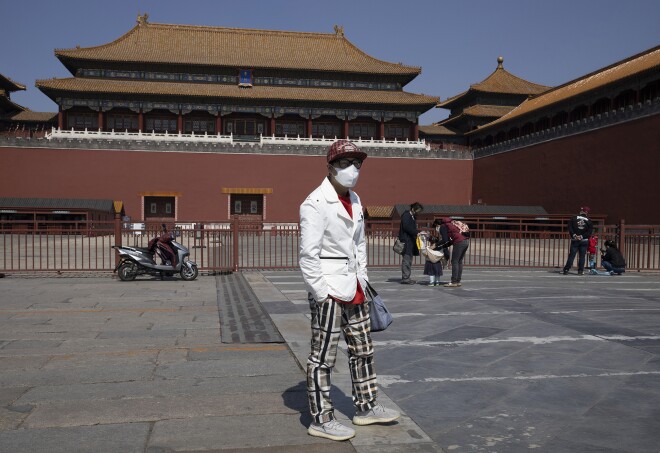
Beijing’s number one tourist attraction is a massive former imperial palace known as the Forbidden City. Between 1416 and 1911, it was home to 24 Ming and Qing dynasty emperors and their families and staff. In 1912, after the abdication of Puyi—the last emperor of China, who ascended the throne when he was not yet three years old—the Outer Court opened to the public; in 1925 the Palace Museum was opened, with a collection of nearly 1 million Chinese antiquities. The Forbidden City has almost 1,000 buildings spread across 72 hectares (178 acres), making it the world’s largest palace complex.
If you’re planning to stay in Beijing, you’ll have your pick of both international hotel chains and a growing number of boutique properties, many within walking distance of major sights. Choose a spot in a central location, near the Summer Palace or an important shopping street, or base your decision on perks like room service and free Wi-Fi. Either way, you can expect to find a great home base for getting to the heart of Beijing.
From cooking classes to high tea, and from pedicab tours to sidecar excursions, some experiences just shouldn’t be missed in China’s capital city.
From dumplings to duck—specifically Peking duck—China’s capital offers a bounty of delicious meals, both local dishes and international cuisine. Here are our picks of the top places for memorable meals.
Dumplings are a northern Chinese staple—inexpensive, hearty, and with a variety of fillings—and the boiled dumplings (shuijiao) at Baoyuan don’t disappoint. What sets them apart from your corner dumpling shop is the colored dumpling skins, dyed with juice from spinach, tomatoes, carrots, and purple cabbage. Customize your order by choosing your skin and filling—say, a spinach dumpling filled with cucumber, cilantro, pork, and lotus root, or a cabbage-dyed purple wrapper with bean sprouts, crispy rice, pork, and cabbage inside. There’s no denying that these dumplings photograph well, and that, plus the quirky venue—two dining rooms reached by a stroll through a fake garden and over a bridge—makes this a worthy place for a cheap and cheerful lunch or dinner.