Beijing

Throughout its long history, Beijing has oscillated between being a center of imperial grandeur and a city subjugated by foreign powers. In the 21st century, it has again emerged as a seat of global power and influence, modernizing at a breakneck pace. Yet amid the new skyscrapers, crowded roadways, and all the other trappings of development brought on by China’s rise, Beijing retains much of the sleepy charm that characterized it a century ago. This is the real reward for visitors: the discovery that, at its cultural foundation, so little of the city has really changed.

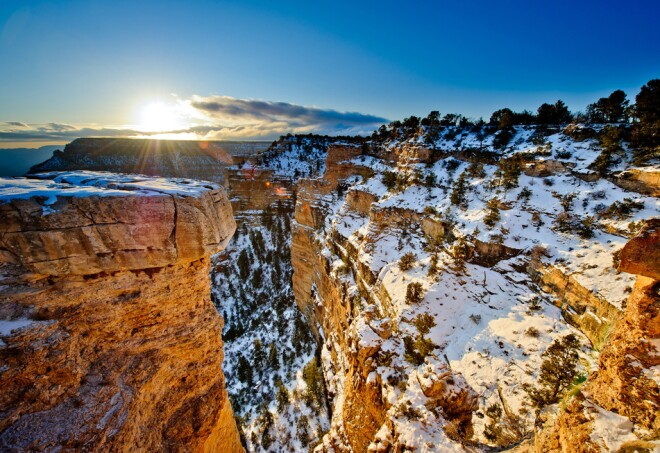
BEIJING/CHINA-SEP 14: Temple of Heaven Park scene- Hall of Prayer for Good Harvests on Sep14,2015 in Beijing, China. The temple was built in 1420 A.D. in the Ming Dynasty to offer sacrifice to Heaven.

Photo By Meiqianbao/ Shutterstock

Overview

When’s the best time to go to Beijing?

Situated near the fringe of the encroaching Gobi Desert, Beijing has a dry and often blustery climate. Winters are cold and windy with almost no precipitation. Fall and spring offer the most dependently pleasant conditions and relatively cheap prices for air travel and lodging. Summer (June through August) is peak tourist season, but the weather can be hot and humid, with occasional torrential downpours. Beijing’s air pollution often makes headlines around the globe, but the city also experiences long stretches of blue-sky days. Air quality tends to be comparatively worse in summer and winter, though a shift in wind and humidity can quickly change things for the better.

How to get around Beijing

Beijing Capital Airport is spread out over three terminals in the northeast corner of the city, with most international flights arriving at T2 or T3. Taxis are relatively cheap—around RMB 75 ($12) to the center of the city—but almost none of the cabbies speak English, so you’ll need to have the Chinese characters for your destination handy if you’re not a Mandarin speaker. A high-speed train connects the airport to major public transit hubs at Sanyuanqiao and Dongzhimen.

On paper, Beijing’s roadways are defined by six neatly arranged concentric ring roads. In reality, traffic is chaotic and often grinds to a standstill. During peak commuting hours, it’s best to avoid surface transportation. Beijing has an extensive and rapidly growing subway system that connects to most points of interest. As of early 2015, there were 18 lines and 319 stations, with plans for significant expansion. Buses are also plentiful, but most lack English translations for the stops.

Can’t miss things to do in Beijing

Get an early morning start at the park surrounding the Temple of Heaven to see retirees mastering dance, calligraphy, tai chi, and musical instruments. Most of the regulars are not professional performers and are only there for personal enjoyment and socializing. Visitors showing interest in a craft or skill will often be invited to join in.

Food and drink to try in Beijing

With an eclectic mix of local and international cuisine, Beijing is a good place to satisfy almost any food craving. Long famous for such local specialties as Peking duck and dumplings, the city has also attracted some of the world’s top kitchen talent in the past decade. And as Beijing has drawn migrants from other provinces, more and more regional Chinese cuisine has become available, with Sichuan, Yunnan, and Uyghur restaurants particularly popular. When it comes to drinks, Beijing’s nightlife scene includes posh nightclubs and hip hole-in-the-wall pubs.

Culture in Beijing

Beijing has a wealth of exhibitions, concerts, book talks, and theatrical performances. The most significant Chinese holiday is the Spring Festival, which marks the start of a new lunar calendar year. Other major holidays include the Mid-Autumn Festival, National Day, Tomb Sweeping Day, and the Dragon Boat Festival. Although these times can give visitors charming insights into traditional Chinese culture, travel logistics can be difficult and popular tourist sites are often overwhelmed by domestic travelers.

Local travel tips for Beijing

Tipping is not practiced in China, and leaving a few extra bills on the table will often result in a well-meaning proprietor chasing you down the street to return your money. Local expats tend to live their lives according to pollution conditions. While most short-term visitors won’t experience health effects, those with sensitive respiratory tracts should consider packing a pollution mask.

Guide Editor

Matthew Durnin is a research consultant specializing in China’s economics and politics. He has lived in Beijing for eight years.

READ BEFORE YOU GO
HOTELS
Experience a hotel stay made for royalty.
RESOURCES TO HELP PLAN YOUR TRIP
Head to any Chinese park on a sunny afternoon or weekend and look up: Flitting through the sky, carried by the winds, are dozens of colorful kites. These are being flown by pint-size kids, laughing couples hand in hand, and smiling grandparents showing their prowess off to the next generation. Kites are delightfully old-school, and a handmade one is a wonderfully retro Beijing souvenir. For the best, head to Three Stone Kite, located within walking distance of the Forbidden City. This cheerful shop is chockablock with colorful kites—birds, fish, butterflies, and dragons, with frames made of bamboo. The Liu family has been making kites by hand for three generations, and what’s for sale here are works of art.
Though it’s mere minutes from the chaotic pedestrian street Nanluoguxiang, Dali Courtyard, in a charming brick courtyard house, is as tranquil as the nearby streets are buzzing. Dinner is a set menu here (from ¥150 per person), a small parade of dishes from southern Yunnan Province. Star dishes, like rubing (fried goat cheese), guoqiao mixian (“crossing-the-bridge noodles”), and anything with mushrooms, a food for which Yunnan is known, always make appearances. Other dishes include things like grilled fish colored in chilies, stir-fried wild vegetables, and tofu and mint salad. The food here is on the spicy side, so be sure to ask for it mild. If you’re a vegetarian or have dietary restrictions, have the information written down in Chinese and give it to your server before you order.
While visiting Beijing on a Fulbright over the summer, we were given the opportunity to attend a traditional Peking Opera. Though the show was entirely in Mandarin, it was highly entertaining and lively. The vibrant colors of the venue, coupled with a mystic, historic ambiance makes the Huguang Guild Opera Theatre, the oldest Peking opera house, one of the most atmospheric.
After receving mixed feedback on social media, Airbnb called off the competition to win a slumber party on top of the Great Wall of China.
You may know that Yellowstone is the world’s oldest national park and that the Burj Khalifa is the tallest building in the world. But there are plenty of other superlative spots out there that rarely get their due.
Day and night, dumplings are being made by hand, boiled and fried at the original branch of Mr. Shi’s in Baochao Hutong and at the Sanlitun outpost. This is not your corner dumpling joint but a cleaned-up space where the menus are in English and the menu overflows with more than 50 varieties of dumplings. There are the traditional—think pork and chive or leek and egg—and there are the unusual, such as pizza (cheese and tomato). While you can certainly live on dumplings alone, Mr. Shi’s has solid sides, including sliced cold cucumbers with garlic (a treat on hot summer days), a nice tofu salad, and stir-fried egg and tomato, a home-style classic that’s also available in dumpling form.
The Moka brothers in question are restaurateurs Daniel Urdaneta and Alex Molina, pals, partners, and owners of Beijing restaurants Mosto and Modo. The pair decided the capital needed a healthy-eats joint and, judging by the packed house, they were right. Moka Bros. has several branches in Beijing, including one in Sanlitun. Lean proteins, vegetables, and whole grains make up most of the dishes here. The menu sections let you know exactly what you’re in for—“Power Bowls” includes salmon sashimi bibimbap, with melt-in-your-mouth slices of salmon served on black rice, avocado, roasted pumpkin, carrots, and seaweed and topped with a poached egg. To drink are various trendy juices and smoothies, among them the fatigue-fighting C-Shot—mango, mixed berries, beetroot, lemon, and ginger.
Within the rapidly trendifying area of Dashilar is Ubi Gallery, founded by Dutch former diplomat and art enthusiast Machtelt Schelling. Ubi showcases and sells ceramics and “wearable art,” aka contemporary jewelry. The featured artists are a slew of nationalities, with a handful from China and Holland. Everything is unique and handmade, with prices to match, although there are enough moderately priced pieces to please most visitors. Look out for black-and-white-polka-dot cuff links by Malin Jansson, Japanese-style striped tea bowls by Arita, and a set of angular celadon cups by Park Mun Hee.
Although this bicycle company was founded in the 1930s in Tianjin by a Japanese businessman, today it’s iconically Chinese, particularly in Beijing. This is Beijing’s flagship Flying Pigeon, where you can buy 22-, 24-, and 28-inch frames. Bikes retro, modern, electric, and foldable are on display here, and everything but the electric bikes can be checked in a bicycle box and brought home. While the contemporary models are perfectly fine, it’s the handsome vintage-style bikes in Dutch-cruiser or English-roadster style that make the best souvenirs, inspiring envy and looks of awe when you ride them in the streets at home.
Meet Beijing’s first artisanal cheesemaker.