Boston

Boston is a city full of charm, its residents dedicated to their sports teams and their city’s place in history. An important college town, it has a youthful vibe you’ll feel everywhere, but thanks to an impressive arts and culture scene, Boston leans sophisticated too. The city’s colleges and universities offer quite the number of opportunities for learning at every age. Boston is anchored by two very important waterways: The Charles River and Boston Harbor provide plenty of photo opps and outdoor adventures. And all through the city: some of New England’s best shopping, vibrant neighborhoods, and some great eats. And though Cambridge residents cringe at being smashed in with their neighbor, visitors should think of Harvard’s hometown as part of Boston and head over there for at least a meal or two.

Historic Acorn Street on Beacon Hill in dowtown Boston Massachusetts MA.

Dennis MacDonald/© Dennis MacDonald

Overview

When’s the best time to go to Boston?

Boston is a busy city all year round. You won’t see much of an uptick in accommodation prices, except perhaps during leaf-peeping season in the fall and Marathon Weekend in April. Spring is beautiful, when the many parks make for pleasant strolling and trees along the water are in full bloom. Although winter definitely presents the greatest weather challenge, on the upside, there will be the fewest crowds. Indoor cultural events and festivals provide plenty of entertainment protected from the cold temperatures.

How to get around Boston

Boston’s Logan International Airport is about 20 minutes from downtown by taxi; fares will run about $30 (including the airport/toll fee). The public transportation system, MBTA, also runs directly to and from the airport. A fun option is the trip across the harbor by commuter boat, if you want to beat the notorious Boston traffic. Arriving by Amtrak train will bring you to either South Station or Back Bay, both located in convenient areas of the city.

MBTA trains and buses traverse the city. The “T,” organized by colored routes, is a reliable way to go, but remember the last ride is between 12 and 1 a.m. A $2.25 Charlie Card will allow you to travel on all lines for one price, or you can ge a day pass for $12 or a seven-day pass for $21.25. The MBTA mTicket option for commuter rail and ferry rides allows mobile ticketing via your smartphone. Taxis are readily available, as are services like Uber and Lyft. (In order to call one of these services, you’ll have to download their respective apps.) Zipcar and the city’s extensive bike-sharing program, Bluebikes, are two additional alternatives.

Can’t miss things to do in Boston

You can’t come to Boston without walking at least part of the 2.5-mile Freedom Trail. Any of the 16 historically significant sites the trail passes through will give you a taste of Boston history, and there are great pit stops along the way to recharge. On a nice day, start at the Old North Church, have lunch in the North End, then walk to the USS Constitution. You can take the water shuttle back to Central Wharf and enjoy outstanding views of Boston from the inner harbor.

The Rose Kennedy Greenway is another wonderful wander. The 1.5-mile greenway connects parks, public art, and several neighborhoods. Pull up the Interactive Map to find things to see and places to stop along the way.

Food and drink to try in Boston

Boston is a city just the right size to support the local farm-to-table movement. With many growers within a 30-mile radius, farmers’ markets all over town shine with local produce and small-batch makers. Affordable restaurants reflect the diverse population of Beantown, and the food truck scene rivals any in the nation. Seasonal menus can be found when splurging at high-end favorites Oleana or Craigie on Main, or dining at the more affordable brick-and-mortar locations of Clover Food Lab and Mei Mei food trucks. Somerville is home to many young chefs on the rise. Craft brews and cocktails are a big part of the local bar scene, and several local bartenders have gained national acclaim for their creations.

Culture in Boston

Boston has a huge cross section of museums. The scene is anchored by the MFA and the more contemporary ICA, but be sure to explore some of the smaller gems like the Isabella Stewart Gardner Museum, deCordova, and Peabody Essex. Many of the museums open for several hours a week free to the public. For instance, the MFA is open for voluntary contribution Wednesday evenings after 4 p.m. (Pro tip: full-price admission tickets are good for two visits within 10 days.) Although the traditional gallery scene is centered on Newbury St., the South End houses many high-profile exhibits as well. The Wang Theatre is home to an impressive array of theater, music, and dance; the Boston Opera House hosts the Boston Ballet. Check out the Berklee Performance Center for global jazz festivals and much more.

Year-round festivals are a source of pride in Boston. The Boston Wine Expo‘s dinner run through much of February. Restaurant Week is in March, and the Boston Marathon falls on Patriot’s Day in April. June begins three months of festivals in the North End. The Rose Kennedy Greenway plays host to summer activities including the Boston Harborfest and Figment Boston, two days packed with art, creativity, and tinkering. Fall finds Head of the Charles Regatta. Holiday music sends us into the New Year with the Boston Pops. Every Sunday May through October, the SoWa Open Market hosts a huge gathering of farm-fresh vegetables, craft vendors, food trucks, and an indoor vintage market. Explore the surrounding areas of New England, and you’ll find many more themed celebrations throughout the year.

Practical Information

The weather is probably the biggest variable for Boston visits. Come prepared for variety. Layer layer layer. Sports events guarantee traffic jams so check the sports schedules if you have a nearby reservation. When the home teams are playing in town, traffic around their venues can come to a standstill. (The Boston−New York sports team rivalry is legendary. Do not wear clothing with a New York team’s logo unless you can take some serious verbal abuse.) The waterfront can be breezy, so even in summer, a wrap or light jacket is a good idea. Depending on where you’re staying, you can probably leave the car at home. The T, buses, cabs, and rideshares are readily available (and will keep you from having to learn any driving-in-Boston lessons the exhausting way). If time permits you to travel beyond the 617, rent a car to explore Massachusetts’ surrounding mountains, beaches, or historical sites.

Guide Editor

READ BEFORE YOU GO
American cities are ringing in the holiday season with unique local traditions, including country music concerts in Nashville and film-focused festivities in Los Angeles.
HOTELS
From Victorian London to Boston and Pasadena, Langham hotels continue to define timeless elegance and modern hospitality.
Whether you want to stay in a historic neighborhood, on the water, or in the middle of Red Sox Nation, Boston’s hotel scene delivers.
Hotels can introduce their guests to the creativity that surrounds them—and reveal canvases visitors may not otherwise see.
These top-level properties are the places to stay.
How to See the Boston Marathon Like a Pro (According to a Hotel Concierge)
RESOURCES TO HELP PLAN YOUR TRIP
This 101-year-old building in the Financial District spent its first 59 years as the Federal Reserve Bank of Boston. In 2003, the Hong Kong–based Langham Hospitality Group reopened the landmark building as a well-appointed hotel. The building still has its original brass Federal Reserve seal embedded in the marble floor of the hotel’s Italian restaurant, Grana. In the lobby, the banker’s box drawers line one of the walls, while the custom-designed carpets are inspired by the leaf motif found on dollar bills.

The 312 guest rooms, renovated in 2021, have a modern residential feel, with a blue and tan color scheme meant to evoke the shores of New England. Sprawling marble bathrooms have rain showers, while a wooden armoire hides a well-stocked mini bar. On the first floor of the hotel, visit the Fed, a moodily lit 1920s-style cocktail bar with a vault of rare spirits from around the world.
The first transatlantic JetBlue flights from JFK to Heathrow are finally operating.
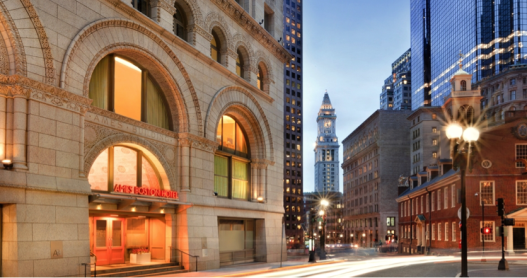
Want to sleep in Boston’s very first skyscraper? Originally constructed in 1893, the 15-story Ames Building was, for many years, the tallest building in the city. Renowned architect David Rockwell helped reconceive the building as the high-end Ames Hotel in 2009, preserving much of the original detailing. Many celebrities have since stayed in the luxury hotel, that’s now part of the Hilton Curio Collection, a collection of unique hotels steeped in history.

The rooms at the Ames feel more like opulent city apartments, with modernist furniture and eclectic details like feather chandeliers and gold-sequined pillows. The property’s historic roots are reflected in the 13-foot ceilings and Romanesque, floor-to-ceiling arched windows. Other classic elements include decorative marble fireplaces and oak wood floors. Centrally located in downtown Boston, the Ames provides easy foot access to many of the city’s best-known attractions.
In 2012, a forgettable Radisson was reborn as the indie-luxe Revere Hotel, today one of the hippest hotels Boston has to offer. The 356-room space underwent a dramatic transformation that was completed in March of 2017, with the decor now dramatically modern. It’s the only hotel in Boston where every room has a private balcony, and with guestrooms starting on the ninth floor, everyone is guaranteed a legitimate skyline view. Personal touches abound as well, from the hotel’s pillow library to cool towels on hand for guests post-morning runs or on a hot day.

The hotel is centrally located to downtown and the Back Bay, catering to most visitors’ shopping and dining desires, while theater enthusiasts will appreciate the close proximity to the city’s most iconic venues. Come summer, the seasonal Rooftop at Revere offers luxe cabanas, outdoor fitness classes, and one of the most popular social scenes in the city.
The hippest kid on the block has risen from the most unlikely of origins: the Fenway Motor Hotel, a run-down mid-century relic that once housed all manner of misbehaving musicians. Today the hotel feels more like an of-the-moment Los Angeles enclave, with mid-century furnishings, floor-to-ceiling Mondrian stained-glass windows, and upscale bathrooms. Local music and pop-culture memorabilia decorate the rooms and foyers, from framed Boston Phoenix covers (the city’s now-defunct alt-weekly) to vintage speakers and ‘70s-era phones.

In keeping with the rock-and-roll theme, both the lobby and the outdoor pool area regularly host live music. Lansdowne Street, home to legendary clubs like House of Blues, is just steps away, and of course no visit to Boston is complete without a stop at next-door Fenway Park (tours of the ballpark are available daily and year-round).
Housed in side-by-side 19th-century townhouses amid the gas streetlights and cobblestoned streets of Boston‘s Beacon Hill, the high-end Beacon Hill Hotel retains a distinctly European feel. The original owners and neighborhood residents Peter and Cecilia Rait bought the properties with the intent of opening a hotel and bistro. Nowadays, the property is managed by Saunders Hotel Group, but the who’s-who clientele hasn’t changed. Since the hotel opened in 2000, the intimate property has hosted innumerable A-listers seeking a lower profile, including Todd English.

Each of the 13 rooms has plantation shutters, pedestal sinks, flat-panel TVs with DirecTV, and windows that actually open for fresh air. The second-floor common area invites guests to meet and mingle. Plus, the hotel has a private, residential-feeling roof terrace overlooking Charles Street, perfect for morning coffee or afternoon reading.
While the Liberty Hotel may have deep roots in Boston lore, it’s not for the reasons you think. For more than 100 years the hotel existed as the Charles Street Jail, an in-city penitentiary that housed (in)famous inmates like James Michael Curley, Malcolm X, and Sacco and Vanzetti. Its inspired transformation came in 2007, but the owners maintained some of the jail’s vestiges, from the exercise yard to several jail cells, while turning the building into a 298-room luxury hotel. Richly appointed rooms offer sweeping views of the city skyline and the Charles River.

The hotel houses five distinct restaurant and bar venues, all of which attract large swaths of locals, especially on the weekends. Located at the foot of Beacon Hill, the hotel is steps away from the boutique and antique stores along Charles Street and also sits next to the picturesque Charles River Esplanade.
A hot lobster roll from Neptune Oyster is summertime heaven on a butter-soaked brioche, and bivalve lovers queue up daily to sample the two dozen varieties of oysters chilling in the front window of this diminutive North End restaurant. Fresh-off-the-boat fish and creative takes on New England seafood are the draws here—the clam chowder is made to order, the fish-and-chips uses Acadian redfish (not cod), and it’s probably the only place in town where you can get lobster tacos. Yeah, it’s pricey—hot or cold, the lobster roll will set you back around $30—but share the Neptune Plateau raw-bar plate with your friends and you’ll truly feel like the king of the sea.
Nothing defines Boston quite as much as the town’s devotion to sports (10 championships since the turn of the century doesn’t hurt), and with all due respect to the five-time-Super-Bowl-champion Patriots, it’s Fenway Park, not Gillette Stadium, that’s the temple of sports fandom. Opened in 1912, the quirky green bandbox between Lansdowne Street and Yawkey Way is almost as famous for its obstructed-view seats as it is for its fabled Green Monster wall in left field, but that’s a price Sox fans gladly pay in exchange for maintaining Fenway’s historic layout. It’s both intimate and loud on game day even in years when the Sox aren’t contenders (tickets are often hard to come by, so plan ahead); the old ballpark also is open for one-hour, behind-the-scenes tours that take you inside and atop the Green Monster. You’ll be able to stroll around the field (the warning track, not the grass), and visit the press box, the Pesky Pole, and (on days with no games) the dugouts and bull pens.