St. Vincent and the Grenadines

Until recently, St. Vincent and the Grenadines was a destination known only by the most intrepid vacationers. Because access was limited, few travelers made the difficult journey to this string of 32 islands and cays near the southern end of the Caribbean archipelago. Argyle International Airport official opened in 2017, however, making it significantly easier to discover St. Vincent’s rich history and rugged landscape as well as the Grenadines’ magnificent white-sand beaches, spread out over Bequia, Mustique, Canouan, Mayreau, Palm Island, Petit St. Vincent, Union Island, and Tobago Cays.

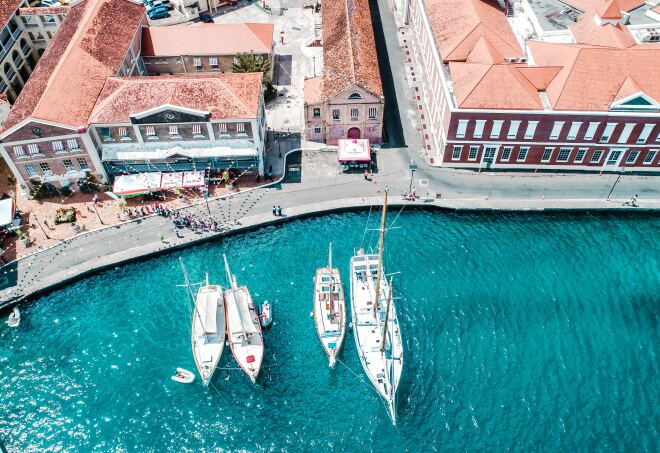
City center of caribbean town  Kingstown, Saint Vincent and the Grenadines

Photo by Vadim_N/Shutterstock

Overview

When’s the best time to go to St. Vincent and the Grenadines?

Though the temperature is steady, the humidity fluctuates throughout the year—the wet season runs from June through October, while the dry season goes from mid-November through April or May. That being said, St. Vincent and especially the Grenadines often avoid severe autumn hurricanes. As in the rest of the Caribbean, rates at luxury resorts are highest from December 15 to April 15. However, prices at smaller hotels, inns, and guesthouses usually remain the same year-round. Those looking to plan their visit around special events should consider the Mustique Blues Festival in January, the Bequia Easter Regatta in the spring, or Vincy Mas (St. Vincent’s carnival) in late June and July.

How to get around St. Vincent and the Grenadines

Several airlines offer non-stop flights into St. Vincent’s Argyle International Airport, including Caribbean Airlines (from New York’s JFK), American Airlines (from Miami starting December 15, 2018), and LIAT and SVGAir (from Barbados and St. Lucia). SVGAir also flies daily from St. Vincent to Bequia, Mustique, Canouan, and Union Island.

Ferries travel frequently between St. Vincent and Bequia, with some—including the Jaden Sun fast ferry—continuing on to Canouan, Mayreau, and Union. Additionally, visitors can rent a car on St. Vincent and Bequia, reserve a “mule” (beach buggy) on Mustique, or take a taxi on Canouan and Union Island. The other islands are walkable.

Food and drink to try in St. Vincent and the Grenadines

Dining in St. Vincent and the Grenadines is almost always a casual affair, the exception being a handful of high-end resort restaurants, where women don sundresses and men are required to wear long pants and collared shirts. While some large resorts also offer sophisticated international cuisine, the majority of restaurants here focus on fresh-caught fish, lobster in season, local vegetables, and fresh fruit. At small inns and local restaurants, you can also find barbecued or baked chicken, grilled fish, mutton or fish stew, and curried goat, typically accompanied by rice and peas, root vegetables, plantains, green salad, and “bakes” (biscuits). For a snack during the day, pick up a roti (a meat- or vegetable-filled turnover) or some fish and chips.

The official national dish is fried jackfish and roasted breadfruit. A common substitute for potatoes, the ubiquitous breadfruit is also often served mashed, boiled, or even in a salad. Sunset is the local rum brand and Hairoun is the local beer.

Culture in St. Vincent and the Grenadines

St. Vincent has a turbulent history. Carib Indians once controlled the rugged island, thwarting French and English colonization until the 18th century. (On a visit to Fort Charlotte, north of Kingstown, you’ll notice cannons aimed inward, where most Carib attacks originated.) The English ultimately prevailed, taking over the island and forcing the natives into slavery. On the eastern coast near Georgetown, you can still see Black Point Tunnel, where slaves hand-carved a shorter route between the sugar works and the sea.

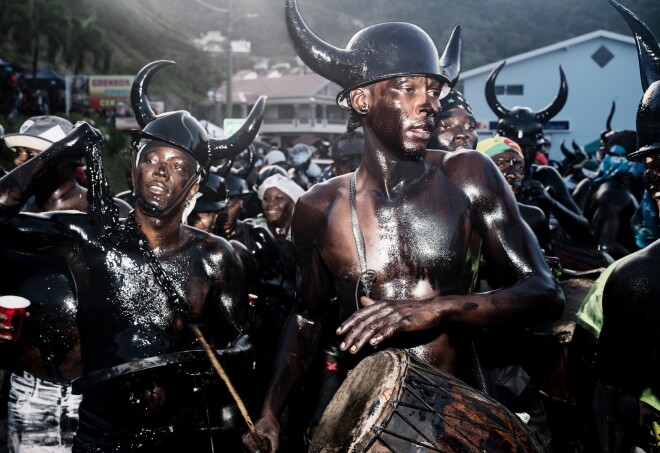
St. Vincent and the Grenadines earned its independence in 1979. Today, it’s a peaceful nation that enjoys a good party, especially in late June and July when locals come together to celebrate Vincy Mas (St. Vincent’s carnival) with costumes, parades, music, food, and the annual naming of a king and queen.

Can’t miss things to do in St. Vincent and the Grenadines

On St. Vincent, you’ll learn a lot about the nation’s history and people by visiting Fort Charlotte, touring the Botanic Garden, and simply walking around Kingstown. Adventurous visitors can attempt the climb up La Soufrière (the volcano that covers about a third of the island), but everyone should get out on the water and visit the dazzling Grenadines. Each island has a different appeal, but all are ringed with powder-soft, white-sand beaches and an aquamarine sea with gentle surf. Sailing on your own or a chartered sailboat is ideal, but even a ferry ride is a delightful way to spend a day. Highlights include Tobago Cays, Saltwhistle Bay Beach on Mayreau, Basil’s Beach Bar on Mustique, and Port Elizabeth on Bequia.

Local travel tips for St. Vincent and the Grenadines

A Caribbean vacation doesn’t have to break the bank. Of course, there are high-end resorts scattered throughout the Grenadines—including two on privately owned islands and another geared toward the rich, famous, or royal—but those in the know choose from the many family-run hotels, inns, and guesthouses for a truly Caribbean experience. You’ll find the best ones—near a beautiful beach or colorful village—on St. Vincent, Bequia, Mayreau, and Union Island. Also, you don’t need your own yacht to sail around the Grenadines. Ferries are fun, frequent, and inexpensive.

Practical Information

To enter St. Vincent and the Grenadines, U.S., Canadian, and British citizens must present a valid passport and a return or ongoing ticket. The official language is English, and the currency is the Eastern Caribbean dollar (with a fixed exchange rate of EC$2.67 per US$1), although hotels, restaurants, and most shops accept U.S. dollars and major credit cards. The electric current is 220–240 volts, but large resorts and even some small hotels are also equipped with 110-volt outlets (U.S. standard).

Guide Editor

A freelance travel writer based in Connecticut, Jane Zarem has been traveling to—and writing about—St. Vincent and the Grenadines since 1995. She authored Fodor’s In Focus: Barbados & St. Lucia (now in its fifth edition) and currently covers several islands for Fodor’s Caribbean. Her travel articles, covering much of the globe, have appeared in various publications over the years, most recently in Rand McNally’s Getaway magazine and its Road Atlas. She is a member of the New York Travel Writers’ Association.

READ BEFORE YOU GO
HOTELS
Across the Caribbean, these 13 boutique hotels offer a more intimate take on the region—from rainforest villas to beachfront bungalows and restored estates—each reflecting its area’s architecture, landscape, and local context.
You don’t have to rough it to scuba dive in epic underwater sites. These hotels pair luxury with world-class reefs.
RESOURCES TO HELP PLAN YOUR TRIP
Steps from the sand on Princess Margaret Beach, Jack’s Beach Bar is the perfect spot for an alfresco lunch, happy hour on the terrace, or both. It’s a good choice for dinner, too, although landside access is tricky, with lots of stairs and rough terrain that’s difficult to navigate in the dark. Whenever you come, look forward to local ingredients, prepared with an international touch. Pair the tropical quinoa salad with the catch of the day, or opt for the famous fried chicken, served with your choice of mango chutney, smoky barbecue sauce, blue cheese dip, or Mama’s Hot Sauce. If you’re having too much fun on the water, order something from the delivery menu and Jack’s will bring it directly to your boat—the restaurant delivers up to almost two miles from the beach.
Near the far northeastern tip of Bequia, the Sugar Reef Café is a breezy spot just steps from the crashing sea. Here, diners can enjoy healthy, locally sourced dishes for both lunch and dinner, from fish roti with mango chutney and papaya-black-bean salsa, to blackened chicken and Callaloo lasagna with Caribbean spinach and rosemary. Sugar Reef’s own estate produces the honey and fruit, while St. Vincent farmers and fisherman are responsible for the fresh produce, meat, and fish. The restaurant even uses coconut milk instead of dairy and coconut oil for frying. Daytime is casual, while evening brings a more romantic vibe.
Generally speaking, shopping isn’t a big draw on St. Vincent, but if you’re searching for the perfect souvenir, you can’t do better than Nzimbu Browne’s famous banana art. Besides tourism, banana production is a driving force behind St. Vincent’s economy. By using the industry’s waste products—the banana leaves—Browne creates sustainable art with a strong sense of place. His works depict local scenes, brought to life with snippets of dried, multicolored leaves. If you’re not into art, he also makes goat-skin drums and tie-dye clothing. His studio is located on McKie’s Hill in Kingstown, but he often sets up shop in front of the Cobblestone Inn on Upper Bay Street.
Within the St. Vincent Botanical Gardens in Kingstown, visitors will find a very nice gift shop, featuring everything from local artwork, handmade pottery, and crafts to books about the island, toys for kids, authentic souvenirs, and snacks and cold drinks. The gift shop is decorated with plants, of course, as well as carnival costumes that reflect the island culture.
Three blocks inland from the waterfront, on Frenches St., the Craftmen’s Centre sells locally made, reasonably priced crafts: intricate grass mats in sizes ranging from place mats to full floor mats, colorful batik cloth, handmade West Indian dolls, hand-painted calabashes, and more. Cash only! (P.S. The grass mats roll or fold into a neat bundle to carry home.)
It’s worth planning an entire trip around Vincy Mas, St. Vincent’s carnival celebration. The event begins in late June and lasts for 12 days, bringing with it costumes, parades, parties, food, competitions, the naming of a “calypso monarch” and “carnival king and queen,” and lots and lots of music, from steel pan to soca and calypso. The biggest parades—Monday morning’s J’Ouvert and Tuesday’s all-day Mardi Gras—take place on the last two days of the festival.
A favorite among beach bums, yachters and rock stars, Basil’s Bar, on Mustique, is a legend in the world of beach bars. The second Basil’s brings some of the flavor of the original to Kingstown. Located near the Cobblestone Inn, the bar/restaurant serves a West Indian buffet at lunch as well as soups, salads, sandwiches and more substantial entrées.

At Paradise Beach Hotel Restaurant on Villa Beach, about 15 minutes south of Kingstown, you can get a meal of local specialties like crab back, Creole chicken, grilled fish, and lobster straight from the holding tank, along with a picture-perfect view of Young Island. There’s live music and dancing several evenings a week, and the Friday night barbecue (called “Grillin’ with the Captain”) is an island tradition.
A tiny, man-made island in Clifton Harbour built with discarded conch shells, Happy Island is really just a small bar where you can tie up for a while and have a drink, a meal, and a conversation with Janti Ramage, the island’s joyful builder, owner, and operator. Just be sure to call ahead, as Ramage keeps flexible hours.
Sailors place the Grenadines, with its 32 breathtakingly beautiful islands and islets, among the world’s best places for boating. For help getting out on the water, turn to Horizon Yacht Charters, which rents monohulls and catamarans (either bareboat or crewed) out of Blue Lagoon Marina on St. Vincent. Enjoy a multi-day or week-long sail around the Grenadines, or opt for the one-way charter and sail south through the Grenadines all the way to Grenada, where Horizon has another facility.